
Have you ever wondered if your favourite bottle of Port is actually doing your cheese board justice, or are you simply following the old rule of "Blue with Ruby" because it's safe? While Stilton and Port is a classic for a reason, sticking to the same routine means you're missing out on a world of exquisite port and cheese pairings that can transform a simple course into a sensory revelation. It's perfectly natural to feel a bit lost amongst the talk of vintages, wood-aged tawnies, and the latest IVDP labelling regulations that came into force in April 2026.
We know that the variety of styles can feel overwhelming, especially when you're worried the wine's sweetness might drown out a delicate artisanal cheese. As a family of passionate purists, we believe every glass should be an experience, not a guessing game. This guide will give you the confidence to select the perfect partner for everything from sharp Cheddar to creamy Goat's cheese. We'll demystify the difference between an LBV and a 20-year-old Tawny, explore surprising new flavour profiles, and share the essential serving temperatures that ensure your curated selection shines.
Key Takeaways
- Understand the fundamental balance between the natural sugars of Douro Valley fortified wines and the savoury saltiness of artisanal cheeses.
- Master the art of port and cheese pairings by matching the vibrant dark fruit of Ruby and LBV styles with bold, intense cheeses like Stilton.
- Discover how the nutty, toffee notes of wood-aged Tawny Ports perfectly complement hard cheeses and more complex, aged profiles.
- Learn essential serving techniques, such as the ideal 12-14°C temperature for Tawny Port, to ensure the spirit doesn't overshadow the fruit.
- Gain the expertise to curate a bespoke cheese course that moves beyond traditional habits to surprise and delight your guests.
The Art of Port and Cheese Pairings: Why This Duo Endures
The marriage of Port and cheese is a cornerstone of British hospitality. It relies on a deliberate contrast between sharp, savoury notes and rich, fruit-driven sweetness. This isn't just about habit; it's about the way these two distinct profiles elevate one another. Port is a fortified wine from the Douro Valley that retains natural sugars whilst gaining structural strength during its unique production process. For those seeking a deeper look at its origins, this comprehensive guide to Port wine offers a detailed history of how these wines are classified and created.
Beyond the flavour, there's a structural reason why port and cheese pairings work so effectively. The tannins found in many Port styles act as a palate cleanser. They bind to the proteins and fats in creamy or hard cheeses, cutting through the richness and preparing your tongue for the next bite. This makes the duo the perfect conclusion to a meal. Whether you are hosting an intimate dinner or selecting bottles for wedding and party wine service, this pairing offers a sophisticated final flourish that guests always remember.
Understanding the Port Spectrum for Pairings
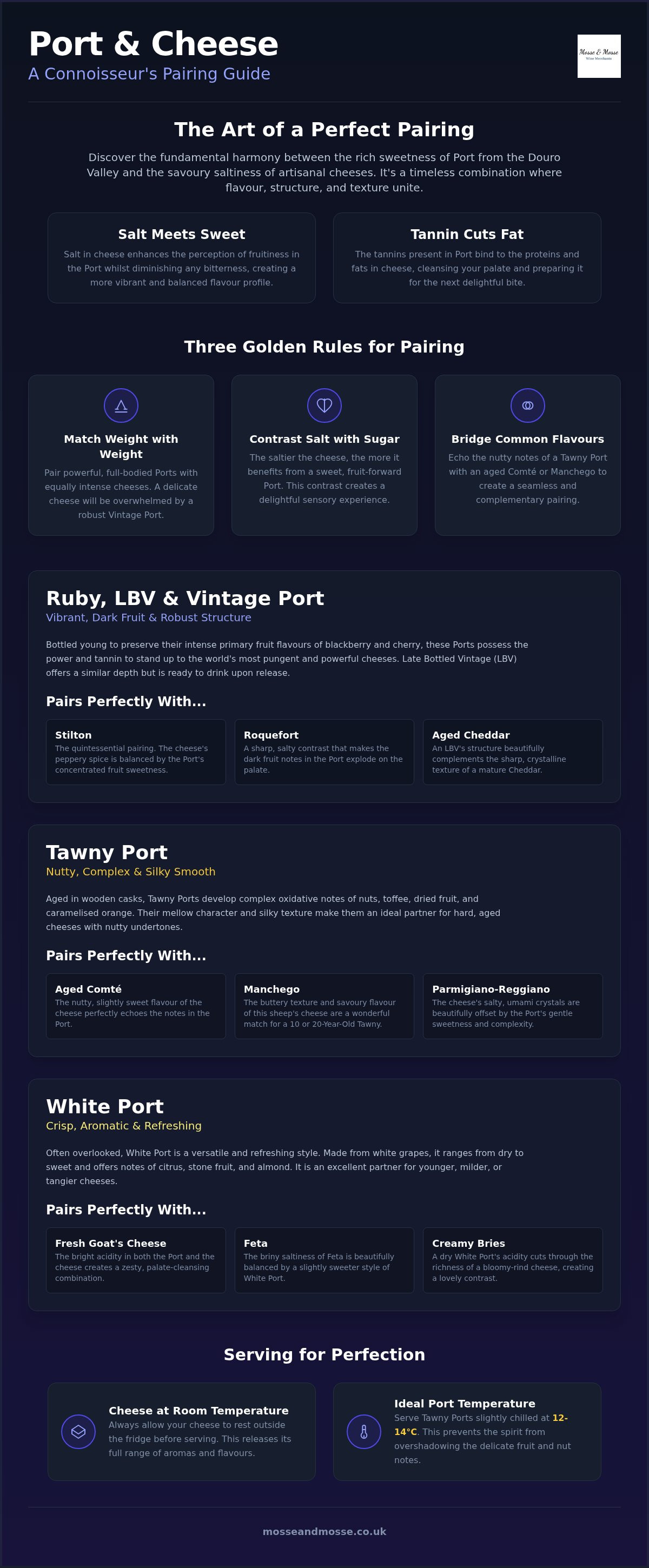
To master the match, you must first understand the styles. Ruby and Vintage Ports are bottled young to preserve their vibrant primary fruit and spice. They possess the muscle to stand up to powerful, pungent cheeses. In contrast, Tawny styles spend years in wood, developing oxidative notes of nuts, toffee, and caramelised orange. Then there is White Port. Often overlooked, its lighter and crisper profile makes it a refreshing partner for younger, milder cheeses or even a sharp goat's milk variety.
The Science of Salt and Sweet
Salt acts as a flavour magnifier. When you pair a salty cheese like Stilton with a Ruby Port, the salt actually reduces the perception of bitterness whilst enhancing the fruitiness of the wine. Acidity also plays a vital role. The bright acidity in Port slices through the high fat content of bloomy-rind cheeses, preventing the palate from feeling weighed down. The secret is balancing intensity. Consider these rules of thumb:
- Match weight with weight: A delicate cheese will be lost against a powerful Vintage Port.
- Contrast salt with sugar: The saltier the cheese, the more it benefits from a sweet, fruit-forward wine.
- Bridge flavours: Use a Tawny Port to echo the nutty notes in an aged Comté or Manchego.
Matching Robust Ruby and Vintage Ports with Bold Cheeses
Ruby Ports are defined by their vibrant, dark fruit profiles. Think of crushed blackberries and juicy cherries captured in a glass. These wines aren't shy; they demand cheese partners with equal weight and intensity. Amongst our customers, these robust reds are a firm favourite for Wedding & Party Wine selections because they offer immediate impact and broad appeal without the need for decades of cellaring.
Late Bottled Vintage (LBV) is a brilliant middle ground for any connoisseur. It offers much of the depth and complexity of a true vintage style but remains accessible because it's ready to drink as soon as you pull the cork. Vintage Port itself remains the category's pinnacle. It is a wine for quiet contemplation or grand celebratory moments, specifically reserved for the finest aged blues that have developed their own complex, spicy character over time.
The Stilton Standard and Beyond
The pairing of Stilton and Port is the ultimate culinary handshake. The peppery spice of the blue mould finds its perfect foil in the wine's concentrated fruit sweetness. If you want a saltier kick, Roquefort provides a sharp contrast that makes the fruit in the Port pop. For those who prefer a more decadent, velvety experience, Gorgonzola Dolce is an excellent choice. You should always let your cheese reach room temperature whilst the Port settles to ensure the full range of aromatics is released.
LBV Versatility with Hard Cheeses
LBV isn't just for blue cheese. Its structure makes it a superb companion for a mature, aged Cheddar. The wine's dark fruitiness complements the cheese's sharp, crystalline texture beautifully. For a winter board that looks as good as it tastes, try Red Leicester with a Ruby Port. It's a colourful and flavour-packed combination that holds its own against the wine's sweetness. If you appreciate this level of structure in your glass, you might also enjoy exploring our Bordeaux collection, which features reds with similar depth and tanning profiles.
Mastering these port and cheese pairings is about trusting your palate and experimenting with different intensities. If you're unsure which specific style best suits your upcoming event, we'd love to help you choose a bespoke selection tailored to your menu.
Discovering Tawny and White Port with Hard and Creamy Cheeses
While Ruby styles celebrate the intensity of fresh fruit, Tawny Port is a masterclass in patience and oxidation. These wines are aged in wood for years, a process that transforms the liquid into a beautiful amber colour. This slow maturation replaces primary berry notes with sophisticated flavours of dried fruit, toasted nuts, and toffee. For a deeper look at how these oxidative styles differ from their Ruby cousins, our guide on types of Port provides a comprehensive breakdown of these distinct categories.
White Port offers a refreshing alternative to the heavier red styles. It's often overlooked by casual drinkers, yet it brings a unique zest to the table. When you serve it chilled, it acts as a vibrant counterpoint to younger or richer cheeses. Finding the right port and cheese pairings in this category requires a focus on shared aromatic profiles and structural balance.
Nutty Tawnies and Aged Hard Cheeses
Aged Tawnies (10, 20, or 30 years) require cheeses with a similar depth of character. We often recommend the Comté connection. The delicate hazelnut notes of an 18-month Comté sing when matched with a 10-year Tawny. If you prefer sheep's milk richness, try Manchego. This Mediterranean-inspired pairing balances the cheese's oily texture with the wine's caramel sweetness. For a truly indulgent match, look to an aged Gouda. Its natural butterscotch notes find a perfect mirror image in the complex profile of an older Tawny Port.
White Port: The Unexpected Companion
Dry White Port is a revelation when paired with young goat's cheese. The wine's acidity provides a fresh, zesty contrast to the tangy, citrusy notes of the cheese. On the sweeter side, try a sweet White Port with triple-cream cheeses like Brillat-Savarin. It's a decadent, dessert-like experience that surprises most guests. Remember one essential serving tip: White Port is best enjoyed chilled. This keeps the spirit integrated and allows the delicate floral and honeyed notes to shine whilst the wine remains refreshing.
If you are planning a special event and need a curated selection of these unique styles, we invite you to enquire about our personalised wine service to find the perfect bottles for your board.
Organising the Perfect Port and Cheese Course at Home
Serving your selection is the final, crucial step in mastering port and cheese pairings. Proper service is what distinguishes a knowledgeable host; temperature and glassware are paramount to the sensory experience. We recommend that Tawny Port be served slightly cool (12-14°C) to prevent the alcohol from dominating the delicate dried fruit and nut notes. Modern central heating often makes "room temperature" far too warm for Ruby or Vintage styles, so aim for a cellar-cool 16-18°C for those instead. If you are looking to share these experiences with others, our Corporate & Private Wine Gift Boxes provide an expertly curated starting point for colleagues or clients.
Glassware and Decanting Essentials
Forget the tiny "thimble" glasses of the past. To truly appreciate the aromatics, use a standard white wine glass which allows the wine to breathe and swirl. Decanting is another area where many hosts hesitate. Whilst LBV and Tawny Ports are typically filtered and fine to pour straight from the bottle, Vintage and Crusted Ports require decanting to remove natural sediment. Carefully pour the wine into a decanter in one steady motion, stopping when you see the first hint of sediment reaching the neck. This process also aerates the wine, softening the tannins and opening up the bouquet. For more advice on choosing bottles with the structural integrity to age, see our guide on how to buy wine online.
Curating Your Board with Mosse and Mosse
A balanced board should offer a journey of textures. We suggest selecting four distinct styles: one soft, one hard, one blue, and a "wildcard" such as a goat's cheese or a smoked variety. Accompaniments should bridge the gap between the food and the wine. Walnuts and dried figs are the gold standard here, as they echo the oxidative notes of Tawny Ports whilst providing a textural contrast to the creaminess of the cheese. For larger gatherings, our personalised service can help you select a Magnum to ensure the wine flows as generously as the conversation. This format not only looks impressive on the table but often allows the wine to age more gracefully.
Elevate Your Next Cheese Course with Expert Selection
Mastering port and cheese pairings is more than just a culinary exercise; it's a way to bring a touch of traditional European quality to your own dining table. You've seen how the vibrant fruit of a Ruby Port can tame a spicy Stilton, and how the oxidative grace of an aged Tawny finds its soulmate in a nutty Comté. By focusing on the structural balance of tannins, fats, and sugars, you can move beyond safe habits and discover flavour profiles that truly surprise your guests. Remember that service details, from using the right glassware to maintaining a cool 12-14°C for wood-aged styles, make all the difference in the final pour.
As independent family merchants specialising in fine French and Portuguese wines, we take great pride in our curated selection. We're here to offer the personalised service you'd expect from connoisseurs who care deeply about your enjoyment. With next-day delivery available across the UK mainland, your next discovery is never far away. Explore our expertly curated Port collection at Mosse and Mosse and start building a board that celebrates the very best of this ultimate duo. Cheers to your next great pairing.
Frequently Asked Questions
What is the most traditional cheese to pair with Port?
Stilton is the most traditional and iconic partner for Port. This classic British pairing relies on the sharp saltiness of the blue cheese to balance the intense, dark fruit sweetness of Ruby or Vintage styles. The spice of the blue mould acts as a natural foil to the wine's richness. Whilst Stilton is the gold standard, other blues like Gorgonzola or Roquefort offer equally compelling port and cheese pairings for those seeking variety.
Do I need to decant all types of Port before serving with cheese?
You don't need to decant every bottle. Only Ports that have aged in the bottle, such as Vintage, Single Quinta, or Crusted Port, require decanting to remove natural sediment. Most Late Bottled Vintage (LBV) and wood-aged Tawny Ports are filtered before bottling, meaning they are ready to pour straight away. If you're unsure, check the label for "unfiltered" status; these specific bottles always benefit from aerating and sediment removal before serving.
Can I pair White Port with cheese, or is it only for aperitifs?
White Port is a fantastic companion for cheese and shouldn't be reserved solely for aperitifs. Dry versions offer a zesty acidity that cuts through the tang of young goat's milk cheeses or a light, fresh Ricotta. Sweeter styles provide a decadent match for triple-cream cheeses like Brillat-Savarin. Serving it chilled ensures the wine remains refreshing, allowing the floral and honeyed aromatics to complement the delicate notes of younger artisanal cheeses.
How long does a bottle of Port stay fresh once it has been opened?
The lifespan of an open bottle depends entirely on the style. Vintage Port is the most delicate and should be enjoyed within two to three days. Ruby and LBV styles generally stay fresh for one to two weeks if re-corked and kept in a cool place. Tawny Ports, having already been exposed to oxygen during their long wood-ageing process, are much hardier. They can often remain in peak condition for up to two months.
Is it better to serve Port at room temperature or chilled?
It's best to avoid modern "room temperature" as it's often too warm for fortified wines. White Port should be served well-chilled, whilst Tawny Port benefits from being slightly cool, around 12-14°C, to keep the alcohol integrated. Ruby and Vintage Ports are best at a cellar-cool 16-18°C. Serving these wines too warm can cause the spirit to dominate the fruit, masking the complex flavours you've carefully selected for your board.
What are the best accompaniments for a Port and cheese board besides crackers?
Beyond crackers, walnuts and dried figs are the most evocative partners for a Port-led board. Their earthy, concentrated flavours mirror the oxidative notes found in aged Tawnies. Quince paste, or membrillo, adds a fruity acidity that bridges the gap between the cheese and the wine. For a bolder choice, try a piece of high-quality dark chocolate; it works exceptionally well with the blackberry and spice notes found in many port and cheese pairings.


