
The most famous label in the shop isn't necessarily the best choice for your wedding toast. It's a bold claim, but as independent merchants, we've seen how a character-led bottle from a dedicated grower often leaves a far more lasting impression than a mass-market brand. We know that choosing the right champagne for weddings feels like a high-stakes decision. You want a selection that reflects your personal style whilst keeping the logistics seamless and the guests' glasses full.
It's completely natural to feel a bit lost amongst the talk of Brut, Rosé, and Vintage classifications. You're likely worried about running out of wine or getting caught out by complex venue corkage fees. This guide is here to replace that uncertainty with the confidence of a connoisseur. We'll show you exactly how to calculate your bottle quantities, pair specific styles with your wedding breakfast, and manage the finer details of service. By the end, you'll have a wine plan that ensures your celebration is both sophisticated and stress-free.
Key Takeaways
- Learn why independent, character-led bottles provide a more meaningful sensory anchor for your celebration than mass-market supermarket labels.
- Discover how to implement a timeline-led strategy that uses the natural acidity of Champagne to cleanse the palate and keep guests refreshed.
- Master the essential logistics of champagne for weddings, including precise quantity calculations and the "Golden Rule" for avoiding shortages.
- Gain expert insights into navigating venue corkage fees and glassware selection to ensure a professional and seamless service on the day.
- Understand the value of a bespoke consultation to curate a wine selection that avoids generic choices and truly reflects your personal signature.
The Art of Selecting Champagne for Your Wedding Day
Champagne is more than just a drink; it's the sensory anchor of your entire celebration. From the moment the first cork pops, the sound and the fine bead of bubbles signal that the festivities have truly begun. We've always believed the first toast carries immense emotional weight. It's the first shared sip as a married couple, and choosing a wine of genuine quality ensures that the moment feels as significant as the vows you've just exchanged. To understand the foundations of this storied drink, one might ask What is Champagne? beyond the bubbles. It's a product of heritage, specific terroir, and meticulous craft.
Finding your "House Style" is about matching a wine to your collective personality. Some couples prefer a rich, brioche-heavy profile, whilst others lean towards a crisp, citrus-led finish. If you're planning a modern British wedding, we often suggest looking at premium English Sparkling wine as a sophisticated alternative that rivals the best of France. Whatever you choose, it should feel like a personal signature. You can explore our curated Wedding & Party Wine selection to find a bottle that resonates with your vision.
Understanding Styles: Brut, Extra-Brut, and Rosé
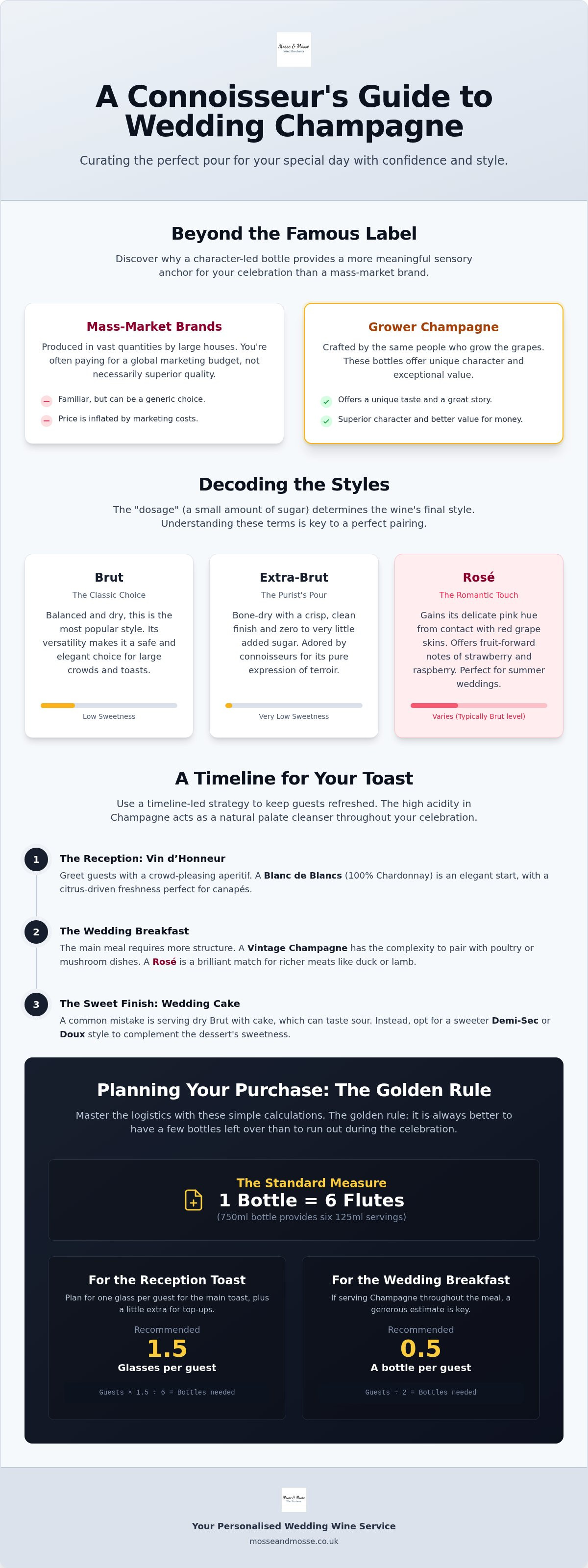
The key to selecting the right champagne for weddings lies in the "dosage," which is the small amount of sugar added before final corking. This determines the wine's sweetness and how well it pairs with food. Brut is the classic, safe choice for large crowds because its balanced profile appeals to almost every palate. Extra-Brut offers a bone-dry experience that purists adore, whilst Rosé Champagne has seen a surge in popularity for summer garden weddings. The delicate pink hue and fruit-forward character of a Rosé add a romantic touch to any reception table.
The Grande Marque vs Grower Champagne Debate
Most people are familiar with the "Grande Marques," the famous global houses that produce millions of bottles. However, we're passionate about "Grower Champagne," produced by the same vignerons who tend the vines. These wines often offer superior character and better value for money because you aren't paying for a global marketing budget. Choosing a lesser-known, high-quality label from a small producer acts as a wonderful talking point for your guests. Selecting this kind of champagne for weddings offers your loved ones a taste of something unique they won't find on a supermarket shelf.
Matching Champagne to Your Wedding Menu and Timeline
A successful drinks plan isn't just about the bottles; it's about the timing. We always advise couples to adopt a timeline-led strategy to keep guests refreshed without the fatigue that often follows heavy, overly sweet drinks. High acidity is the secret weapon here. It acts as a natural palate cleanser between rich courses, ensuring each bite of your wedding breakfast tastes as vibrant as the first. Whilst many think of bubbles only for the toast, Selecting the Perfect Wedding Champagne involves thinking about how the wine evolves from the first greeting to the final dance.
The Reception: Vin d’Honneur and Canapés
The initial reception needs a crowd-pleaser that works as a standalone aperitif. We've found that a Blanc de Blancs, made from 100% Chardonnay, is the most elegant way to start. Its citrus-driven freshness and mineral finish won't weigh guests down before they sit for the meal. It's a classic pairing for smoked salmon blinis or light pastry bites. This style sets a sophisticated tone whilst remaining approachable for everyone in the room.
The Wedding Breakfast: Pairing with the Main Course
For the main meal, you need more structure and depth. This is where a vintage Champagne really proves its worth. These wines have the complexity to stand up to poultry or even earthy, mushroom-based dishes. If you're serving duck or lamb, don't be afraid to pour a Rosé. Its red fruit notes and slightly firmer tannins make it a brilliant, unexpected match for richer meats. Using champagne for weddings throughout the meal elevates the entire dining experience into something truly memorable.
The Sweet Finish: Champagne and the Wedding Cake
It's a common mistake to serve a dry Brut with a sweet wedding cake. The sugar in the cake makes a dry wine taste metallic or unpleasantly sour. To avoid this, look for Demi-Sec or Doux styles for the dessert course. These wines have a higher residual sugar that complements the sweetness of the sponge. For fruit-based desserts or summer berries, a Rosé with a hint of sweetness creates a harmonious and indulgent finish. If you're feeling unsure about these pairings, you can enquire about a bespoke consultation to refine your choices.
Practical Logistics: Calculating Quantities, Glassware, and Corkage
Managing the flow of wine is a crucial part of any celebration. We always share a "Golden Rule" with our clients: it is always better to have two bottles too many than one too few. Running dry mid-toast is a stress no couple needs. For those seeking a truly spectacular impact, Magnums and larger formats offer more than just visual drama; the larger volume of liquid actually promotes superior, slower ageing. Coordination with your caterer is essential, especially regarding serving temperatures. Keeping the fizz chilled amongst the chaos of a busy wedding day requires foresight and plenty of ice. Champagne should ideally be served at 7 to 9 degrees Celsius to maintain its crispness.
How to Calculate the Number of Bottles Required
Planning quantities for champagne for weddings doesn't have to be guesswork. First, determine your guest count and the length of your reception. We recommend allowing for 2 to 3 glasses per person during the initial reception and 1 dedicated glass for the toast. Remember that a standard 750ml bottle yields 6 generous pours. According to this expert guide to wedding champagne, you should account for slightly more if you plan to keep the bubbles flowing throughout the meal. For 100 guests, 17 bottles usually cover the toast, but you'll need closer to 60 if serving throughout the reception.
Navigating Venue Corkage Charges
Corkage is a fee venues charge to serve wine you've sourced yourself. Whilst it might seem like an extra expense, sourcing your own champagne for weddings and paying corkage often provides better value than the venue's house options. You're paying for character and quality rather than a generic label. Don't be afraid to negotiate these fees, especially if you're booking during off-peak dates. Many "no corkage" venues are also available if you want to maximise your wine budget without compromise. Choosing an independent merchant's bottle over a supermarket staple ensures your guests enjoy a wine that feels truly special.
Glassware and Service Etiquette
The choice of vessel changes the experience. Whilst traditional flutes preserve bubbles, many connoisseurs now prefer wide-rimmed wine glasses to let the complex aromas breathe. Coupes offer a vintage aesthetic but can cause the fizz to dissipate quickly. Ensure your catering team understands the correct pouring technique: a slow, steady stream down the side of the glass preserves the carbonation. If you're hosting in a marquee, logistical planning for chilling large quantities is vital. If you need help with these finer details, contact us to discuss your wedding wine logistics.
Personalised Wedding Wine Services with Mosse and Mosse
We treat every wedding as if it were our own. At Mosse and Mosse, our philosophy is simple; we prioritise the liquid in the bottle over the marketing budget of a global brand. When you choose champagne for weddings through us, you're getting 25 years of expertise in corporate and private wine curation. We move away from generic supermarket staples to offer a selection that reflects your personal taste whilst showcasing our passion for traditional European regions.
Our wedding and party wine consultation is designed to take the guesswork out of your planning. We handle the complexities of logistics with reliable national delivery across the UK mainland, giving you one less thing to worry about as your big day approaches. We believe that professional guidance should be welcoming and service-oriented, building a relationship that lasts well beyond the final toast.
Expert Curation for Every Budget
We pride ourselves on sourcing wines that punch well above their weight in terms of quality and price. Our deep ties to traditional regions like Burgundy and Bordeaux allow us to find "hidden gems" that offer incredible value without sacrificing sophistication. Whether you're looking for a crisp Chardonnay-led fizz or a more complex blend, we use our expertise to ensure your champagne for weddings is a highlight of the day.
A Partner for Your Celebration
Working with a boutique, family-led business means you have a professional partner who is personally invested in your event's success. We don't just stop at bubbles; we coordinate your red and white wine selections, sourcing directly from Bordeaux and the Côte d'Or, to ensure a cohesive menu from start to finish. We believe a perfectly paired table is the mark of a truly memorable celebration. To begin your journey with us, simply reach out to start your bespoke consultation today.
Elevating Your Celebration with Expert Curation
Selecting the right champagne for weddings is about more than just filling glasses; it's about creating a personal signature for your most significant day. By moving away from generic labels and embracing character-led bottles, you ensure every toast is as memorable as the vows themselves. We've explored how a timeline-led strategy keeps your guests refreshed whilst professional logistics management prevents any mid-celebration shortages.
At Mosse and Mosse, we bring 25 years of experience to your table. As specialists in high-end regions like Burgundy and Bordeaux, we don't just sell wine; we partner with you to curate a cohesive menu that genuinely reflects your personality. Our bespoke consultations take the stress out of the planning process, and our reliable national delivery ensures your selection arrives safely and on time.
Ready to find the perfect bottles for your celebration? Explore our curated Wedding & Party Wine collection today. We look forward to helping you create a celebration that your guests will talk about for years to come.
Frequently Asked Questions
How many glasses of Champagne are in a standard 75cl bottle?
A standard 75cl bottle of Champagne contains exactly six glasses of wine when using a traditional 125ml pour. This is the industry standard for catering and ensures your guests feel well looked after throughout the reception. If you're pouring specifically for a toast where glasses are only half-filled, you might stretch a bottle to eight servings. However, we always recommend sticking to the rule of six to avoid running short.
What is the average corkage fee for a wedding in the UK?
Corkage fees across the UK vary significantly based on the venue's specific policy and service level. You'll generally find that venues charge a fixed fee per bottle to cover the use of their glassware, chilling facilities, and professional pouring staff. Whilst some locations are open to negotiation, others have strict set rates. It's vital to clarify these costs during your initial viewing so you can accurately calculate the total investment for your wine.
Can I use sparkling wine instead of Champagne for the wedding toast?
You can certainly use sparkling wine for your toast, provided you understand the stylistic differences. Only bottles from the specific French region can be legally labelled as Champagne; everything else is sparkling wine. For a modern British wedding, many couples now choose premium English Sparkling wine. These bottles use the same traditional method and grape varieties, offering a sophisticated profile that rivals French houses whilst providing a unique talking point for your guests.
How long can I store Champagne before the wedding day?
Non-vintage Champagne is released when it's ready to drink, so you don't need to age it further. You can safely store these bottles for several months before the event, provided they're kept in a cool, dark place with a consistent temperature. Ensure the bottles lie horizontally to keep the cork moist and the seal intact. If you've invested in vintage champagne for weddings, these can often be kept for years if your storage conditions are stable.
Should I choose a Vintage or Non-Vintage Champagne for my guests?
Non-vintage (NV) is the most popular choice for large gatherings because it offers a consistent house style that is familiar and reliable. It's generally more approachable for a wide range of palates. Vintage Champagne is made from grapes of a single exceptional year and offers more complexity and depth. We often suggest using an NV for the main reception and reserving a special vintage bottle for the wedding breakfast or the couple's personal toast.
What is the best temperature to serve wedding Champagne?
The best temperature to serve wedding Champagne is between 7 and 9 degrees Celsius. Serving the wine too cold can mute the intricate flavours we've sourced for your celebration. If it's too warm, the carbonation will disappear too rapidly and the wine may taste unbalanced. Achieving this window ensures that every glass of champagne for weddings is refreshing and expressive. We suggest chilling bottles in a mix of ice and water before the first pour.


