
The best wine merchant isn’t simply the one with the broadest list. It’s the one whose wines, service and delivery suit the way you buy. Knowing what to look for in a wine merchant means weighing clear terms and useful advice alongside wine quality, value and specialisms that match your taste or business.
It’s natural to focus first on the bottle and its price. But a good buying experience also depends on how well a merchant can guide your choices, explain a wine’s style and maturity, and help you find bottles that suit your preferences.
This guide shows how to assess service and logistics, judge value beyond the label, and decide whether a merchant’s range and expertise are the right match. Use it to compare what matters, whether you’re choosing wine for your table or selecting bottles for a business.
Key Takeaways
- Assess after-sales advice as well as the purchase itself, especially guidance on when to enjoy wines already in your rack.
- Read delivery terms closely, including how shipping arrangements affect convenience and the final cost.
- Judge value by the wine’s quality, character and suitability, not price or branding alone.
- Look for a merchant whose regional expertise and selection reflect your tastes or the identity you want your brand to convey.
- Explore Mosse and Mosse’s Champagne & Sparkling Wines, alongside its red, white and rosé wines, when those styles fit what you’re seeking.
1. After-sales service and logistics
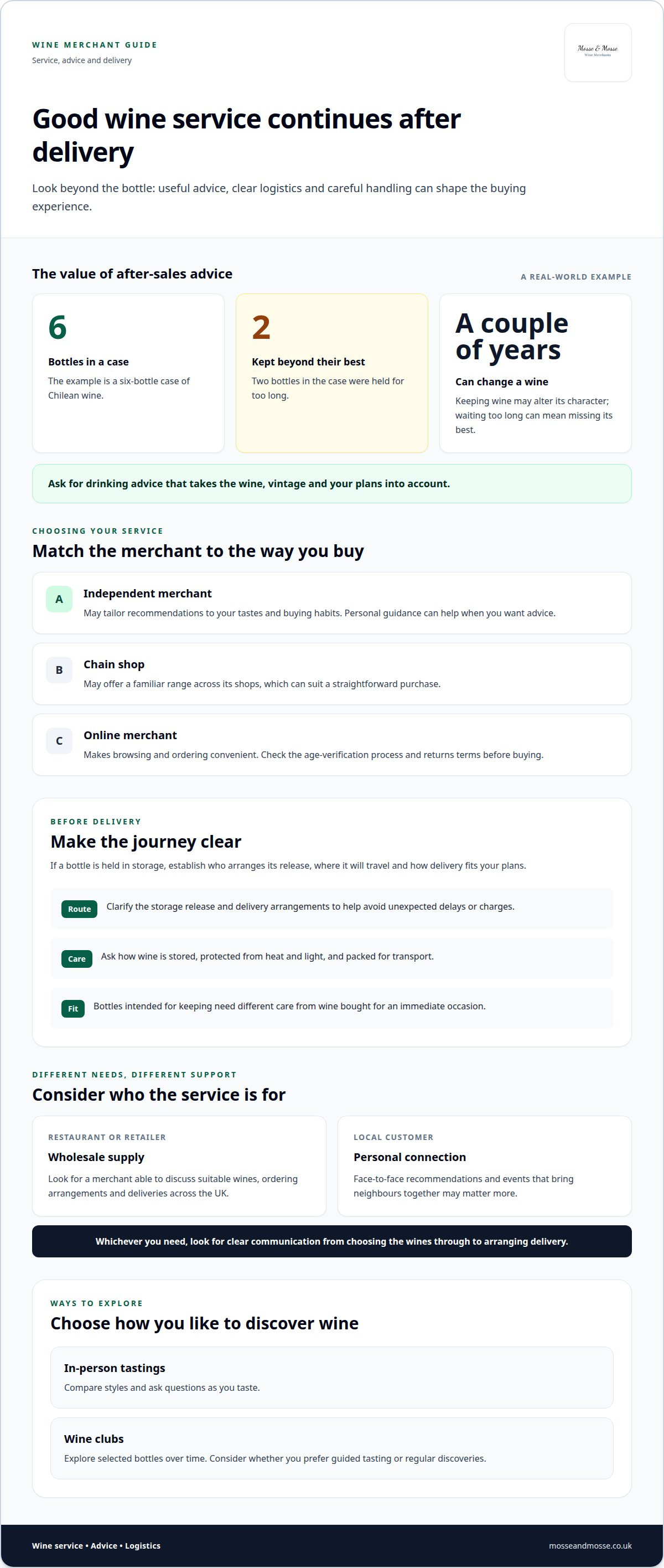
An independent wine merchant can tailor recommendations to your tastes and buying habits. A chain may offer a familiar range across its shops, while an online merchant makes browsing and ordering convenient. Consider whether you value personal guidance or prefer a straightforward transaction.
After-sales advice matters once the bottles reach your rack. A good merchant can recommend wines and help you decide when to drink bottles you already own. Keeping a wine for a couple of years can change its character, but waiting too long may mean missing its best. One example is a six-bottle case of Chilean wine, where two bottles were kept beyond their best. Ask for advice that considers the wine, vintage and your drinking plans.
Delivery can involve more than a van arriving at your door. If a bottle is held in storage, establish who arranges its release, where it will travel and how delivery fits your plans. Clear logistics help you avoid unexpected delays or charges.
National wholesale service and local community support call for different kinds of organisation. A restaurant or retailer buying wholesale needs a merchant that can discuss suitable wines, ordering arrangements and deliveries across the UK. A local customer may value face-to-face recommendations and events that bring neighbours together. In either case, look for clear communication at each step, from choosing the wines to arranging delivery.
For online wine orders in the UK, read the age-verification process and returns terms before buying. Make sure you understand how age checks work at delivery and what the retailer’s policy says about returns.
Storage and handling affect how a bottle arrives and develops. Ask how the merchant stores wine, protects it from heat and light, and packs it for transport. Bottles intended for keeping need different care from wine bought for an immediate occasion.
Independent merchants may offer tastings, events or wine clubs, each giving you a different way to explore wine. In-person tastings let you compare styles and ask questions as you taste. A wine club usually centres on selected bottles over time, so consider whether you prefer guided tasting or regular discoveries.
2. Delivery thresholds and shipping
A delivery threshold can change the real cost of an order. Compare the amount needed for reduced or included delivery with what you planned to buy. Adding bottles just to reach a threshold may cost more than paying the delivery charge. Judge the total basket, not just the headline offer.
Read the delivery terms before choosing wines. Check the destinations covered, the charge, the expected delivery window and what happens if nobody can receive the order. Someone sending wine to a workplace, for example, may need to plan differently from a customer receiving it at home.
Reliable supply starts with clear stock information. Producers may release wines in stages, and availability of a particular vintage can change. If you’re ordering for a dinner or business event, ask which wines are ready to dispatch and whether the full order can arrive together.
Delivery planning matters for occasions with a fixed date. Work backwards from the event, allowing time for the merchant to prepare the order and the carrier to deliver it. For a wedding reception, separate the wine order from last-minute purchases and confirm the delivery address, access instructions and a suitable receiving contact.
Consider how bottles are packed for their journey. A mixed case of sparkling and still wines needs secure packaging to protect the glass in transit. For a warm-weather event, plan where the delivery will be received and stored, away from direct sunlight.
For repeat orders, consistency matters. A restaurant serving the same house wine needs to understand what happens if a vintage sells out. Look for a clear policy on whether the merchant contacts you before making any change. This helps keep menus and customer expectations aligned.
Check the checkout summary for the delivery destination, selected service and total charge. If a delivery threshold applies, confirm it has been reached before placing the order. Keep the confirmation with your event details so the person receiving the wine can identify the delivery.
For UK mainland orders that need coordinating around an event or delivery address, contact Mosse and Mosse about your delivery plans.
3. Balancing wine quality with perceived value
One part of what to look for in a wine merchant is how clearly it explains a wine’s quality and character. Consider the producer, region, vintage, grape variety and style together. Burgundy Pinot Noir and a Bordeaux Cabernet blend offer different profiles, so compare their character and intended occasion rather than judging by region or label alone.
To compare a merchant’s prices with other retailers, match the exact producer, cuvée, vintage and bottle size. Then compare the delivered total, including any delivery charge or promotion. If those details differ, you’re comparing different wines, not like-for-like offers. Two bottles labelled Sauvignon Blanc, for instance, may come from different producers and regions.
Read descriptions for details that explain a wine’s place in the merchant’s range. Its appellation, grape variety and production approach help you understand what is in the bottle. A Bordeaux listing that names its appellation and blend gives you more to assess than one focused only on the label or tasting adjectives.
Quality also depends on fit. A structured red may suit a leisurely meal, while a fresher white could work better as an aperitif. Ask how a recommendation relates to the food, occasion and styles you enjoy. That is more useful than choosing solely by a medal, score or familiar brand.
Look for selection notes that explain why a wine was chosen. A merchant who tastes wines and new vintages can describe differences in balance, aroma or structure, rather than relying only on producer branding. Ask what distinguishes the current vintage and how that affects the wine’s character.
Value can come from discovery as well as familiarity. A well-described bottle from an established region may feel reassuring, while a less familiar producer could introduce a new style. Compare its origin, tasting profile and suggested occasion to decide whether it suits your preferences, rather than relying on label prestige.
A final way to think about what to look for in a wine merchant is to test its recommendations against your priorities. Note the style, origin and occasion you have in mind, then see whether the explanation connects them to the wine. A thoughtful recommendation makes its case through the bottle’s character, not just a score or attractive branding.
A $15 bottle tasting like a $30 bottle illustrates perceived value for consumers.
These bands can help shoppers narrow their choices, but the wine’s stated character and fit remain central to deciding whether it feels worthwhile.
4. Matching a wine brand to a merchant’s identity and specialities
A merchant’s specialities reveal the tastes and traditions behind its selection. Look beyond a broad “French wine” category: the Côte de Beaune, Côte de Nuits and Médoc each have distinct identities. A focused range may suit buyers seeking depth in particular regions, while a broader portfolio offers more styles to explore.
Assess the range by looking at its balance and detail. Does it include wines for different occasions, from celebratory Champagne to a food-friendly red? Do descriptions name the region, producer, grape variety and vintage? These details help you understand the selection and decide whether it suits your customers or preferences.
To assess provenance and authenticity, look for a clear account of each wine’s producer, region, vintage and route to market. A merchant should be able to explain how it sources wines and distinguish the named producer from a distributor or importer. Specific, consistent information is more useful than grand claims about rarity or prestige.
For a business, match the merchant’s identity to the experience your brand wants to create. A restaurant focused on regional French cooking might build a coherent list around Burgundy or Bordeaux, rather than choosing bottles solely for familiar labels. A retailer serving varied tastes may need a wider selection and clear descriptions staff can use confidently.
Test the fit with practical examples. Choose a meal, customer profile or event and see whether the merchant can suggest wines that work together. For a Burgundy-led dinner, compare how it explains the differences between Côte de Beaune and Côte de Nuits. For a celebration, consider whether its selection includes styles suited to the occasion.
Vintage information adds another layer to a merchant’s identity. A producer’s style may remain recognisable, while the vintage can change a wine’s balance and drinking character. Look for descriptions that treat the vintage as meaningful context, not just a date on the label. That care suggests the wine itself is central to the selection.
Finally, ask whether the merchant’s specialities complement rather than dictate your own identity. A specialist can offer depth and a distinctive point of view, but a mismatch may leave gaps in the range you need. Compare its regional strengths with your audience, food or brand story, then decide whether the overlap feels natural.
If regional character is central to your selection, discuss the styles that best fit your wine range.
Mosse and Mosse: Champagne & Sparkling Wines
Mosse and Mosse offers Champagne & Sparkling Wines for celebrations, thoughtful gifts and special occasions. Its range also includes white wine, giving you another style to consider when matching a bottle to a meal or event.
If regional character matters to your choice, explore the Champagne and sparkling wine selection and consider how each bottle fits your taste, menu or brand. The same principles apply: look for clear wine details and choose a style that feels right for the occasion, rather than relying on the label alone.
For a personal discussion about choosing Champagne, sparkling wine or white wine, contact Mosse and Mosse.
Choose your next bottle with confidence
The most useful choice is one that suits the moment and gives you something to look forward to opening. Let a meal, celebration or simple curiosity guide your selection. You might choose a red wine with a favourite dish, a white to bring freshness to the table, or Champagne & Sparkling Wines for a celebratory toast. A new bottle can introduce you to a producer, region or style you haven’t explored before.
Deciding what to look for in a wine merchant becomes more personal as you learn what you enjoy. Notice which recommendations appeal to you, and use those preferences to shape future choices. You don’t need a complete cellar plan to begin; a clear idea of the occasion and the kind of wine you’d enjoy is a good starting point.
Ready to discuss a bottle or find a style for your next occasion? Contact Mosse and Mosse and start planning your next discovery.
Frequently Asked Questions
What makes a good wine merchant in the UK?
A good wine merchant combines a considered range with accurate descriptions, reliable ordering and advice suited to your taste. Mosse and Mosse serves wine enthusiasts across Suffolk and nearby communities, including Ipswich, Norwich, Bury St Edmunds, Sudbury, Stowmarket, Newmarket, Thetford, Diss, Attleborough, Southwold, Aldeburgh, Framlingham, Woodbridge, Long Stratton and Saxmundham. Use the occasion and styles you enjoy to judge whether a merchant’s selection feels right.
How important are staff knowledge and wine recommendations?
Knowledgeable staff can turn a broad list into a bottle suited to your meal, occasion and preferences. A useful recommendation explains the wine’s region, grape variety and style in accessible terms, then gives a reason for the match. If you enjoy fresh, aromatic whites, for example, ask for a wine with similar character. In-person tasting events also offer a chance to explore styles and discuss your preferences.
What delivery options, costs and minimum orders do UK wine merchants offer?
Delivery terms vary, so check the destination, charge, dispatch time and any minimum order before paying. An adult aged 18 or over must sign. Check the delivery terms to see whether parcels can be left unattended or with a neighbour.
How can you check a wine merchant’s reputation, reviews and customer service?
Look for detailed, consistent feedback about order accuracy, communication and how problems were handled, rather than relying on a star rating alone. Recent comments describing specific experiences are more useful than brief praise without context. Read the merchant’s delivery and returns terms too, and check what they say about faulty or damaged bottles. Clear policies and attentive responses offer practical evidence of how service works.


