
The best wine choice is the one that suits your taste and the occasion, not simply the best-known label. The benefits of a personal wine consultant include tailored recommendations, less time spent choosing, and guidance on how digital tools, member support, discounts and rewards can help make buying easier.
It’s understandable to want both confidence and good value when choosing wine, especially if you’re buying for different tastes or occasions. A consultant can help narrow the options around what you enjoy, explain the differences between styles and point out member benefits that may be relevant to your purchases.
This article explores how personal advice and digital support can simplify selection, what discounts and rewards may add, and what to consider when engaging a consultant. You’ll also see how a specialist wine merchant can make expert guidance feel welcoming and personal, whether you’re choosing a bottle for dinner or putting together a mixed case.
Key Takeaways
- See how a personal wine consultant can use your tastes, budget and plans to make recommendations more relevant.
- Learn what details about a meal or occasion can help guide wine choices.
- Explore how a collection can be shaped around the wines you enjoy and the occasions you buy for.
- Understand which factors can affect the cost of professional wine advice, without relying on a one-size-fits-all figure.
- Find out how digital tools, member support, discounts and rewards may make choosing and buying wine easier.
3. What does a personal wine consultant do?
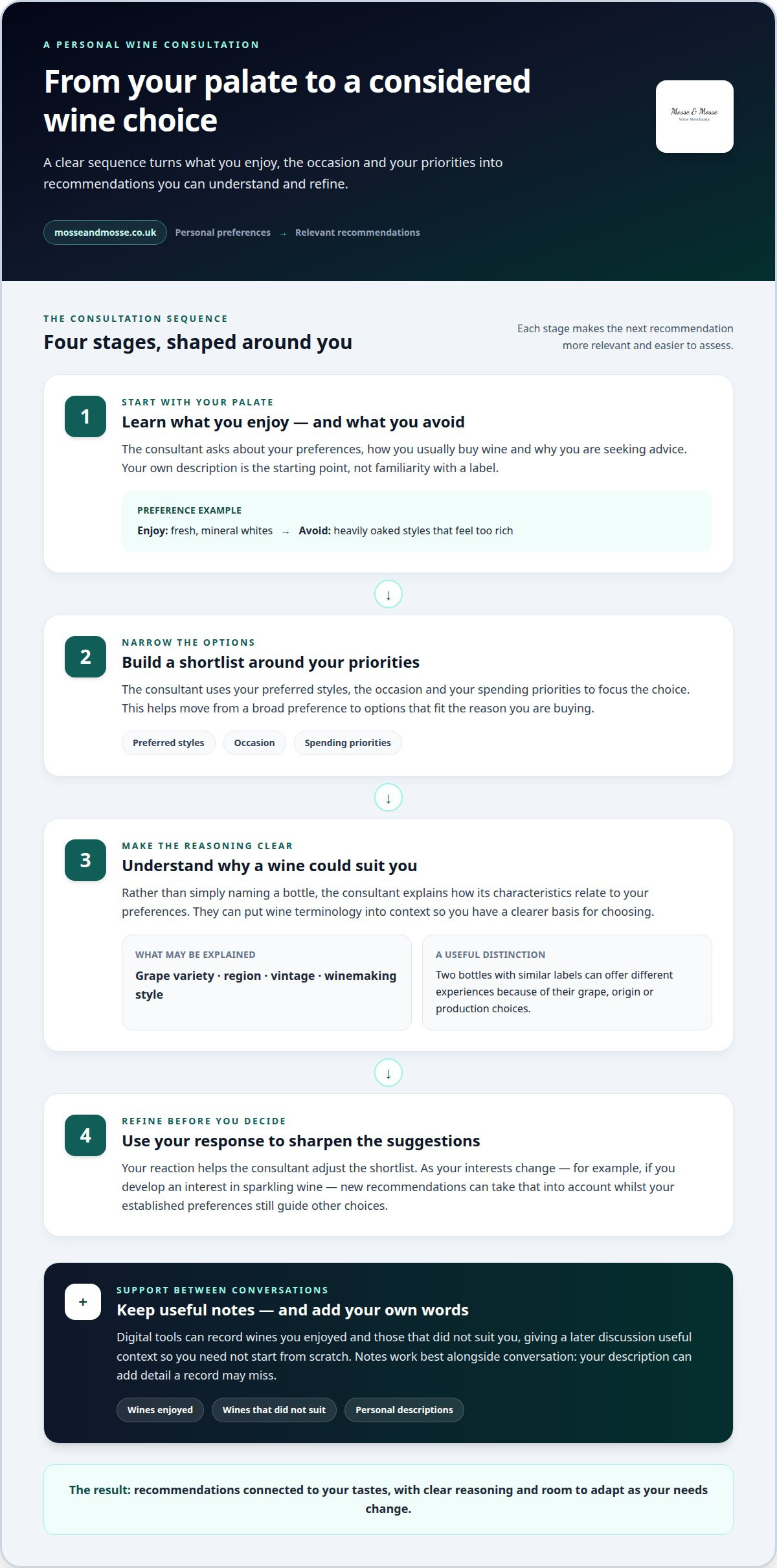
A personal wine consultant turns your preferences into practical recommendations. They start by learning what you enjoy, what you avoid and how you usually buy. If you like fresh, mineral whites but find heavily oaked styles too rich, for example, that helps shape a shortlist around your palate rather than familiar labels alone.
A consultant can also make unfamiliar wine terms easier to understand. They explain grape variety, region, vintage and winemaking style in relation to the bottle you’re considering. If a label names Burgundy, for instance, they can describe how its origin and style inform the recommendation. You get a clearer basis for choosing without needing specialist knowledge.
A useful consultation follows a clear sequence. First, the consultant learns your preferences and why you’re seeking advice. Next, they narrow the options using details such as your preferred styles, occasion and spending priorities. They explain why particular wines fit, then use your response to refine the suggestions before you decide.
Digital tools can help organise recommendations and preferences. A record of wines you enjoyed, and those that didn’t suit you, can give the consultant useful context for a later discussion. This means you needn’t start from scratch each time. Digital notes work best alongside conversation, because your own description of a wine adds detail that a record may miss.
Advice can clarify why two bottles with similar labels offer different experiences. A consultant might explain how grape variety, origin and production choices influence a wine’s style. They can also turn a broad preference, such as “something elegant”, into more specific characteristics. That makes future recommendations more precise and helps you describe what you enjoy.
A consultant’s role is more than naming a bottle. They connect your preferences with suitable options, explain their reasoning and adapt suggestions as your needs change. If you develop an interest in sparkling wine, for example, that can inform new recommendations while your established preferences still guide other choices. The result is a considered decision and useful knowledge for next time.
One point of terminology matters in the United Kingdom. According to UK legislation, the Care Quality Commission was established by the Health and Social Care Act 2008. That statutory history concerns healthcare, not wine advice; the shared word “consultant” does not make the roles equivalent. A wine consultant provides product guidance, helping you make informed choices about styles and bottles.
4. How can a wine consultant help choose wines for meals and occasions?
A consultant starts with the food, not a memorised list of pairings. They consider the main ingredient, cooking method, sauce and overall richness. Roast chicken with lemon, for example, calls for different qualities from chicken in a creamy mushroom sauce. Those details help identify a wine whose freshness, body and flavour complement the dish.
Texture matters as much as the main ingredient. A delicate white fish can be overwhelmed by a powerful, tannic red, while a richly flavoured stew may suit a wine with more structure. Preparation changes the pairing, too: grilled salmon has smoky notes, while salmon with a creamy sauce feels richer. A good recommendation responds to the whole plate.
The occasion shapes the choice, too. A relaxed Sunday lunch may suit an easy-drinking bottle, while a formal dinner could call for a considered match across several courses. For a meal that begins with seafood and ends with roast lamb, a consultant can consider the sequence, serving style and whether one wine should accompany multiple dishes. This helps avoid a bottle that suits only one course.
Guest preferences also shape the shortlist. If some guests enjoy crisp whites and others prefer fuller reds, a consultant can suggest options for different tastes without making the menu feel disjointed. For a summer garden party, they might explore refreshing styles for lighter dishes and a richer option for grilled food. The selection can reflect both the menu and the people sharing it.
For celebrations, practical details matter alongside flavour. A wedding reception, anniversary meal or family gathering may involve varied dishes, different serving moments and guests arriving at different times. A consultant can discuss whether the wine is for a welcome drink, the meal or a toast, then help shape a coherent selection around the event’s atmosphere and menu.
A useful discussion follows a simple order: identify the menu, clarify the occasion, note guests’ preferences, then compare suitable styles. Details such as a peppery sauce, fresh herbs or smoky barbecue can change which flavours work best. Sharing those specifics gives the consultant a clearer picture than naming the main ingredient alone, and helps them explain the reasoning behind each pairing.
For a celebration where the menu or guest list needs careful thought, talk through wine for your occasion. A focused conversation can help bring the food, setting and chosen bottles together, from a quiet dinner to a lively gathering.
3. How can a wine consultant build a personalised wine collection or cellar?
A wine consultant starts by defining what your collection needs to do. Is it mainly for weeknight dinners, special occasions, or bottles to enjoy over time? A household that often cooks pasta may want versatile reds and whites, whilst someone hosting formal dinners may prefer a broader selection. These priorities shape the collection before individual bottles are chosen.
Next, the consultant considers your established tastes alongside styles you’d like to explore. If you enjoy structured reds but also want lighter options for summer meals, the collection can balance both. Regional variety matters, too. For example, exploring wines from the Côte de Beaune can add a distinct regional perspective to a collection focused on familiar styles.
A useful plan separates bottles by purpose. Some are for drinking soon; others may be intended for a future celebration or special meal. A consultant can group recommendations by occasion, style or region, making it easier to spot if your selection is too focused on one kind of wine. A mixed collection might include everyday choices alongside distinctive bottles for guests.
Cellar planning also involves space and storage. A consultant can discuss how much room you have, where bottles will be kept and how you expect to access them. A small, frequently used wine rack serves a different purpose from a dedicated cellar. These details help shape the collection’s size and organisation without assuming every bottle needs long-term storage.
To keep a collection manageable, a consultant can help establish a simple record of each bottle’s region, style, intended occasion and whether you’ve enjoyed it before. If a particular white worked well with shellfish, for instance, noting that can make future choices more relevant. An inventory can also reveal gaps, such as several reds but few wines suited to lighter meals.
Personalisation continues as your preferences and plans change. A consultant can use your feedback after you try a new region or grape variety to adjust later recommendations. If you begin hosting more often, you may want additional versatile wines. If your focus shifts to special dinners, the balance could move towards bottles selected for particular menus or milestones.
The result is a considered selection rather than a random collection. Each recommendation has a purpose, whether it suits a familiar meal, introduces a new style or is being kept for a future occasion. By connecting taste, storage, organisation and intended use, a consultant can help make your collection enjoyable to explore and practical to maintain.
4. What does a personal wine consultant cost in the UK
A consultant’s fee depends on the work involved, rather than one standard task. A discussion about selecting wine for a single dinner differs from planning a collection for several occasions. The scope, preparation and recommendations required all shape the work. In the UK, a useful estimate therefore starts with what you want the consultant to help you achieve.
A fee should reflect the consultant’s experience, effort, skills and resources. A detailed collection plan may require more research than advice on one straightforward choice. Recommendations across several regions, for example, involve different considerations from choosing a bottle for a familiar Sunday roast.
The amount of preparation can affect the fee. Before making tailored recommendations, a consultant may need to understand your preferences, intended use and practical constraints. A formal dinner with several courses and varied guest preferences calls for more consideration than a shortlist for one meal. Clear objectives help define the work.
It’s useful to understand what a quoted fee covers. A proposal might set out the consultation, research, recommendations and any follow-up included. Advice on a dinner menu could focus on suitable styles, while collection planning might organise choices by region or occasion. Clear deliverables make it easier to judge whether the proposed work meets your needs.
Keep the cost of professional advice separate from the cost of buying wine. A consultant’s fee covers their time and expertise; the bottles are a separate purchase. The selection itself affects your eventual spending, so discuss both parts to understand the overall commitment before deciding.
To assess whether a fee suits the task, consider what you want the advice to achieve. A focused recommendation may resolve one specific choice, while a broader plan can support future occasions. A collection organised around weekday meals and celebrations, for instance, serves a different purpose from advice for one event. Choose a scope that fits how you’ll use the guidance.
Start by describing the decision you need help with, such as choosing wines for a dinner or shaping a collection. The consultant can define the work and explain what informs the fee. Ask for the scope and deliverables in clear terms so the proposed advice matches the time and expertise required.
For a tailored discussion about your wine needs, get in touch to discuss your requirements.
Mosse and Mosse: Champagne & Sparkling Wines
Mosse and Mosse offers Champagne and sparkling wines for celebrations, gifts and relaxed gatherings. If you’re in Framlingham, Ipswich, Norwich, Bury St Edmunds, Sudbury, Stowmarket, Newmarket, Thetford, Diss, Attleborough, Southwold, Aldeburgh, Woodbridge, Long Stratton or Saxmundham, explore the selection for a toast or compare styles for an occasion. Mosse and Mosse also hosts in-person wine tastings, where you can discover wines through tasting and conversation.
The same considered approach can help when choosing white wine for a meal or a bottle to share. Tell Mosse and Mosse about the occasion and the styles you enjoy, then explore options suited to your plans.
Contact Mosse and Mosse to discuss your wine choices.
Make your next wine choice with confidence
Let your preferences guide what you explore next. A thoughtful choice can make a meal, gathering or gift feel more personal, while keeping your selection focused on wines you’re looking forward to enjoying. The benefits of a personal wine consultant go beyond discovering something new: they can help you make decisions with a clearer sense of style and purpose.
Mosse and Mosse offers red wine, white wine, Champagne and sparkling wines for different tastes and occasions. Start with the kind of bottle you have in mind, whether it’s a fresh white for supper or sparkling wine for a celebration, and use that to guide your next choice.
There’s no need to make the decision complicated. A conversation about what you enjoy and what you’re planning can help narrow the possibilities and make choosing feel more rewarding. Take the next step and contact Mosse and Mosse to discuss your wine choices.
Frequently Asked Questions
What are the benefits of hiring a personal wine consultant?
The benefits of a personal wine consultant include clearer choices and a better understanding of what suits your taste. If a wine list uses unfamiliar grape varieties, for example, an adviser can explain the descriptions and help narrow down suitable options. Over time, learning which characteristics you enjoy can make it easier to communicate your preferences, even when choosing wine in a new setting.
Personal wine consultant vs wine merchant or sommelier: what’s the difference?
A personal wine consultant tailors recommendations to your tastes, occasion and spending priorities, and explains the reasoning. The article describes a specialist wine merchant as offering expert guidance, but gives no details about how either role differs from a sommelier.


