
A well-planned wine list balances the season and menu with a practical pour plan. For planning wine for a large event, choose lighter, crisper styles for spring and summer dishes, and fuller-bodied wines for hearty winter food; a standard 750 ml bottle provides five 150 ml glasses. For a tasting, smaller pours let guests sample several wines without serving a full glass of each.
Choosing the wines is only part of planning wine for a large event. The menu, format and guests’ likely preferences all shape the right mix. Match styles to the season and food, decide on pour sizes, and estimate how many bottles you’ll need. A considered selection of sparkling, white, rosé and red wines gives guests variety while keeping quantities manageable.
Key Takeaways
- Choose lighter, crisper styles for warmer-season dishes and fuller-bodied wines for hearty winter menus.
- Set tasting pours to suit the format, then plan the wine sequence from sparkling and lighter styles towards fuller reds and sweeter wines.
- Build variety into the selection with different regions and grape varieties, while keeping guest preferences in mind.
- Estimate bottles from the pour size: a 750 ml bottle gives five 150 ml glasses, so guest numbers and expected pours shape the total.
- Use Mosse and Mosse’s Champagne & sparkling wines, red and white wines, or in-person tasting events as options for bringing the wine selection together.
1. Wine tasting group sizes and serving portions
A corporate wine tasting can suit groups from 10 to 100 or more people. Keep the selection focused: four to six wines gives guests enough contrast without making each glass feel like a full serving. A smaller group can discuss each wine together, while a larger gathering benefits from clear instructions and well-organised pouring.
Use tasting pours of around 25ml to 50ml per wine, rather than standard glasses. A longer or more varied tasting can include six to twelve wines, depending on its format and length. For a sit-down tasting, one glass per wine makes it easier to compare aromas and flavours. Five wines for 10 guests therefore require 50 glasses. According to the International Organization for Standardization, ISO 3591 defines specifications for a recognised wine tasting glass used in professional evaluation.
A 90-minute to two-hour session gives an organiser room to introduce the wines, pour samples and invite discussion. Start with a brief welcome and explain the tasting order. Then introduce each wine with a few useful details, such as its region, grape variety or vintage. Leave space between pours for guests to compare notes, refresh their palate and enjoy the conversation. A quiz or blind tasting can add interaction for corporate groups without requiring wine expertise.
For a regional tasting paired with dinner, plan three or four flights to accompany the courses. Match each wine to a dish, then explain the pairing in plain language. Bread, plain crackers, mild cheeses, olives and light charcuterie make simple tasting foods. A flight might begin with a lighter wine alongside the first course, then move to fuller reds with a richer main.
Keep the tasting order approachable: serve sparkling wine and lighter styles before fuller-bodied reds, with sweeter wines towards the end. Guests can follow the five S’s: see, swirl, sniff, sip and savour. Invite them to describe what they notice rather than look for a “correct” answer. Terms such as acidity, body and finish can help turn a first impression into a useful observation. Provide water and a place to discard wine so guests can taste thoughtfully throughout.
For UK rules, there isn’t one answer for every private event: the arrangements for supplying alcohol and the venue’s licensing position matter. Establish whether alcohol is being sold or supplied as part of a venue’s licensed activity before setting the service plan. The UK Chief Medical Officers recommend not regularly drinking more than 14 units of alcohol a week. A tasting’s small sample pours help guests assess each wine without treating every sample as a full glass.
2. Matching wine styles to the season and food
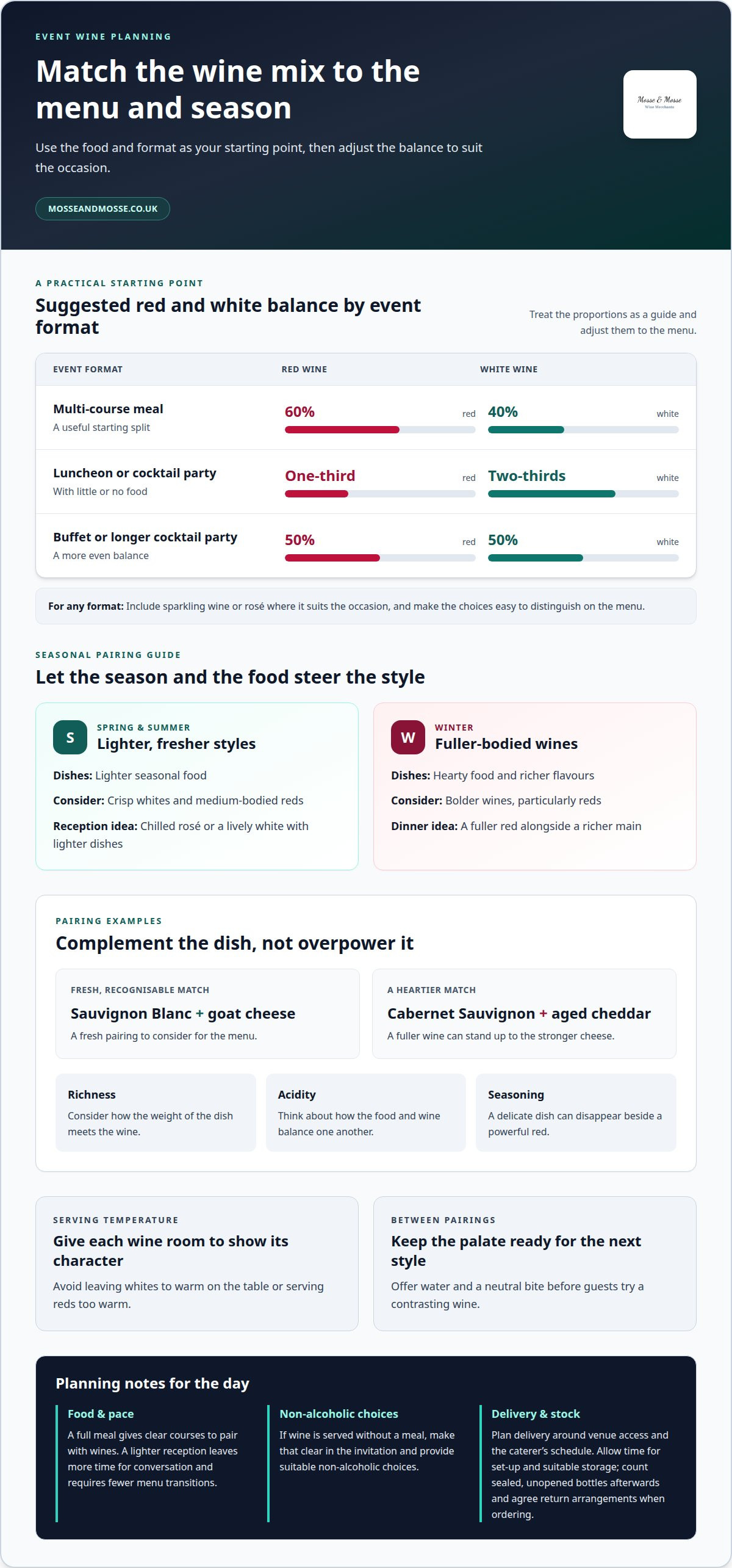
Start with the menu, then let the season guide the style. Spring and summer dishes often suit crisp whites and medium-bodied reds, while hearty winter food works well with bolder wines. At a summer reception, chilled rosé or a lively white can pair comfortably with lighter dishes; at a winter dinner, a fuller red can complement richer flavours. Serve each wine at a temperature that allows its character to show. Avoid leaving whites to warm on the table or serving reds too warm.
For a mixed group, offer contrasting styles rather than relying on one grape variety. A practical starting point for a multi-course meal is 60% red and 40% white, adjusted to the menu. For a luncheon or cocktail party with little or no food, a two-thirds white and one-third red split can suit the lighter format; buffets and longer cocktail parties may call for a 50/50 mix. Include sparkling wine or rosé where they suit the occasion, and make the choices easy to distinguish on the menu.
A good pairing complements the dish without overwhelming it. Sauvignon Blanc with goat cheese is a fresh, recognisable match, while Cabernet Sauvignon can stand up to aged cheddar. Consider how richness, acidity and seasoning interact: a delicate dish can disappear beside a powerful red, while a hearty main may overwhelm a very light wine. Offer water between pairings and a neutral bite to reset the palate before guests try a contrasting style.
Food also affects an event’s budget and pace. A full meal gives organisers clear courses to pair with wines. A reception with lighter food leaves more time for conversation and requires fewer menu transitions. If you’re serving wine without a meal, make that clear in the invitation and provide suitable non-alcoholic choices.
Plan wine delivery around the venue’s access arrangements and the caterer’s schedule, leaving time for setup and suitable storage. Count sealed, unopened bottles during the post-event stocktake. Agree any return arrangements when ordering instead of assuming they’ll be available afterwards.
For a menu-led selection that balances guest preferences and the occasion, discuss your event wine plan.
3. Choosing wines from different regions and grape varieties
Begin with the purpose of the evening, then build a selection around it. A corporate celebration might suit familiar styles with broad appeal, while a themed tasting can explore a region or grape variety in more detail. Chardonnay, Merlot, Zinfandel, Cabernet Sauvignon and Sauvignon Blanc are options to consider for large events. Choose wines with different aromas, body and flavour profiles rather than several bottles that taste alike.
Regional comparisons can put the wines at the centre of the event. A horizontal tasting compares wines from different wineries made in the same year, showing how place and producer shape the result. For a blind tasting, choose three to five wines made from the same grape variety or style but from different regions. Guests compare them before learning their origins. This format gives the evening a clear theme without assuming attendees already know wine terminology.
For a broader event, balance reds, whites and sparkling wine, taking guest preferences and the season into account. Lighter styles often suit spring and summer, while fuller-bodied wines, particularly reds, may work well for winter gatherings. Include a sweeter wine for dessert or guests who prefer a less dry style. A varied selection caters to different tastes without making every bottle a separate feature.
Give the theme a simple structure guests can follow. A region-led evening might compare wines from France, Italy or Spain; a grape-led tasting could explore Sauvignon Blanc from several regions. Put the grape, region and vintage on tasting notes or display cards. At an informal gathering, share one detail about each wine, such as its origin or the contrast between a lighter and fuller style. Clear labels help guests choose confidently and keep service moving.
Glassware should suit the format and the people serving. One all-purpose glass per guest is a practical choice for a party, particularly where guests will mingle rather than sit through a formal tasting. A consistent glass makes pouring and clearing simpler. Keep white wines chilled in ice buckets during service, and have a backup cooler ready for replacement bottles. Serve non-vintage sparkling wine at around 6-8°C. Lighter-bodied whites suit 7-13°C, while red wines are served within 12-18°C; fuller-bodied reds suit around 16-18°C.
Plan the serving order as carefully as the selection. Start with sparkling wine, then move through whites, rosé and reds, progressing from lighter-bodied to fuller-bodied examples. Save sweeter wines for later. On a warm evening, chill red wine briefly before serving, keeping it slightly below room temperature. These small choices preserve contrast between styles and make a regional or grape-focused tasting easier to enjoy.
4. Calculating wine quantities and pour sizes
Start with attendance, serving size and the number of expected pours. A standard 750 ml bottle gives five 150 ml glasses, so multiply your planned glasses by guests, then divide by five. This gives a straightforward bottle estimate for dinner or a reception. Adjust the expected pours to reflect the event’s duration, food, other drinks and the group.
For example, if 100 guests are expected to drink three 150 ml glasses each, calculate 100 × 3 × 150 ml: that is 45,000 ml, or 60 standard bottles. This is a planning example, not a fixed allowance for every event. A shorter reception with other drinks may need less wine than a dinner where wine is served throughout. A common event-planning rule of thumb is half to one bottle per person, depending on those factors.
Another useful check is the number of glasses per case. One case is estimated to provide about 50 glasses, while a 12-bottle case provides one glass each for 60 people. These figures use different serving assumptions, so base your order on the actual pour size. For five 150 ml glasses per bottle, a 12-bottle case contains 60 glasses. Don’t use the 50-glass estimate and the 60-glass calculation interchangeably.
For a wine tasting event, calculate samples separately from dinner pours. Work out the total sample volume by multiplying the guests, wines and pour size, then divide by 750 ml to estimate bottles. For instance, a smaller pour across several wines can use fewer bottles than serving a full 150 ml glass of each. Keep the tasting plan and meal service as separate totals if both are part of the evening.
A simple worksheet keeps the quantities clear. Record attendance, expected glasses per person, pour size and bottles needed for each style, then check the estimate against the event format. A luncheon with little food, a lengthy reception and a seated dinner can have different consumption patterns. One to two drinks per guest per hour is another planning guideline; interpret it in light of the event’s length and the other drinks served, rather than treating it as a guaranteed total.
One event-planning suggestion is to add a case split evenly between red and white bottles as a safety margin. Store the reserve separately from the serving table and open it only if demand calls for more. Keeping reserve bottles unopened and grouped by style makes the final stock count easier.
For help shaping a wine tasting event around your guest numbers, discuss your event wine plan.
Mosse and Mosse: Champagne & Sparkling Wines
Mosse and Mosse can help you move from choosing event styles to selecting wines for the occasion. Its Champagne and sparkling wines can bring a celebratory opening or toast to a gathering, while white wines offer another option for a varied selection. For organisers who want guests to explore wines together, Mosse and Mosse also offers in-person wine tasting events.
Consider a tasting event when conversation and discovery are part of the occasion; choose bottles for service when the menu and guest numbers are already shaping your plan. Contact Mosse and Mosse to discuss your event.
Shape the wine list around the occasion
A wine list can do more than accompany a menu: it can set the mood and give guests a reason to connect. As you finalise planning wine for a large event, consider the experience you want people to remember. A relaxed reception may call for an easy-going selection, while a formal dinner can make room for wines that invite conversation around the table.
Make the final choice personal. Consider the venue, the food and the guests you’re welcoming, then shape a selection that suits the occasion. Mosse and Mosse’s red wines can form part of that choice, alongside other styles that fit your event. A thoughtful selection helps the occasion feel cohesive, rather than simply well stocked.
Ready to shape the wine selection for your event? Contact Mosse and Mosse to discuss your plans and take the next step with confidence.
Frequently Asked Questions
How much wine should you buy per guest for a large event?
For planning wine for a large event, calculate bottles from the number of guests and expected glasses each person will have. Divide the total planned glasses by five for a standard 750 ml bottle. Adjust the estimate for the event’s format, food, duration and other drinks. For a reception with a full dinner, plan service around the meal; for a shorter toast, allow for fewer pours.
What is the UK price per bottle for event wine at different budgets?
There is no single UK price per bottle for event wine: grape variety, region, producer and vintage all affect the cost. Set a total wine budget first, then divide it by the number of bottles you expect to serve to establish your per-bottle limit. Allocate sparkling wine or special bottles separately so they don’t distort the budget for the rest of the selection.
Where to buy wine in bulk for a large event in the UK?
Mosse and Mosse offers mixed wine cases for event organisers who want to buy a selection together. Organisers in Ipswich, Norwich, Bury St Edmunds, Sudbury, Stowmarket, Newmarket, Thetford, Diss, Attleborough, Southwold, Aldeburgh, Framlingham, Woodbridge, Long Stratton and Saxmundham can arrange UK mainland delivery. Match the case selection to your menu and guests’ likely preferences, then group the wines by style for service.
How much wine should you buy for an event lasting several hours?
For a multi-hour event, estimate drinks per guest per hour, then multiply by attendance and duration. A planning guideline is one to two drinks per guest per hour, so 40 guests over three hours gives a range of 120 to 240 drinks. Translate the expected wine share into bottles, allowing for food, other drinks and whether guests will stay for the full event.
What are the risks of running out of wine or over-ordering for an event?
Running out can leave guests without the wines intended for dinner or a toast, especially if demand favours one style. Over-ordering ties up the event budget and leaves bottles to store or manage afterwards. Track unopened bottles separately from those in service, and keep a reserve by style so you can respond to demand without opening everything at once.
What are UK rules for serving alcohol at a private event or venue?
The arrangements for supplying alcohol and the venue’s licensing position matter. Before setting the service plan, establish whether alcohol is being sold or supplied as part of the venue’s licensed activity.


