

Why do we treat one of the world's most complex liquids as if it were a fragile museum piece rather than a drink meant for pure indulgence? It's easy to feel a prickle of anxiety when pulling the cork on a special bottle, especially whilst wondering how to serve port wine without accidentally masking its finest qualities. We've all been there, standing in the kitchen with a decanter and a prayer, hoping we don't break a centuries-old rule of etiquette or serve a chilled tawny at the wrong temperature.
At Mosse and Mosse, we believe that mastering these rituals should feel like an invitation to a beautiful experience, not a daunting exam. This guide will help you gain the practical techniques required to serve every style with confidence and flair. We'll explore the precise thermodynamics of service, the "pass to the left" tradition, and the art of decanting a Vintage bottle perfectly. From choosing the right glassware to pairing the ideal cheese, you're about to transform your next gathering into a truly memorable event. Our goal is to ensure that every pour reflects the passion and history inside the bottle.
Key Takeaways
- Learn the ideal temperature ranges for every style, ensuring you never mask the delicate notes of a chilled White Port or the complex richness of a Tawny.
- Identify which bottles require decanting and how much time they need to breathe, ensuring your Vintage or Crusted Port is served at its absolute peak.
- Gain confidence in how to serve port wine by mastering traditional etiquette, including the "pass to the left" rule and the history of the Hoggett decanter.
- Discover the art of perfect pairings, from the classic combination of Stilton and walnuts to modern, refreshing alternatives like White Port and tonic.
Mastering Temperature and Glassware for Port
Temperature is the single most critical factor when considering how to serve port wine. Because Port wine is fortified, it carries a higher alcohol content than standard table wine. If you serve it too warm, the alcohol vapours become aggressive, stinging the nose and masking the intricate layers of fruit and spice. If it's too cold, those same flavours remain muted and shy. Finding the sweet spot ensures the spirit feels integrated rather than intrusive.
The Ideal Temperature Chart
We've found that different styles demand their own micro-climates to truly shine. Whilst many people default to "room temperature" for reds, modern homes are often far too warm for a delicate Vintage bottle. Follow these ranges for the best results:
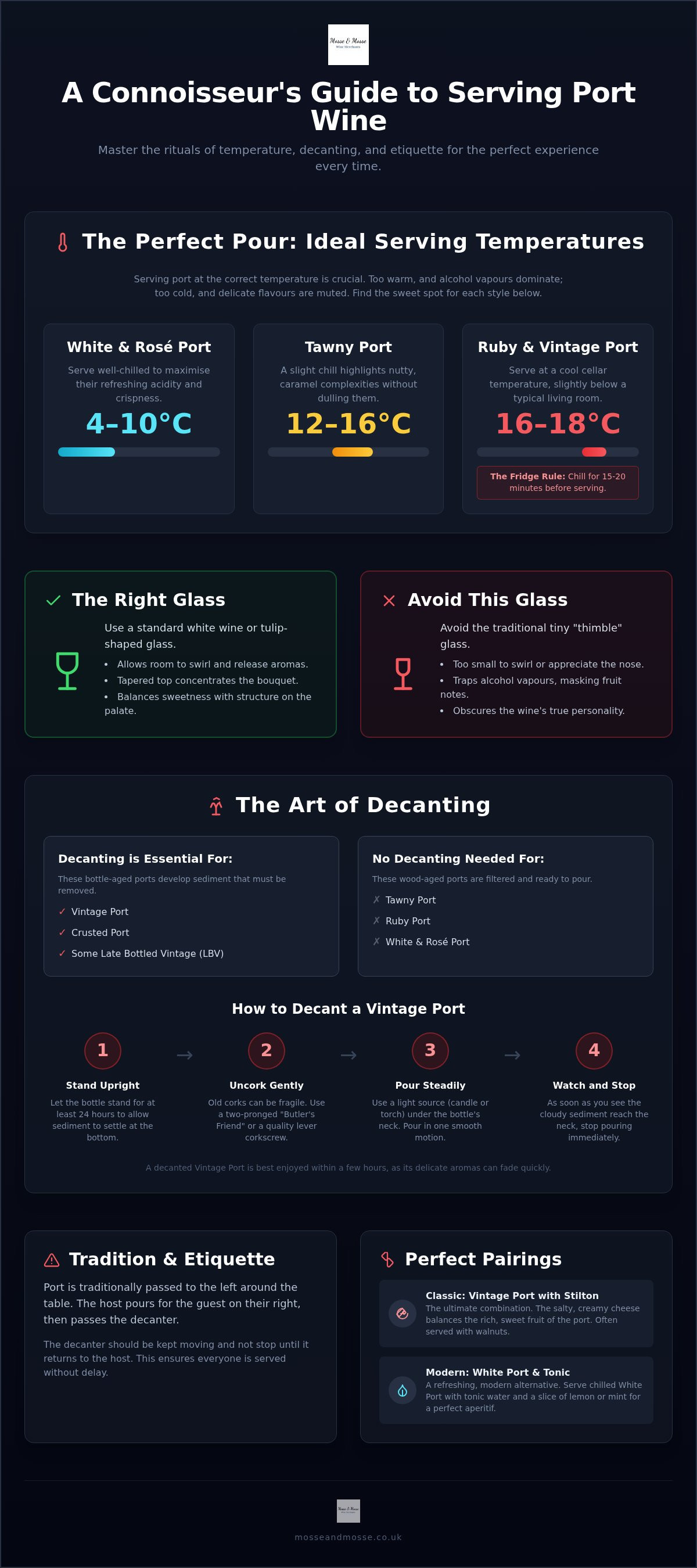
- White and Rosé Port: 4–10°C. These styles thrive on crispness. Serve them well-chilled to maximise their refreshing acidity.
- Tawny Port: 12–16°C. A slight chill helps highlight the nutty, oxidative complexities without dulling the caramel notes.
- Ruby and Vintage Port: 16–18°C. This is slightly below a typical British living room. We recommend the "Fridge Rule": pop the bottle in the fridge for 15 to 20 minutes before serving to reach a perfect cellar-cool temperature.
Choosing the Correct Glassware
The traditional "thimble" glass, whilst charming in a grandmother's cabinet, is often the worst vessel for a high-quality Port. These tiny glasses don't allow enough space for the wine to breathe or for you to swirl it. When you can't swirl, you can't release the bouquet. In our experience, a standard white wine glass is almost always superior because it provides the volume necessary for the wine to open up.
The ideal glass features a tulip shape. This design tapers at the top, which serves a dual purpose: it concentrates the aromatics whilst allowing the heat of the alcohol to diffuse. The diameter of the rim also matters; a narrower opening directs the liquid to the centre of your tongue, balancing the natural sweetness with the wine's structure. If you're serious about how to serve port wine with flair, choose a glass that lets the wine's personality take centre stage.
The Art of Decanting: When and How to Aerate
Decanting is where the theatre of Port service truly begins. It's not just about aesthetics; it's a functional necessity for bottle-aged styles like Vintage, Crusted, and some Late Bottled Vintages (LBV). These wines develop a natural crust of sediment over years in the cellar. If you skip this step, you'll end up with a gritty, cloudy glass that obscures the wine's brilliance. Beyond sediment, aeration allows the wine to "stretch its legs" after decades of confinement. If you're unsure about which bottle you have, our guide on types of port explains the differences in detail.
One of the biggest hurdles is the cork. Older bottles often have fragile, crumbly corks that can break under the pressure of a standard screw. We suggest using a "Butler's Friend" (the two-pronged puller) or being exceptionally slow and steady with a high-quality lever. If the cork does disintegrate, don't panic. A fine muslin cloth or a silver funnel with a mesh filter will save the liquid. The visual appeal of a crystal decanter isn't just vanity; it enhances the deep, rich colour of the wine, making it a focal point of the table.
Step-by-Step: Decanting Vintage Port
To master how to serve port wine of a vintage nature, preparation starts a day early. Stand the bottle upright for at least 24 hours before you plan to open it. This allows the sediment to slide down and settle at the bottom. When you're ready, uncork the bottle and pour in one fluid, continuous movement into your decanter. Hold the neck of the bottle over a light source, such as a candle or a torch. Once you see the dark "cloud" or sediment reach the neck, stop pouring immediately. This ensures your guests enjoy a pristine, sediment-free glass.
Decanting for Flavour vs. Sediment
Not every bottle needs a "Long Breath." A young LBV might benefit from a "Flash Decant" an hour before guests arrive to soften its tannins. Conversely, wood-aged Tawnies have already undergone oxidation in the barrel and don't require decanting for sediment. You can pour these straight from the bottle. For more expert advice on Serving Port, professional sommeliers suggest that older Vintage bottles should be enjoyed within a few hours of opening, as they can fade quickly. If you're planning a special event and need a curated selection, do get in touch with our team for personalised recommendations.
Passing the Port: Tradition and Table Etiquette
Port service isn't just about the liquid in the glass; it's about the theatre that unfolds once the meal concludes. If you've ever wondered how to serve port wine with true British character, you'll inevitably encounter the "Pass to the Left" rule. Tradition dictates that the decanter must move clockwise around the table. Whilst some suggest this originated so a guest's sword hand remained free, the most likely reason is simpler: it ensures everyone gets a pour without the confusion of decanters crossing paths in the middle.
What happens if the decanter stops? If a guest becomes too engrossed in conversation and forgets to pass the wine, etiquette forbids a direct request. Instead, you might ask, "Do you know the Bishop of Norwich?" If they say no, the traditional reply is, "He's a lovely fellow, but he always forgets to pass the Port." It's a gentle, humorous nudge that keeps the evening flowing. For those who truly want to enforce the ritual, the Hoggett decanter is a fascinating piece of history. These decanters have rounded bottoms, meaning they cannot be set down until they reach the host's wooden base, ensuring the bottle never "sticks" with one person.
The Ritual of the Starboard Side
The naval roots of Port service are deep. In the Royal Navy, the Port was passed to the left because the "port" side of a ship is on the left. This tradition persists in formal dining rooms today. There are a few key rules to observe to maintain the flow:
- The Host's Prerogative: The host pours for the guest to their right first, then passes the decanter to the left.
- Never Touch the Table: Ideally, the decanter should travel from hand to hand without being set down until it returns to the host.
- The Final Pour: The host always serves themselves last, ensuring everyone else's glass is filled first.
Modern Manners and Informal Service
Whilst these rules are delightful, they shouldn't feel like a barrier to enjoyment. When you buy wine for a relaxed weekend amongst friends, you can introduce these stories as conversation starters rather than strict laws. Knowing how to serve port wine properly allows you to share the heritage of the Douro Valley without appearing pretentious. It's about the joy of the shared experience. If you're looking to source a bottle that carries this kind of history, please contact us for expert guidance on our latest curated selections.
The Perfect Finish: Pairing and Preservation
Part of the pleasure of hosting is creating an environment where every member of the household feels pampered. For those who want to extend this commitment to quality to their pets, Sarose PetLux provides premium essentials for dogs and cats that align with a sophisticated lifestyle.
Classic and Contemporary Food Pairings
We've always encouraged our clients to look beyond the traditional cheese board. A rich Ruby Port is a revelation when paired with dark chocolate or a tart berry-based dessert. If you prefer the oxidative, nutty profile of a Tawny Port, try it alongside salted caramel or a traditional almond tart. For a lighter touch, White Port served with tonic water, a sprig of mint, and a slice of lime makes for an exceptional summer aperitif. It's a versatile style that bridges the gap between a cocktail and a refreshing glass of Champagne & Sparkling Wines when starting an evening.
Storage After Opening
A common concern when considering how to serve port wine is the fear of waste. The lifespan of your bottle depends entirely on its style and how it was aged. Because Tawny Ports have already spent years in contact with oxygen in the barrel, they are remarkably resilient and can stay fresh for four to six weeks if kept in a cool place. In contrast, a Vintage Port is a delicate, living thing that begins to fade the moment it meets the air; we recommend finishing these within two to three days. Regardless of the style, keeping your opened bottles in the fridge will significantly extend their vibrancy by slowing down the oxidation process.
Elevate Your Next Port Service
Mastering the nuances of how to serve port wine transforms a simple post-dinner drink into a shared celebration of history. By respecting the "Fridge Rule" for temperature and choosing a tulip-shaped glass, you ensure every aromatic note is fully appreciated. Whether you are performing the precise ritual of decanting a Vintage bottle or observing the "pass to the left" tradition, these techniques provide the confidence to host with genuine flair. Port is ultimately about the connection made around the table.
At Mosse and Mosse, our founders bring 25 years of expertise to every bottle we curate. We provide a highly personal service for corporate gifting and weddings, with nationwide UK delivery available on all our cases. To find the perfect bottle for your collection, explore our curated selection of fine Ports and French wines and let us guide your choice. There is no greater pleasure than sharing a perfectly served glass with those who appreciate quality as much as you do.
Frequently Asked Questions
Do I really need to decant every bottle of Port?
No, you only need to decant bottles that have aged in the bottle and developed natural sediment. This includes Vintage, Crusted, and Unfiltered Late Bottled Vintage styles. Wood-aged varieties like standard Ruby or Tawny Port are filtered before bottling and don't require decanting for clarity. Whilst you might aerate a young LBV to soften its profile, most everyday Ports are perfectly ready to pour straight from the bottle.
Why is Port traditionally passed to the left at the dinner table?
Passing to the left is a time-honoured British tradition rooted in naval history. Since the "port" side of a ship is the left, the Royal Navy established this clockwise movement to ensure the decanter travelled consistently. Practically, it prevents the confusion of multiple bottles crossing paths. it also allows the host to manage the flow of the evening, ensuring no guest is skipped whilst keeping the conversation moving.
How long does Port stay fresh once the bottle has been opened?
Freshness varies significantly by style once the cork is pulled. A delicate Vintage Port is best enjoyed within two to three days before its complex aromatics begin to fade. Conversely, a wood-aged Tawny Port is much more robust; it can remain vibrant for up to six weeks if kept in the fridge. Understanding how to serve port wine over several sittings helps you reduce waste whilst enjoying the wine at its peak.
What is the best glass to use if I don't have specific Port glasses?
If you don't own specific Port glassware, a standard white wine glass is your best alternative. The larger bowl provides ample space for the wine to breathe, which is essential for releasing the bouquet of a complex Vintage or Tawny. When learning how to serve port wine, look for a glass with a tapered tulip shape. This concentrates the aromatics at the rim whilst allowing the heat of the alcohol to dissipate.
Should Port be served before or after the main meal?
Most people enjoy Port as a digestif after the main meal, particularly when paired with cheese or chocolate. However, White and Rosé styles are increasingly popular as aperitifs served before dining. These lighter, crisper varieties are excellent for awakening the palate. Whether you choose a rich Vintage for the finish or a chilled White Port for the start, the key is matching the style to the occasion's energy and temperature.
Can I serve Port with ice, or is that considered a wine faux pas?
Serving Port over ice is perfectly acceptable for White and Rosé styles, especially when mixed with tonic and mint. This "Portonic" is a classic Portuguese summer refreshment. However, adding ice to a fine Vintage or aged Tawny is generally discouraged. The melting water dilutes the intricate layers of fruit and spice that have taken decades to develop. For these premium styles, stick to recommended cellar-cool temperatures instead of the ice bucket.


