
Every bottle of Port is essentially an act of perfectly timed interruption. It is the art of stopping nature in its tracks to preserve the vibrant, sun-drenched soul of the Douro Valley. You might have found yourself staring at a label, feeling a little lost amongst terms like fortification or aguardente, or perhaps you're simply curious about exactly how is port wine made and why it tastes so uniquely indulgent compared to a standard red. It's a complex world where technical precision meets centuries of hard-won tradition.
I understand that the leap from enjoying a casual glass to building a connoisseur's cellar can feel daunting, especially when trying to distinguish between those that age in the barrel and those that evolve in the bottle. This guide promises to demystify that process for you. We will explore the intricate steps of the harvest, explain the vital role of the IVDP regulatory body, and look at the technical mastery required to balance spirit and fruit. By the end, you'll have a clear understanding of the vinification process and the confidence to select a bottle that truly resonates with your personal palate.
Key Takeaways
- Discover how the Douro’s unique schistous soil and its climate of ‘nine months of winter and three months of hell’ create the perfect conditions for Port grapes.
- Understand the technical precision behind how is port wine made, from the rapid fermentation window to the intense extraction achieved in stone lagares.
- Learn to distinguish between the two primary ageing paths, wood-matured and bottle-matured, and why the journey to the lodges of Vila Nova de Gaia is so significant.
- Gain a merchant’s perspective on selecting the right style for specific occasions, from casual sipping to elegant corporate gifting delivered from our Suffolk base.
The Douro Valley: Where the Journey Begins
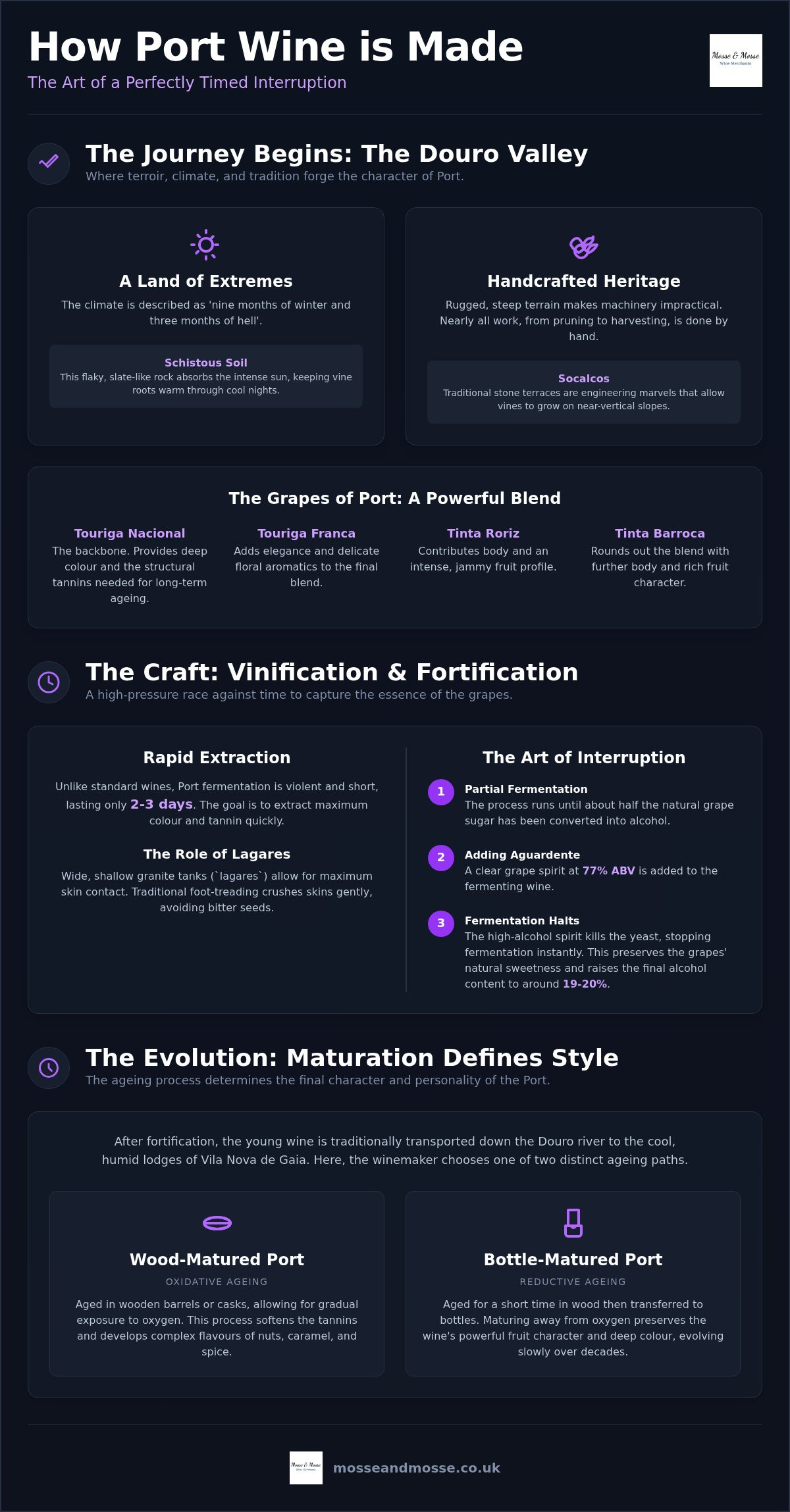
The Douro is a land of extremes. Local growers often describe the climate as having 'nine months of winter and three months of hell', a phrase that perfectly captures the harsh conditions vines must endure. To truly grasp how is port wine made, you have to stand amongst the vines and feel the heat radiating from the ground. It is the schistous soil that defines this terroir; this flaky, slate-like rock absorbs the fierce Portuguese sun during the day and keeps the roots warm throughout the cool nights.
Because the terrain is so rugged and steep, machines are largely useless here. Almost everything is done by hand, from pruning the vines to the final harvest. This labour-intensive process is exhausting, yet it ensures that only the most resilient fruit makes it into the Port wine we curate for our clients. The sheer verticality of the slopes means that every grape is a testament to human endurance and tradition.
The Grapes of Port
Unlike many regions that focus on a single variety, Port relies on a blend of indigenous grapes. Touriga Nacional is the celebrated backbone, providing the deep colour and structural tannins required for long-term ageing. Touriga Franca adds a layer of delicate floral aromatics and elegance, which is particularly evident in the recently declared 2024 vintage. To round out the blend, Tinta Roriz and Tinta Barroca are used to provide body and an intense, jammy fruit profile that makes the final wine so indulgent.
Terroir and Microclimates
The valley is split into three distinct sub-regions: the cooler, wetter Baixo Corgo; the central Cima Corgo, which is the heart of high-quality production; and the arid Douro Superior reaching towards the Spanish border. Understanding how is port wine made requires looking at these distinct zones, where altitude and proximity to the river dictate ripening speeds. The 'socalcos', or traditional stone terraces, are engineering marvels that manage water flow and allow vines to survive on near-vertical slopes. Whether you are looking for a singular bottle for your cellar or Corporate & Private Wine Gift Boxes & Wine Hampers, the character of the wine always leads back to these specific, sun-baked hills.
Vinification and the Art of Fortification
Once the grapes reach the winery, the clock starts ticking. Unlike standard red wines that ferment for weeks, Port requires a violent, rapid extraction of colour and tannin in just two to three days. This is the heart of how is port wine made; we're essentially trying to squeeze a week's worth of character into a matter of hours before the fermentation is halted. It's a high-pressure environment where the winemaker must balance power with precision.
The Role of the Lagares
Many of the finest houses still use traditional stone 'lagares'. These wide, shallow granite tanks allow for maximum contact between the juice and the skins. Foot-treading remains the gold standard because the human foot is firm enough to crush the skins and release colour and tannin but soft enough to leave the bitter grape seeds intact. Modern mechanical lagares now use silicone 'feet' to mimic this precise pressure, ensuring quality even in larger productions where manual labour isn't feasible.
Understanding Aguardente
Understanding how is port wine made requires looking closely at the 'interruption' phase. When about half the natural sugar has converted to alcohol, the winemaker adds 'aguardente', a clear grape spirit at 77% ABV. By adding this spirit in a ratio of roughly one part spirit to four parts wine, the yeast is instantly killed. This stops the fermentation, leaving behind the natural sweetness of the grapes whilst raising the alcohol content to around 19 or 20%.
As of January 2026, new regulations require this aguardente to be distilled exclusively from Douro grapes, a move that reinforces the regional authenticity we value so highly. This fortification doesn't just add strength; it stabilises the wine, allowing it to age for decades or even centuries. If you're looking to start a collection and need advice on which styles benefit most from this process, please get in touch with our team. We pride ourselves on guiding our clients through these technical nuances to find the perfect bottle.
Maturation: How Ageing Defines the Style
Once the fortification is complete, the wine’s personality begins to take shape. Historically, the young wine was transported down the Douro river to the cool, humid lodges of Vila Nova de Gaia. This journey is a crucial part of how is port wine made, as the coastal climate provides a stable environment for maturation. Here, the winemaker decides which of two distinct evolutionary paths the wine will follow: the reductive environment of a bottle or the oxidative embrace of wood.
The master blender’s role is vital during this period. They must sample hundreds of casks to ensure consistency across non-vintage styles, a task that requires an incredible sensory memory. It is this careful curation that allows a house to maintain its signature profile year after year.
Ruby, LBV, and Vintage Styles
Ruby styles are designed to celebrate the primary fruit. Standard Ruby is aged briefly in large vats to prevent oxygen contact, keeping it fresh and vibrant. Late Bottled Vintage (LBV) acts as an accessible bridge; it spends four to six years in wood before bottling, making it ready to enjoy immediately. Vintage Port, however, is the pinnacle. It is bottled after just two years, spending the rest of its life evolving in total isolation from the air. This results in a wine of immense longevity and complexity.
The World of Tawny Port
Tawny Port represents the oxidative side of the family. By ageing the wine in smaller 'pipes', which are casks of around 600 litres, the master blender allows a tiny amount of air to seep through the staves. This process transforms the deep purple liquid into a beautiful amber hue. You’ll notice the flavours shift from fresh berries to complex notes of toasted walnuts, caramel, and dried figs.
For those seeking the ultimate expression of this craft, Tawnies with an indication of age (10, 20, 30, or 40 years) are exceptional. These aren't just single-year wines; they are masterful blends of various harvests, balanced to maintain a specific house style. Understanding these nuances is key to selecting the right bottle. If you are unsure which style fits your next celebration, please speak with us directly for a personalised recommendation.
Selecting the Perfect Port: A Merchant's Perspective
Understanding how is port wine made is only half the battle. As independent merchants based in Suffolk, we believe the true joy lies in knowing when and how to pour it. We don't just stock labels; we curate specific houses that represent the very best of the Douro's traditions. Whether you're looking for a vibrant Ruby for a casual evening or a complex Vintage for a milestone toast, the choice should reflect the moment. We take this responsibility personally, ensuring every bottle we recommend meets our exacting standards for quality and character.
Serving Port correctly is an art in itself. For Vintage or crusted styles, decanting is essential to remove the natural sediment and allow the wine to breathe. We recommend standing the bottle upright for 24 hours before opening. Pour it steadily into a decanter until you see the first hint of cloudiness in the neck of the bottle. This simple ritual ensures you're savouring the wine exactly as the maker intended.
Port for Special Occasions
Port is the ultimate conclusion to a formal dinner. It’s a chance to slow down and enjoy the company of your guests. When selecting Port for wedding celebrations, we often suggest a Late Bottled Vintage for its reliable quality and ease of service. For a perfect pairing, try a rich Tawny with dark chocolate or walnuts, or go traditional with a robust Ruby and a wedge of salty Stilton. These combinations highlight the natural sweetness preserved during the fortification process.
Gifting and Hampers
The remarkable longevity of this wine makes it a favourite for gifting. Because it can age for decades, it's the ideal 'birth year' gift for a godchild or a wedding anniversary. We take great pride in incorporating premium bottles into our corporate gift boxes, offering a touch of traditional luxury that stands out. If you want to dive deeper into the specific categories, read our companion piece, Types of Port: A Connoisseur’s Guide. Understanding the technicalities of how is port wine made helps you appreciate why these bottles remain the world's most celebrated fortified wines, delivered with care from our Suffolk base across the UK mainland.
Begin Your Journey into the World of Port
From the sun-scorched schistous slopes of the Douro to the quiet, humid lodges of Vila Nova de Gaia, the story of Port is one of human endurance and technical mastery. We have explored the unique terroir, the intense foot-treading in stone lagares, and the pivotal moment of fortification that defines how is port wine made. Whether you prefer the vibrant fruit of a bottle-aged Vintage or the complex, nutty profile of a wood-matured Tawny, you now have the foundation to choose with confidence.
At Mosse and Mosse, we believe every bottle should be an experience. As an independent Suffolk merchant with over 25 years of experience, Tim Mosse personally curates our selection to ensure we only offer wines of genuine character and quality. We take pride in providing a personalised service, including delivery across the UK mainland from our Dennington base. If you're ready to find a bottle for your cellar or a thoughtful gift for a loved one, please explore our curated selection of Port and fine wines. There is a world of indulgent flavour waiting for you to discover it.
Frequently Asked Questions
Is Port wine always sweet?
Port is almost always sweet because of how is port wine made, with the fortification process stopping fermentation before the yeast consumes all the grape sugar. This leaves a high level of residual sweetness in the final wine. However, you can find Dry and Extra Dry White Ports, which are allowed to ferment for longer before the spirit is added. These styles are popular in Bury St Edmunds and Ipswich as a refreshing aperitif.
What is the difference between Ruby and Tawny Port?
The difference lies in the ageing vessel and oxygen exposure. Ruby Port is aged in large tanks or vats to prevent oxidation, preserving its deep red colour and vibrant berry flavours. Tawny Port is aged in smaller casks, allowing air to interact with the wine. This shifts the profile towards amber hues and complex notes of caramel. Both styles are favourites for our corporate gift boxes delivered from Sudbury to Saxmundham.
How long does a bottle of Port last once opened?
This depends entirely on the style. A Vintage Port should be finished within 48 hours as it oxidises rapidly. Ruby and LBV styles usually stay fresh for two to three weeks if kept in a cool place. Tawny Ports are the most resilient; because they've already been exposed to oxygen during maturation, an opened bottle can often last for several months. This makes them a practical choice for our clients in Southwold and Aldeburgh.
Do I need to decant all types of Port?
You don't need to decant most modern Ports. Ruby, Tawny, and most Late Bottled Vintages are filtered before bottling to remove sediment, so they're ready to pour. However, Vintage Ports and Crusted Ports are unfiltered and will throw a heavy sediment as they age. These require careful decanting to ensure the wine in your glass remains clear. We often advise our wedding clients in Norwich on this simple but vital ritual.
Why is Port fortified with grape spirit?
Fortification originally served as a method to preserve wine for long sea voyages to England. By adding grape spirit, the alcohol level rises to a point where the wine becomes stable and resistant to spoilage. Today, this is the defining step in how is port wine made, as it halts fermentation to preserve the fruit's natural sweetness. This creates the rich, indulgent texture that makes Port a staple for hampers in Newmarket and Stowmarket.
Can Port wine be made outside of Portugal?
True Port can only be produced in the Douro Valley of Northern Portugal. It is a protected designation of origin, much like Champagne. While other countries produce excellent fortified wines using similar techniques, they cannot legally use the name Port. We focus on these authentic Portuguese traditions for our customers in Woodbridge and Framlingham because they offer a level of heritage and technical precision that simply cannot be replicated elsewhere.


