
What if the best sign of a wine advisor’s expertise is not how much terminology they use, but how well they listen? Finding a trustworthy wine advisor means finding someone who understands your taste, occasion and budget, rather than steering you towards a bottle without explaining why it might suit you. That matters whether you’re choosing a dinner-party red or trying to make sense of a Burgundy or Bordeaux label.
Qualifications can offer evidence of wine study, but they’re only part of the picture. A good advisor should explain recommendations clearly, welcome questions and be open about how they work. You should be able to compare options and decide without feeling pressured to spend more or buy a particular bottle.
This guide covers what to ask, how to assess an advisor’s knowledge and transparency, and how to judge whether their approach suits you. It also explains what details to share and what a useful recommendation should include, so you can choose a wine that fits the occasion and the budget you planned.
Key Takeaways
- For finding a trustworthy wine advisor, look for someone who listens and makes recommendations that reflect your preferences, occasion and budget.
- Ask the advisor to explain a wine’s style and origin in plain language, then check whether the suggestion matches what you’ve told them.
- Ask about alternatives, availability and what to expect if a bottle disappoints, rather than assuming a return or exchange is possible.
- Compare independent merchants, specialist retailers and general advice services by their approach and personal fit, not just their credentials.
- If you’re in Suffolk, consider whether a local merchant’s regional focus and personalised service suit the guidance you’re looking for.
Finding a trustworthy wine advisor starts with your needs
You don’t need to know grape varieties or wine regions to get useful advice. Finding a trustworthy wine advisor starts with what you enjoy, what you’re buying for and what you’re comfortable spending. A good advisor listens, explains why a bottle might suit you and respects the budget you set. Their role is to help you choose, not to make you feel that you need to spend more or pick a particular bottle.
Start by separating the practical details from your taste preferences. For an everyday bottle, you might want an easy-drinking red or crisp white similar to one you already enjoy. A gift may call for a different style or a bottle with a story you can share. For an event, the food, number of guests and range of tastes also matter. A useful recommendation takes these details into account and gives a clear reason for the choice, rather than defaulting to the most expensive option.
What should a wine advisor ask before recommending a bottle?
Expect questions about what you usually drink, flavours you enjoy and styles you avoid. The advisor should also ask what the wine is for, what food you’ll serve and how much you want to spend. For an event, they may need to understand the number of people and the kind of occasion. You can describe your preferences without technical terms: “I like smooth reds, but not very dry ones” is a useful starting point.
Then listen for how the advisor uses your answers. A helpful suggestion might explain how a wine’s style relates to a flavour you like, or why it could work with the meal. Ask for an alternative if you’re unsure. Pressure to upgrade without a clear reason is not a useful response.
Does a trustworthy wine advisor need to share your level of expertise?
No. You can get thoughtful guidance without knowing what an appellation is or how to pronounce it. An advisor should translate technical details into plain English, rather than using them to make you feel out of your depth. The Sommelier overview describes the role and its responsibilities, but a title alone won’t show whether someone’s advice fits your taste.
Try asking a straightforward question about a familiar style or region, such as what distinguishes one Bordeaux from another. A useful answer should be clear, relevant to what you like and open to follow-up questions. You’re assessing how well the advisor explains the choice, not whether you already know the answer.
How to assess a wine advisor’s expertise and transparency
Wine knowledge is most useful when it helps you make a decision. Ask the advisor to describe the wine’s style, origin and suitability in terms you can follow. If it’s being recommended for a meal, they should be able to explain why its character may work with the food, rather than relying on grand claims or a string of tasting terms. If you’re comparing two bottles, ask what the main difference is and which one better matches your preferences.
What evidence of wine knowledge is useful to look for?
Ask how Burgundy differs from Bordeaux, or why a particular appellation or vintage matters to the bottle being discussed. You don’t need a lecture. Look for a clear answer that connects the region, grape variety or vintage to the style you’re considering. Technical details should help you understand the choice, not feel like a test. The WSET Level 4 Diploma in Wines is one example of an advanced qualification. An advisor should be able to discuss their experience and credentials without suggesting that qualifications alone guarantee a suitable recommendation.
Credentials can show that someone has studied wine, but they don’t replace your own judgement. Does the explanation make sense? Do the suggestions reflect the preferences and budget you shared? You can also ask how the advisor selects wines and whether they have a commercial relationship with the bottles they recommend. A straightforward answer helps you understand the advice and make your own decision.
How should you use wine merchant reviews and recommendations?
Reviews can offer context, but they can’t prove that an advisor will suit every buyer. Look for specific comments about communication, helpfulness and whether recommendations matched the person’s needs. Detailed feedback across different sources may tell you more than a single glowing or critical review. Check what the reviewer was looking for, too: praise for help with an event may not tell you much about advice on a single bottle as a gift.
A useful test: trustworthy advice links each recommendation to something you’ve told the advisor. If the reasoning is unclear, ask for an explanation or another option. Suffolk readers who want to discuss their wine preferences can contact Mosse and Mosse about their needs.
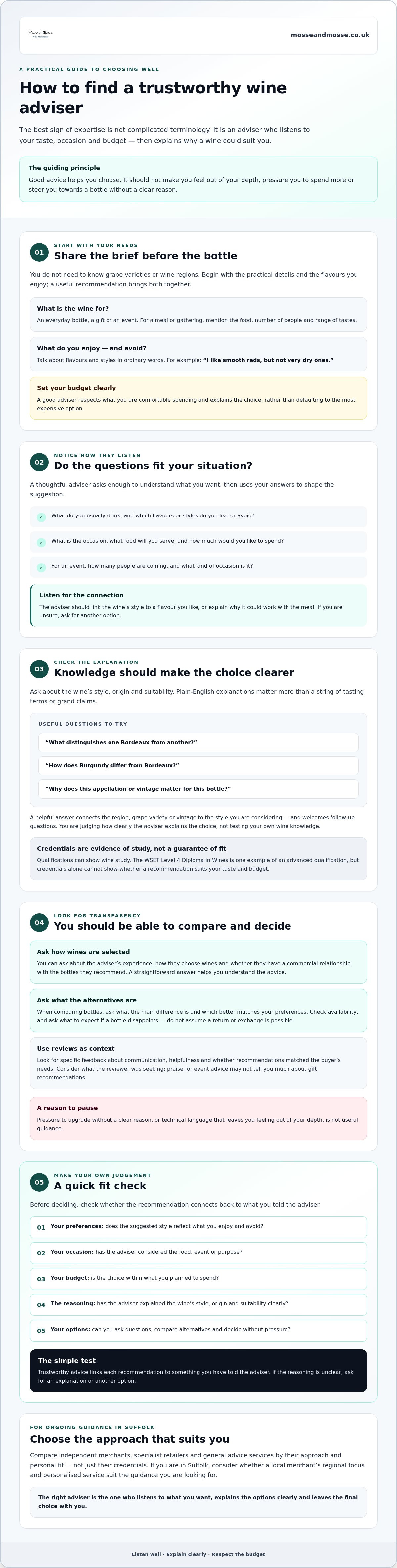
Questions to ask before choosing a wine advisor
A short conversation can show whether an advisor is curious about your needs or simply ready to recommend a bottle. These questions help you check the reasoning, compare options and confirm relevant details before you buy.
- “What would you need to know about my taste and occasion?” For a meal, a useful answer might include questions about the food, the styles you enjoy and how many people you’re serving.
- “Why does this wine suit what I’ve told you?” Look for a straightforward explanation linked to your preferences, not just a list of tasting terms.
- “What’s another option in a different style or at a different price point?” An advisor should explain the trade-offs rather than implying there’s only one right choice.
- “Is this wine available, and are there any limitations I should know about?” Confirm details such as availability before deciding.
- “What should I do if the wine isn’t to my taste?” Ask what you can reasonably expect and what terms apply before buying. Don’t assume a return or exchange is available unless it’s confirmed.
Which questions reveal whether recommendations are personalised?
Ask what details would help the advisor choose wine for your meal, gift or event. Then request an alternative, perhaps a fresher style instead of a fuller one. Compare the explanations: does the advisor make the differences clear, discuss the trade-offs and welcome follow-up questions? Those are useful signs that the advice is shaped around your needs rather than being a standard pitch.
How can you tell whether advice is transparent rather than sales-led?
Ask what other styles might suit you and why the advisor favours this option. A confident advisor can explain their reasoning without dismissing alternatives. Qualifications, including those awarded through the Court of Master Sommeliers, can provide context about training, but no single credential or answer guarantees a good fit. Finding a trustworthy wine advisor means weighing the whole conversation: clarity, relevance, options and honest explanations of any limitations.
When choosing wine online, check how clearly a merchant describes its wines and ordering terms, and how you can ask questions if something is unclear. If you’re in Ipswich or elsewhere in Suffolk, contact Mosse and Mosse to discuss your wine needs.
Choosing a wine advisor in Suffolk for ongoing guidance
If you want guidance beyond a one-off purchase, compare independent merchants, specialist retailers and general advice services in the same way. Do they listen to your preferences, explain their recommendations and respect your budget? Ask whether they can help you explore different styles over time, and whether their range includes the wines you’re interested in. A local connection may make it easier to build a direct relationship, but the quality of the conversation matters more than proximity alone.
What matters when choosing a local wine merchant as your advisor?
Look for a merchant who can discuss the styles you enjoy and explain regional choices without assuming you know the terminology. Burgundy labels, for example, can be a starting point if you want to explore how wines from different parts of the region vary. You can browse wines from the Côte de Beaune as one example of red Burgundy. Ask whether recommendations can take account of what you’ve enjoyed before as well as what you need for your current occasion.
Mosse and Mosse is an independent wine merchant based in Suffolk, with a curated selection that includes Burgundy and Bordeaux alongside wines from other regions. Its personalised service, curated mixed cases and UK mainland delivery may be relevant if you’re looking for ongoing guidance. These features don’t guarantee the right fit, so ask the same questions you would of any prospective advisor: how do they learn your preferences, explain options and work within your budget?
How can you start a conversation with Mosse and Mosse?
Share the details that will help shape useful suggestions: the occasion, styles you like, wines or flavours you dislike, and the budget you have in mind. If you’re curious about Burgundy or Bordeaux, mention it, but you don’t need to choose a region before asking for advice. Mosse and Mosse’s selection includes wines from elsewhere, so you can start with what you enjoy rather than a label you feel you ought to know.
Finding a trustworthy wine advisor is an ongoing matter of personal fit. Notice whether the advice stays relevant as your needs change and whether you feel comfortable asking for alternatives. If you’re in Ipswich or elsewhere in Suffolk, you can discuss your wine preferences with Mosse and Mosse, including your occasion and budget, before deciding what to buy.
Choose advice that feels right for you
Finding a trustworthy wine advisor is less about impressive terminology and more about the quality of the conversation. Look for someone who listens to your preferences, occasion and budget, then explains why a recommendation fits. Ask about alternatives and relevant limitations, too. Clear answers and thoughtful options help you decide without pressure.
Credentials and reviews can offer useful context, but neither guarantees that an advisor’s approach will suit you. Focus on whether the guidance is understandable, relevant and tailored to what you’ve shared. You should feel comfortable asking questions and choosing whether to buy.
Mosse and Mosse is an independent wine merchant based in Suffolk, with a focus that includes Burgundy and Bordeaux. Its personalised service, curated mixed cases and delivery across the UK mainland may suit those looking for guidance on wines for personal enjoyment or an occasion.
To explore your options, share what you like, what you’re buying for and the budget you have in mind. Discuss your wine preferences with Mosse and Mosse. A relaxed conversation can help you find a bottle you’ll be pleased to pour.
Frequently Asked Questions
How do I know if a wine advisor is trustworthy?
A trustworthy wine advisor listens to your preferences, explains recommendations clearly and respects your budget. Finding a trustworthy wine advisor means judging the conversation as well as their wine knowledge: do their suggestions reflect what you’ve said, and can they explain why a bottle may suit you? Ask about alternatives and relevant limitations. A confident answer is useful, but no single qualification or recommendation guarantees the right fit.
What questions should I ask a wine advisor?
Ask what they need to know about your taste, occasion and budget before suggesting a wine. Then ask why a particular bottle suits your needs, what alternative styles might work and whether the wine is available. If you’re buying for a meal, mention the food and ask how it may influence the choice. Before purchasing, clarify any relevant limitations and what options you have if the bottle disappoints.
Do I need to know about wine before speaking to an advisor?
No, you can describe what you enjoy in everyday terms. Mention a familiar wine, flavours you like or styles you avoid, such as very dry whites or full-bodied reds. You don’t need to know grape varieties or appellations. A helpful advisor will explain unfamiliar terms in plain English and ask follow-up questions rather than making you feel out of your depth. Your preferences are a perfectly good starting point.
Can a wine merchant recommend wines to suit my taste and budget?
A wine merchant can use your preferences and budget to guide suggestions, although you should decide whether each recommendation feels right for you. Explain what you usually enjoy, what you’re buying for and how much you intend to spend. Mosse and Mosse is an independent Suffolk wine merchant offering personalised service and a curated selection that includes Burgundy, Bordeaux and wines from other regions. Ask for options that fit your stated budget.
Is it better to use a local wine merchant or buy wine online?
Neither route is automatically better. Online buying can suit people who prefer browsing from home and comparing merchant descriptions; a conversation may help clarify styles, food pairings or regional labels. Check product details, delivery information and how you can ask questions before ordering. Mosse and Mosse is based in Suffolk and delivers across the UK mainland, which may be relevant to buyers in Ipswich, Norwich, Bury St Edmunds, Sudbury, Stowmarket, Newmarket, Thetford, Diss, Attleborough, Southwold, Aldeburgh, Framlingham, Woodbridge, Long Stratton and Saxmundham.
How can I tell whether a wine recommendation is personalised?
A personalised recommendation should connect to details you’ve shared, such as a favourite style, a flavour you dislike, the occasion or the meal. Ask the advisor to explain why the wine may suit you and what other styles could work. If they can describe the trade-offs and adjust their suggestions when you clarify your preferences, the advice is more likely to be tailored than a standard recommendation offered to every buyer.


