
The most famous French appellation isn’t automatically the best buy for your table. Choosing the best value French red wine means looking beyond the label and shelf price to find a style you’ll enjoy, whether that’s a fresh, lighter red or a richer, more structured bottle.
Regional names, grape varieties and wine descriptions can make choosing feel daunting. A low price alone won’t tell you whether a wine suits your taste, what to serve it with or whether it’s right for a relaxed supper or a special occasion. Value is about the pleasure and quality in the glass, not simply spending less.
This guide compares French regions and styles in practical terms, from Bordeaux to the Loire and Rhône. It explains what to look for when comparing bottles, how producer and vintage can inform your choice, and how to match a red to a meal or occasion. Use these pointers to find a wine that feels worth choosing for your table.
Key Takeaways
- Judge the best value french red wine by how well its character suits your taste and occasion, not by its price or appellation name alone.
- Use regional style as a starting point when comparing Bordeaux, Burgundy, the Rhône and the Loire, then look beyond broad labels.
- Shortlist wines by occasion and preferred style, then consider the producer and vintage before choosing.
- Explore different regional starting points, such as Rhône, Chinon and Médoc, to discover which styles appeal to you.
- A curated selection can help you look beyond familiar names and find a French red that feels right for your table.
What makes the best value French red wine worth choosing?
Value isn’t simply the smallest figure on the shelf. It’s the balance between what a wine costs, how much you enjoy its character and how well it suits the meal or occasion. A good-value French red is one whose style, quality and drinking experience feel well matched to its outlay and purpose.
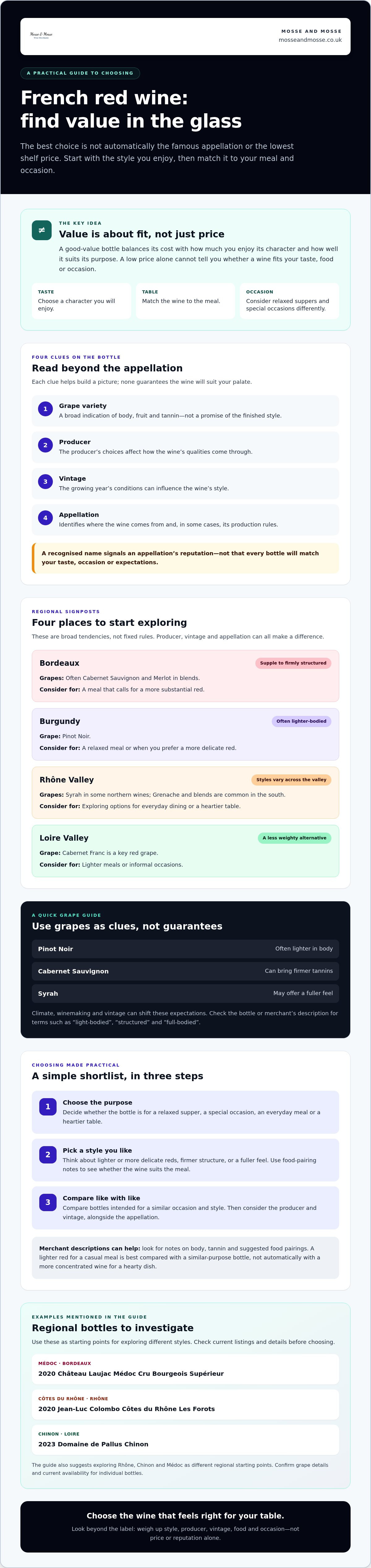
Four clues can help you make sense of a bottle. The grape variety gives you a broad idea of its body, fruit and tannin. The producer’s choices affect how those qualities come through, while the vintage reflects the conditions of that growing year. The appellation identifies the wine’s place and, in some cases, production rules. These clues work together, but none guarantees that a bottle will suit your palate. For background on the system and its origins, explore this overview of French wine history and classification.
Does a famous French appellation always mean better value?
No. A well-known name tells you that an appellation is recognised, not that every wine from it will match your taste or occasion. A celebrated appellation may offer a style you love, but the place name alone won’t tell you whether a particular producer’s wine is light, firm or generous in character. Less familiar areas can also be rewarding to explore, though they aren’t automatically cheaper or better. Look at the producer, vintage and description as well as the appellation.
Which clues help you assess a bottle before buying?
Start with the grape as a broad clue, not a promise. Pinot Noir is often lighter in body, Cabernet Sauvignon can bring firmer tannins, and Syrah may offer a fuller feel. Climate, winemaking and vintage can shift these expectations, so read the bottle or merchant’s description too. Terms such as “light-bodied”, “structured” and “full-bodied” help you picture the wine’s weight and grip. Food-pairing notes can help you decide whether it suits your meal.
Compare like with like. Set aside bottles intended for different occasions, then compare options with a similar style and purpose. A lighter red for a casual meal shouldn’t be judged against a more concentrated bottle chosen for a hearty dish. Focus on what matters: whether the wine delivers the drinking experience you want.
Bordeaux, Burgundy, Rhône or Loire: compare French red wine styles
Use region and grape as a starting point, not a tasting guarantee. Grape variety and region help shape a wine’s style, while the producer and vintage influence how that style appears in the glass. This practical guide can help you decide where to start:
| Region | Grapes to look for | Structure and occasion |
|---|---|---|
| Bordeaux | Often Cabernet Sauvignon and Merlot in blends | Can range from supple to firmly structured; consider with a meal that calls for a more substantial red. |
| Burgundy | Pinot Noir | Often a lighter-bodied option to explore for a relaxed meal or when you prefer a more delicate red. |
| Rhône Valley | Syrah in some northern wines; Grenache and blends are common in the south | Styles vary across the valley, offering options to investigate for everyday dining or a heartier table. |
| Loire Valley | Cabernet Franc is a key red grape | Can suit drinkers seeking a less weighty alternative; explore with lighter meals or informal occasions. |
These are broad signposts, not fixed rules. Appellations within a region, individual producers and vintage conditions all matter. Before deciding which candidate might be your best value french red wine, compare merchant notes on body, tannin and suggested food pairings.
When might Bordeaux be the right-value choice?
Many Bordeaux reds blend Cabernet Sauvignon and Merlot, though the balance and resulting structure differ from wine to wine. Mosse and Mosse’s confirmed examples include 2020 Château Laujac Médoc Cru Bourgeois Supérieur. Check the current listing for availability and details. Browse the merchant’s Bordeaux wine selection and compare individual descriptions rather than relying on the appellation alone.
How do Burgundy, Rhône and Loire reds differ in the glass?
Pinot Noir is the grape to investigate in Red Burgundy, although producer and vintage affect the finished wine. The Rhône and Loire offer other regional styles to explore. Confirmed examples include 2020 Jean-Luc Colombo Côtes du Rhône Les Forots and 2023 Domaine de Pallus Chinon. Check their current listings and grape details before choosing. For more Pinot Noir context, look for a dedicated Red Burgundy guide.
If you’re unsure which regional style fits your meal or taste, ask Mosse and Mosse for guidance.
How to choose a French red wine for your taste, meal and occasion
A simple shortlist can turn a crowded shelf into a more confident choice. Work through these steps before comparing bottles:
- Set the occasion. Is this an easy-going bottle for supper, a red to serve with a richer meal, or something to share with guests? The occasion helps you decide how much structure and weight you want.
- Identify your preferred style. Think about reds you’ve enjoyed before. Do you like lighter-bodied wines with softer tannins, or fuller wines with a firmer grip? If you’re unsure, describe the qualities you remember rather than relying only on a grape name.
- Shortlist regions. Treat regional styles as clues, not promises. A lighter preference might lead you to investigate some Loire or Burgundy reds; for more structure or body, you could explore Bordeaux or Rhône examples. Producer and vintage can shift the result.
- Check the producer and vintage. Read the description for body, tannin and food suggestions, then consider whether the bottle suits your plans. A well-matched option may be the best value french red wine for you, even if it isn’t the most famous label.
How should you match red wine to your own taste?
Compare two qualities: body, or how weighty the wine feels, and structure, including the firmness of its tannins. A grape or region you’ve enjoyed before is a useful starting point, not a rule. Serving conditions and food matter too. A very warm red may seem heavier, while a cooler serving can make it feel firmer. Follow the bottle’s serving guidance where available.
Which French reds suit meals, sharing and everyday drinking?
For casual drinking, look for a style you’ll enjoy on its own or alongside a straightforward supper. A lighter red can work with roast chicken or a vegetable dish; a more structured wine may appeal with richer flavours, such as a slow-cooked meal. These are prompts, not strict pairings. Personal preference counts, so choose a wine you’ll be happy to pour.
Sharing different styles can help you discover what you like. Mosse and Mosse offers mixed wine cases; ask whether a selection could help you compare French reds. For advice based on your taste, meal and occasion, ask Mosse and Mosse for personalised wine guidance.
Find a well-chosen French red wine with a Suffolk wine merchant
Mosse and Mosse is an independent wine merchant based in Suffolk, with a curated selection that includes French reds. Its selection is not a ranking of every bottle on the market, but it offers considered starting points for comparing regions and styles. The best value french red wine for you will depend on what you enjoy, what you’re serving and the occasion.
What can a curated selection add to your comparison?
A focused range can help you narrow your search by region, grape, drinking occasion and stated preference. Confirmed listings include 2020 Jean-Luc Colombo Côtes du Rhône Les Forots, 2023 Domaine de Pallus Chinon and 2020 Château Laujac Médoc Cru Bourgeois Supérieur. These are different regional starting points, not universal recommendations. Check current listings and availability before making a choice.
If Bordeaux is the style you’d like to explore, browse the merchant’s Bordeaux wines. Compare individual bottle descriptions and look for details that match your preferred body, structure and meal. The merchant offers individual bottles as well as curated mixed cases, giving you options to consider more than one style.
How can local buyers and UK customers ask for guidance?
Mosse and Mosse is based in Suffolk and serves private clients in the surrounding area, as well as customers further afield. The merchant serves private clients and private events, with delivery available across the UK mainland. When asking for guidance, share a few useful details: whether you prefer lighter or fuller-bodied reds, what you’re planning to eat, and whether the bottle is for a quiet meal or a gathering.
A recommendation is more useful when it starts with your preferences rather than a famous label. Contact Mosse and Mosse for help choosing French red wine.
Choose a French red you’ll look forward to pouring
The best value french red wine is the bottle whose style, quality and occasion feel right for you, not simply the one with the most familiar name. Use region and grape as helpful clues, then compare the producer, vintage and description. A lighter red for an informal supper and a more structured wine for a richer meal may both be excellent choices, depending on what you enjoy.
Mosse and Mosse is an independent Suffolk wine merchant specialising in curated wines, including Burgundy and Bordeaux. Its confirmed French red examples span the Rhône Valley, Loire Valley and Médoc, offering different starting points for exploring regional styles. Individual bottles and curated mixed cases are available, with delivery across the UK mainland. Check current availability before choosing a particular bottle.
Share the style you favour, what you’re serving and the occasion to get a recommendation that fits. Contact Mosse and Mosse for a personal French red wine recommendation.
Frequently Asked Questions
What is the best value French red wine?
The best value French red wine is one that delivers the style and drinking experience you want for the occasion, rather than simply having the lowest price. Start with your preference for lighter or fuller-bodied reds, then consider the region, producer and vintage. Confirmed examples from Mosse and Mosse include wines from the Rhône Valley, Loire Valley and Médoc. Check current listings and availability before choosing a particular bottle.
Which French red wine regions offer good value?
Good options can be found across Bordeaux, Burgundy, the Rhône Valley and the Loire, depending on your taste and what you’re looking for. Compare specific bottles rather than assuming every wine from a region shares the same style or value. Producer and vintage matter too. Exploring beyond the most familiar appellations can reveal styles you might otherwise overlook, though a lesser-known name isn’t automatically cheaper or a better match.
Is French red wine good value compared with other wine?
It can be, but there’s no universal answer: value depends on the individual bottle and what you enjoy. Compare wines intended for a similar occasion and style, reading descriptions for body, structure and food suggestions. A familiar French appellation doesn’t guarantee a better match than a wine from another country. Judge the bottle by its producer, vintage and how well its character suits your preferences, not its origin alone.
How do I choose an affordable French red wine?
First decide what you’re serving and whether you prefer lighter or fuller-bodied reds. Then shortlist regions and compare the producer, vintage and merchant’s description, keeping your occasion in mind. For shoppers in Ipswich, Norwich, Bury St Edmunds, Sudbury, Stowmarket, Newmarket, Thetford, Diss, Attleborough, Southwold, Aldeburgh, Framlingham, Woodbridge, Long Stratton and Saxmundham, Mosse and Mosse is based in Suffolk and delivers across the UK mainland. Check current listings before buying.
Is Bordeaux or Burgundy better value for red wine?
Neither region is automatically better value; the right choice depends on the style you prefer and the specific wine. Bordeaux often features blends including Cabernet Sauvignon and Merlot, while Pinot Noir is the key grape to investigate in Red Burgundy. Both regions vary by producer and vintage. Compare bottles for the same meal or occasion, and use descriptions of body and structure to decide which better suits your taste.
Can a lesser-known French appellation be better value?
Yes, a lesser-known appellation can be worth exploring if its wines suit your palate and occasion, but its name alone doesn’t prove it offers better value. Look beyond recognition: check the producer, vintage, grape details and description, and compare with bottles in a similar style. A merchant’s curated selection can help you discover alternatives to famous regions. Ask for current availability and a recommendation based on what you enjoy drinking.


