
Choosing Port is less about finding the “best” bottle and more about matching a style to when you plan to open it. The names can be confusing, and sweetness alone won’t tell you how a Port has matured or what it may taste like. This guide to port wine styles compares the main options and helps you decide where to start.
You’ll discover how Ruby, Tawny, White and Rosé differ, and where Vintage and Late Bottled Vintage fit in. We’ll look at how maturation affects flavour and texture, then match styles to occasions, food and your plans for ageing. By the end, you’ll know what details to check on a label and what to ask a specialist merchant. Mosse and Mosse is a Suffolk-based independent wine merchant offering Port; check which styles and bottles are currently available rather than assuming a particular bottle is in stock.
Key Takeaways
- This guide to port wine styles explains how maturation helps distinguish Ruby, Tawny, White and Vintage Port.
- Start with the flavours you enjoy and the occasion, then compare fruit-led styles with those shaped by wood ageing.
- Consider when you plan to drink the bottle and whether you want a Port that can develop further in the bottle.
- Before buying, ask about sweetness, maturation, food pairings and the bottle’s intended drinking date.
- Check the exact bottle details and current availability with a specialist, as selections can change.
Guide to Port wine styles: what separates one style from another?
Port’s style names are not a test of wine knowledge. They offer useful clues about how a wine was made and matured, helping you decide what might suit your taste and plans. The key distinction in this guide to port wine styles is often the ageing process: the vessel and time spent maturing can influence a Port’s colour, texture and flavour.
Port is a fortified wine produced in Portugal’s Douro region. Fortification means adding grape spirit during fermentation. This stops fermentation before all the grape sugars have turned into alcohol, leaving natural sweetness in the wine and raising its strength. For a broader overview of Port’s origins, production and classifications, see this guide to Port wine.
How fortification and maturation shape Port
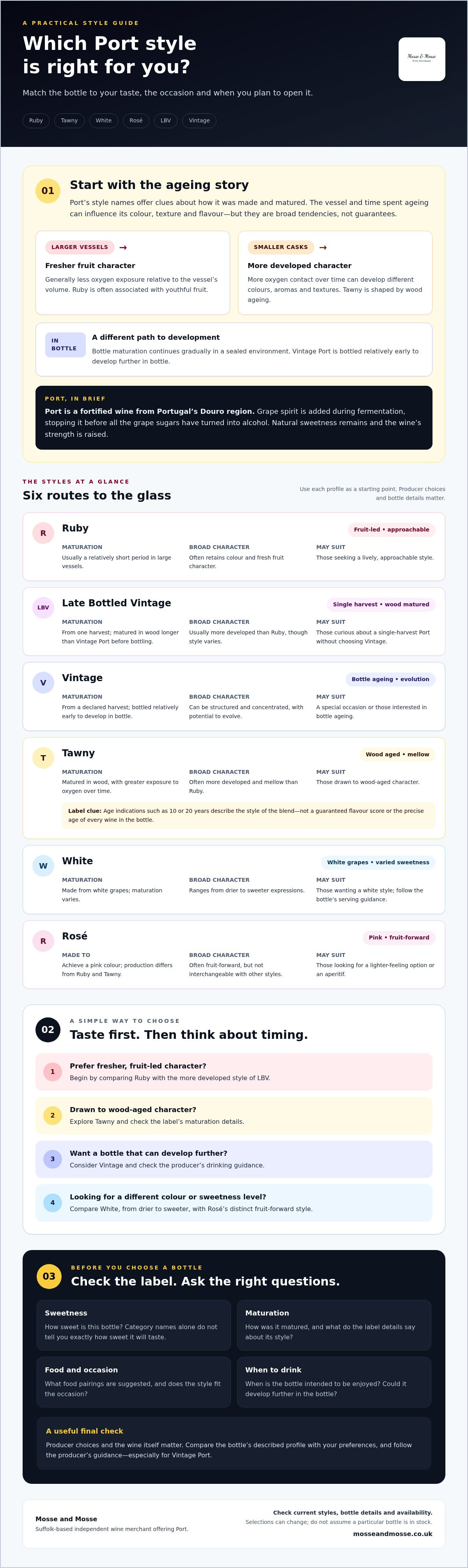
After fortification, Port matures before bottling, or continues to develop in the bottle. Larger wooden vessels generally expose the wine to less oxygen relative to their volume than smaller casks, helping preserve a fresher fruit character. Smaller casks allow more contact with oxygen over time, which can develop different colours, aromas and textures. Bottle maturation follows another path, with the wine changing gradually in a sealed environment.
These are broad tendencies, not guarantees of a particular taste. Producer choices and the wine itself matter too. Use the style name as a starting point, then check the bottle details and producer’s guidance before choosing.
The main style families at a glance
Ruby, Tawny, White, Rosé, Late Bottled Vintage and Vintage are distinct Port categories, shaped by how the wine is made, aged and presented. Ruby styles are generally associated with youthful fruit, whilst Tawny’s wood ageing can bring more developed character. White Port is made from white grapes, and Rosé is made to achieve its pink colour. Late Bottled Vintage and Vintage are both from a single harvest, but differ in their ageing and bottling approach.
Category names alone do not tell you exactly how sweet or full-bodied a bottle will feel. If you’d like more background before comparing options, the linked Types of Port guide offers a deeper introduction. When choosing, check the label’s maturation details and compare the described profile with your preferences. Mosse and Mosse is a Suffolk-based independent wine merchant offering Port; ask about current styles and bottle details rather than assuming a particular category is available.
Ruby, Tawny, White and Vintage Port compared
Use this comparison as a starting point, not a promise that every bottle in a category will taste the same. Producer choices and label details matter. For formal classifications, the official regulatory body for Port is the Instituto dos Vinhos do Douro e do Porto (IVDP).
| Style | Maturation | Broad character | May suit |
|---|---|---|---|
| Ruby | Usually matured for a relatively short period in large vessels | Often fruit-led, with colour and fresh fruit character retained | Those seeking a lively, approachable style |
| Late Bottled Vintage (LBV) | From one harvest, matured in wood for longer than Vintage Port before bottling | Usually more developed than Ruby, though style varies | Those curious about a single-harvest Port without choosing Vintage |
| Vintage | From a declared harvest; bottled relatively early to develop further in bottle | Can be structured and concentrated, with potential to evolve | A special occasion or those interested in bottle ageing |
| Tawny | Matured in wood, with greater exposure to oxygen over time | Often more developed and mellow than Ruby | Those drawn to wood-aged character |
| White | Made from white grapes; maturation and sweetness vary | Ranges from drier to sweeter expressions | Those wanting a white style, served according to the bottle’s guidance |
| Rosé | Made to achieve a pink colour; production differs from Ruby and Tawny | Often fruit-forward, but not interchangeable with other styles | Those looking for a lighter-feeling option or an aperitif |
Ruby and Late Bottled Vintage: fruit and approachability
Ruby is a family of styles, not a single fixed flavour. Its fruit-led profile can vary with the producer and bottling. LBV is distinct: it comes from one vintage and receives longer wood maturation before release than Vintage Port. Vintage Port, by contrast, is declared for selected harvests and bottled young to mature in bottle. It can reward patience, but check the producer’s drinking guidance before opening.
Tawny, White and Rosé: different routes to the glass
Wood-aged Tawny tends to develop a different profile from Ruby. Age indications such as 10 or 20 years are cues to the style of the blend, not guaranteed flavour scores or a precise age for every wine in the bottle. White Port spans sweetness levels, whilst Rosé has its own production and character. Read the label for sweetness and serving advice rather than assuming these styles are interchangeable.
Choosing between these categories is the practical heart of any guide to port wine styles. To weigh up the options against your preferences, you can ask Mosse and Mosse for personalised advice and check which Port bottles are currently available.
How to choose a Port style for your taste, food and occasion
Start with what you enjoy, then think about how and when you’ll serve the bottle. This decision path turns the differences between Port styles into a practical shortlist.
- Choose the flavour direction. If you prefer youthful, fruit-led character, explore Ruby styles. If mellow, developed or potentially nutty notes appeal, look towards wood-aged Tawny. These are broad tendencies, so check the individual bottle description.
- Consider sweetness and structure. Port styles can vary in sweetness and weight. Think about whether you want something that feels lighter alongside food or richer and fuller as a small after-dinner pour. Colour alone won’t answer that. Look for sweetness information on the label or ask a merchant.
- Picture the occasion. A relaxed dessert or cheese course may call for a different style from a celebratory meal or a considered gift. For a gift or event, find out what the recipient enjoys and what food will be served.
- Decide how much ageing matters. If you want a bottle to enjoy without making bottle ageing part of the plan, ask about styles intended for earlier drinking. If you’re choosing Vintage Port, check the producer’s guidance on cellaring and when to open it.
Match Port to the flavour and texture you enjoy
A useful shorthand is that maturation can steer the experience: fruit-led character is often associated with Ruby, whilst time in wood can give Tawny a mellower, more developed character. Treat this as a guide, not a guarantee. Compare the bottle’s described sweetness and texture too. A Port that sounds appealing on flavour alone may still feel richer than you’d like.
Choose Port for dessert, sharing or a considered bottle
Pairings are suggestions, not rules. A fruit-led Port may work with chocolate desserts, whilst some wood-aged styles can complement cheeses or desserts with caramel and dried-fruit flavours. The recipe, sweetness and intensity of the food all affect the match, so look for flavours that complement rather than overwhelm each other. Port can suit different after-dinner settings, from a shared glass to a considered bottle for a special occasion.
To narrow down the options for your taste, menu or plans, ask Mosse and Mosse for personalised Port guidance and check current availability.
Buying Port: Questions to Ask and Where to Get Advice
Once you’ve narrowed down the style, a few practical questions can help you choose. This guide to port wine styles is a useful starting point, but the bottle details and your plans matter too.
What to ask before choosing a bottle
Tell the merchant what you enjoy and when you intend to serve the Port. For example, mention whether you prefer fruit-led or mellow, wood-aged flavours, and whether it’s for dessert, cheese, a gift or a special meal. Then ask:
- How sweet and full-bodied is it? Style names offer clues, but the individual bottle description can help you understand its likely weight and sweetness.
- How was it matured? Ask whether it spent more time in wood or bottle, and how that may shape its character.
- Would it suit my food and occasion? Share the menu or serving plan so the recommendation can take those details into account.
- What are the bottle details? Confirm the format, vintage where relevant, intended drinking date and any guidance on ageing or serving.
- Is it currently available? Check the exact bottle and availability before placing an order, as selections can change.
Get individual advice from a Suffolk wine merchant
Mosse and Mosse is an independent Suffolk wine merchant serving private clients and private events. Port is among its listed wine categories, and its personalised service gives you a way to explain what you’re looking for without needing to know every classification. Ask about current bottle details and availability rather than assuming a particular style is in stock.
For broader guidance on choosing and purchasing wine online, read this guide to buying wine online. Mosse and Mosse delivers to customers across the UK mainland; confirm the current delivery terms when making an enquiry.
If you’d like help finding a Port that suits your taste or plans, contact Mosse and Mosse about Port. Share the occasion, food and flavour profile you have in mind, and ask what’s currently available.
Choose a Port you’ll be pleased to pour
The most useful guide to port wine styles helps you match a bottle to your taste and plans. Keep three points in mind: maturation shapes a Port’s character, style names are clues rather than exact flavour promises, and sweetness and texture matter as much as colour. Think about what you enjoy, what you’ll serve it with and when you plan to open the bottle.
You don’t need to know every classification before choosing. A clear description of the occasion and flavours you like gives a specialist a helpful place to start. Check the bottle details and current availability before deciding.
Mosse and Mosse is an independent wine merchant based in Suffolk, with Port among its listed categories. The team offers personalised service to private clients and private events, so you can discuss what might suit your plans without needing specialist knowledge.
Ask Mosse and Mosse for personal Port advice, and check which bottles are currently available. With a little guidance, choosing your next Port can be a pleasure in itself.
Frequently Asked Questions
What are the main styles of Port wine?
The main styles are Ruby, Tawny, White, Rosé, Late Bottled Vintage (LBV) and Vintage Port. Ruby is generally matured to retain a fruit-led character, whilst Tawny develops through wood ageing. White and Rosé are made in distinct styles, and LBV and Vintage both come from a single harvest but differ in maturation and release. These are broad distinctions: producers’ choices mean bottles within each category can vary.
What is the difference between Ruby and Tawny Port?
Ruby and Tawny differ chiefly in their maturation, which tends to shape their character. Ruby is generally kept in larger vessels and is often fruit-led, whilst Tawny spends time ageing in wood and may develop a mellower, more evolved profile. These are useful starting points, not guarantees. Producer choices and the individual bottle matter, so check the description and sweetness information rather than relying on colour or category alone.
Is Vintage Port the same as Late Bottled Vintage Port?
No, Vintage Port and Late Bottled Vintage (LBV) are separate categories. Both come from a single harvest, but Vintage Port is bottled relatively early and is intended to develop further in bottle. LBV spends longer maturing in wood before bottling and release. The producer and bottle details can affect its character, so check the label and ask a merchant about its intended drinking window before choosing.
Can Port be served with food, or is it only a dessert wine?
Port can be enjoyed with food as well as on its own after a meal. Depending on the style and sweetness, you might try a fruit-led Port with chocolate, or a wood-aged Tawny with cheese or a dessert featuring caramel or dried fruit. These are pairing ideas, not fixed rules. Consider the recipe’s sweetness and intensity, and choose a Port you enjoy alongside it.
Which Port style should a beginner try first?
There’s no single best first Port. Choose according to the flavours and occasion you enjoy. If fruit-led character appeals, ask about Ruby. If you prefer mellow, wood-aged notes, explore Tawny. This guide to port wine styles can help you compare broad differences, but the bottle description matters too. Tell a merchant what you like, how you’ll serve the Port and how sweet or full-bodied you prefer it.
How should I choose a Port wine as a gift?
Choose by the recipient’s taste, the occasion and their interest in ageing. Ruby may suit fruit-led preferences; Tawny offers a wood-aged alternative. For Vintage, check the producer’s drinking guidance. Confirm the vintage, format and current availability before buying. Mosse and Mosse, an independent Suffolk merchant offering Port and personalised service, is relevant to buyers in Ipswich, Norwich, Bury St Edmunds, Sudbury, Stowmarket, Newmarket, Thetford, Diss, Attleborough, Southwold, Aldeburgh, Framlingham, Woodbridge, Long Stratton and Saxmundham.


