

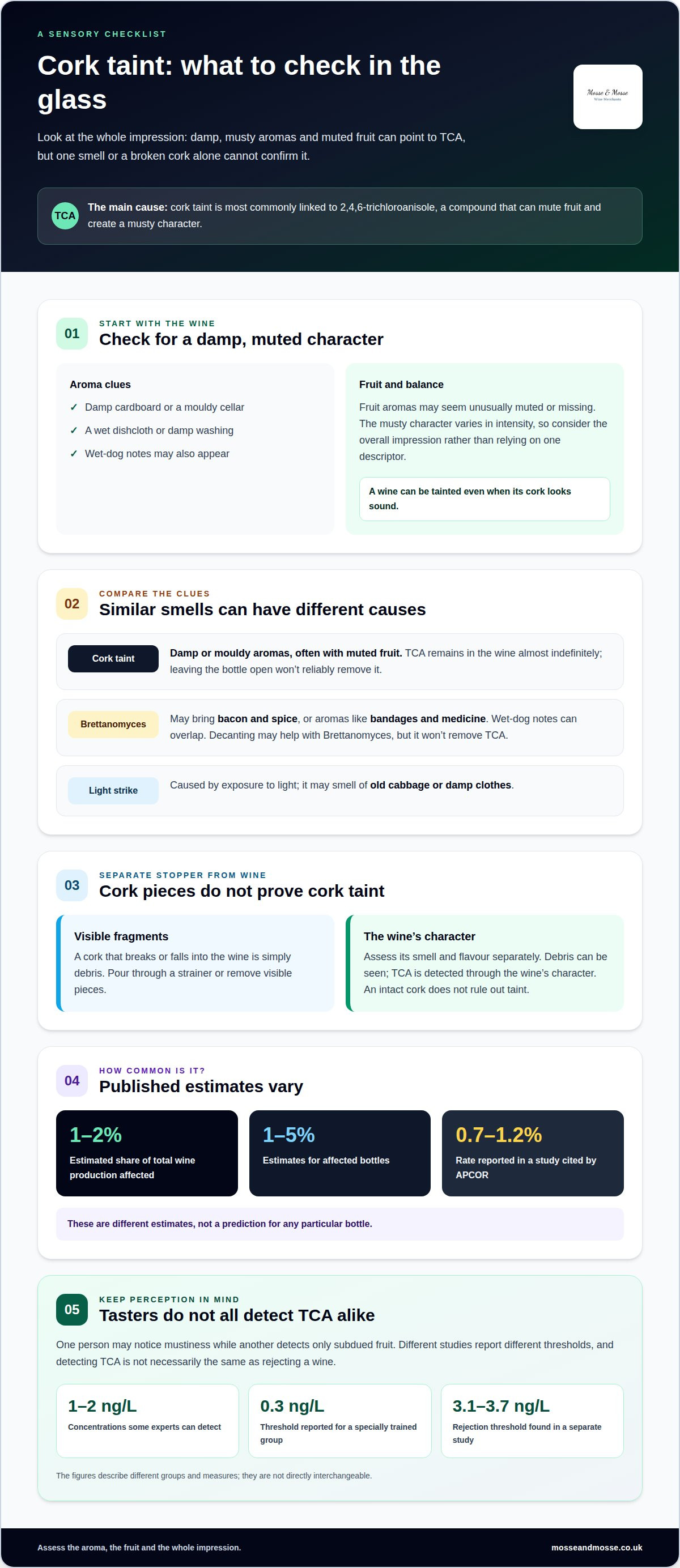
A wine can smell of damp cardboard or a musty dishcloth and have far less fruit on the nose than you’d expect. If you’re wondering what a ‘corked’ wine smells like, these are familiar clues: cork taint is usually linked to TCA, short for 2,4,6-trichloroanisole, which can mute a wine’s aromas and flavours as well as create a mouldy smell.
It’s easy to mistake this muted character for a wine that simply isn’t showing well. Musty, wet-dog or damp-washing aromas can vary in intensity, and the cork doesn’t have to look damaged for the wine to be tainted.
Here, you’ll learn what corked wine is, how TCA affects its aromas and taste, and why some people notice it more readily than others. We’ll also distinguish cork taint from other faults to help you understand what may be happening in your glass.
Key Takeaways
- Look for musty, damp-cardboard or mouldy aromas alongside unusually muted fruit when assessing a wine’s condition.
- Separate cork taint from other faults by considering how their aromas differ, rather than relying on one smell alone.
- A damaged or crumbling cork doesn’t, by itself, tell you whether the wine is corked.
- TCA sensitivity varies, so one person may notice a taint that another can’t detect.
- Discover how cork taint can affect both the aroma and the flavour of a wine.
What Is Corked Wine?
Cork taint is a wine fault most commonly linked to TCA, or 2,4,6-trichloroanisole. It can make a bottle smell musty and mute its fruit, even when the cork looks sound.
TCA as the Main Cause
TCA is a compound responsible for most cases of cork taint. It affects wine sealed with a cork and can be present in winemaking environments, including on cardboard, corks and barrels, before reaching a bottle. Once in the wine, TCA remains almost indefinitely. Age won’t make the taint disappear, so a bottle opened years after bottling can still show the fault.
Recognising Cork Taint
Cork taint often combines a damp, mouldy smell with fruit that seems muted or missing. Other faults have different characteristics: Brettanomyces can bring bacon and spice, or aromas resembling bandages and medicine. Wet-dog notes may overlap, so consider the overall aroma rather than one descriptor. Light strike, caused by exposure to light, may smell of old cabbage or damp clothes. These distinctions matter because similar smells can have different causes. Decanting may help with Brettanomyces, but it won’t remove TCA.
Cork Taint and Cork Pieces
Cork taint changes a wine’s aroma and taste; cork pieces are simply fragments of the stopper. A cork that breaks during opening or falls into the wine doesn’t prove the bottle is tainted. Conversely, an intact cork doesn’t rule out TCA. If fragments are present, pour the wine through a strainer or remove visible pieces, then assess its smell and flavour separately. Debris can be seen; TCA is detected through the wine’s character.
Estimates vary. Around 1% to 2% of total wine production is affected by cork taint, while estimates for affected bottles range from 1% to 5%. APCOR cites a study reporting a cork-taint rate of 0.7% to 1.2%. These figures describe different estimates, not a prediction for any particular bottle.
Is cork taint harmful to drink? Cork taint is a sensory fault that affects aroma and flavour. Its musty character can make wine unpleasant, but taint alone doesn’t mean it’s harmful to drink.
Can corked wine be fixed or used in cooking? Once TCA has entered the wine, it remains almost indefinitely, so leaving the bottle open won’t reliably fix it. Cooking may not remove the tainted flavour; choose another wine when its taste matters to the dish.
What should you do if a bottle is corked in the UK? At a restaurant, tell the staff and describe the musty smell or muted fruit. For a bottle bought in a shop, keep the bottle and receipt, explain the fault and ask the retailer about a replacement or refund.
Can you return corked wine to a UK shop or restaurant for a replacement or refund? At a restaurant, you can ask staff to assess the bottle and return it if it’s corked; restaurants can receive supplier credit. For a shop purchase, take the bottle and receipt back and request a resolution.
Variation in people’s sensitivity to TCA
People don’t all perceive TCA to the same degree. It can be obvious to one person and almost imperceptible to another, so tasters may have different impressions of the same glass. One might describe a damp, musty smell, while another notices only subdued fruit. That difference doesn’t, by itself, prove either person wrong.
Reported detection thresholds show how widely sensitivity can vary. Some experts detect TCA at concentrations as low as 1 to 2 ng/L, while a specially trained group reported a threshold of 0.3 ng/L. A separate study found a rejection threshold between 3.1 and 3.7 ng/L. These figures describe different groups and measures: detecting a compound isn’t necessarily the same as deciding a wine is unpleasant.
Other findings underline the variation. A review reported olfactometry thresholds of 4-10 ng/L in white wine and 50 ng/L in red wine. One panel preferred non-corked white wines when TCA reached 20 ng/L, while some experts’ detection threshold was 250 ng/L. Some assessors unfamiliar with TCA odours detected the fault only at concentrations of milligrams per litre. Taken together, these results show why one universal threshold can’t describe every taster or tasting context.
Wine colour and testing method matter when interpreting these numbers. A threshold measured through olfactometry isn’t directly interchangeable with a panel’s preference or rejection result. Nor does a result for white wine automatically describe red wine. In a practical tasting, note whether the wine smells musty, its fruit aromas seem muted, and other tasters independently notice similar changes. These observations can help distinguish a shared sensory fault from individual differences in perception.
Familiarity can shape recognition, too. Someone who has learnt to associate TCA with damp cardboard may identify a subtle example sooner than a drinker without that reference. An anecdotal estimate suggests about 5% of people may not detect TCA, but this isn’t a universal measure of sensitivity. A person who doesn’t notice the mustiness can still recognise that a wine seems less expressive than expected.
To explore how aromas differ between wines, consider an in-person wine tasting with Mosse and Mosse, where guided tasting can help build a vocabulary for what you notice in the glass.
Corked wine's musty, mouldy, earthy and mushroom-like aromas
Cork taint can bring several related aromas rather than one unmistakable smell. A glass may suggest damp cardboard, a mouldy cellar, a wet dishcloth or mushrooms left in a paper bag. These descriptions point to a stale, damp quality, not the fresh scent of soil after rain. One taster might call it musty; another may find the same glass earthy or mushroom-like.
Consider the overall impression. Cork-tainted wine can smell like damp washing that hasn’t dried properly or a cloth left wet beside the sink. Wet-dog notes may also appear. These comparisons help describe the fault, but no single image fits every bottle. Aromas vary in intensity and balance, so focus on whether the smell feels persistently damp and stale.
Earthy character needs context. Mushroom notes can be appealing in some wines, especially alongside clear fruit and other aromas. With cork taint, mouldy or earthy impressions are more concerning when the fruit seems muted. For example, a red wine expected to show vivid berry aromas may instead seem flat, with a damp, mushroom-like note dominating the glass.
A cellar comparison can help, but don’t confuse a wine’s intended character with a fault. A cool, clean cellar may evoke earthiness without smelling mouldy; a musty cellar with damp cardboard offers a closer reference. A mushroom aroma alone doesn’t establish cork taint. Look for the combination of dampness, mouldiness and suppressed fruit rather than relying on one descriptor.
During tasting, smell the wine before deciding what your first impression means. Swirl gently, then smell again. Notice whether the fruit becomes clearer or remains subdued beneath a stale note. A sommelier might use “musty”, “mouldy” or “damp cardboard” to describe the same broad fault. These are sensory comparisons, not separate diagnoses.
Describe the glass in plain terms: “damp dishcloth”, “mouldy cardboard” or “wet dog”. Then note whether the wine’s fruit is present. This pairing is more useful than simply calling it “off” and gives restaurant staff a clear account if you’re tasting a bottle there. A broken cork or fragments, by contrast, are physical signs and don’t create these aromas by themselves.
For a practical reference, compare the wine’s aroma with familiar damp materials, not just the word “earthy”. A mushroom-like note alongside mouldy cardboard and muted fruit is more suggestive of cork taint than an earthy aroma alone.
What corked wine smells and tastes like
Cork taint changes more than a wine’s first smell. TCA can suppress fruit aromas and flavours, so a glass may seem muted before any obvious mouldy note emerges. A red wine expected to show ripe berries might smell faintly damp, then taste unexpectedly quiet. In a white wine, familiar citrus or orchard-fruit notes may seem diminished. A key clue is the contrast between the wine’s expected fruit and what reaches your nose and palate.
TCA may suggest damp cardboard, wet washing or a musty room. These comparisons describe a range, not a fixed signature. One bottle may have a clear mouldy smell; another may simply seem closed, with little fruit to detect. Before tasting, smell the wine in the glass, then revisit it after a gentle swirl. Notice whether the damp character remains and the fruit becomes clearer.
The taste can be just as revealing. Rather than adding a strong flavour of its own, TCA can flatten a wine’s expression. A Pinot Noir may seem short on berry character, while a crisp white may lose some of its fresh, lively impression. The finish can feel subdued too. This differs from a wine that is merely delicate or light-bodied: cork taint combines muted fruit with a stale, damp impression.
Time in the glass can make the fault easier to recognise. If a bottle seems suspicious, smell and taste a small pour, then return to it after an hour or more. The cork-taint smell may intensify, making the bottle seem more obviously corked after a couple of hours. That change can clarify your impression, but waiting won’t remove the taint or restore suppressed fruit.
Use a simple tasting comparison. Ask whether the wine has recognisable fruit, whether a damp or mouldy note persists, and whether the flavour feels unusually muted. A wine with clear berry aromas and a lively finish may simply have an earthy profile; one with subdued fruit and a persistent musty smell is more suggestive of cork taint. One descriptor alone isn’t enough.
Once a glass has held cork-tainted wine, its aroma can affect your next tasting. Change glasses before opening another bottle, so lingering TCA odours don’t cloud the comparison. If the wine is being served in a restaurant, describe the damp smell and muted fruit to staff. For help choosing wines for your next tasting, get in touch about your wine selection.
Mosse and Mosse: Champagne & Sparkling Wines
Mosse and Mosse can help when you’re ready to choose another bottle after learning how cork taint affects aroma and taste. Its Champagne and sparkling wines offer a celebratory option, while white wines provide another style to explore. Browse the Champagne and sparkling wine selection if you’re choosing something for a gathering or a special meal.
Understanding the signs of cork taint can make tasting more informed, but it can’t restore a bottle affected by TCA. If you’d like guidance choosing a wine to suit the occasion or your preferences, contact Mosse and Mosse.
Choose your next bottle with confidence
Knowing what a ‘corked’ wine smells like can make you more attentive to aroma, but it needn’t define your next tasting. Treat each bottle as a fresh experience: consider the styles you enjoy, the food you’re serving and the mood of the occasion. A red wine might suit a relaxed supper, while white wine or Champagne and sparkling wine can bring a different feel to the table.
Mosse and Mosse offers red wine, white wine, and Champagne and sparkling wines for readers ready to explore their next choice. If you’d like a personal conversation about selecting a bottle that suits your preferences or occasion, discuss your wine choice with Mosse and Mosse.
Stay curious: noticing what you enjoy is part of the pleasure of discovering wine.
Frequently Asked Questions
What does corked wine smell like?
Corked wine can smell damp, musty or mouldy, like wet cardboard or a stale dishcloth. If you’re asking what corked wine smells like, remember that its fruit aromas may also seem unusually faint. The fault varies between bottles: one glass might have a distinct mouldy smell, while another mainly seems muted. Compare smell and flavour rather than relying on one note alone.
What causes cork taint in wine?
Cork taint is most often caused by TCA, a compound associated with cork. It can occur in winemaking environments, including on corks, cardboard or barrels, and taint may become apparent after wine is sealed with a cork. TCA is estimated to cause 80% to 85% of cork taints. The stopper’s appearance alone doesn’t establish the cause: a sound-looking cork can still be associated with tainted wine.
What is TCA and how does it affect wine aroma and taste?
TCA is short for 2,4,6-trichloroanisole. In wine, it can create a damp, musty impression and suppress fruit aromas and flavours, changing how expressive the wine seems. For example, a wine that would normally show clear fruit may feel muted on both the nose and palate. TCA remains in wine almost indefinitely once present, so simply leaving a glass to breathe won’t remove its effect.
How can you distinguish corked wine from wine that is merely oxidised or faulty?
Look for a musty impression combined with muted fruit when considering cork taint. Oxidation can develop when wine has too much contact with air, such as when it’s left open for more than a few hours, and produces a different fault profile. Other faults differ too: Brettanomyces may bring medicinal or spicy notes. If wine is being served in a restaurant, describe the specific aromas to the staff.
Does corked wine smell like wet cardboard, damp basement, or mould?
Yes, wet cardboard and mould are common comparisons for cork taint; a damp, musty room can be another useful reference. The smell may be unmistakable or subtle enough to register mainly as a loss of fruit. A damp-basement description is a comparison, not a separate diagnosis. Consider whether the wine’s aroma and taste also seem muted instead of treating one familiar smell as proof.
Can a wine be corked without an obvious smell?
Yes. Sensitivity to TCA differs, and someone may not detect a taint that another taster notices. In some bottles, the main sign may be unusually subdued fruit rather than a strong mouldy aroma. Two people tasting the same glass can therefore describe it differently. Compare notes on the wine’s aroma and flavour, and remember that a cork that breaks or looks intact doesn’t establish whether TCA is present.


