
The most memorable bottle isn’t automatically the most expensive. The best Champagne for a special occasion is the one that suits the recipient, the moment and your budget. A crisp, classic style can make a confident all-round choice, while rosé or a distinctive bottle may better match someone’s tastes.
Choosing well can feel harder than it should. The label, presentation and price all shape the impression, but what matters most is whether the recipient will enjoy the style. You don’t need to know every Champagne house or tasting term to make a thoughtful choice. A little guidance can narrow the options while keeping the occasion in focus.
This guide explains how to match Champagne styles to celebrations and recipients, what makes a bottle gift-ready, and how to think about budget without assuming that spending more is always better. It also shows how advice from a wine merchant can help you choose with confidence.
Key Takeaways
- Match the bottle’s style and presentation to the occasion and the person receiving it.
- Use grape variety and colour as practical clues when choosing between Blanc de Blancs, Blanc de Noirs and rosé Champagne.
- Set a budget around the experience you want to give, rather than assuming the highest-priced bottle is always the best choice.
- Share the occasion, recipient’s preferences and budget with a wine specialist to help narrow the options.
- Explore Mosse and Mosse’s Champagne and sparkling wines alongside red, white and rosé wines when considering what to serve or give.
1. What are the best Champagne gifts for special occasions?
The best choice depends on the celebration, recipient and serving occasion. For an engagement or anniversary, a vintage bottle can mark a particular year; for a birthday, non-vintage Champagne offers a classic celebratory style. A bottle from a familiar house may suit someone who likes recognised names, while a less familiar producer can make a more individual gift.
Presentation adds meaning, but it doesn’t determine the wine’s quality. For a wedding, choose a bottle that suits the couple’s taste and can be shared at the table. A gift box or handwritten message can give a retirement or milestone birthday present a personal finish. For a dinner invitation, consider the food and whether the Champagne will accompany the meal or be served as an aperitif.
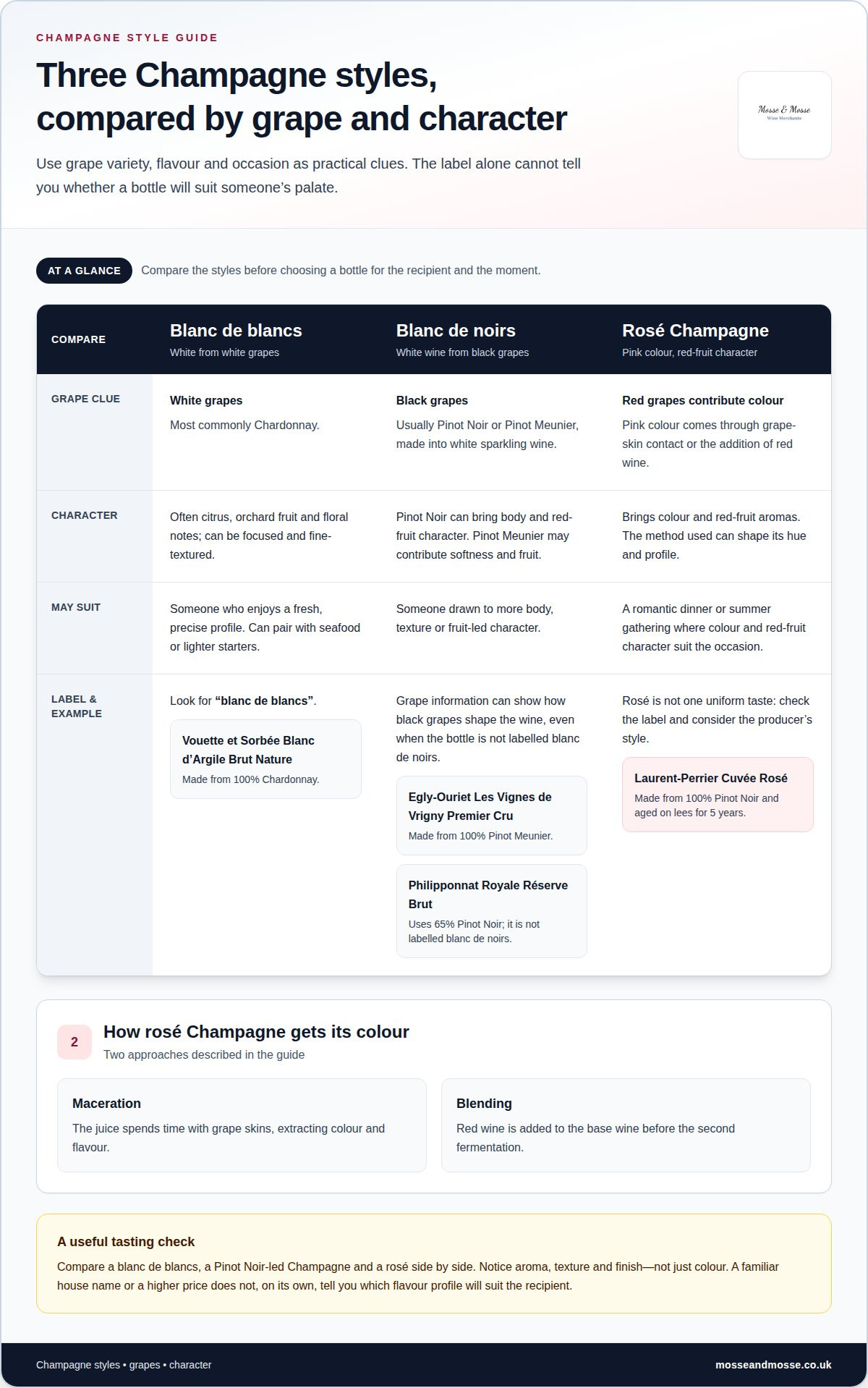
Style offers another useful starting point. Blanc de blancs, made from white grapes, can suit someone who enjoys a fresh, precise profile. Blanc de noirs, made from black grapes, can offer more body. Rosé Champagne brings colour and red-fruit aromas to a romantic dinner or summer gathering. Match the style to the recipient’s preferences rather than choosing by label alone.
Budget matters, but so do presentation and producer. A Champagne from a recognised house can feel reassuringly familiar, while a grower Champagne may appeal to someone curious about an individual producer’s character. Vintage Champagne suits a gift tied to a meaningful year; non-vintage Champagne is a versatile choice for a party. Compare the style and occasion before deciding what feels right.
A tasting can help you discover which style suits the recipient. Taste a blanc de blancs alongside a rosé Champagne, and notice differences in fruit, texture and aroma. An in-person Champagne tasting can also make the celebration itself more memorable. For a gift, tasting helps you choose based on flavour preferences rather than the bottle’s appearance.
English sparkling wine can be a good alternative, bringing traditional-method bubbles and a distinctly British origin to a special occasion. It isn’t Champagne, which takes its name from the French region, but it can still make a thoughtful celebratory gift.
There’s no fixed bottle quantity that suits every guest. Decide whether Champagne is for a brief toast or the main drink, then consider the event’s length, guests’ preferences and what else will be served.
Serve Champagne at approximately 8 to 10°C. A white wine glass gives the aromas room to open, while a flute emphasises the bubbles. Store bottles on their side in a cool, dark place, then chill before serving. An ice bucket or refrigerator can bring the bottle to serving temperature; avoid leaving it warm until the last moment.
2. Blanc de Blancs, Blanc de Noirs and rosé Champagne
Champagne’s grape blend gives you a useful starting point for understanding its style. Blanc de blancs means “white from whites” and is made from white grapes, most commonly Chardonnay. Blanc de noirs uses black grapes, usually Pinot Noir or Pinot Meunier, to produce white sparkling wine. Rosé Champagne gets its pink colour through contact with grape skins or the addition of red wine.
A Chardonnay-led blanc de blancs often shows citrus, orchard fruit and floral notes. It can suit guests who enjoy a more focused, fine-textured style, particularly alongside seafood or lighter starters. Vouette et Sorbée Blanc d’Argile Brut Nature is made from 100% Chardonnay, offering a specific example of this grape-led approach. Look for “blanc de blancs” on the label, then consider whether the recipient prefers fresh fruit or richer, developed aromas.
Blanc de noirs brings another perspective. Pinot Noir can lend body and red-fruit character, while Pinot Meunier may contribute softness and fruit. Egly-Ouriet Les Vignes de Vrigny Premier Cru is made from 100% Pinot Meunier. Philipponnat Royale Réserve Brut uses 65% Pinot Noir, showing how a Champagne can draw on black grapes without being labelled blanc de noirs. These differences help distinguish texture and structure, not simply colour.
Rosé Champagne suits a celebration where colour and red-fruit character feel part of the occasion. Laurent-Perrier Cuvée Rosé is made from 100% Pinot Noir and aged on lees for 5 years. Some rosé Champagnes gain colour through maceration: the juice spends time with the grape skins, extracting colour and flavour. Others are made by blending red wine into the base wine before the second fermentation. The method can shape the wine’s hue and profile, so rosé is not one uniform taste.
House style matters alongside grape variety. Bollinger and Veuve Clicquot are recognisable Champagne houses, but a name alone doesn’t tell you whether a bottle will suit someone’s palate. Check the label for grape information and sweetness terms, then consider how the wine will be served. Reserve wines in a blend may add depth, while a fresher, fruit-led style can work well as an aperitif. “Expensive” isn’t a flavour profile.
For a more confident choice, compare a blanc de blancs, a Pinot Noir-led Champagne and a rosé side by side. Notice the aromas, texture and finish, rather than judging only by colour. If you’d like help narrowing down these styles for a celebration, talk through your Champagne preferences.
3. Champagne price ranges and value bottles
Champagne prices reflect more than the label. Production, ageing, grape selection, vintage status and presentation all influence a bottle’s cost. Champagne comes from its namesake French region, and production includes a second fermentation in the bottle. The method takes time and careful handling, which contribute to the price.
Start by deciding what the bottle needs to do. For a toast, prioritise a style guests will enjoy; for a gift, consider whether vintage detail or elegant packaging adds meaning. Non-vintage Champagne blends wines from different harvests to create a house style. A vintage bottling represents grapes from a particular harvest, making it a more specific choice for a milestone.
Ageing is another useful comparison. Champagne sold in the UK is matured for a minimum of 15 months during production. Longer ageing on lees can bring more developed flavours and texture, though a longer period alone doesn’t tell you whether you’ll prefer the wine. Compare tasting descriptions and producer details, then decide which qualities matter most for your celebration.
Grape blend can help explain the differences between bottles. Champagne is made primarily from Pinot Noir, Chardonnay and Pinot Meunier. A blend led by Pinot Noir may suit someone who likes fuller-bodied wines, while Chardonnay-led examples can feel more precise. Check the back label or producer notes for the blend rather than treating a familiar house name as a guide to taste.
Retailers may offer the same style as a bottle, in a gift box or in a larger format. Compare like with like: vintage, bottle size, presentation and what the price includes. A magnum holds twice as much wine as a standard bottle, making it useful for a larger gathering. It may suit a shared celebration better than an elaborate box.
For a luxury gift, presentation can be part of the experience, but it doesn’t change the wine in the bottle. Decide whether the recipient values a recognised house such as Bollinger or Veuve Clicquot, or might enjoy discovering a grower producer. Then compare the Champagne itself, including its vintage, blend and ageing, before paying extra for packaging.
Value means finding the right balance, not simply choosing the lowest-priced bottle. Set your spending limit, choose the occasion and recipient, then compare a few bottles against those needs. A non-vintage house Champagne may offer the familiar style you want, while a grower bottling can bring a more distinctive character. Choose the bottle whose profile and presentation fit your celebration.
4. Choosing Champagne with help from a local wine shop
A wine merchant can turn the occasion into a useful shortlist instead of simply suggesting a famous label. Start with three details: who will drink the Champagne, what they enjoy and how you’ll serve it. A wedding toast for mixed tastes calls for a different choice from a bottle for someone who loves expressive, structured wines.
Describe familiar flavours, not just preferred brands. Say whether the recipient likes crisp acidity, ripe fruit or a richer, bready finish. Mention wines they already enjoy, including sparkling or still white wine. If Veuve Clicquot is a favourite, explain what appeals: the recognisable name, flavour profile or celebratory presentation. That helps a specialist suggest options with relevant similarities.
Grape variety offers another practical clue. Ask how Pinot Noir, Chardonnay and Pinot Meunier shape the Champagne’s body, freshness and fruit character. A Pinot Noir-led blend may suit someone who prefers a broader style; a Chardonnay-led wine may appeal to someone seeking freshness. These are useful starting points, not rigid rules, so explain the occasion and the recipient’s palate together.
Champagne houses each have a distinctive approach, while grower producers can offer a closer expression of individual vineyards and winemaking choices. A specialist can explain the difference without assuming that a famous name is the best fit. If you’re choosing between a classic house style and a less familiar producer, compare the blend, ageing and tasting notes before deciding.
A tasting gives those details a sensory context. Compare examples side by side, such as a fresh, Chardonnay-led Champagne and a richer blend with more Pinot Noir. Notice the acidity, texture and finish, then describe which qualities you prefer. Even a small comparison can make label terms easier to interpret when choosing a bottle later.
Budget is most useful when paired with a clear priority. Tell the specialist whether you value a particular house, a vintage, a grower’s character or presentation for gifting. If your budget is firm, ask for options within it and compare the wine itself first. A decorative box may suit a present, while a dinner bottle may benefit more from a style matched to the menu.
For a celebration meal, share the food and serving plan too. Champagne served before dinner may call for a different profile from a bottle accompanying richer dishes. Mention guests’ preferences, whether other sparkling wines will be available, and whether the bottle is a gift or for immediate enjoyment. These details help narrow the choice beyond brand recognition.
Bring your preferences and occasion together, then ask for a short comparison of suitable styles. Discuss your Champagne choice to find a bottle that fits the celebration and the drinker.
Mosse and Mosse: Champagne & Sparkling Wines
Mosse and Mosse offers Champagne and sparkling wines for celebrations, thoughtful gifts and special meals. If you’re choosing between a fresh blanc de blancs, a fuller Pinot Noir-led style or rosé, start with the recipient’s tastes and how you plan to serve the bottle. White wine can also suit guests who prefer a still style.
For an occasion with varied preferences, consider how Champagne will fit alongside the food and other wines. Red and rosé wines offer alternatives for the table, while Champagne keeps the focus on a celebratory toast. Share the occasion and the style you have in mind to narrow your choice.
Contact Mosse and Mosse to discuss your Champagne choice.
Choose a bottle that makes the occasion yours
The right Champagne is more than a celebratory pour. It can reflect the people gathering, the meal being shared and the feeling you want the moment to hold. Use what you’ve learnt about style and budget as a starting point, then focus on the details that make the choice personal: a favourite flavour, a meaningful vintage or a producer worth discovering.
For a celebration with different tastes around the table, consider the wider wine selection too. Mosse and Mosse offers Champagne and sparkling wines alongside red and white wines, giving you options for both the toast and the meal. A thoughtful choice doesn’t need to be complicated. It simply needs to feel right for the people you’re celebrating.
If you’d like help choosing the best Champagne for a special occasion, share the celebration and the style you have in mind. Contact Mosse and Mosse for Champagne advice, and take the next step towards a bottle everyone can enjoy.
Frequently Asked Questions
What is the best Champagne to buy in 2026?
There isn’t one Champagne that suits every occasion or palate in 2026. Choose according to who’ll drink it, whether they prefer a familiar house style or a more individual producer, and whether the bottle is for a toast or a meal. If you’re unsure, decide first whether you want a crisp, fruit-led profile or something richer, then use that preference to narrow your shortlist.
Does Champagne have to cost a lot?
No, Champagne doesn’t have to be expensive to make a special occasion feel celebratory. The price reflects factors such as producer, grape blend, vintage, ageing and presentation, so compare the wine’s character rather than relying on a prestige label. A straightforward non-vintage bottle can suit a toast, while a gift box or vintage bottling may make sense when those details matter to the recipient.
What are the best Champagne gifts for special occasions?
A good Champagne gift reflects the recipient, not just the event. For a housewarming, choose a versatile bottle they can share with guests; for an anniversary, a vintage linked to a meaningful year can add a personal touch. If you don’t know their taste well, include a short note explaining why you chose it, such as its producer or style.
What are the different types of Champagne?
Champagne styles vary by grape blend, colour and sweetness. The sweetness terms on labels include brut nature, extra brut, brut, demi-sec and doux. Brut nature can contain a maximum of 3 g of sugar per litre; extra brut has 3 to 6 g, whilst brut can have up to 12 g. Demi-sec contains 32 to 50 g, and doux has over 50 g per litre.
Why is Champagne so expensive?
Champagne’s price reflects its origin and production, not simply the bubbles. The grapes come from France’s Champagne region, and the traditional method includes a second fermentation in the bottle. Producers also invest in vineyard work, ageing, blending and careful handling before release. Vintage wines and gift presentation can add further cost, so compare these elements with what matters for your occasion.
What are the best Champagnes for a special occasion in the UK?
The best choice depends on the celebration and the people sharing the bottle. Classic Champagne suits a formal toast, while rosé can bring a different feel to a birthday dinner. English sparkling wine is another celebratory option if you’d like a British alternative. For readers around Ipswich, Norwich, Bury St Edmunds, Sudbury, Stowmarket, Newmarket, Thetford, Diss, Attleborough, Southwold, Aldeburgh, Framlingham, Woodbridge, Long Stratton and Saxmundham, advice from Mosse and Mosse can help refine the choice.


