

The best wine for spicy food isn’t necessarily the boldest bottle on the table. With chilli, a high-alcohol or tannic wine can make the burn feel more intense, whilst a touch of sweetness, fresh acidity or a gentle fizz may bring welcome relief.
Choosing between red, white and rosé can still feel tricky. One dish might be fiery and smoky, another rich and creamy, and a third bright with citrus. Match the wine to the chilli and sauce rather than relying on a single rule for every spicy meal.
This guide explains which wine characteristics can soften or amplify chilli heat, and how to choose a style that suits the dish and your taste. You’ll find practical pointers for balancing spice, richness and acidity, plus examples from Mosse and Mosse’s selection.
Key Takeaways
- The best wine for spicy food depends on the dish’s heat, sauce and the flavours you want to bring forward.
- Compare off-dry and crisp whites, rosé and fruit-forward reds to find a style that suits your palate.
- Use a simple four-step approach to match wine with chilli intensity, sauce weight and acidity.
- Adjust your choice to the dish: a lean, fiery plate calls for a different balance from a creamy or sweet-spiced sauce.
- Mosse & Mosse’s mixed case, The Sunday Six, includes Solas Syrah Viognier and Côtes du Rhône Les Forots as red wine styles to explore with food.
What makes a wine work with spicy food?
The best match depends on the chilli’s heat, the sauce and your preference. A wine might soften the impression of heat, complement the dish’s flavours or let the chilli take centre stage. There’s no single style for every palate or recipe, so start with the effect you want rather than choosing by colour alone.
Think of pairing as three checks: heat, weight and flavour balance. How fiery is the dish? Is the sauce light and sharp, or rich and substantial? Then consider whether the wine’s sweetness, acidity, fruit and texture will sit comfortably beside those flavours. These broad wine and food pairing principles are a useful starting point, not a strict formula.
Why chilli heat changes how wine tastes
Capsaicin is the compound associated with the burning sensation in chilli. Beside a fiery dish, a wine with high alcohol or prominent, drying tannins may seem more forceful. Some diners find that the chilli feels sharper as a result. The effect varies with the wine, dish and individual tolerance, so treat these traits as points to consider rather than automatic deal-breakers.
Not all spice means heat. Cumin, coriander and cardamom can bring fragrant, warm or earthy notes without the same chilli burn. A dish led by aromatic spices may call for a wine that complements those flavours, whilst a chilli-heavy one may make a gentler, fruitier style more appealing.
Should wine tame the heat or complement it?
If you’d like a gentler impression, try a softer, fruit-forward wine or an off-dry style. A little sweetness can balance the chilli’s sharp edge, whilst fresh acidity may help the pairing feel lively rather than heavy. This won’t erase the heat, but it can change the overall balance of each mouthful.
Prefer a proper kick? Choose a wine that complements the dish rather than trying to mask it. Let the sauce guide you: ripe fruit may echo sweet-spiced flavours, whilst a fresher style can contrast with a tangy sauce. The best wine for spicy food is the one that suits both the plate and the people sharing it. If diners have different heat tolerances, choose a versatile bottle that doesn’t overwhelm the food or the wine.
Which wine styles pair best with spicy food?
There’s no universal winner. The right style depends on how much heat you want to soften and what the sauce brings to the plate. Use this comparison to narrow the choice, then adjust for your own taste. Body describes how weighty the wine feels; perceived sweetness is about how sweet it tastes, not a promise that every bottle in a style has the same profile.
| Style | Body | Perceived sweetness | Acidity | Possible role with chilli |
|---|---|---|---|---|
| Off-dry white, such as Riesling or Chenin Blanc | Light to medium | Noticeably fruity, sometimes gently sweet | Often lively | Can soften the impression of heat and suit tangy or aromatic sauces. |
| Crisp white | Light | Usually dry-tasting | Fresh to high | Offers a clean contrast to lighter, citrusy or sharp flavours. |
| Rosé | Light to medium | Dry to gently fruity | Fresh | A versatile middle ground when the table has varied dishes or preferences. |
| Fruit-forward red | Light to medium | Fruit-led, usually dry | Variable | Can complement savoury, moderately spicy food if tannins feel soft. |
When to choose white wine or rosé with chilli
If you’d like the chilli to feel less dominant, an off-dry Riesling or Chenin Blanc is one option. Ripe fruit and a hint of sweetness can balance heat, whilst freshness helps the wine stay lively beside a tangy sauce. Neither is a guaranteed match, so consider how sweet, sour or rich the dish tastes. Rosé can bridge the gap between white and red, bringing fruit without the weight of a fuller-bodied red. Browse Mosse & Mosse rosé wines to explore the style.
When a red wine can suit spicy food
Red can work when the dish has savoury depth and moderate rather than overwhelming chilli heat. Look for fruit-forward examples of Syrah, Grenache or Pinot Noir, while remembering that grape variety alone doesn’t determine a wine’s body, alcohol or tannin. A softer, fruit-led red with modest tannin can complement savoury spice without the drying grip of a more tannic style. By contrast, a high-alcohol or firmly tannic red may make the heat feel more pronounced for some diners.
Choose the best wine for spicy food by the effect you want, not by a rigid rule. If you’re weighing up a bottle for a particular dish or mixed table, talk with Mosse & Mosse about your pairing.
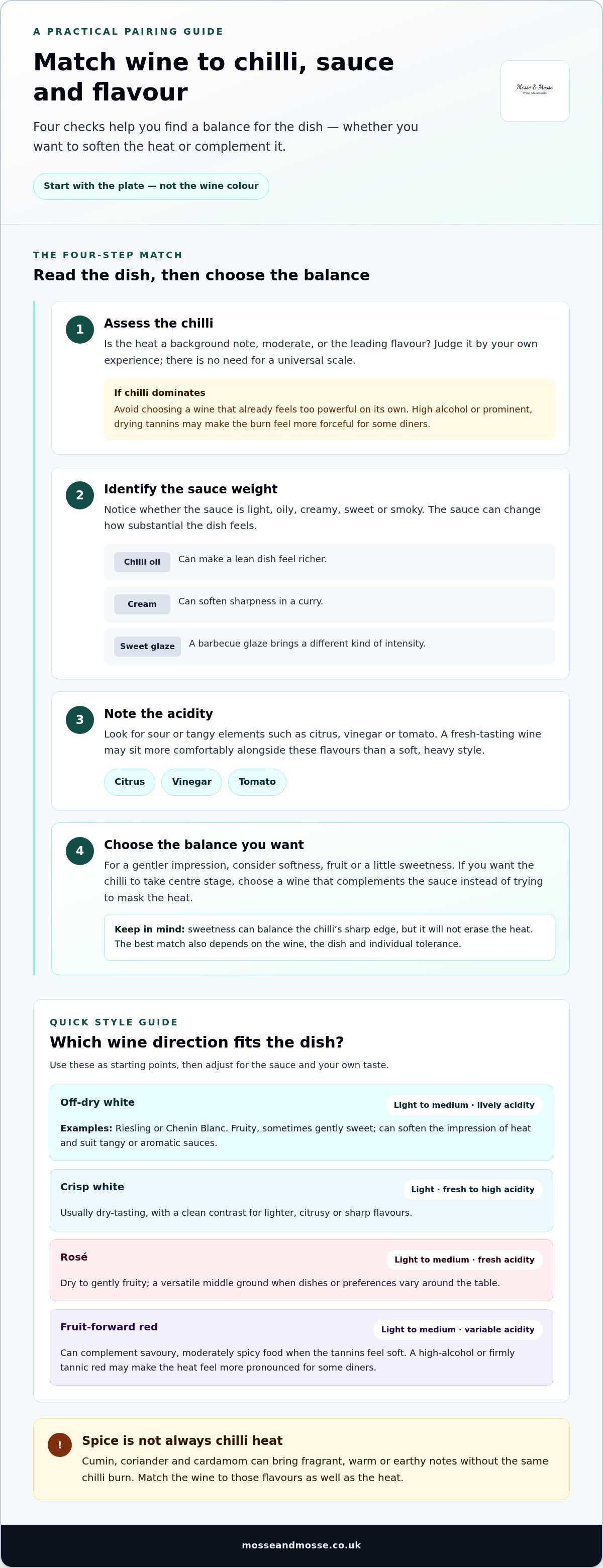
How to match wine to the heat, sauce and dish
A useful pairing starts with the dish, not a rule about a particular cuisine. A curry might be creamy and gently spiced or sharp with chilli; smoky barbecue could be sweet, tangy or fiery. Work through these four checks to narrow your choice, then taste and adjust to your preference.
Start with chilli level and sauce texture
Judge heat by your own experience: is it mild, moderate or dominant? There’s no need for a universal scale. Next, identify the sauce’s weight and character. A thin, light sauce behaves differently from a rich, creamy one, whilst chilli oil adds richness even if the dish itself seems lean. Acidity matters too: a tangy sauce may call for a wine with enough freshness to keep the combination lively.
- Assess the chilli. Decide whether heat is a background note or the leading flavour. If it dominates, avoid choosing a wine that already feels too powerful on its own.
- Identify the sauce weight. Is it light, oily, creamy, sweet or smoky? Chilli oil can make a lean dish feel richer; cream in a curry can soften sharpness, whilst a sweet barbecue glaze brings a different kind of intensity.
- Note the acidity. Look for sour or tangy elements such as citrus, vinegar or tomato. A fresh-tasting wine may sit more comfortably with these than a soft, heavy style.
- Choose the wine style. For hot, lean food, consider a lighter, fruit-led wine rather than a dense, tannic one. With creamy or rich dishes, a wine with enough freshness can help balance the weight. Sweet-spiced flavours may suit a fruitier option, though the right choice depends on how sweet the sauce tastes to you.
A simple tasting method for finding your match
Taste the dish first and notice what leads: heat, sweetness, acidity or richness. Then take a small sip of wine alongside a bite. Does it soften the chilli, balance the sauce or make the heat feel sharper? If you can, compare another style. A small tasting is more useful than guessing from the grape name alone.
If the pairing feels harsh, move towards less alcohol, softer tannin or more fruit. If the wine seems bland beside the dish, choose one with more freshness or flavour. These are adjustments, not fixed rules. The best wine for spicy food is the one you enjoy with the meal, whether that means calming the chilli or letting it shine.
For advice tailored to your dish and heat preference, speak with Mosse & Mosse about choosing a wine.
Choose a spicy-food wine with Mosse & Mosse
Mosse & Mosse is an independent fine-wine merchant based in Framlingham, Suffolk. When pairing wine with chilli, the useful question isn’t simply “red or white?” It’s how the wine’s character will sit beside your dish, sauce and preferred level of heat. A personal recommendation can help narrow the options without treating any bottle as a guaranteed match.
What The Sunday Six offers for exploring different styles
The Sunday Six is a current mixed case of six 75 cl bottles from France and Spain. It includes Solas Syrah Viognier and Côtes du Rhône Les Forots, two red wines to consider alongside savoury or moderately spicy dishes. The right fit depends on the wine and the food’s intensity.
The other four wines in the case are Picpoul de Pinet, Ochoa Blanco, Château du Moulin Rouge and St Sidoine Rosé. The case costs £89.95, with all six bottles under twenty pounds a bottle. Its range gives you different styles to explore at the table, but it doesn’t mean every bottle will suit every spicy recipe. Consider the sauce as well as the chilli: a bright, tangy dish and a rich, smoky one can call for quite different balances.
Get a personal recommendation for your meal
For advice tailored to your dinner, share what you’re cooking, how the sauce tastes and how much chilli heat you enjoy. Is it a creamy curry, a sharp chilli dressing or a smoky dish with a sweet edge? Those details give a clearer starting point than naming the cuisine alone.
Tim Mosse selects the wines, whilst Sam Mosse leads customer service. If you’re comparing bottles online, the guide to how to buy wine online offers broader pointers on selecting wine with care. For a recommendation shaped around your meal, send Mosse & Mosse a personal wine enquiry.
Serving guests in Ipswich, Norwich, Bury St Edmunds, Sudbury, Stowmarket, Newmarket, Thetford, Diss, Attleborough, Southwold, Aldeburgh, Framlingham, Woodbridge, Long Stratton or Saxmundham? Get in touch with your dish and preferred level of heat for a personal wine recommendation.
Make your next spicy meal your own
Let the next bottle be part of the pleasure, not a test with one right answer. A chilli-rich supper with friends, a fragrant curry or a favourite dish from the grill can each be an opportunity to explore what you enjoy in a pairing. If tastes differ around the table, choosing two contrasting styles can make the meal more welcoming: one might bring freshness, whilst another offers a softer, fruitier feel.
Afterwards, remember what worked for you. Perhaps you preferred the wine to settle the chilli, or enjoyed a pairing that let the spice shine. Those preferences are a better guide for your next choice than a rigid rule, and they’ll make finding the best wine for spicy food feel more intuitive over time.
If you’re planning a meal and would value a considered second opinion, share the occasion and flavours you have in mind. A thoughtful recommendation can make choosing a bottle part of the anticipation. Talk to us about a wine for your meal, and enjoy discovering a pairing that feels right for your table.
Frequently Asked Questions
Is red or white wine better with spicy food?
Neither is automatically better; the dish and your preference decide. For a table serving several dishes, a white with some fruit may feel adaptable, whilst a softer red could suit a less fiery main with savoury depth. Consider the wine’s alcohol and tannin, and whether the sauce is rich or sharp. Try a small sip with a bite. If the red feels harsh, switch to a fresher, lighter style.
Can wine make spicy food taste hotter?
It can seem hotter for some people, particularly if a chilli-heavy dish is paired with a wine that feels alcoholic or drying. That doesn’t rule out red wine: a fruit-led red with softer tannins may be comfortable beside a milder, richer dish. You could also try a fresh white or rosé. Take a small sip with a bite first, then decide whether you enjoy the effect.
What wine is best with curry?
There isn’t one best wine for every curry, as recipes range from creamy and mild to tangy and fiery. If you’d like a gentler impression of chilli, off-dry Riesling or Chenin Blanc can be a starting point. With a rich sauce, look for freshness as well as fruit. For a milder curry with savoury flavours, a softer, fruit-forward red is another style to try.
Is Pinot Noir good with spicy food?
Pinot Noir can suit a mildly or moderately spiced dish, especially if the wine tastes fruit-forward rather than firm and drying. It may feel less at ease beside intense chilli heat, so consider the sauce before opening a bottle. A light, savoury dish offers a different setting from a rich, sweet or very hot sauce. Serve a small pour first and see how the flavours work together.
Should wine with spicy food be sweet?
No. Some diners enjoy an off-dry wine because a little sweetness can soften the impression of chilli, whilst others prefer a dry, fruity style that complements the heat. Think about the sauce too: a sweet glaze may make a noticeably sweet wine feel cloying, while a tangy dish may call for a fresher taste. Choose the level of sweetness you enjoy, rather than treating it as a rule.
How do I choose wine for spicy food if I don’t know the dish well?
Start with what you know: the main ingredient, the sauce’s texture and whether the chilli is mild or prominent. If you only have a menu description, use its clues about creaminess, sweetness, citrus or smoke to estimate the balance. A fruit-led style is a practical starting point if you’re unsure. Diners in Ipswich, Norwich, Bury St Edmunds, Sudbury, Stowmarket, Newmarket, Thetford, Diss, Attleborough, Southwold, Aldeburgh, Framlingham, Woodbridge, Long Stratton and Saxmundham can share these details with Mosse & Mosse for a considered suggestion.


