

What if the most versatile bottle in your cellar isn't a crisp white or a heavy red, but a chilled glass of Tawny Port? While many enthusiasts reserve this fortified gem for the very end of a meal, the idea that it only belongs with chocolate or a handful of walnuts is a missed opportunity for your palate. You might worry that the high sugar content or the robust alcohol level, which the IVDP regulates between 19% and 22%, will simply bully your food rather than complement it.
We understand that hesitation. It's easy to stick to the "safe" options when you aren't sure how the oxidative, nutty flavours of an aged blend will react with savoury dishes. This guide promises to transform your approach to tawny port food pairing by sharing the professional secrets we've gathered as independent merchants. You'll learn how to match different ages to specific seasonal ingredients and discover why serving temperature is the secret weapon of every true connoisseur. We are going to move past the basics and explore how these complex spirits can act as a structural bridge for your entire menu, from the first course to the final sip.
Key Takeaways
- Understand how the wood-ageing process develops the complex tertiary notes of toffee and dried peel that make Tawny Port a versatile companion for every course.
- Discover the secret to a successful tawny port food pairing by matching the wine’s oxidative character with savoury, umami-rich ingredients and roasted flavours.
- Learn which specific desserts sing alongside these nutty profiles and why you should generally avoid pairing them with overly creamy or delicate sweets.
- Master professional serving etiquette by learning the ideal chilled temperature for your bottle and why decanting is almost never necessary for these wood-aged styles.
- Gain the confidence to select between different age classifications to ensure the intensity of your wine perfectly matches the weight and season of your meal.
Understanding the Tawny Profile: Why Oxidation Changes the Pairing Game
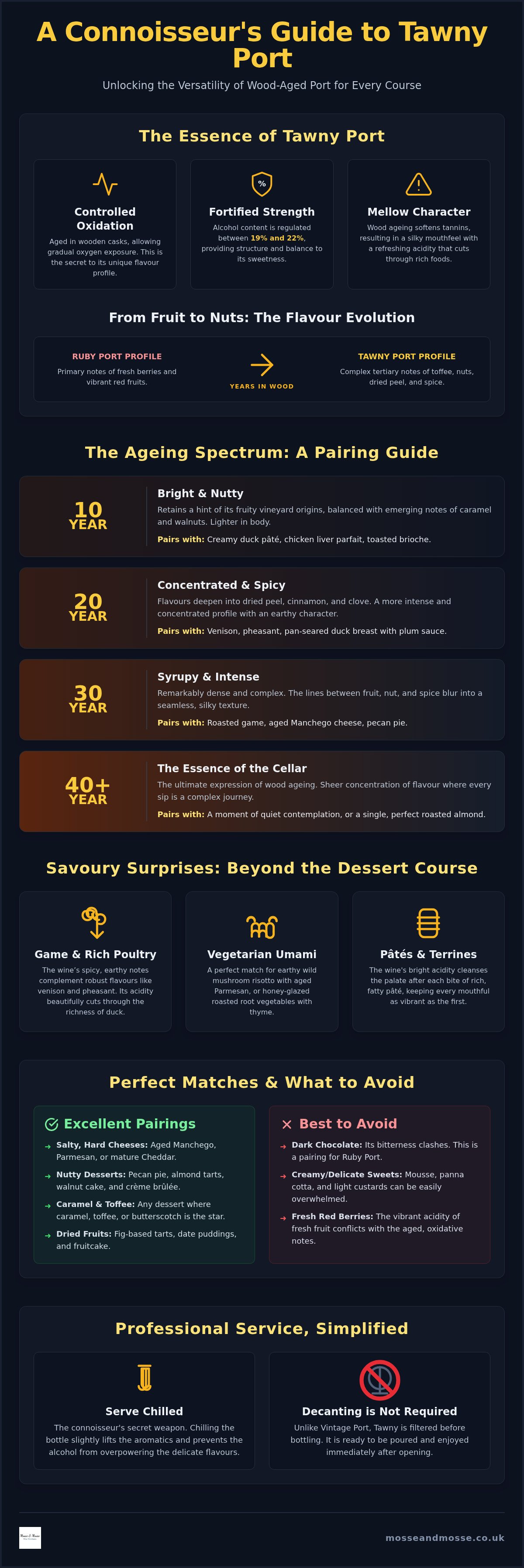
To understand why a tawny port food pairing works so differently from other wines, we have to look at the barrel. Unlike Ruby styles that age in bottle to preserve fruit, Tawny Port is a wood-aged fortified wine that thrives on controlled oxidation. Over years in seasoned oak casks, the vibrant red hues fade to amber. The primary berry flavours transform into tertiary notes of toffee, spice, and dried peel. This process is anchored by "aguardente", a neutral grape spirit that creates a structural backbone for Port wine. It ensures the liquid remains balanced despite its sweetness, providing the grip needed to stand up to rich, complex food.
We often contrast the freshness of a 10-year-old with the sheer concentration of a 40-year-old. A younger blend still remembers the vineyard, whilst an older one is a pure expression of the cellar. This evolution dictates exactly what should be on your plate.
The Flavour Spectrum: From Butterscotch to Roasted Almonds
As the wine breathes through the wood, it develops a palette of caramel, cinnamon, clove, and walnut. These aromatic markers are essential for a successful tawny port food pairing. Because the tannins soften during the ageing process, the resulting amber liquid is far less astringent than a Vintage Port. Instead, you'll find a mellow acidity. This acidity is your best friend at the dinner table. It cuts through fats and oils whilst maintaining a silky, indulgent mouthfeel that lingers long after the first bite.
Tawny vs Ruby: A Pairing Philosophy
Ruby Ports are the natural partners for dark chocolate and forest fruits. However, Tawny demands salt, smoke, and earthiness. We always suggest matching the "weight" of the wine to the texture of your dish to avoid one overwhelming the other. A lighter 10-year-old suits a creamy duck paté, whereas the syrupy intensity of a 30-year-old requires something dense like an aged Manchego or roasted game. Oxygen is the secret ingredient that replaces the aggressive fruit of youth with the savoury complexity required to bridge the gap between the kitchen and the cellar.
Savoury Surprises: Moving Tawny Port to the Centre of the Table
Many wine lovers believe Port is a "sticky" reserved strictly for the end of the night. We'd like to challenge that misconception. Tawny Port is actually a structural powerhouse for savoury courses. Its residual sugar is perfectly balanced by high alcohol and refreshing acidity, making it an incredible foil for salt and umami. This makes it particularly suited for the cooler British months when we crave hearty, roasted flavours and the comfort of the "British Pantry" staples. A successful tawny port food pairing relies on this tension between the wine's sweetness and the deep, fermented notes of a well-cooked dish.
Game Meats and Rich Poultry
Game season in the UK offers the perfect backdrop for a 10-year-old Tawny. The wine’s spicy profile aligns beautifully with pan-seared duck breast served with a sharp plum reduction. For something more robust like venison or pheasant, the concentrated notes of a 20-year-old provide a spicy, earthy counterpoint. You can even use the wine itself as a glaze for roasted quails, creating a natural flavour bridge between the glass and the plate. For more inspiration on how different bottles interact with various ingredients, you can explore this guide on Port Styles and Wine Pairings.
Pâtés, Terrines, and Foie Gras
A classic chicken liver parfait with a caramelised onion chutney is a match made in heaven. The wine’s acidity works to cleanse the palate after each rich, fatty bite, ensuring the next mouthful is as vibrant as the first. We recommend serving this with toasted brioche. The bread's buttery, yeasty notes echo the oxidative character of the Port. It’s a sophisticated way to start a meal that immediately signals your guests are in for something special.
Vegetarian Umami: Mushrooms and Nuts
Vegetarian diners needn't feel left out of the experience. A wild mushroom risotto with truffle oil and aged Parmesan is a masterclass in umami. The earthy fungi and salty cheese thrive alongside the walnut and spice notes of the wine. Similarly, roasted root vegetables glazed with honey and thyme echo the herbal undertones found in many independent curations. If you're planning a seasonal dinner party and need bespoke advice on a specific bottle, do get in touch with our team for a personal recommendation.
The Classic Close: Elevating Cheese and Dessert Pairings
Whilst the savoury matches we've explored might surprise some, the end of a meal remains the traditional heartland for these wines. However, even within this classic territory, there is a hierarchy to master. To ensure a successful tawny port food pairing, you must first consider the serving temperature. We always recommend serving your bottle slightly chilled, ideally between 12 and 14 degrees Celsius. This prevents the residual sugar from feeling cloying on the palate and allows the delicate hazelnut and spice notes to shine rather than being masked by the heat of the alcohol.
The Connoisseur’s Cheeseboard
Stilton is often cited as the only choice for Port, but we encourage our clients to look beyond the blue. The "Cheeseboard Hierarchy" suggests matching the age of the wine to the intensity of the cheese. Consider these pairings for your next gathering:
- Aged Cheddar or Comté: A 24-month matured cheese has a crystalline texture that brings out the butterscotch and toasted oak in a 20-year-old Tawny.
- The Blue Cheese Exception: Whilst older wines suit hard cheeses, a younger, sweeter 10-year-old provides a brilliant counterpoint to the saltiness of Roquefort or Gorgonzola.
- Goat’s Cheese: A firmer, honey-drizzled goat’s cheese mirrors the floral undertones often found in independent, boutique curations; you can discover Bright Meadows Honey for a raw, unprocessed variety that pairs beautifully with these artisanal flavours.
If you're looking to experiment with different profiles across a single evening, our curated mixed case options provide a variety of styles to help you find your favourite match.
Desserts: Caramel, Coffee, and Spice
When selecting a dessert, the rule is simple: look for "burnt," nutty, or spiced flavours. A classic Crème Brûlée is perhaps the ultimate tawny port food pairing because the torched sugar top perfectly echoes the caramelised notes of the wood-ageing process. Similarly, an Apple Tarte Tatin with a hint of cinnamon mirrors the natural wood spices found in the wine. We often find that whilst dark chocolate is the natural partner for Ruby styles, milk chocolate or a hazelnut praline is far superior for Tawny. The creamy, nutty fats in the praline wrap around the wine's acidity, creating a silky, indulgent finish that lingers beautifully. If you're planning a special dinner and need help selecting the right age for your menu, please contact us for a personal recommendation.
For those looking to source high-quality treats that complement these nutty profiles, you can discover Chocolate Maven Bakery & Cafe and their selection of handmade pastries.
Professional Service: How to Organise Your Tawny Tasting
Organising a tasting at home should feel like an extension of the cellar experience. One of the most common questions we hear concerns the "Decanting Myth." Unlike Vintage Port, which requires careful pouring to manage sediment, Tawny Port is aged in wood and filtered before bottling. It's ready to pour the moment you pull the cork. This stability also grants it a superior shelf life. Whilst a Vintage bottle might fade within 48 hours, an opened Tawny remains vibrant for four to eight weeks if kept in the fridge. This longevity makes it the perfect companion for spontaneous tawny port food pairing experiments across several weekends.
Temperature and Glassware
Temperature is the most overlooked factor in professional service. We suggest the "Cellar Cool" rule, aiming for 12-16°C. If the wine is too warm, the alcohol can feel aggressive. If it's too cold, the delicate butterscotch and spice notes are muted. Throw away the tiny "thimble" glasses often associated with fortified wines. A larger white wine glass allows the liquid to breathe. This enhances the aromatic profile and provides a more balanced experience on the palate, ensuring the sugar and alcohol don't overwhelm your chosen dish.
Selecting the Right Bottle for Your Occasion
Choosing between a blended aged Tawny and a Colheita is a personal journey. Blends offer a consistent house style curated by the master blender, whereas a Colheita captures the unique character of a single harvest. Sourcing from independent merchants allows you to discover rare, small-producer gems that mass-market retailers often overlook. We believe the story behind the bottle is just as important as the liquid inside. For a deeper dive into these specific categories, our Types of Port Guide provides a comprehensive breakdown of Portugal's finest styles.
Selecting the perfect bottle is about more than just the label. It’s about finding a wine that resonates with your personal taste and the menu you’ve prepared. If you are unsure which age statement will best suit your tawny port food pairing, please contact us for a personalised recommendation on your next bottle of Port. We take great pride in acting as your personal guides through the historic vineyards of the Douro.
Mastering the Art of the Tawny Table
You now have the tools to move beyond the "dessert wine" label and embrace Tawny Port as a structural powerhouse for your entire menu. Whether you are matching a 10-year-old with seasonal game or finding the perfect caramelised bridge for a Crème Brûlée, the secret lies in balancing those oxidative, nutty notes with salt and umami. A successful tawny port food pairing is as much about the environment as the ingredients. Remember that serving temperature and glassware are vital to ensuring those complex flavours remain vibrant rather than cloying.
As an independent wine merchant with over 25 years of experience, we take pride in helping you navigate our curated European selections. We believe every bottle should be a personal discovery, and our team of passionate connoisseurs is here to provide the personalised service you need for your next gathering. If you are ready to explore unique styles beyond the mass-market brands, please speak to our experts about your next wine selection. We look forward to helping you find a bottle that truly sings at your dinner table.
Frequently Asked Questions
Should Tawny Port be served chilled or at room temperature?
Tawny Port should always be served slightly chilled, ideally between 12 and 16 degrees Celsius. Serving it at room temperature often causes the alcohol to feel aggressive and masks the delicate nutty aromas. A quick hour in the fridge before serving ensures the residual sugar remains refreshing. This temperature control is the foundation of a successful tawny port food pairing, especially when you are serving it alongside rich or fatty savoury dishes.
How long does a bottle of Tawny Port stay fresh once opened?
An opened bottle of Tawny Port will stay fresh for four to eight weeks if it's kept in the fridge with the stopper in. Because the wine has already been exposed to oxygen during its years in the barrel, it's far more resilient than Ruby or Vintage styles. This extended shelf life allows you to enjoy a small glass over several weeks without worrying about the flavour profile degrading or becoming flat.
Do I need to decant Tawny Port before serving?
You don't need to decant Tawny Port before serving. These wines are aged in seasoned oak casks and are filtered to remove sediment before bottling, so they're ready to enjoy immediately. Whilst Vintage Ports require decanting to separate the liquid from the "crust," a Tawny is designed for convenience. Simply pull the cork and pour directly into a larger white wine glass to let the aromas breathe naturally.
What is the best cheese to pair with a 20-year-old Tawny Port?
The best cheese to pair with a 20-year-old Tawny Port is a mature, hard cheese like a 24-month aged Comté or a sharp vintage Cheddar. The crystalline texture and saltiness of these cheeses provide a brilliant counterpoint to the wine’s concentrated butterscotch and toasted almond notes. Whilst Stilton is a classic choice for Ruby, the nutty complexity of an aged Tawny requires the savoury depth of a well-matured hard cheese.
Can I pair Tawny Port with a main course like roast beef?
Yes, you can pair Tawny Port with roast beef, provided you use the wine as a bridge in the cooking process. We suggest incorporating a splash of Tawny into a rich bone-marrow gravy or using it as a glaze for the meat. The umami-rich flavours of the beef align perfectly with the wine’s spicy, oxidative character. This creates a sophisticated tawny port food pairing that moves the bottle from the dessert trolley to the centre of the dinner table.
What is the difference between Tawny Port and Sherry for food pairing?
The main difference lies in the residual sugar and the weight of the liquid. Tawny Port is almost always sweeter and more viscous than Sherry styles like Amontillado or Oloroso. Whilst both wines share nutty, oxidative characteristics, Tawny has a richer fruit backbone and higher alcohol, usually between 19% and 22%. This makes it better suited for dishes with a sweet-savoury balance, whereas dry Sherries often favour purely salty tapas.


