

Most people treat a bottle of ruby port as a mere afterthought, a dusty supermarket staple brought out only when the Stilton appears at Christmas. To dismiss this vibrant spirit as a simple entry-level wine is to miss out on the most explosive, fruit-driven expression of the Douro Valley. It's a common frustration for anyone who values quality over mass-market branding. You've likely stood in a wine aisle feeling overwhelmed by cryptic labels, worried that picking a budget-friendly bottle might lead to a cloying, sugary disappointment.
I've spent years curating selections that prioritise artisanal depth over flashy labels, and I can promise that the right bottle will transform your perception of this British favourite. This guide will strip away the confusion. You'll discover how to identify an exceptional ruby port that offers far better value than high-street alternatives. We'll explore the youthful production techniques that preserve those intense berry flavours, clarify the vital difference between standard and Reserve bottles, and provide expert tips for serving and food pairing at your next dinner party.
Key Takeaways
- Learn why the non-oxidative ageing process in large vats is essential for preserving the deep crimson colour and fiery fruit character of ruby port.
- Discover how to navigate the hierarchy of quality, moving beyond basic blends to find premium Reserve bottles that offer far better depth.
- Master the art of the perfect pour by serving your wine slightly chilled at 16°C, ensuring the alcohol doesn't overpower those delicate berry notes.
- Gain the confidence to pair these vibrant spirits with a range of foods for your next dinner party, moving beyond the traditional cheese board.
- Understand why sourcing through an independent merchant provides superior provenance and value compared to standard high-street selections.
What is Ruby Port? Understanding the Vibrant Soul of the Douro
The Douro Valley remains the exclusive home of authentic Port production, a rugged landscape where steep terraced vineyards produce some of the world's most characterful fortified wines. Amongst these, ruby port stands out as the most widely produced style. It's a wine defined by its deep crimson colour and a fiery, fruit-driven personality that captures the raw energy of the Portuguese sun. While other styles focus on the mellowing effects of time, this variety is all about the intensity of the grape.
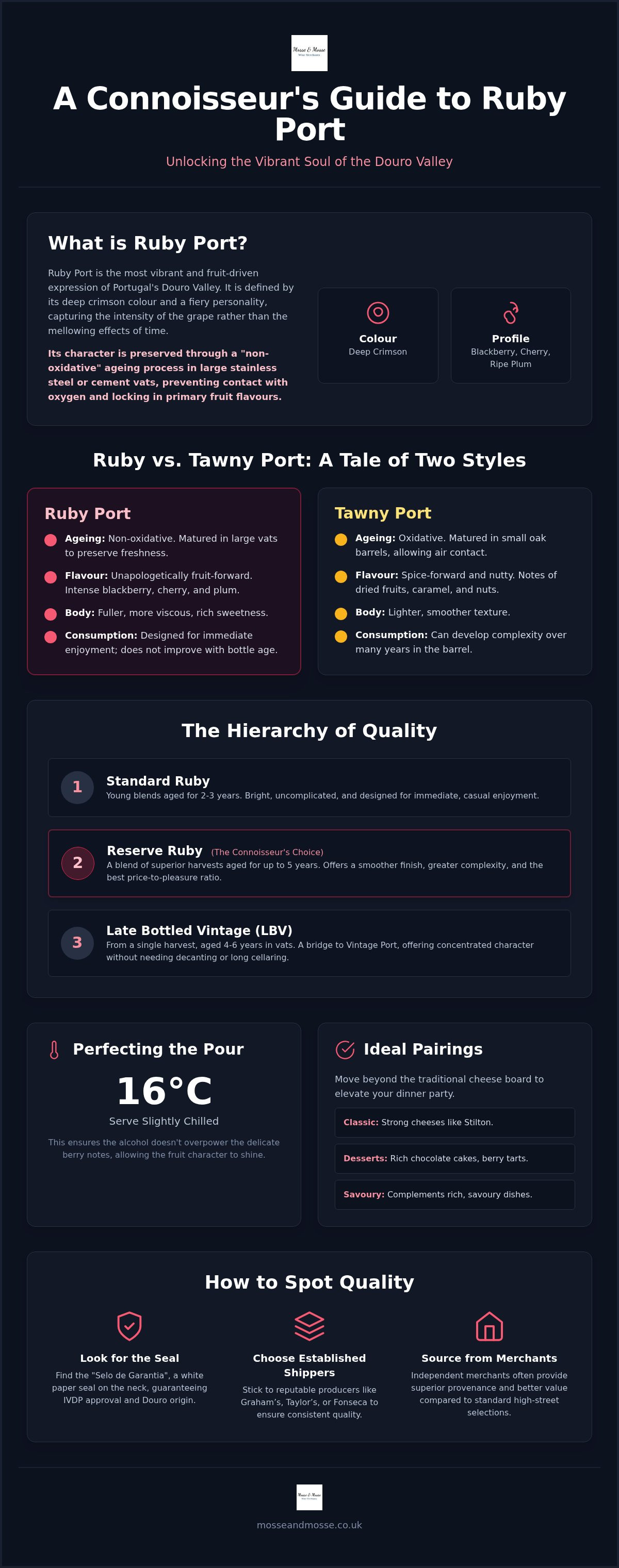
To achieve this, producers use a "non-oxidative" ageing process. Instead of resting in small oak barrels where air can seep through the wood, the wine is kept in massive stainless steel tanks or large cement vats. This environment prevents contact with oxygen, locking in the primary fruit flavours. You won't find the nutty, oxidative notes of a Tawny here; instead, your palate is greeted by an indulgent profile of blackberry, cherry, and ripe plum. Because of its accessible, vibrant nature, this style is a fantastic choice for corporate wine gift boxes, offering a touch of luxury that is immediately enjoyable.
The Secret Behind the Colour: Preserving Youthful Intensity
The striking appearance of the wine is no accident. By strictly limiting wood contact, winemakers ensure the liquid doesn't undergo the browning process that creates a "tawny" hue. This preservation relies heavily on the quality of indigenous Portuguese grapes, specifically Touriga Nacional and Touriga Franca. These varieties are prized for their thick skins and high tannin levels, which provide the structural backbone and deep pigments required for such a bold profile. Ruby is a descriptive name that perfectly captures both the wine’s brilliant gemstone appearance and its spirited, punchy personality.
Ruby vs. Tawny: A Quick Comparison for the Palate
When you taste a ruby port, the first thing you'll notice is the texture. It's typically fuller-bodied and more viscous than its tawny counterparts, coating the mouth with a rich sweetness. While a Tawny Port is spice-forward and evocative of dried fruits, a Ruby remains unapologetically fruit-forward. It's also worth noting that most bottles are designed for immediate consumption. Unlike rare Vintage styles, standard rubies don't usually improve with bottle age, so there's no need to wait for a special occasion to pull the cork.
The Hierarchy of Quality: From Everyday Blends to Premium Reserve
Selecting a bottle of ruby port isn't as simple as grabbing the first red label you see on a supermarket shelf. There's a clear hierarchy of quality that determines whether you're getting a simple, punchy drink or a sophisticated, velvet-smooth experience. At the base lies the standard Ruby. These are young, vibrant blends usually aged for two to three years. They're designed for immediate enjoyment and offer a bright, uncomplicated hit of fruit that works well for casual sipping.
Sitting just above these everyday blends is the Late Bottled Vintage (LBV). This style acts as a vital bridge between standard rubies and the prestigious Vintage category. An LBV comes from a single harvest and stays in the vat for four to six years. It provides a taste of that concentrated vintage character without the need for decades of cellar ageing or the fuss of decanting. If you're planning a wedding or a large family gathering and need advice on specific styles, it's always worth speaking with a specialist merchant who can guide your selection based on your menu.
Why "Reserve" is the Connoisseur’s Choice
For those seeking real value, Reserve Ruby is the true sweet spot. Historically known as "Vintage Character", these wines are a blend of superior harvests aged for up to five years. This extra time in the vat allows the fiery spirit to integrate, resulting in a much smoother finish and greater complexity than entry-level bottles. The master blender plays a crucial role here. They carefully marry different lots to ensure the "house style" remains consistent year after year. It's often the best price-to-pleasure ratio you'll find in the Douro.
Deciphering the Label: What to Look for in a Fine Ruby
Understanding the label is the best way to avoid low-quality imitations. Always look for the "Selo de Garantia", the white paper seal across the neck. This isn't just decoration; it's a guarantee from the IVDP that the wine has passed rigorous tasting panels and originates from the Douro. Stick to established shippers such as Graham’s, Taylor’s, or Fonseca to ensure quality. Be wary of bottles marketed as generic "British Wine". These are often made from imported grape concentrate and lack the heritage and soul of an authentic ruby port.
Perfecting the Pour: How to Serve and Pair Ruby Port
Many people believe Port belongs on a dusty sideboard at room temperature, but this is a common mistake that can ruin the experience. Serving ruby port too warm allows the alcohol to mask those delicate blackberry and plum notes we've worked so hard to preserve. I always recommend a serving temperature of approximately 16°C. This slight chill keeps the wine refreshing and ensures the fruit remains the star of the show. If your room is particularly warm, twenty minutes in the fridge before serving will make a world of difference.
Glassware is equally vital. Forget those tiny, narrow "port schooners" that were popular decades ago; they trap the aromas and make the wine feel cramped. A standard white wine glass is a much better choice, as the larger bowl allows the wine to breathe and directs the bouquet toward your nose. Once you've pulled the cork, there's no need to rush. Because of its fortified nature, a bottle will stay remarkably fresh for up to four weeks if kept in a cool, dark spot.
The Classic Pairings: Cheese, Chocolate, and Beyond
The marriage of ruby port and Stilton is a cornerstone of British gastronomy for a reason. The aggressive saltiness of the blue cheese cuts through the wine's rich sweetness, creating a perfect balance on the palate. If you prefer something sweet, try pairing it with a dark chocolate fondant or a forest fruit tart. The acidity in the berries mirrors the wine's natural vibrance. For a more modern twist, serve it alongside salty smoked nuts or even use it as a base for a "Port Tonic" with plenty of ice and a slice of orange.
To Decant or Not to Decant?
One of the best things about this style is its sheer simplicity. Most Ruby and Reserve bottles are filtered before bottling, meaning they don't have sediment and don't require the fuss of decanting. Whilst using a port decanter can add a sense of occasion to a dinner party, simple aeration in the glass is usually enough for the wine to open up. Ultimately, Ruby Port is the hassle-free choice for a spontaneous evening where quality matters more than ceremony.
If you're planning a wedding or a corporate event and need a bespoke selection that offers better value than the high street, you can always get in touch with us for a personal consultation.
Finding Your Style: Why Independent Curation Beats the High Street
Stepping away from the generic supermarket shelf is the first step toward truly enjoying the Douro's finest. At Mosse and Mosse, our philosophy is rooted in finding wines that offer genuine character and artisanal quality. We don't select bottles based on flashy marketing or mass-market brand names. Instead, we focus on value and provenance, ensuring that every ruby port we recommend has been chosen for its specific flavour profile and balance. This approach allows us to discover hidden gems that offer far more depth than high-street alternatives.
Buying from an independent merchant means you're tapping into a deep understanding of the Douro's traditional regions. This expertise is particularly valuable when planning large-scale events. Whether you are organising wedding celebrations or looking for high-quality options for corporate gifting, we can help you find artisanal producers that your guests or clients won't find at their local corner shop. Our goal is to build long-term relationships through individualized attention and trusted expertise.
The Gift of Port: A Timeless Gesture
Because ruby port is ready to drink upon release and requires no decanting, it's a wonderfully stress-free gift. It appeals to a broad range of palates, from the casual enthusiast to the seasoned connoisseur. For those truly special occasions, we often suggest Magnums. These larger formats not only age gracefully but also make a significant visual impact at a dinner party or wedding reception. Every case we assemble for a client comes with a personal touch, reflecting our commitment to your individual enjoyment and the quality of the physical product.
Your Next Steps into the World of Fortified Wine
If you've enjoyed discovering the vibrant world of Ruby, you might be curious about how it compares to other styles. I invite you to explore our comprehensive guide on the various types of port to deepen your knowledge. For those planning a specific event or who need a bespoke selection tailored to a budget, a personal consultation can save you both time and money. Please contact Mosse and Mosse for personalised wine recommendations that will make your next gathering truly memorable.
Embrace the Vibrant Spirit of the Douro
Understanding the nuances of ruby port transforms it from a simple after-dinner drink into a sophisticated centrepiece for any occasion. By prioritising the vibrant, fruit-forward profile of Reserve bottles and serving them at the correct, slightly cool temperature, you ensure every glass delivers its full potential. Moving away from mass-produced labels allows you to discover the authentic heritage of the Douro Valley through the work of smaller, artisanal producers who value character over volume.
As independent, family-led wine merchants, we take pride in curating a selection that offers superior depth and better value than standard high-street alternatives. Whether you're planning a wedding or looking for a refined corporate gift, we provide national UK delivery to bring these exceptional spirits directly to your door. Our expertise is always at your disposal to help you navigate our collection of hand-picked gems from traditional European regions.
Speak to our experts for a personalised Port recommendation and find the bottle that perfectly suits your palate. We look forward to helping you discover your new favourite style and ensuring your next gathering is truly memorable.
Frequently Asked Questions
Does Ruby Port need to be decanted?
No, most bottles of ruby port don't need to be decanted because they're filtered before bottling to remove sediment. This makes them a hassle-free choice for immediate drinking. Whilst you can use a decanter for aesthetic reasons at a dinner party, it isn't a requirement for the wine's quality. You can simply pour it straight from the bottle into a glass and enjoy those vibrant berry flavours without any complex preparation.
How long does a bottle of Ruby Port last once opened?
Once opened, a bottle will typically stay fresh for up to four weeks if stored correctly. It's best to keep the bottle in a cool, dark place or even in the fridge to preserve its fruit-forward character. Because port is fortified with grape spirit, it resists oxidation much better than standard table wine. This allows you to enjoy a glass occasionally over the course of a month without the quality noticeably declining.
What is the difference between Ruby and Reserve Ruby Port?
The main difference lies in the quality of the grapes and the length of the ageing process. Standard ruby port is young and vibrant, usually aged for two or three years. In contrast, a Reserve Ruby is a blend of superior harvests aged for up to five years. This extra time in the vat results in a smoother, more complex wine with better-integrated alcohol, offering a much more sophisticated experience for the drinker.
Should Ruby Port be served chilled or at room temperature?
It's a common misconception that Port should be served at room temperature; it's actually best enjoyed slightly chilled at around 16°C. Serving it too warm can make the alcohol feel overpowering and mask the delicate fruit notes. If your kitchen is warm, placing the bottle in the fridge for twenty minutes before serving is usually enough to bring it down to the ideal temperature, ensuring a refreshing and balanced glass.
Is Ruby Port suitable for vegans or vegetarians?
Suitability for vegans and vegetarians depends entirely on the fining agents used by the specific producer. Traditional methods sometimes involve animal-derived products like gelatine or isinglass to clarify the wine. However, many modern artisanal producers in the Douro are moving toward plant-based or mineral fining agents. If this is a priority for you, it's always best to check the label or ask your independent merchant for a specific recommendation from their curated list.
Can I age Ruby Port in my cellar?
No, these wines are designed to be enjoyed immediately and won't improve with further bottle age in your cellar. Unlike Vintage Port, which is bottled young and matures over decades, Ruby and Reserve styles are aged in the winery until they're ready for the table. Once they're released for sale, they've already reached their peak vibrance. It's best to pull the cork and enjoy them whilst those primary fruit flavours are at their most intense.


