
What if the most expensive bottle on the shelf is actually the worst choice for your dinner party tonight? It's a common trap. You reach for a prestigious Vintage Port, only to realize too late that it requires three hours of decanting and a very specific palate. At Mosse & Mosse, we believe it's all about what's in the bottle. This port wine comparison cuts through the jargon to help you match the intensity of your moment to the complexity of the wine. Whether you're looking for a lovely wine treat or a reliable gift, understanding these styles is the key to avoiding a costly mistake.
You likely want to feel confident when a sommelier hands you a wine list or when you're browsing our latest Old World finds. With the 2025 harvest production quota limited to just 75,000 barrels, a 16% decrease from 2024 and the lowest limit in the 21st century, choosing the right bottle is more important than ever. We'll show you how to distinguish a vibrant, fruit-forward Ruby from a mellow, nut-toned Tawny. You'll also discover why the premiumization trend, which now accounts for 50% of all Port sales value, makes certain vintage styles a glorious choice for laying down. We'll give you the knowledge to match Port to any meal or mood with total certainty.
Key Takeaways
- Master the nuances between fruit-forward Ruby and silky, wood-aged Tawny to ensure every glass perfectly suits your personal palate.
- Use our port wine comparison guide to check the "open life" of your bottle, preventing you from wasting a drop of your favorite style.
- Learn to match your wine to the setting, whether it's a bold Vintage for a winter evening or a 10-Year-Old Tawny served chilled in the summer sun.
- Discover why choosing curated selections from independent houses offers a more soulful experience than mass-produced supermarket options.
Understanding the Port Spectrum: Ruby, Tawny, and Beyond
Authentic Port is a product of place. The rugged, schistous slopes of the Douro Valley in Portugal are the only home for this wine. To make it, winemakers stop fermentation by adding a neutral grape spirit, known as aguardente. This preserves natural sugars and brings the alcohol up to about 20% ABV. This foundational Port wine overview shows how this process creates a spectrum that ranges from bright, berry-laden liquids to complex, mahogany masterpieces. It is a tradition Tim Mosse respects deeply because, at the end of the day, it's all about what's in the bottle.
Your 2026 port wine comparison starts with understanding the "Port Pyramid." At the base, you have accessible, youthful styles. As you climb, you encounter wines that have spent decades in wood or bottle. Following the recent regulation updates published on April 22, 2026, which tightened quality controls for tasting bodies, the bottles hitting the shelves this year represent some of the most strictly certified quality in decades. While the 2025 harvest production quota was limited to just 75,000 barrels, the wines currently available for your table are the result of years of patient craftsmanship.
Ruby Port: The Fruity Powerhouse
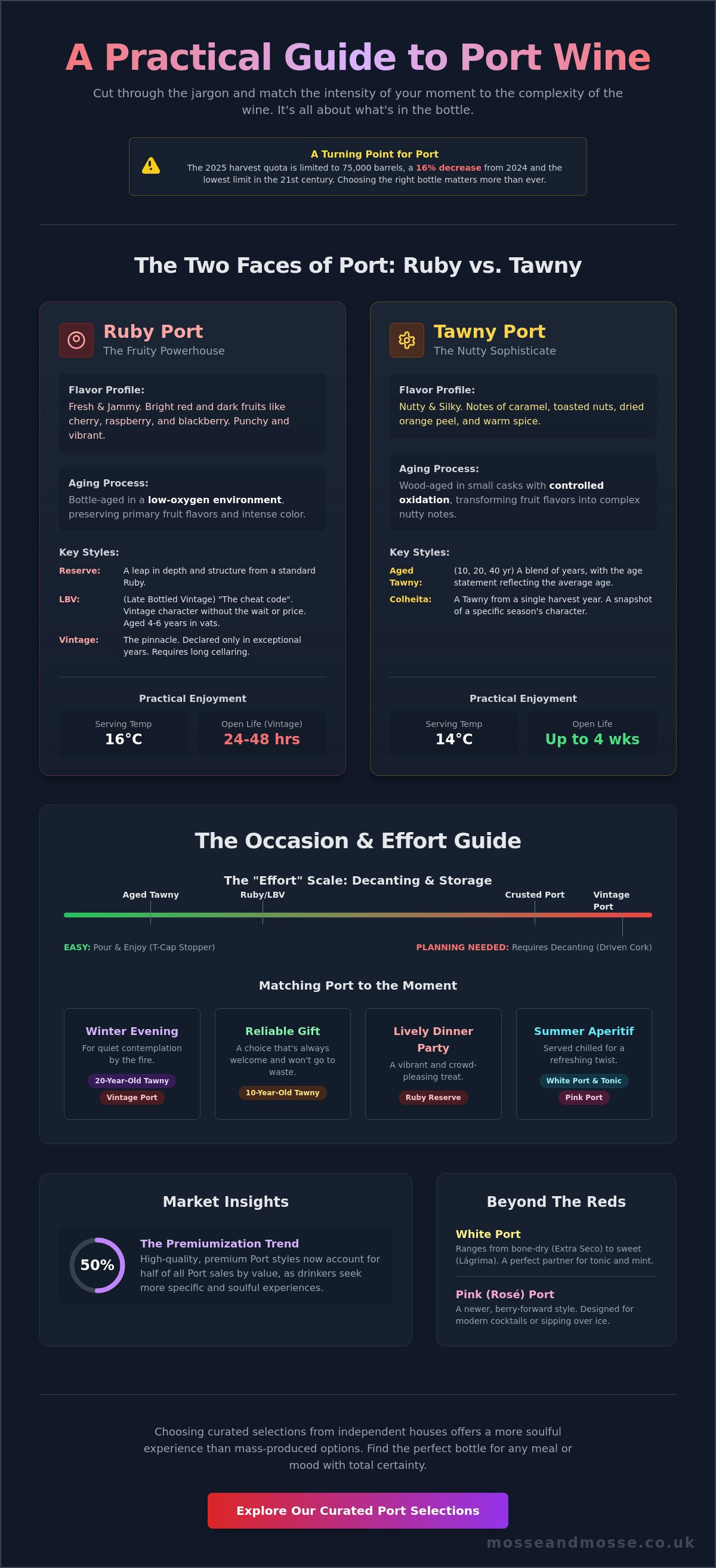
Ruby Port is all about the fruit. A standard Ruby is bright and punchy, while a Reserve offers a significant leap in depth and structure. If you want the intensity of a Vintage wine without the high price or the need to wait twenty years, Late Bottled Vintage (LBV) is your "cheat code." It's aged for four to six years in large vats before bottling. Vintage Port remains the pinnacle. It's only declared in exceptional years and requires patient cellaring to reach its glorious potential.
Tawny Port: The Nutty Sophisticate
Tawny Port undergoes a different journey. It spends its life in smaller wooden casks, allowing controlled oxidation to transform red fruit into notes of caramel, toasted nuts, and dried orange peel. When you see an age statement like 10, 20, or 40 years, remember it's an average age of the blend, not a minimum. For a specific snapshot of history, look for a Colheita. This is a Tawny from a single harvest year, offering a unique taste of a specific season. It's a port wine comparison essential for those who prefer complexity over primary fruit.
White and Pink Port: The Modern Aperitifs
Port isn't always red. White Port ranges from the bone-dry "Extra Seco" to the honeyed "Lágrima," making it a perfect partner for tonic water and mint. Pink Port is a newer, berry-forward style. It's designed for contemporary cocktails or sipping over ice during a summer garden party. These styles prove that while Port is steeped in tradition, it's perfectly suited for 2026's modern palate.
Choosing Your Style: A Practical Port Comparison Framework
Choosing the right bottle shouldn't be a guessing game. It's about matching your mood to the liquid. In this port wine comparison, we look past the label to the practicalities of enjoyment. Do you want a "Fresh and Jammy" experience or something "Nutty and Silky"? If you're hosting a lively dinner, the vibrant fruit of a Ruby Reserve is a lovely wine treat. However, if you're settling in by the fire, the mellow, oxidative notes of a 20-Year-Old Tawny offer pure drinking pleasure. With premium Port now accounting for 50% of all sales by value, more enthusiasts are looking for these specific, high-quality experiences.
Practicality also dictates your choice. A major factor is the "Open Life" of the wine. A Tawny Port, having already spent years socialising with oxygen in a cask, will stay fresh in your cupboard for up to four weeks. A Vintage Port is a different story. Once that driven cork is pulled, the wine is at its peak for only 24 to 48 hours. Most people serve Port far too warm, which makes the 20% ABV feel aggressive. Try serving your Rubies at 16°C and your Tawnies slightly cooler at 14°C to let the aromatics shine. If you're unsure where to start, you can explore our curated cases for a hand-picked selection of styles.
Freshness vs. Complexity: The Ageing Debate
The environment inside the cellar changes the chemistry of the wine. Bottle-aged wines, like Vintage Port, mature in a low-oxygen environment, preserving intense dark fruit and developing "forest floor" notes. Wood-aged wines, like Tawnies, embrace oxidation to create caramel and spice. Crusted Port is the best-kept secret for value-seekers, offering the sediment-rich character of a fine Vintage wine without the hefty price tag. Because these wines aren't filtered, they require a steady hand and a decanter to separate the wine from the natural sediment.
The "Effort" Scale: Decanting and Storage
You can tell a lot about a bottle just by looking at the cork. A "T-Cap" or stopper cork means the wine is ready to drink and the bottle should stand upright. A driven cork, typical of Vintage styles, means the wine is intended to be "laid down" in a cool, dark place. These bottles require decanting to breathe and to remove solids. For a deeper look at these distinctions, see our Types of Port: A Connoisseur’s Guide. Understanding this "effort vs reward" scale ensures you don't waste a prestigious bottle on a night when you just want a simple, delicious glass.
The Occasion Guide: Matching Port to the Event
Port isn't just a fireside companion for December. While Vintage and LBV styles certainly dominate the winter months with their rich, warming profiles, our port wine comparison shows that this category offers glorious drinking pleasure year-round. In 2026, as the IVDP continues to enforce strict quality standards through new regulations like Regulamento n.º 410/2026, every bottle we hunt for you carries a guarantee of authenticity. Whether it's a summer garden party or a corporate milestone, there's a style that fits the moment perfectly. It's all about what's in the bottle, and we want to ensure that bottle matches your setting.
Imagine a warm July evening. Instead of a heavy red, you serve a 10-Year-Old Tawny slightly chilled. It's a revelation. The nuttiness and caramel notes become crisp and refreshing when the bottle hits 14°C. For weddings, White Port and tonic water is the sophisticated alternative to Pimm’s. It’s dry, aromatic, and far more memorable for your guests. When it's time for corporate gifting, a boxed Tawny is the safest luxury choice. Its long open life means your client can enjoy a glass at their own pace over several weeks without the wine fading. This flexibility is why premium Port now represents 50% of the total market value.
Port and Food Pairing: Beyond the Stilton
Don't limit yourself to the cheese board. A Ruby Port is a stunning match for dark chocolate or berry-based desserts, where the fruit intensity mirrors the cocoa. If you're serving salted nuts or crème brûlée, reach for a Tawny. Its oxidative character even stands up to hard cheeses like Manchego. For a pre-dinner treat, try White Port with smoked salmon or salty almonds. It cuts through the fat beautifully and prepares the palate for the meal ahead.
Gifting and Weddings: Selecting a Crowd-Pleaser
Choosing a gift requires a personal touch. An LBV is the perfect "thank you" for a host because it's ready to drink immediately but feels like a significant wine treat. If you're looking for a birth-year Port, we can help you navigate the logistics of sourcing specific vintages that have been laid down for decades. At Mosse & Mosse, we take pride in helping you select Wedding Wines that include a stellar Port finish to cap off your special day. If you need help finding the right bottle for your next event, contact us for a personal recommendation.
Finding Quality: Why Curated Port Matters
Mass-market shelves are often filled with Port that lacks soul. These bottles are built for volume rather than character. When you perform a port wine comparison between a generic supermarket Ruby and a bottle from an independent house, the difference in texture and "pure drinking pleasure" is undeniable. At Mosse & Mosse, Tim Mosse acts as a hunter of quality. He believes it’s all about what’s in the bottle. With the 2025 production quota slashed to 75,000 barrels, which is the lowest limit recorded in the 21st century, finding these authentic gems requires a dedicated eye and deep relationships with the growers.
Small-batch producers in the Douro Valley are currently facing rising production costs while average grape prices have remained stagnant at roughly 1,000 euros per barrel for decades. This economic pressure means global brands often focus on consistency at the expense of complexity. In 2026, the real value lies in supporting independent houses that prioritise heritage over high-speed bottling lines. A personal wine merchant helps you navigate these challenges. We ensure you don't waste money on a style that doesn't suit your palate or your specific occasion.
Independent Sourcing: Hunting for the Best
Our selection process focuses on balance and heritage. We don't just look for famous labels; we look for the "wine treat" that surprises us. Talking to a human expert beats an algorithm every time because we understand the nuances of your taste. Whether you need a bottle for a milestone or a gift, we provide that one-to-one service. You can learn more about our process in our guide on How to Buy Wine Online with Confidence. This personal connection is what sets a family-run business apart from faceless retailers.
Building Your Collection
Starting your journey doesn't require a cellar full of expensive Vintage bottles. A "Mixed Case" approach is the best way to discover if you lean towards the fruity power of Ruby or the nutty sophistication of Tawny. For those looking to future-proof their collection, certain 2026 purchases will appreciate as they mature, especially following the strict quality regulations published on April 22, 2026. These new rules ensure the grape spirit used in fortification meets the highest standards. We invite you to explore our hand-picked Port collection and find a bottle that truly resonates with your palate.
Elevate Your Next Glass of Port
Mastering the nuances of Port ensures you never waste a glorious bottle on the wrong occasion. You now know that a vibrant Ruby Reserve offers immediate fruit-driven pleasure, while a wood-aged Tawny provides a nutty, sophisticated finish that stays fresh for weeks in the cupboard. This port wine comparison has highlighted the importance of matching the "effort" of decanting to your evening, helping you avoid the common pitfalls of mass-produced supermarket options. Whether it's a summer Portonic or a bottle-aged Vintage for a special milestone, the right choice is always about matching the intensity of the moment to the complexity in the bottle.
At Mosse & Mosse, we're a family-run independent merchant dedicated to finding wines with soul. As specialists in Burgundy, Bordeaux, and fine Port, we hunt for the best so you can simply enjoy what's in your glass. We provide a personal, one-to-one service to help you find your perfect match, and we offer free UK mainland delivery to bring these wine treats straight to your door.
Browse Tim’s Curated Port Selection at Mosse and Mosse and find your perfect style today. It's time to treat yourself to something truly lovely.
Frequently Asked Questions
What is the main difference between Tawny and Ruby Port?
Ruby Port is aged in large vats to preserve its vibrant, jammy fruit flavors and deep red color. It’s a fruity powerhouse that tastes of blackberries and cherries. In contrast, Tawny Port matures in smaller wooden casks. This allows more oxygen contact, which turns the wine a brick brown color and develops complex notes of caramel, spice, and toasted nuts. This distinction is the most important factor in any port wine comparison when you’re choosing a bottle for your palate.
How long does Port wine last once it has been opened?
The lifespan of an open bottle depends entirely on how the wine was aged. A Vintage Port is at its glorious peak for only 24 to 48 hours after opening because it hasn't been exposed to oxygen during its life in the bottle. A Tawny Port is much more resilient and can stay fresh in your cupboard for up to four weeks. Standard Ruby and LBV styles usually offer pure drinking pleasure for about ten days if kept in a cool place.
Does all Port wine need to be decanted before serving?
Only Port wines that have aged in the bottle without being filtered require decanting to remove natural sediment. This includes Vintage Port, Crusted Port, and some traditional Late Bottled Vintages. Most Ruby, Tawny, and White Ports are filtered before they are sold, so you can pour them straight from the bottle. If you see a driven cork rather than a T-cap stopper, it’s a clear sign you’ll need a decanter and a steady hand.
Is Port wine always sweet, or can you get dry versions?
Most Port is sweet because winemakers add grape spirit to stop fermentation while natural sugars remain in the juice. However, you can find drier styles within the White Port category. Labels marked as "Extra Seco" offer a crisp, aromatic experience that works perfectly as a pre-dinner aperitif. While these still have more residual sugar than a standard red wine, they provide a refreshing, less syrupy finish that’s lovely when served with tonic and mint.
What is the best Port style to give as a Christmas gift?
A 10 or 20-Year-Old Tawny is often the most reliable gift because it’s sophisticated and doesn't require immediate drinking or complex decanting. It’s a wine treat that suits a wide variety of palates and lasts a long time once opened. If you want a more robust, fruit-forward option, a Late Bottled Vintage (LBV) provides a premium experience without the high cost of a Vintage bottle. For a truly personal touch, we often suggest a birth-year Colheita to mark a specific milestone.
Why is Port wine more expensive than regular red wine?
Port’s price reflects the intensive labor required to harvest grapes on the steep, schistous slopes of the Douro Valley. The fortification process also requires high-quality grape spirit, which adds to the production cost. Furthermore, many premium styles spend a decade or more aging in oak casks or bottles in the cellar before they reach our shop. When you consider these storage costs and the unique heritage of the region, the value inside every bottle becomes very clear.


