

Why does one of the world's most prestigious wine villages, capable of producing bottles that command hundreds of pounds, possess not a single Grand Cru vineyard? It's a question that often baffles even seasoned collectors who find themselves captivated by the golden, hazelnut-scented flavour profile of the Côte de Beaune. You likely already appreciate that a glass of Meursault wine represents the pinnacle of indulgent Chardonnay. However, the complex map of "lieux-dits" and the fear of buying an oaked-to-death bottle can make choosing the right producer feel like a daunting gamble.
I understand that frustration, which is why we've curated this guide to help you master the nuances of this legendary region. We promise to help you distinguish between the iconic buttery textures and the rare, elegant Pinot Noirs that remain a hidden secret amongst enthusiasts. We'll explore the "Three Musketeers" of the Premiers Crus, uncover why these sites rival any Grand Cru on the market, and give you the confidence to select and serve these masterpieces at your next special occasion.
Key Takeaways
- Understand why Meursault remains a world-class benchmark despite lacking Grand Cru status and how to navigate its unique vineyard classifications.
- Learn to identify the classic sensory profile of Meursault wine, from its signature toasted hazelnut notes to the modern shift towards precision and mineral elegance.
- Uncover the "connoisseur's secret" regarding the rare, floral Pinot Noirs produced in tiny quantities that offer a unique alternative to traditional white Burgundy.
- Gain the confidence to prioritise exceptional growers over famous labels and understand why magnums are the superior format for long-term cellaring.
- Master the art of serving and pairing these rich whites to ensure they shine at everything from intimate dinners to large-scale celebrations.
Understanding Meursault: The Heart of the Côte de Beaune
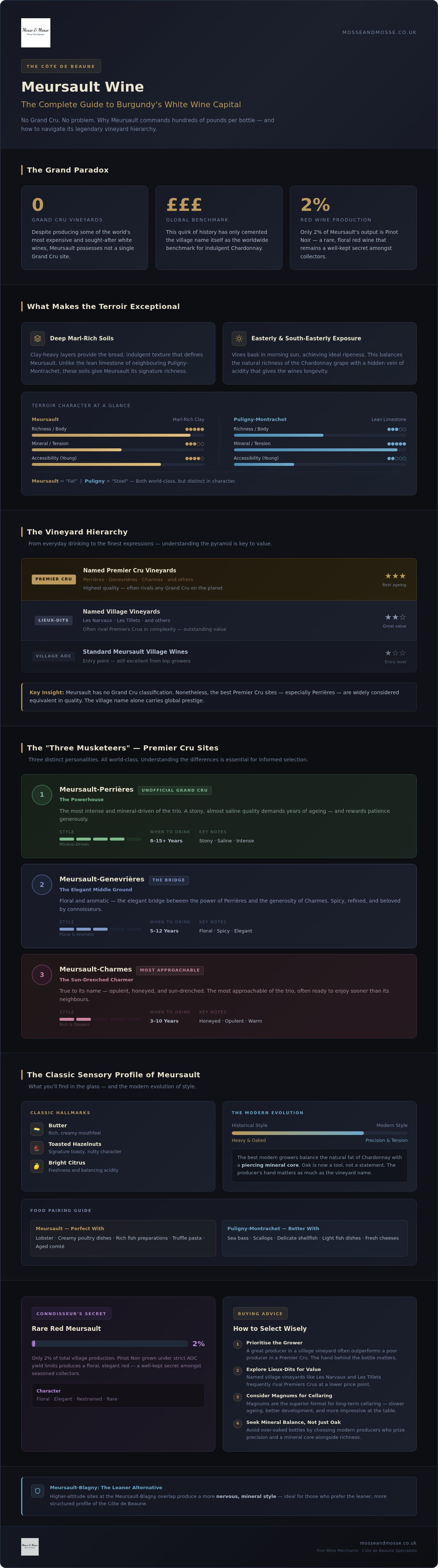
Meursault stands as the undisputed commercial heart of the Côte d’Or. It marks a dramatic geographical shift. As you travel south from the Pinot Noir strongholds of the north, the vines suddenly give way to the golden promise of Chardonnay. It's a village that defies conventional Burgundy logic. Despite producing some of the most expensive and sought-after white wines on the planet, it doesn't possess a single Grand Cru site. This quirk of history hasn't dampened its reputation; instead, it's cemented the village name itself as a global benchmark for quality.
The Terroir: Limestone, Marl, and Exposure
The magic lies beneath the surface. Whilst neighbouring Puligny-Montrachet is defined by its lean limestone, Meursault's terroir is characterised by deep, marl-rich soils. These clay-heavy layers provide the broad, indulgent texture that fans of Meursault wine have come to adore. The easterly and south-easterly exposures ensure the grapes bask in the morning sun, reaching a perfect level of ripeness that balances richness with a hidden vein of acidity. High up the slope, you'll find the Meursault-Blagny overlap. These higher altitude sites produce a more nervous, mineral style that we often recommend to those who prefer a leaner profile.
The Hierarchy of Meursault Vineyards
Understanding the hierarchy here requires looking beyond the label. You'll find the standard Village wines and the esteemed Premier Crus, but the real value often lies in the "Lieux-dits". These are named village-level vineyards, such as Les Narvaux or Les Tillets, which frequently rival Premiers Crus in complexity. It's also worth seeking out the rare red production. Only about 2% of the village's output is Pinot Noir. Under AOC regulations, these reds must follow strict yield limits. The result is often a floral, elegant red Meursault wine that remains a well-kept secret amongst our regular clients. We've spent years vetting growers to ensure every bottle we source reflects this intricate vineyard map.
The White Wine Benchmarks: Stylistic Profile and Leading Crus
The classic sensory profile of Meursault is often defined by an indulgent trio of butter, toasted hazelnuts, and bright citrus. Historically, this region was synonymous with a heavy, "oaked-to-death" style that prioritised richness above all else. However, we've seen a significant shift amongst the best modern growers. Today's finest examples of Meursault wine lean toward precision and "tension," where the natural fat of the Chardonnay grape is balanced by a piercing mineral core. This evolution makes understanding the hand of the producer just as vital as knowing the vineyard name when selecting white Burgundy wine for your cellar.
The "Three Musketeers": Perrières, Genevrières, and Charmes
Whilst Meursault lacks a Grand Cru, three Premier Cru sites stand above the rest. They're affectionately known as the "Three Musketeers" for their distinct yet complementary personalities:
- Meursault-Perrières: Widely considered the "unofficial Grand Cru," this site produces the most intense, mineral-driven wines. You'll find a stony, almost saline quality here that demands years of ageing.
- Meursault-Genevrières: This vineyard offers a more floral and aromatic profile. It's elegant and spicy, acting as the bridge between the power of Perrières and the generosity of Charmes.
- Meursault-Charmes: True to its name, this is the most approachable and sun-drenched of the trio. It offers an opulent, honeyed texture that's often ready to enjoy sooner than its neighbours.
Meursault vs Puligny-Montrachet: A Palate Comparison
If you're planning a special event, choosing between Meursault and Puligny-Montrachet often comes down to texture versus structure. Meursault is the "fat" to Puligny's "steel." Where Meursault coats the palate with a creamy, nutty weight, Puligny-Montrachet offers a more vertical, high-acid experience. For a decadent dinner featuring lobster or creamy poultry dishes, the richness of Meursault is unbeatable. Conversely, if you're serving delicate sea bass or scallops, the laser-like acidity of Puligny might be the better fit. If you're unsure which profile suits your menu, we're always happy to provide bespoke advice on the best current vintages for your occasion.
The Rare Red Meursault: A Connoisseur’s Secret
Meursault is the undisputed Queen of white Burgundy, but a tiny fraction of its production-roughly 2%-is dedicated to the "other" grape. This rare red Burgundy is a true connoisseur's secret, prized amongst enthusiasts for its scarcity and charm. It's often overlooked by the general market, yet it offers incredible value for those who know where to look. We've always found these bottles to be a refreshing change of pace. They possess a distinct character that sets them apart from the more famous reds of the Côte de Nuits. Finding a red Meursault wine today requires a bit of detective work, but the reward is a wine of immense heritage.
Pinot Noir in a Chardonnay World
Historically, Pinot Noir had a much stronger presence in the village than it does today. Before the global boom in white wine demand, many of these vineyards were mixed. Now, the unique charm of Meursault wine extends beyond its famous whites, though finding the reds is like finding a needle in a haystack. Most growers have replanted their red parcels with Chardonnay to satisfy the market's thirst for the village's famous whites. However, a few dedicated families maintain these historic plots. These are often found in cooler microclimates or specific pockets where the soil is too heavy for the finesse of Chardonnay. These bottles are easy to miss on a crowded wine list. You'll need to look closely at the producer or ask your merchant specifically for the village's red output.
Terroir and Taming the Tannins
The lower-slope soils, rich in clay and marl, lend these reds a surprisingly silky structure. Whilst the whites from these areas are broad and rich, the reds are elegant and floral. You can expect a flavour profile dominated by fresh red cherries, subtle earthiness, and very soft tannins. Unlike the structured, often muscular reds of Pommard, red Meursault is remarkably approachable in its youth. It's an exceptional value alternative to Volnay, sharing that same ethereal, light-footed quality that Burgundy lovers crave. We love pairing it with traditional Burgundian fare. A classic Coq au Vin or a simple plate of local cheeses works beautifully to highlight the wine's delicate fruit. If you're looking to source these rare bottles for your own collection, please do get in touch with us directly.
A Merchant’s Guide to Selecting and Enjoying Meursault
At Mosse and Mosse, we believe a label is only as good as the hands that tended the vines. Our philosophy is simple: we prioritise the grower over the famous name. This is particularly true for Meursault wine, where the difference between a mass-produced bottle and a hand-crafted masterpiece is night and day. As an independent merchant, our role is to act as your expert guide, vetting every estate to uncover those "hidden gems" that larger retailers often overlook. We look for producers who respect the heritage of the land whilst embracing the precision of modern viticulture.
If you're looking to invest in a bottle for a special occasion or long-term cellaring, we always recommend Magnums and larger formats. The increased volume of liquid slows down the oxidation process, allowing the wine to develop complex secondary characteristics of honey and dried fruit with far more grace. For those with patience, the 2022 vintage and top-tier Premiers Crus like Perrières have the longest legs. These bottles often peak after a decade in a cool, dark cellar.
Finding Value: Lieux-dits and Declassified Gems
You don't always need to pay Premier Cru prices to experience the soul of this village. "Lieux-dits" like Les Narvaux or Les Chevalières sit on the same limestone-rich slopes as their more expensive counterparts. They offer incredible tension and depth at a fraction of the cost. By hand-selecting every bottle, we ensure you're getting the best of these sites. Building a balanced Burgundy case is the best way to enjoy the region across the seasons. We suggest mixing these high-altitude whites with a few rare reds to ensure you're prepared for any menu.
Serving Temperatures and Glassware
A common mistake is serving white Burgundy straight from a domestic fridge. At 4°C, the delicate aromas of Meursault wine are completely muted. Aim for 12-14°C to let the butter and hazelnut notes breathe. For the rare reds, we suggest the "20-minute rule": take the bottle out of your cellar twenty minutes before serving to reach a gentle 16°C. Use a wide-bowled Burgundy glass for both. The increased surface area is essential for capturing the complex bouquet that defines this legendary appellation.
Discover the True Spirit of Meursault
Meursault is more than just a name on a label; it's a sensory journey through the very heart of the Côte de Beaune. Whether you're drawn to the mineral intensity of Perrières or the rare, floral charm of a red Pinot Noir, this village offers a lifetime of exploration for the dedicated enthusiast. We've spent years vetting growers and building relationships to ensure that every bottle we source reflects the true soul of the terroir.
As an independent, family-led enterprise, we pride ourselves on being specialists in curated French appellations. We prioritise the quality of the physical product over external marketing, ensuring that your investment translates into genuine drinking pleasure. We offer national UK mainland delivery, making it easier than ever to add these world-class benchmarks to your collection. If you're ready to explore the nuances of Meursault wine, we're here to guide you with the warmth and expertise of a boutique merchant.
Speak to our experts for a personalised Meursault recommendation and let us help you find the perfect match for your next occasion. We look forward to sharing our passion for these exceptional vineyards with you.
Frequently Asked Questions
Is Meursault wine always white?
No, Meursault wine is not exclusively white. Whilst Chardonnay accounts for approximately 98% of the village's output, a tiny fraction of production is dedicated to red wine made from Pinot Noir. These rare reds are often floral and elegant, offering a lighter alternative to the more structured wines of the Côte de Nuits. At Mosse and Mosse, we particularly enjoy sourcing these rare bottles for collectors looking for something truly unique that defies the usual expectations of the region.
What is the difference between Meursault and Chablis?
The primary difference lies in the terroir and the use of oak ageing. Chablis is grown on Kimmeridgian limestone in northern Burgundy, resulting in a lean, steely, and high-acid profile. In contrast, Meursault is produced further south in the Côte de Beaune; where marl-rich soils and traditional oak create a much broader, richer wine with signature notes of butter and toasted hazelnuts. It is a choice between vertical precision and horizontal indulgence.
Why are there no Grand Crus in Meursault?
The lack of Grand Cru sites is largely a result of historical classification decisions rather than a reflection of quality. When the AOC system was established, many Meursault growers were hesitant to seek Grand Cru status due to concerns over higher taxes and stricter regulations. Today, several Premier Cru sites, most notably Les Perrières, are widely considered to be of Grand Cru quality and command prices that reflect their world-class status amongst collectors across the country.
What food pairs best with a buttery Meursault Chardonnay?
Rich, textured white wines require dishes with similar weight and intensity. A classic buttery Meursault wine pairs exceptionally well with lobster served with drawn butter or sea bass in a creamy hollandaise sauce. It is also a magnificent partner for traditional roasted poultry, especially when served with a wild mushroom cream sauce. The wine's nutty undertones also make it a favourite accompaniment for aged Comté or other firm, nutty cheeses from the region.
How long can I cellar a Meursault Premier Cru?
A high-quality Premier Cru generally requires five to seven years to reach its peak, though exceptional vintages can comfortably cellar for fifteen years or more. Over time, the fresh citrus notes evolve into complex secondary flavours of honey, dried apricot, and truffle. If you are looking for long-term ageing, we highly recommend purchasing magnums. The larger format slows the oxidation process, ensuring the wine retains its vibrancy and complexity for many decades.
Why is Meursault more expensive than other white Burgundies?
Pricing is driven by a combination of immense global demand and very limited supply. The village has a finite number of hectares, and production costs in Burgundy are amongst the highest in the world due to manual labour and expensive land. Because this village is considered the global benchmark for rich Chardonnay, collectors worldwide compete for a small number of bottles. We focus on finding independent growers to ensure our clients receive the best possible value.


