
Why do so many wine lovers settle for a thin, overly alcoholic bottle from a supermarket shelf when the Rhône Valley offers some of the most soulful, textured wines in the world? We've all stood in the aisle, squinting at French labels and wondering if a "Villages" designation actually justifies the extra few pounds. It's frustrating when a region known for its sun-drenched richness delivers nothing but a sharp, uninspiring disappointment.
This guide will change how you shop for cotes du rhone wines by stripping away the marketing jargon and revealing the secrets of the classification hierarchy. You'll gain the confidence to distinguish between a peppery Northern Syrah and a plush Southern Grenache blend. We'll explore why the 2026 harvest yields of 43 hl/ha matter for quality and how the trend towards fresher, fruit-led styles is reshaping the region. By the end, you'll know exactly how to bypass uninspired branding and select a bottle that truly sings at your next dinner party.
Key Takeaways
- Master the French classification hierarchy to understand exactly when a "Villages" designation represents a genuine step up in quality and character.
- Discover the traditional art of the blend, where Grenache, Syrah, and Mourvèdre combine to create the region's signature warmth and spice.
- Learn why prioritising the reputation of independent producers over generic appellation labels is the secret to finding the finest cotes du rhone wines.
- Understand how to navigate recent vintage variations by seeking out the modern trend for fresher, fruit-forward styles that avoid excessive oak.
- Gain the confidence to choose a bottle that reflects the true soul of the Rhône Valley whilst avoiding the thin, uninspiring options often found on supermarket shelves.
Understanding Côtes du Rhône: More Than Just a Reliable Red
The Côtes du Rhône AOC is far more than a generic label found on the bottom shelf of a local shop. It is a vast regional designation in eastern France that stretches over 200km along the Rhône river, from Vienne in the north down to Avignon in the south. I often hear it described as the "workhorse" of French viticulture. Whilst it's true that the production volumes are high, this massive scale hides incredible gems that offer better value than many prestigious labels. The secret lies in the terroir and the fierce Mistral wind. This cold, dry wind is vital; it clears the skies of humidity and prevents grape rot, allowing for healthier harvests without excessive intervention.
For the 2026 vintage, the focus on quality is sharper than ever. Maximum yields for red and rosé cotes du rhone wines have been set at 43 hl/ha to ensure the fruit remains concentrated and expressive. We've always believed that a producer's commitment to the land matters more than the size of their marketing budget. When you find a grower who respects these natural conditions, the resulting wine is a revelation of sun-drenched fruit and earthy complexity.
The North-South Divide: Two Distinct Worlds
The valley is split into two distinct environments. In the North, you'll find narrow, steep granite slopes where the climate is cooler. This is the land of pure Syrah and fragrant Viognier. If you appreciate the structured elegance found in our Côte d’Or selections, the Northern Rhône's precision will feel familiar. In contrast, the South is a broad expanse of rocky, sun-baked plains scented with "garrigue"—the wild lavender and thyme that grow amongst the vines. Here, the heat requires a blend, usually led by the plush, high-alcohol Grenache.
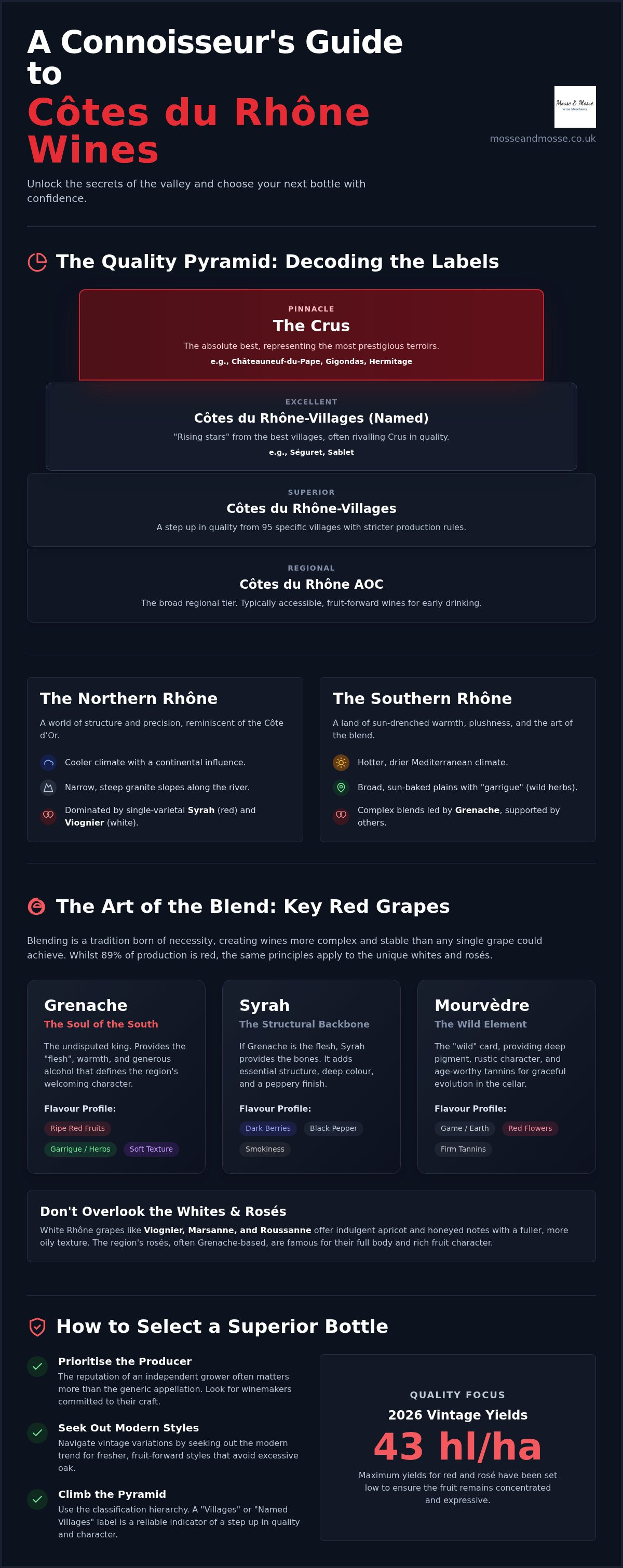
The Quality Pyramid: Decoding the Labels
Understanding the hierarchy is the easiest way to avoid a disappointing bottle. The system is designed to reward specific plots of land that produce superior fruit.
- Côtes du Rhône AOC: The broad regional tier. These are typically accessible, fruit-forward wines meant for early drinking.
- Côtes du Rhône-Villages: A step up in quality. These come from 95 specific villages that must adhere to stricter production rules.
- Côtes du Rhône-Villages (Named): These are the "rising stars" like Seguret or Sablet. They represent the best of their specific village and often rival the Crus in quality.
- The Crus: The absolute pinnacle. Names like Châteauneuf-du-Pape, Gigondas, and Hermitage represent the most prestigious terroirs in the valley.
We've spent years building relationships with independent growers who ensure their cotes du rhone wines punch well above their weight. It's about finding that sweet spot where heritage meets meticulous craft.
The Art of the Blend: Grapes and Character
Blending in the Rhône isn't just a stylistic choice; it's a tradition born of necessity. The region's variable climate means that relying on a single variety is often too risky for a grower. By combining different grapes, winemakers create a final profile that is far more complex and stable than any single-varietal wine could achieve. Whilst 89% of production for cotes du rhone wines is dedicated to red, the whites and rosés are increasingly sought after for their unique weight and texture. We often see "forgotten" varieties like Cinsault and Carignan adding a delicate floral lift or a rustic, spicy edge to our favourite selections.
Grenache: The Soul of the Southern Rhône
Grenache is the undisputed king of the South. It thrives in the intense heat, providing the "flesh" and warmth that defines the region's character. You'll find a flavour profile bursting with ripe red fruits and those unmistakable herbal notes of "garrigue". It also plays a vital role in crafting the region’s famous, full-bodied rosés. Because it carries high sugar levels, it provides the generous alcohol and roundness that makes these wines so welcoming. It's the heart of the blend, offering a soft, approachable texture that appeals to both novices and connoisseurs.
Syrah and Mourvèdre: Structure and Longevity
If Grenache is the flesh, Syrah and Mourvèdre are the bones. Syrah adds deep colour, dark berry flavours, and that signature black pepper finish that we look for in a quality bottle. Mourvèdre is the "wild" element; it provides the deep pigment and age-worthy tannins needed for a wine to evolve gracefully in the cellar. These varieties are essential for balancing the high alcohol potential of Grenache. They ensure the final blend remains harmonious and structured rather than simply being a fruit bomb.
The Elegant Whites and Refreshing Rosés
Don't overlook the whites and rosés. White Rhône grapes like Viognier, Marsanne, and Roussanne offer indulgent apricot and honeyed notes with a fuller, more oily texture than many other European whites. We've also noticed a significant rise in the popularity of dry, pale Rhône Rosé as a sophisticated, more structured alternative to the lighter styles of Provence. These wines offer a savoury complexity that pairs beautifully with food. If you're looking for a specific profile to suit a dinner party menu, you can always ask us for a bespoke recommendation to find your perfect match.
Selecting Quality: How to Spot a Superior Bottle
Choosing a bottle based solely on the name of a famous village is a common mistake. I always tell our clients that the producer matters far more than the appellation. A meticulous independent grower will produce a basic regional wine that far outshines a mediocre producer's Châteauneuf-du-Pape. When you're scanning a label, look for the phrase "Mis en bouteille au domaine". This indicates the wine was estate-bottled, ensuring the person who grew the grapes also oversaw the fermentation and ageing. It's the hallmark of quality that separates artisanal cotes du rhone wines from the uninspired, mass-produced blends found in the supermarket trap.
Vintage character is equally vital. For those drinking the 2026 vintage, the focus has shifted away from sheer alcoholic power towards balance and freshness. With the 2026 harvest starting exceptionally early due to a hot spring, the best producers have worked hard to maintain acidity and vibrant fruit. These are wines with soul and a sense of place, rather than the thin, overly alcoholic profiles that often result from industrial-scale farming. If you want to ensure your next purchase reflects this level of craft, get in touch with us for a curated selection tailored to your palate.
Food Pairings for the British Table
The peppery spice and robust fruit of a Rhône red make it the ultimate partner for a classic British Sunday roast. A Grenache-led blend elevates the richness of roast lamb or beef, whilst the earthy notes of a more structured Syrah-heavy wine are a perfect match for autumnal venison stews or wild mushroom risottos. For summer dining, don't ignore the whites. A chilled, honeyed Rhône white provides a beautiful counterpoint to grilled poultry or spicy, coriander-flecked salads.
Serving and Cellaring Tips
Temperature can make or break your experience. Many people serve rich reds far too warm, which makes the alcohol feel aggressive. Aim for a slightly cool "cellar temperature" of around 16°C. Even an affordable bottle of cotes du rhone wines benefits from 30 minutes in a decanter; that short burst of air softens the tannins and lets the aromatics breathe. Finally, use a glass with a large, rounded bowl. This shape allows the complex scents of the valley to concentrate, making every sip more indulgent.
Discovering the Rhône with Mosse and Mosse
We've spent decades honing our palates amongst the prestigious estates of Red Burgundy and Bordeaux. This rigorous training allows us to apply the same level of scrutiny to our selection of cotes du rhone wines. We don't just look for labels; we look for the heartbeat of the vineyard. Our commitment is to the independent growers who respect their land, ensuring that every bottle we stock offers a genuine reflection of its terroir. By focusing on quality over external branding, we find the hidden gems that offer extraordinary value.
Our Personal Selection Process
Our search for excellence is relentless. We taste hundreds of bottles every year to find the few that meet our "quality over branding" philosophy. We look for wines that express true varietal character and regional typicity, avoiding the generic, mass-market styles that lack soul. We prioritise smaller domains that larger retailers often overlook because they simply can't provide the industrial volumes required for supermarket shelves. Our curated mixed cases are designed to be a guided tour of the valley from your own home. With national delivery across the UK mainland, we ensure these artisanal treasures reach your door safely and in peak condition.
Bespoke Services for Every Occasion
The Rhône Valley is incredibly versatile, making it a fantastic source for events and gifts. If you're selecting the perfect Wedding Wine, a well-chosen Southern blend offers the crowd-pleasing warmth and fruit that pairs beautifully with a celebratory menu. For professional relationships, we create memorable Corporate Gift Boxes featuring premium Rhône Crus that signal true appreciation. For those intimate celebratory dinners, the allure of Magnums is hard to beat. These larger formats don't just look impressive on the table; they also allow cotes du rhone wines to age with more grace, preserving the vibrant aromatics that make this region so special.
Elevate Your Next Glass with an Independent Selection
The Rhône Valley remains one of the most rewarding regions for those who know where to look. By moving beyond the supermarket aisles and focusing on the meticulous work of independent growers, you can find bottles that offer profound depth and character. We've explored the importance of the quality pyramid and the delicate art of the blend, but the ultimate secret is finding a partner who prioritises the liquid in the bottle over the branding on the label.
Finding the right cotes du rhone wines doesn't have to be a gamble. As specialists in fine French wines, we pride ourselves on an expert selection process that larger retailers simply can't replicate. Every bottle is hand-picked by our independent merchants to ensure it expresses true regional typicity. With national UK mainland delivery, we make it easy to stock your cellar with artisanal quality. Explore our curated collection of Rhône wines today and let us help you find a bottle that truly resonates with your palate. Here's to your next great discovery.
Frequently Asked Questions
What is the difference between Côtes du Rhône and Côtes du Rhône-Villages?
The primary difference lies in the strictness of production rules and the specific terroir of the vineyards. Whilst a standard AOC bottle can be sourced from across the region, a Villages wine must come from one of 95 delimited areas. These wines often display more concentration and character because the maximum permitted yields are lower; for the 2026 vintage, the limit is 39 hl/ha compared to 43 hl/ha for regional wines.
Is Côtes du Rhône wine always red?
No, although red wine dominates about 89% of the total production. You can also find vibrant rosés and textured white cotes du rhone wines that are becoming increasingly popular amongst connoisseurs. The whites often feature a lovely blend of Viognier and Marsanne, offering a fuller body than many crisp European alternatives. The rosés are typically dry, structured, and perfect for summer dining when you want more weight than a standard Provence style.
Which grapes are used in a typical Côtes du Rhône blend?
Most red blends are built around the "GSM" trio: Grenache, Syrah, and Mourvèdre. Grenache provides the ripe red fruit and alcoholic warmth, whilst Syrah adds dark berry notes and black pepper spice. Mourvèdre contributes deep colour and structure. You might also find smaller percentages of Cinsault for floral elegance or Carignan for a rustic, earthy edge. This diversity allows winemakers to balance the blend perfectly regardless of the specific vintage conditions.
How long can I keep a bottle of Côtes du Rhône before drinking?
Most regional bottles are designed to be enjoyed within two to five years of the vintage date. They are crafted for immediate pleasure and fruit-forward charm. However, higher-tier cotes du rhone wines from specific villages or the prestigious Crus can age beautifully for a decade or more. If you've chosen a bottle with high Mourvèdre content or one from a structured vintage, it will often develop complex leather and truffle notes with a few years in the cellar.
Should I decant Côtes du Rhône wines?
Yes, I almost always recommend decanting these wines for at least 30 minutes before serving. Even an affordable regional blend benefits from a short burst of oxygen; it helps to soften any youthful tannins and allows the complex aromatics of the valley to open up. If you don't have a decanter, simply pouring a glass and letting the bottle sit open can still make a noticeable difference to the balance and smoothness of the wine.
What food goes best with a Southern Rhône red?
These wines are incredibly food-friendly due to their warmth and spice. A Southern Rhône red is the natural partner for a traditional Sunday roast lamb seasoned with rosemary and garlic. The herbal "garrigue" notes in the Grenache also pair beautifully with earthy dishes like:
- Beef Bourguignon or slow-cooked stews.
- Grilled Mediterranean vegetables.
- Hard cheeses like aged Comté or Cheddar.
The peppery finish of the Syrah helps to cut through rich, fatty meats effortlessly.


