
Why does a single village in the Côte de Nuits command nine different Grand Cru titles while its neighbours often settle for one or two? It's a question of geological intensity that makes Gevrey-Chambertin wine the "iron fist in a velvet glove," offering a muscularity and depth that few other Pinot Noirs can replicate. You likely appreciate the prestige of the region, yet feel a certain hesitation when faced with the complex hierarchy of 26 Premier Crus or the daunting reputation of its firm, age-worthy tannins. It's easy to feel lost between the mass-produced labels and the soulful domaines, perhaps fearing you might open a special bottle before it has truly started to sing.
As a family-led merchant with 25 years of experience in high-end curation, we want to help you master these intricacies. We'll guide you through the sensory profile of the village, identify the most reliable vineyard sites, and share our expert advice on cellaring and food pairings. By the end of this guide, you'll have the confidence to select a bottle for any special occasion, knowing exactly when it will be at its magnificent best.
Key Takeaways
- Identify the defining characteristics of the "King of Burgundy" and why its 100% Pinot Noir expressions are celebrated for their muscular, structured profile.
- Explore how the local terroir and the cooling breezes of the Combe de Lavaux influence the unique flavour and longevity of Gevrey-Chambertin wine.
- Master the essentials of service and cellaring, from choosing the correct glassware to understanding why a top vintage requires at least ten years to mature.
- Learn our professional approach to sourcing "hidden gems," allowing you to build a cellar based on genuine liquid quality rather than just external branding.
What is Gevrey-Chambertin Wine? Defining the Appellation
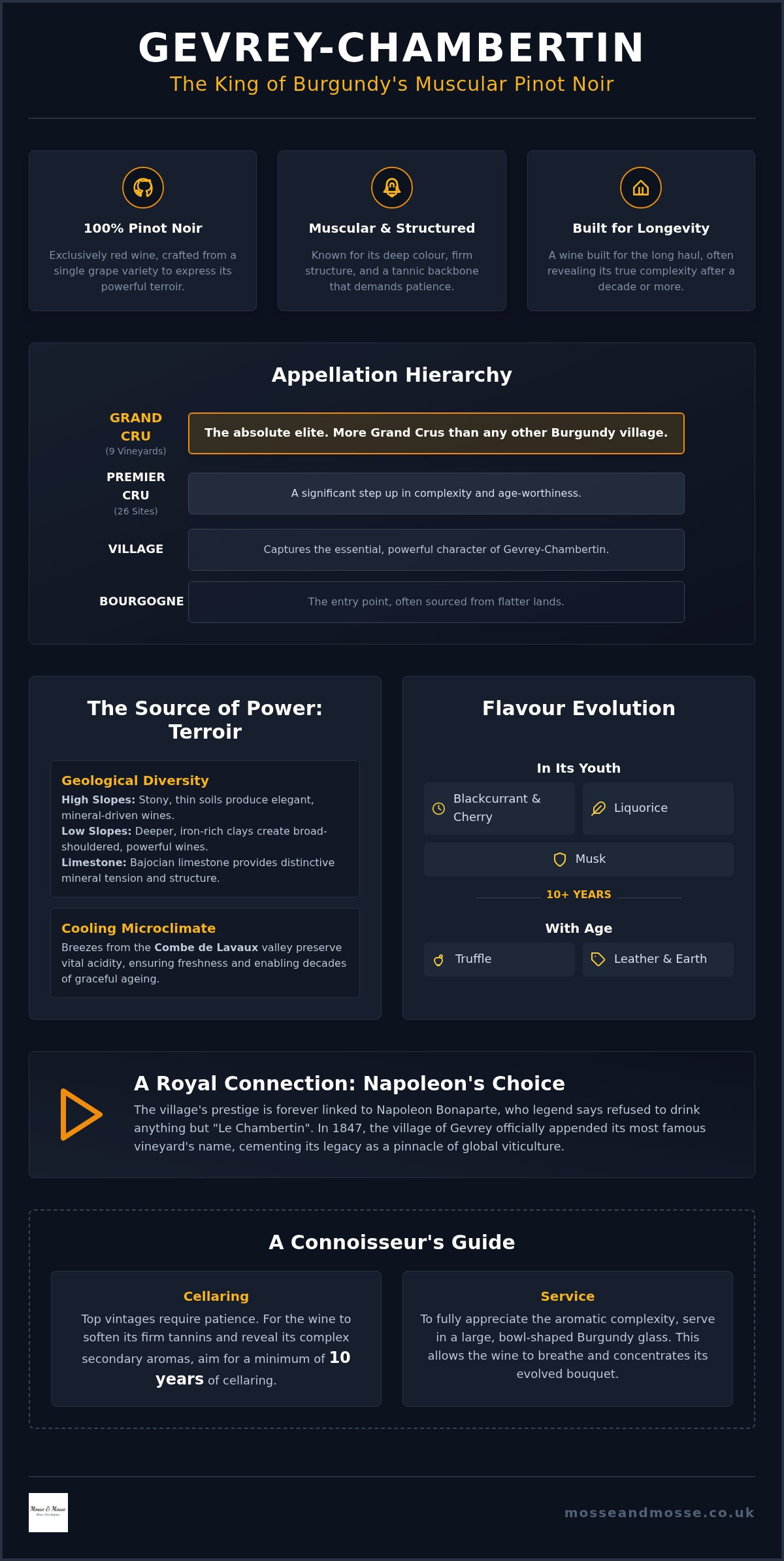
Gevrey-Chambertin stands as the northern powerhouse of the Côte de Nuits. It's the largest wine-producing village in this celebrated sub-region, and it carries a reputation that's as grand as its geography. Whilst other villages might dabble in whites, this AOC is strictly dedicated to red wine. Every bottle of gevrey chambertin wine is crafted from 100% Pinot Noir, yet you won't find the delicate, ethereal character often associated with the grape here. Instead, these wines are famous for their deep colour, firm structure, and a tannic backbone that demands respect and, quite often, a bit of patience.
We often describe these reds as the "King of Burgundy." It's a title earned through sheer power and longevity. When you pour a glass, you're meeting a wine that's built for the long haul, frequently revealing its true complexity only after a decade in the cellar. This muscularity is what sets it apart from its more floral neighbours, offering a sensory experience that's intense, earthy, and undeniably regal.
The Legend of Chambertin and Napoleon
The prestige of the village is inextricably linked to Napoleon Bonaparte. Legend has it that the Emperor refused to drink anything but "Le Chambertin," even insisting on bringing crates of it during his military campaigns. When exploring the history of Gevrey-Chambertin wine, you'll find that this royal connection changed the village forever. In 1847, Gevrey became the first village in the Côte d'Or to officially append the name of its most famous vineyard to its own, creating the "Gevrey-Chambertin" we recognise today. This historical legacy continues to anchor the region's status as a pinnacle of global viticulture, ensuring its name remains synonymous with power and French heritage.
Appellation Hierarchy: From Village to Grand Cru
Understanding the hierarchy is essential if you want to find the best value. The system is split into four distinct tiers:
- Bourgogne: The entry point, often sourced from flatter lands.
- Village: Wines that capture the essential character of Gevrey-Chambertin. Many of these vineyards sit east of the RN74 road, where the soils are deeper and richer.
- Premier Cru: 26 specific sites that offer a significant step up in complexity.
- Grand Cru: The absolute elite.
Gevrey-Chambertin boasts nine Grand Cru vineyards, which is more than any other village in Burgundy. This concentration of top-tier terroir is why the village remains the first port of call for collectors. Whilst the Grand Crus command the highest prices, we've found that the "Village" level wines located near the RN74 often provide a fantastic introduction to the region's signature intensity without the Grand Cru price tag.
The Unique Style and Terroir: Why Gevrey-Chambertin Stands Apart
If you've ever wondered why Gevrey-Chambertin feels so much more substantial in the mouth than its neighbours, the answer lies in a perfect storm of geology and microclimate. The cooling breezes from the Combe de Lavaux, a deep valley cutting through the hills, ensure the grapes maintain their acidity even in warmer vintages. This preservation of freshness is vital for the longevity of gevrey chambertin wine, allowing it to age gracefully whilst its dense structure softens. The Official Gevrey-Chambertin Appellation Profile highlights how the complex mix of Bajocian limestone and iron-rich clays creates a wine that is both intense and resilient.
In its youth, you'll likely encounter aromatics of blackcurrant and cherry, often layered with musk and liquorice. As the years pass, these primary fruits evolve into the noble, earthy scents of truffle and leather. It's this evolution that makes every bottle a journey.
The Power of the Soil
The high limestone content in the northern part of the village provides the distinctive mineral tension found in the most prestigious bottles. Higher up the slope, where the soil is stonier and thinner, the wines tend to be more elegant and vertical. Whilst the lower slopes, with their deeper clay deposits, produce the broad-shouldered, powerful wines that have made the village famous. This geological diversity is why gevrey chambertin wine is amongst the most long-lived Pinot Noirs in the world, often outlasting its peers by a decade or more.
Gevrey vs Neighbours: A Comparison
Whilst we often celebrate the variety found in Red Burgundy: A Guide to France's Finest Pinot Noir, Gevrey-Chambertin remains the benchmark for those seeking structure. It offers a fascinating contrast to the "feminine" elegance of Chambolle-Musigny, which prioritises silkiness over strength. Equally, it avoids the rustic, sometimes gamey earthiness associated with Nuits-Saint-Georges, maintaining a regal poise even at its most powerful. If you're unsure which style best suits your palate, please reach out for a personal chat with our team.
A Connoisseur’s Guide to Vintages, Ageing, and Food Pairings
To truly appreciate the majesty of gevrey chambertin wine, you must embrace the virtue of patience. Unlike some of its softer neighbours, a top-tier Gevrey often requires at least a decade to unfurl its full potential. In its youth, the tannins can feel quite firm; however, given time, they resolve into a silky, enveloping texture that is the hallmark of fine Pinot Noir. We've found that the most rewarding bottles are those that have been allowed to rest undisturbed, away from light and vibration.
When you're ready to open a special bottle, serving etiquette is paramount. We recommend decanting for at least an hour to allow the aromatics to breathe and expand. Always use a large-bowled Burgundy glass to capture the complex bouquet. Whilst many serve reds at a generic room temperature, this muscular wine shines brightest at a slightly cooler 15 to 17°C. This slight chill preserves the fruit's precision and prevents the alcohol from dominating the palate.
Looking at recent years, the 2015 and 2018 vintages offer incredible concentration and firm tannins. The 2019s are particularly vibrant with intense floral notes, whilst the 2020 vintage is already being hailed as exceptional for its power and fruit-forward intensity. These years represent the pinnacle of modern Burgundy winemaking and are essential for any serious cellar.
The Art of Cellaring Burgundy
You'll need a space with consistent temperature and humidity to protect those delicate Pinot Noir nuances. Fluctuations are the enemy of fine wine, leading to premature ageing or a loss of aromatic complexity. For those looking for superior development, we often suggest ageing in Magnums & Larger Formats. The slower oxygen exchange in a larger bottle ensures the wine transitions beautifully from primary red fruits to those sought-after savoury "forest floor" notes that collectors crave.
Culinary Matches for Muscular Pinot Noir
The structured nature of this wine makes it a formidable partner for rich, earthy dishes. Classic French pairings like Beef Bourguignon or a roasted leg of lamb are traditional for a reason. However, we find it particularly well-suited to British game. The wine's firm tannins perfectly cut through the richness of venison or pheasant, creating a balanced and indulgent experience. For the cheese course, the local Époisses is a match made in heaven, though a mature, nutty Cheddar also works wonderfully. If you'd like advice on which vintage best suits your upcoming menu, get in touch for a personal recommendation from our cellar team.
Finding Quality: The Mosse and Mosse Curation
Choosing the right gevrey chambertin wine can feel like a daunting task given the sheer breadth of the appellation. At Mosse and Mosse, we've spent 25 years refining our selection process to ensure we prioritise liquid quality over external branding. Whilst a famous name on a label offers some security, it often comes with a significant price premium that doesn't always reflect what's in the glass. Our family-led approach involves seeking out producers who put their heart into the vineyard rather than the marketing budget.
Being an independent merchant allows us to move quickly when we discover "rising star" producers. These are the winemakers currently producing exceptional quality but who haven't yet reached the astronomical price points of the most famous domaines. We're committed to sharing these finds with our clients, offering national delivery across the UK so that connoisseurs from Cornwall to the Highlands can enjoy these rare bottles. If you're looking for something specific, we always encourage you to contact us for a bespoke recommendation tailored to your palate.
Navigating the Côte de Nuits
Our expertise is deeply rooted in the Côte de Nuits region. One of the most common points of confusion for collectors is the gap between "negotiant" bottlings and "domaine" wines. Negotiants often buy grapes or wine from various sources, which can lead to a more standardised style. In contrast, Domaine-bottled wines are grown, made, and bottled by the estate, typically offering a purer expression of terroir. If you're eager to see how Gevrey compares to its peers, our Côte d’Or collection provides a curated gateway to the region's diverse villages.
Expert Advice for Your Next Purchase
Building a balanced Burgundy cellar is a marathon, not a sprint. We help our clients select wines that will mature at different rates, ensuring there's always something magnificent to open. Our seasonal Mixed Wine Cases are a brilliant way to discover new producers amongst our latest shipments. We invite you to explore our selection and experience the true soul of Burgundy, guided by a team that cares as much about your personal enjoyment as the heritage of the grapes themselves.
Master the King of Burgundy in Your Own Cellar
Embracing the structured power of gevrey chambertin wine is a rite of passage for any serious collector. By understanding the village's unique geological intensity and the cooling influence of the Combe de Lavaux, you can move beyond the labels and appreciate the true "iron fist in a velvet glove" character of these reds. Whether you're looking for a firm, age-worthy Grand Cru or a hidden gem from a rising star domaine, the key lies in patience and precise sourcing. These wines aren't just bottles; they're living histories that reward those who wait for the perfect drinking window. To immerse yourself in this history and the local terroir, you can discover Bellavevra, which offers luxury accommodation in the heart of the Burgundy-Jura.
With over 25 years of trusted service and a specialist focus on the Côte de Nuits, our family-led team is here to help you find the right fit for your collection. We take pride in our independent curation, ensuring every bottle we recommend meets our exacting standards for quality and character. If you're ready to add a legendary Pinot Noir to your next special occasion, speak to our experts for a personalised Gevrey-Chambertin recommendation. We look forward to helping you discover the magnificent soul of this historic region.
Frequently Asked Questions
Is Gevrey-Chambertin a heavy wine?
Gevrey-Chambertin is not heavy in the way a Cabernet Sauvignon might be, but it is certainly the most muscular expression of Pinot Noir in Burgundy. Whilst it maintains the grape's signature medium body, it possesses a broader structure and firmer tannins than its neighbours. This creates a sense of weight and power on the palate that distinguishes it from the lighter, more floral styles found in villages like Volnay.
How long can you cellar Gevrey-Chambertin wine?
Top examples of gevrey chambertin wine have an exceptional lifespan, often cellaring beautifully for 10 to 20 years. Village level bottles are typically approachable after five years, but Premier Cru and Grand Cru sites require at least a decade to soften their tannic grip. As the wine ages, those intense black fruit flavours transition into complex notes of leather, truffle, and forest floor.
What is the difference between Gevrey-Chambertin and Chambertin?
Gevrey-Chambertin refers to the entire village appellation, encompassing village level, Premier Cru, and Grand Cru vineyards. Chambertin is a specific, elite Grand Cru vineyard covering just 12.9 hectares within that village. Every bottle of Chambertin is a Gevrey-Chambertin, but only a tiny fraction of the village's output comes from the prestigious Chambertin plot itself.
Which are the best Premier Cru vineyards in Gevrey-Chambertin?
Clos Saint-Jacques is widely regarded as the finest Premier Cru, often commanding prices and respect equal to the Grand Crus. Other exceptional sites include Les Cazetiers and Lavaux Saint-Jacques, both known for their mineral tension and elegance. These vineyards sit on the steeper slopes where the limestone content is high, producing wines with incredible precision and ageing potential.
What food goes best with Gevrey-Chambertin Pinot Noir?
Rich, savoury dishes are the ideal match for this wine's structured profile and firm tannins. It's a classic partner for British game such as venison or pheasant, where the wine's intensity complements the lean, earthy flavours of the meat. For a simpler pairing, a mature, nutty Cheddar or the pungent local Époisses cheese will stand up perfectly to the wine's muscular character.
Why is Gevrey-Chambertin so expensive?
High global demand and strictly limited supply are the primary drivers of the price for gevrey chambertin wine. The appellation covers only 409 hectares, and yields are kept low to ensure the highest quality and concentration. When you combine this scarcity with the village's historic prestige and the high costs of artisanal viticulture in the Côte d'Or, the market price reflects the wine's status as a luxury commodity.


