
Imagine standing before a wall of dark bottles, trying to decipher the difference between an LBV and a 20-year-old Tawny while wondering if you'll need a decanter before dinner. It’s easy to feel a bit overwhelmed by the terminology, especially with the 2026 regulatory updates that have refined how we identify the best drinking port for our tables. You don't need to be a master sommelier just to enjoy a glorious glass of something sweet and fortified after a long day.
At Mosse and Mosse, we believe it’s all about what’s in the bottle and the pure drinking pleasure it brings to your glass. I’m going to show you how to confidently choose the perfect bottle for any occasion, from a reliable evening sip to a grand celebratory vintage. We will explore the nuances of each style, look at the quality-to-value ratio of the current market, and provide the practical tips you need to serve every glass at its peak. By the end, you'll know exactly which cork to pull for your next evening in.
Key Takeaways
- Distinguish between the vibrant fruit of Ruby and the nutty complexity of Tawny to ensure you always pick the right family for your palate.
- Discover how to find the best drinking port for any moment, balancing price and quality whether you're relaxing on a Tuesday or hosting a grand dinner.
- Stop guessing about decanting and learn the simple serving temperatures that unlock the "pure drinking pleasure" hidden inside your bottle.
- Uncover the secrets of the Vintage label and why certain exceptional years are worth the wait while others are ready for immediate enjoyment.
- Learn why independent curation helps you avoid the common pitfalls of mass-market labels and find the truly glorious bottles that define the Douro Valley.
Finding Your Perfect Match: What Makes a Great Drinking Port?
Port is the ultimate pleasure wine. It comes from the rugged, terraced slopes of the Douro Valley in Portugal, where the sun-drenched slate soil creates something truly magical in the glass. While the UK market once viewed this as a seasonal Christmas treat, 2026 has seen a major shift toward year-round appreciation. The best drinking port for your collection depends entirely on your personal palate. Some prefer the punchy, fruit-forward power of a Ruby, while others seek the complex, nutty layers of a well-aged Tawny.
To find your perfect match, it helps to understand the history of Port wine and the unique way it is produced. Port is a fortified wine where fermentation is halted by grape spirit to preserve the natural sugars of the harvest. At Mosse and Mosse, we always say it's all about what's in the bottle. This means distinguishing between "ready-to-drink" styles that offer immediate gratification and "cellar-worthy" bottles that require years of patience to reach their peak.
The Port Occasion: When to Pull the Cork
The context of your evening should dictate your choice. A White Port and Tonic serves as a crisp, refreshing summer aperitif, perfect for long evenings in the garden. For a reliable Friday night bottle that provides deep, accessible fruit without the need for decanting, a Late Bottled Vintage (LBV) is a fantastic option. If you’re looking for a contemplative fireside companion for solo sipping, an Aged Tawny offers a more refined, elegant experience that rewards slow appreciation.
Why 2026 is a Great Year for Port Lovers
Current availability in the UK market is excellent for those seeking mature bottles from smaller estates. We are seeing a surge in popularity for "Single Quinta" ports, which come from individual properties and often offer superior value compared to the big-name declared vintages. Since the September 2025 regulatory changes removed the 75,000-liter stock reserve requirement, boutique producers have been able to bring more diverse, high-quality options to the market. This makes hunting for the best drinking port an exciting journey into the hidden gems of the Douro.
Decoding the Styles: From Vibrant Ruby to Nutty Tawny
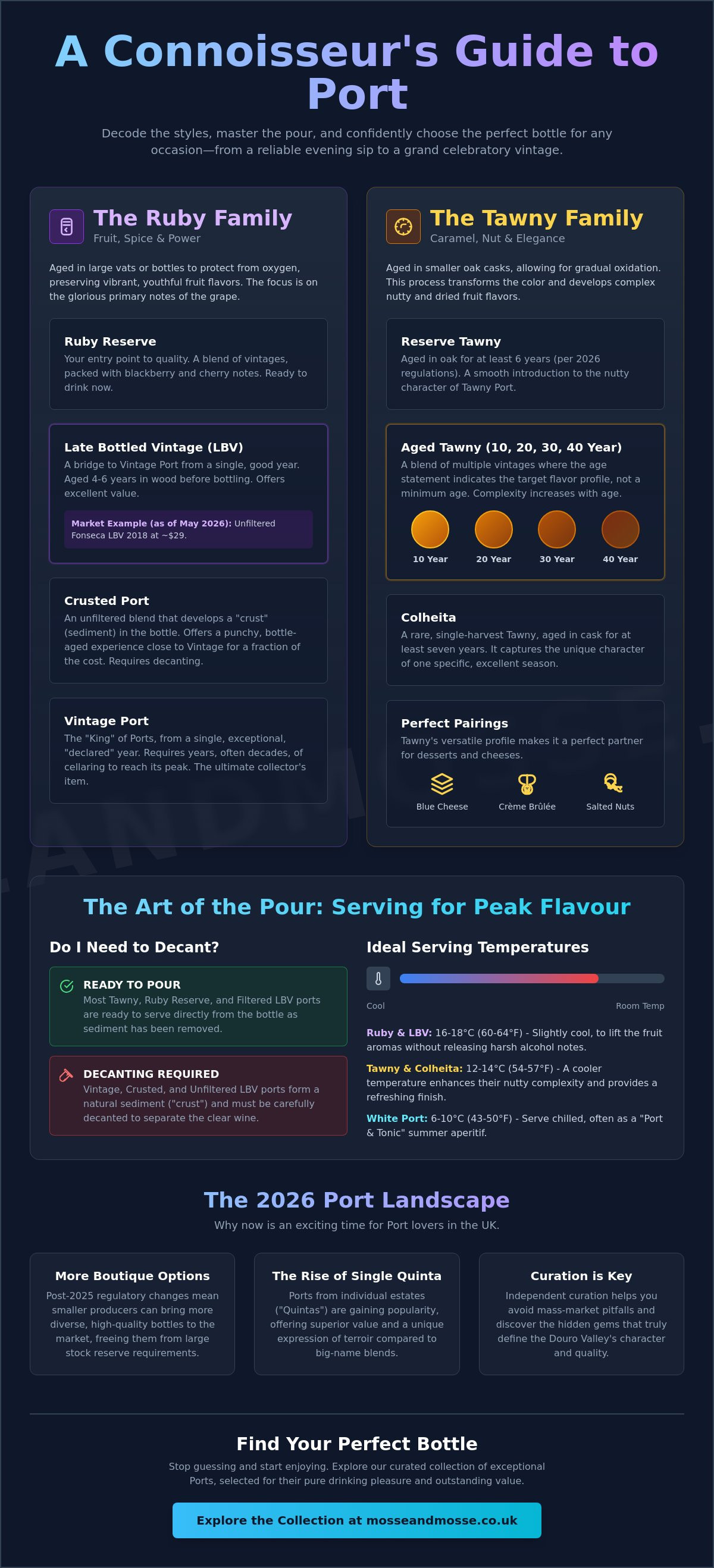
Choosing the best drinking port starts with understanding the two distinct paths the wine takes after fortification. One path leads to the vibrant, fruit-heavy Ruby family, while the other creates the oxidative, nutty elegance of Tawny. The primary difference lies in the vessel used for aging. Rubies spend most of their life in large vats or bottles to protect them from oxygen, preserving those glorious primary fruit flavours. Tawnies are aged in smaller oak casks where they breathe, slowly turning from deep purple to a pale, amber-brown hue.
It's important to understand that Port wine regulations set by the IVDP strictly govern how these styles are labelled. These rules ensure that when you see "Vintage" on a bottle, it represents a single, exceptional year of harvest. If you want the intensity of a top-tier wine without the $124 price tag of a Dow’s 2000 Vintage, consider Crusted Port. It’s an unfiltered blend that develops a "crust" in the bottle, offering a punchy, bottle-aged experience that is remarkably close to a true Vintage for a fraction of the cost.
The Ruby Family: Fruit, Spice, and Power
Ruby ports are all about youthful energy. A Ruby Reserve is your entry point, packed with blackberry and cherry notes. The Late Bottled Vintage (LBV) acts as a bridge; it’s wine from a single year that spends four to six years in wood before bottling. As of May 2026, an unfiltered Fonseca LBV 2018 costs around $29, making it a fantastic value-to-quality choice. Vintage Ports are the "Kings," but they require patience. They are only declared in the best years, and knowing the drinking window is vital to ensure you don't open a bottle that still needs a decade to soften. If you're unsure which year to pull from the cellar, you can explore our curated Port collection for ready-to-drink gems.
The Tawny Family: Caramel, Nut, and Elegance
Tawny Port is defined by time and wood. The age statement on the label (10, 20, 30, or 40 years) represents the target flavour profile of the blend, not the age of the youngest wine. Under the 2026 regulatory updates, a Reserve Tawny must now be aged in oak for at least six years before it can be bottled. For a more specific experience, look for a Colheita. These are rare, single-harvest tawnies that capture the character of one specific season. Because they are already oxidised, Tawnies are incredibly versatile for food pairings. They are the perfect partner for salted nuts, blue cheese, or even a rich crème brûlée.
The Art of the Pour: Serving Your Port for Peak Flavour
Even the best drinking port can lose its charm if it’s served in a tiny, thimble-sized glass at a lukewarm temperature. I often see people making the mistake of treating Port like a delicate antique that can't be touched. In reality, moving beyond those cramped "port glasses" to a proper ISO or standard white wine glass allows the aromas to breathe and the bouquet to open up. Temperature is equally vital. While you might serve a Ruby at room temperature, your White and Tawny Ports should be lightly chilled to around 10 or 12 degrees Celsius to highlight their crispness and nutty elegance.
Decanting 101: Sediment and Aeration
There's a common myth that every bottle needs decanting, but it really comes down to how the wine was aged. Vintage and Crusted Ports are bottled without filtration, meaning they develop heavy sediment over time. To serve these, stand the bottle upright for 24 hours, then pour it slowly into a clean glass decanter until you see the sediment reach the neck. On the other hand, LBV and Tawny are the convenience kings. These are usually filtered before bottling, so they require no decanting and are ready to pour the moment you pull the cork. For a deeper look at how these styles differ, see our Types of Port: A Connoisseur’s Guide.
Storage and Longevity After Opening
One of the greatest benefits of Port is its resilience. Because the fermentation is halted by grape spirit, the higher alcohol content allows Port to resist oxidation far longer than standard table wine. However, the "drinking window" still varies by style. Ruby-style ports, including LBVs, are best enjoyed within seven days to keep that vibrant berry profile fresh. Tawny ports are the true survivors. Because they've already been exposed to oxygen during their years in oak, a 10 or 20-year-old Tawny can stay glorious for four to eight weeks if kept in the fridge. If you're looking for a bottle that lasts through a month of occasional evening sips, you can view our latest cellar arrivals to find your perfect match.
Beyond the Label: Why Curation Matters When Buying Port
Hunting for the best drinking port means looking past the flashy labels found in large retail chains. While big supermarkets focus on volume and stock turnover, an independent merchant focuses on the soul of the wine. At Mosse and Mosse, our philosophy is simple: it’s all about what’s in the bottle. We look for wines that offer character and history, ensuring that every bottle we select has been stored under perfect conditions. Provenance is everything. Even a sturdy fortified wine can be diminished by poor handling or fluctuating temperatures before it reaches your cellar.
Curation is also about helping you explore the full spectrum of the Douro without the risk of a "dud" bottle. Building a mixed case allows you to apply everything you've learned about Ruby and Tawny styles in one delivery. It’s a practical way to discover which specific houses suit your palate, moving from the bright fruit of a young reserve to the complex, wood-aged depth of a mature blend.
Hunting for Quality in the Douro
We focus our search on family-owned Quintas rather than massive corporate conglomerates. These smaller estates often produce glorious, small-batch wines that never see the inside of a supermarket. Having a direct line to your merchant means you get expert advice on the current state of a vintage, saving you from the heartbreak of opening a bottle that is past its prime. If you want to refine your search for quality, read our guide on How to Buy Wine Online With Confidence.
Personal Favourites for 2026
For those seeking pure drinking pleasure this year, a 10-Year-Old Tawny remains a standout choice for its incredible versatility. It’s a wine treat that bridges the gap between youthful energy and sophisticated age. This reliability makes Port a timeless option for corporate gifting, offering a sense of heritage and quality that staff and clients truly appreciate. Whether you are buying for a friend or yourself, we are here to help you find the best drinking port for your next celebration. Explore our hand-picked Port collection and let us guide you to your next favourite bottle.
Elevate Your Evening with the Perfect Pour
Finding the best drinking port doesn't have to be a daunting task involving decades of cellarage. The secret lies in matching the style to your specific moment. Whether you choose a vibrant LBV for a Friday night or a chilled 20-year-old Tawny that stays glorious for up to eight weeks, the focus should always be on the quality inside the glass. By moving beyond the supermarket shelf and embracing proper serving temperatures, you unlock the true potential of the Douro Valley.
At Mosse & Mosse, Tim and Sam bring 25 years of experience in corporate gifting and curated cases to help you find those hidden gems. We specialise in Old World excellence and provide the direct, personal service that only a family-run business can offer. It really is all about what's in the bottle. Browse our curated Port selection for your next special evening and let us help you discover a wine treat that is truly memorable. Cheers to your next great discovery.
Frequently Asked Questions
What is the best Port for a beginner to start with?
A Late Bottled Vintage (LBV) or a 10-Year-Old Tawny is the best drinking port for someone new to the style. These bottles offer a high value-to-quality ratio and are ready to enjoy immediately without any complex cellarage. You can find excellent examples like the Fonseca LBV for around $28.99, providing a rich, berry-filled introduction to the world of fortified wine.
Does all Port need to be decanted before drinking?
No, the majority of modern Port is filtered before bottling and doesn't require decanting. You only need to decant Vintage Port, Single Quinta Vintage, or Crusted Port because these are bottled unfiltered and develop natural sediment over time. Standard Rubies, Tawnies, and most LBVs are the convenience kings of the cellar; just pull the cork and pour.
How long does a bottle of Port last once it is opened?
Longevity depends entirely on the style you've chosen. Ruby and LBV ports stay fresh for about 7 days before their vibrant fruit starts to fade. Tawny ports are much more resilient because they've already been aged in oak casks. A 10 or 20-year-old Tawny will remain glorious for 4 to 8 weeks if you keep it in the fridge.
Can I drink Port with savoury food or only with dessert?
Port is incredibly versatile and shouldn't be restricted to the dessert trolley. A chilled White Port is a lovely partner for salted almonds or olives during the summer. For a savoury course, the high acidity and sweetness of a Ruby Reserve or LBV perfectly balance the saltiness of blue cheeses like Stilton or rich, cured meats.
What is the difference between Vintage Port and Late Bottled Vintage (LBV)?
The primary difference is the time spent in the barrel before bottling. Vintage Port is a "King" that spends only 2 years in wood and requires decades of bottle-aging to reach its peak. LBV is aged in oak for 4 to 6 years, which mellows the wine and makes it ready for pure drinking pleasure the moment it's released.
Is Port wine always sweet?
Yes, all Port is sweet because the fortification process stops fermentation before the yeast can consume all the grape sugars. Even bottles labelled as "Dry" or "Extra Dry" White Port contain significant residual sugar, typically at least 40 grams per litre. This sweetness is essential for the wine's balance, body, and its ability to age for many years.


