

What if the most versatile bottle in your cellar isn't a crisp white or a heavy red, but a chilled glass of wood-aged Tawny Port? For too long, this amber nectar has been confined to the very end of the evening, usually pulled out as an afterthought once the main event is over. It's understandable if you've hesitated to master the art of tawny port food pairing; the fear of those intense, caramelised flavours overpowering a delicate starter is real. Confusing labels and the cryptic difference between a 10 and 40-year-old blend only add to the uncertainty.
We believe that matching these nutty, complex wines is one of life's true sensory joys. This guide will give you the confidence to serve Port throughout your meal, from savoury charcuterie to decadent puddings. We'll explore why the oxidative character of these wines acts as a perfect bridge for salt and fat, whilst clarifying exactly how to serve each age category to ensure every glass is a triumph of balance and elegance. Whether you are planning a wedding feast or a quiet supper, you'll soon see why these bottles deserve a permanent place at the centre of your table.
Key Takeaways
- Understand how the wood-ageing process develops the distinctive nutty and caramelised notes that set Tawny apart from younger, berry-led Port styles.
- Master the art of tawny port food pairing by matching its oxidative character with savoury, umami-rich appetisers and fatty meats.
- Discover why aged Tawny is the ideal partner for hard, crystalline cheeses and how to use nuts to create a seamless "like-for-like" flavour bridge.
- Identify desserts that echo the wine's complex profile, focusing on autumnal fruits, toffee, and coffee-based treats for a sophisticated finish.
- Gain the confidence to serve different age classifications at the correct temperature in a white wine glass to ensure maximum flavour expression.
Understanding the Unique Flavour Profile of Tawny Port
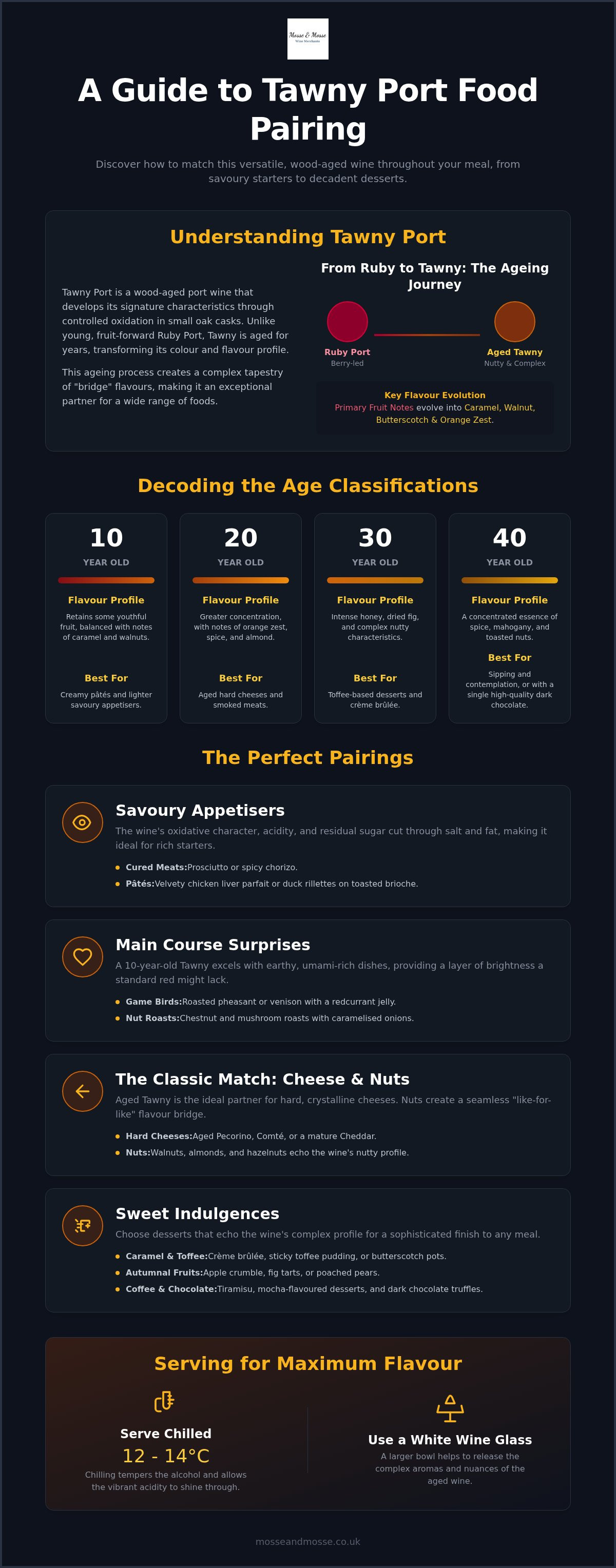
We often find that our clients start their journey with Ruby styles, drawn to their vibrant, berry-forward nature. However, the true connoisseur eventually finds their way to the golden-brown elegance of Tawny. This style is a wood-aged Port wine that undergoes controlled oxidation in small oak casks. Unlike Ruby, which is bottled young to preserve its punchy fruit, Tawny is left to breathe through the wood for years or even decades. This transformation from the primary fruit of a young wine into the sophisticated complexity of an aged bottle is what makes tawny port food pairing so rewarding.
This ageing process fundamentally alters the liquid. The deep red fades into amber and tawny hues, whilst the primary fruit notes evolve into a complex tapestry of "bridge" flavours: caramel, walnut, butterscotch, and orange zest. These elements act as the connective tissue between the glass and the plate. Age indications like 10, 20, 30, or 40 years represent the average age of the blend, as certified by the IVDP. A 10-year-old retains some youthful fruit, whilst a 40-year-old is a concentrated essence of spice and nuttiness.
The Role of Oxidation in Food Matching
The "brown" flavour profile of Tawny is your best friend when matching roasted or caramelised dishes. Oxidation creates a savoury depth that mirrors the Maillard reaction in cooked foods, making it a natural partner for anything toasted or seared. Tawny Port generally possesses a higher perceived acidity than younger styles. This acidity is vital; it cuts through rich fats, allowing the palate to remain refreshed even when paired with heavy appetisers. The residual sugar also plays a key role, acting as a cooling balm against salty or mildly spicy elements, ensuring the wine never feels thin or sharp.
Tawny vs Reserve Tawny: Where to Start
Basic Tawny and Reserve Tawny are excellent entry points, often showing more direct sweetness and lighter bodies. For those considering a bottle for corporate gifting or a wedding cheese course, we recommend moving into age-indicated bottles for greater intensity. Whilst Ruby Port seeks fruit, Tawny Port seeks complexity. The weight of your food should always match the intensity of the wine. A lighter 10-year-old suits a creamy pâté, whereas a concentrated 20-year-old demands the robust saltiness of an aged Pecorino or smoked meats.
Savoury Pairings: Moving Beyond the Cheese Board
Whilst many reserve Port for the end of the night, we believe its real potential lies in the savoury start of a meal. A slightly chilled glass of Tawny is a revelation with rich appetisers. Chilling the wine to around 12 to 14°C is essential here; it tempers the alcohol and allows the vibrant acidity to shine through. This makes it an exceptional tawny port food pairing for dishes that lean heavily on salt and fat, as the wine acts as a refreshing palate cleanser between bites. For a broader look at how different styles compare, this guide to Tawny Port Pairing offers excellent foundational advice.
Charcuterie and Pâté
Cured meats and creamy pâtés are natural allies for wood-aged Port. The inherent sweetness of the wine provides a beautiful counterpoint to the saltiness of a prosciutto or a spicy chorizo. If you're serving a velvety chicken liver parfait or duck rillettes, the wine's caramelised notes find a textural home on a slice of toasted brioche. This bread acts as a bridge, mirroring the toasted oak flavours from the cask ageing. For those planning a menu for wedding or party celebrations, this combination creates a sophisticated first impression that guests won't expect.
Main Course Surprises: Game and Nut Roasts
Moving into the main course, 10-year-old Tawnies are particularly adept at handling British game birds. The lean, earthy flavours of roasted pheasant or venison find a perfect match in the wine's dried fruit and spice profile. It's not just for meat-eaters, though. A chestnut and mushroom nut roast shares that same savoury "umami" DNA. The wine's subtle orange zest notes are fantastic for lifting a heavy gravy or a reduction, adding a layer of brightness that a standard red might lack.
We've found that these pairings work best when the food has a touch of sweetness in the garnish, such as a redcurrant jelly or caramelised onions. This bridges the gap between the savoury dish and the residual sugar in the glass. If you're unsure which specific bottle will best suit your seasonal menu, do get in touch for a personal recommendation from our cellar. We take great pride in helping our clients find the perfect match for their specific tastes.
The Classic Connoisseur Match: Cheese and Nuts
Whilst red wine is often the default choice for a cheese board, we believe it's frequently the wrong one. The heavy tannins in many reds can clash unpleasantly with the high salt content and acidity found in artisan cheeses. In our experience, a well-considered tawny port food pairing is almost always the superior option. The wine's oxidative nature provides a natural bridge to the savoury, nutty notes of the dairy, creating a harmonious balance that a dry red simply cannot achieve. This is where the "like-for-like" principle shines; the walnut and hazelnut notes in the glass find an immediate echo in the nuts and dried fruits on your platter.
Aged Cheddar and Hard Cheeses
A 10-year-old Tawny is the perfect partner for hard, aged cheeses that have developed those delightful, crunchy salt crystals. We're particularly fond of matching it with a Lincolnshire Poacher or a traditional Montgomery's Cheddar. The wine's bright acidity and buttery caramel profile cut through the richness of the cheese whilst complementing its earthy depth. If you're looking to support local producers closer to our Suffolk home, a Norfolk Dapple works beautifully here. We always suggest serving a sliver of quince paste, or membrillo, alongside; it acts as a sweet anchor that ties the fruitier elements of the younger Port to the savoury cheese.
Blue Cheese and the Tawny Exception
There's a long-standing tradition of pairing Vintage Port with Stilton, but we often find it can be a bit heavy and cloying. For a more elegant experience, try a 20-year-old Tawny instead. The mellow caramel and spice of a more mature blend wrap around the sharp, salty punch of the blue veins without the aggressive tannin of a Ruby style. This combination is a highlight of our private wine gift boxes, where we emphasize quality over mere brand names. To finish the board, walnuts or pecans are essential. Their slight bitterness cleanses the palate, preparing you for the next indulgent sip of amber liquid.
Building the perfect board is an art form that requires a personal touch and an eye for genuine value. If you're planning a special event or simply want to elevate your next dinner party, please enquire about our bespoke curation services. We'd be delighted to help you select the ideal bottles and local cheeses to impress your guests.
Sweet Indulgences: Desserts and Serving Etiquette
For those who find a heavy pudding too much after a long meal, we often suggest serving a fine Tawny Port as a "liquid dessert" on its own. Its rich, oxidative character provides all the sweetness and complexity required to satisfy the palate without the need for a spoon. However, if you are planning a full course, the most successful tawny port food pairing involves matching the wine's aromatic profile with desserts featuring toffee, coffee, or nuts. Unlike fruit-forward Ruby styles, Tawny can struggle with fresh berries. Instead, look towards autumnal fruits like poached pears, roasted figs, or dried apricots, which mirror the wine's soul.
Puddings with Personality
The ultimate match in our view is a 20-year-old Tawny paired with a classic Sticky Toffee Pudding. The dates and treacle in the pudding find a mirror image in the wine's concentrated caramel notes. Similarly, the burnt sugar crust of a Crème Brûlée or the toasted nuttiness of an almond Frangipane tart creates a seamless flavour bridge. If you're serving chocolate, we recommend sticking to dark varieties with a high cocoa percentage. Milk chocolate often proves too cloying, whereas the bitterness of dark chocolate allows the wine's butterscotch sweetness to really sing.
The Etiquette of the Port Decanter
One of the joys of Tawny Port is its practicality. Because it has already been aged in wood and filtered before bottling, it rarely needs decanting; you won't find the heavy sediment associated with Vintage Port. For the best experience, serve it slightly chilled between 12 and 16°C. At this temperature, the flavours are at their most expressive without the alcohol becoming too dominant. Many people make the mistake of serving older Tawnies at room temperature, which can make them feel flabby and overly hot on the finish.
Forget the traditional tiny "sipper" glasses. A small white wine glass is far better, as it provides enough space for the complex aromas of walnut and orange zest to breathe. Once opened, a bottle will stay remarkably fresh for up to eight weeks if kept in a cool spot. This longevity makes it a wonderful addition to our private wine gift boxes, allowing the recipient to enjoy a glass at their own pace over the course of a month or two. Whether you are hosting a grand wedding or an intimate dinner, these small details in serving etiquette ensure the wine is presented with the respect it deserves.
Elevate Your Next Gathering with the Perfect Pour
Mastering the art of tawny port food pairing transforms a simple bottle into a versatile companion for your entire menu. We've explored how these wood-aged gems bridge the gap between salty starters and decadent puddings, proving that Port is far more than just a fireside sipper. By serving your Tawny slightly chilled and choosing glassware that lets the amber liquid breathe, you'll unlock a level of complexity that few other wines can match.
As a boutique family business based in Suffolk, we pride ourselves on sourcing exceptional bottles from traditional European regions that offer genuine value. Whether you need a 20-year-old for a wedding cheese course or a special gift for a corporate client, our decades of experience ensure you receive a personalised service. We offer expert curation and reliable UK-wide delivery to help you find the perfect match for any occasion.
Explore our curated selection of Ports for your next gathering and discover the joy of a perfectly paired glass. We look forward to helping you select a bottle that your guests will remember long after the last drop is poured.
Frequently Asked Questions
Does Tawny Port go with chocolate?
Yes, Tawny Port is a magnificent partner for chocolate, provided you choose a dark variety with a high cocoa percentage. The bitterness of the chocolate allows the wine's caramel and butterscotch notes to truly shine without becoming cloying. If you are hosting a dinner party in Bury St Edmunds or Norwich, we recommend serving a 10 or 20-year-old Tawny alongside a rich dark chocolate torte for a sophisticated, balanced finish that your guests will certainly appreciate.
Should Tawny Port be served chilled or at room temperature?
You should always serve Tawny Port slightly chilled, ideally between 12 and 16°C. Serving it at room temperature can cause the alcohol to feel too aggressive and masks the delicate aromas of walnut and orange zest. For our clients in Ipswich and across Suffolk, we suggest placing the bottle in the fridge for about an hour before serving. This ensures the wine remains refreshing and elegant, particularly when enjoyed alongside a savoury first course or a selection of appetisers.
What is the best cheese to serve with a 20-year-old Tawny Port?
The best cheese for a 20-year-old Tawny is a hard, aged variety like a traditional Montgomery’s Cheddar or a local Norfolk Dapple. These cheeses often have salt crystals that perfectly complement the wine's concentrated nutty profile. Whilst Vintage Port is the traditional match for Stilton, we find a mature Tawny provides a more elegant, less heavy alternative. It is a popular choice for wedding cheese courses we curate for our private clients in Framlingham and Woodbridge.
How long does Tawny Port last once the bottle is opened?
A bottle of Tawny Port will stay fresh for up to eight weeks if kept in a cool, dark place. Because it has already undergone a long oxidation process in oak casks, it is much more resilient than Ruby or Vintage styles. This longevity makes it an excellent option for corporate gifting or a personal treat. We regularly deliver these versatile bottles to homes in Stowmarket and Newmarket, where they can be enjoyed one glass at a time over several weeks.
Can you serve Tawny Port with a main course?
Yes, you can certainly serve it with a main course, particularly dishes featuring roasted game birds or earthy mushroom roasts. The wine's savoury depth and acidity make it a surprising but successful tawny port food pairing for pheasant or venison. If you are planning a seasonal feast in Aldeburgh or Southwold, try matching a 10-year-old bottle with a rich reduction sauce. The orange zest notes in the wine provide a wonderful lift to heavy, umami-rich gravies.
What is the difference between Tawny and Ruby Port for food pairing?
The primary difference lies in the flavour profile; Ruby Port is berry-forward and tannic, whilst Tawny is nutty and oxidative. For a successful tawny port food pairing, you should focus on caramelised, toasted, or savoury flavours like walnuts and aged cheeses. Ruby styles generally pair better with blue cheeses or berry-based puddings. At Mosse and Mosse, we help our Suffolk clients distinguish between these styles to ensure their event catering is perfectly balanced and memorable for all the right reasons.


