Did you know that despite a volatile global economy, the fine wine market has seen a consistent rise throughout early 2026, with the Liv-ex 100 index climbing for five consecutive months? You've likely considered how to start a wine collection of your own, yet the fear of wasting money on bottles that don't age well or the sheer complexity of French regional classifications can feel overwhelming. It's a common concern; nobody wants a cellar full of expensive mistakes or poorly stored vintages.
We believe that building a collection should be a deeply personal journey of discovery, not a source of stress. In this guide, you'll discover the art of building a personal wine cellar, from selecting iconic regions like Burgundy to mastering professional storage and curation. We'll walk through how to identify which vintages to keep versus those to enjoy now, ensuring your collection reflects your unique taste whilst building a reliable relationship with an expert merchant who truly cares about your journey. From the first bottle of Champagne to a long-term investment in Port, your path to a professional-grade cellar starts here.
Key Takeaways
- Understand the vital distinction between 'drinking' wines and 'investment' bottles to ensure your cellar serves both your table and your future.
- Discover how to start a wine collection by focusing on foundational regions like Burgundy and Bordeaux, which provide the essential structure for any connoisseur's library.
- Master the precise environmental factors—from humidity to vibration—required to protect your bottles and allow them to reach their full potential.
- Learn how to organise your inventory to track peak drinking windows, ensuring you never miss the moment a vintage is at its absolute best.
- Explore the benefits of establishing a relationship with an independent merchant to receive tailored guidance and curated mixed cases that align with your evolving taste.
The Philosophy of Starting a Wine Collection in 2026
A wine collection is far more than a stockpile of glass and cork; it's a living library of your personal taste and history. Every bottle should tell a story, perhaps of a specific trip to the Bordeaux region or a milestone celebration shared with loved ones. As you consider how to start a wine collection, it's vital to distinguish between 'drinking' wine and 'investment' wine. Whilst some bottles are destined to appreciate in value, most should be chosen for the sheer pleasure they bring to your table.
We suggest following a simple 80/20 rule: allocate 80% of your cellar for enjoyment within the next few years and 20% for long-term ageing. This balance ensures you always have something spectacular to open on a spontaneous evening whilst your rarest gems mature in proper wine storage conditions. Early 2026 is a particularly pivotal time to begin. With the fine wine market currently in a recovery phase and the Liv-ex 100 index showing growth for five consecutive months, sourcing traditional European vintages now allows you to secure quality before market demand pushes prices higher.
Defining Your Collection's Purpose
Ask yourself why you're doing this. Are you building a legacy for your family, or simply ensuring you have the perfect Champagne for every future anniversary? Set a realistic budget that keeps the process enjoyable rather than a financial burden. It's also wise to remember that your palate will evolve. That heavy red you adore today might not be what you crave in 2036, so diversify your selection early on. Investing in how to start a wine collection means planning for the person you'll be in ten years, not just the tastes you have today.
The Value of Personal Curation
Algorithms can suggest what's popular, but they can't understand your soul. Independent merchants act as an expert filter, helping you avoid the 'supermarket trap' of mass-produced labels that lack any real ageing potential. By establishing a relationship with a specialist, you gain a professional partner who understands your developing palate. They can guide you toward hidden gems in the Côte d’Or or small-batch parcels that an automated system would simply overlook. This human connection is what transforms a simple rack of bottles into a curated gallery of liquid history.
Selecting Your Foundation: Iconic Regions and Styles
Once you have established your philosophy, the next step in how to start a wine collection is choosing the bottles that will form its backbone. While thousands of regions produce wine, a few remain the undisputed gold standards for longevity and prestige. Bordeaux and Burgundy are the traditional anchors of any serious cellar. They offer a historical pedigree and an ageing potential that few other regions can match. Whilst we champion the classics, don't ignore high-quality New World gems that challenge traditional European profiles. These can add a vibrant, fruit-forward dimension to your library.
The Pillars of a Cellar: Burgundy and Bordeaux
Burgundy is often the final destination for many collectors. Understanding the Côte d'Or is essential; its unique terroir produces Pinot Noir and Chardonnay of unparalleled complexity. Red Burgundy captures the headlines, yet elegant White Burgundy is a secret weapon for adding variety. Moving to the southwest, the Médoc and Haut-Médoc provide robust, Cabernet-dominant reds. If you seek finesse, the wines of Margaux are famous for their perfumed aromatics and silky textures.
Diversifying with Champagne and Rosé
A versatile cellar isn't limited to heavy reds. Including Champagne & Sparkling Wines ensures you are prepared for any celebration. Many vintage Champagnes develop incredible brioche and nutty notes after years in the cellar. Even premium Rosé can benefit from a year or two of rest, gaining a depth that surprises many. This variety is key when learning how to start a wine collection that stays interesting over several decades.
To avoid the common mistake of buying full cases of wine you might not love, we suggest using mixed cases. This allows you to explore different appellations before committing. As noted in this modern guide to wine collecting, creating a roadmap is vital. We also recommend incorporating Magnums & Larger Formats. These bottles age more slowly due to the lower oxygen-to-wine ratio, making them a savvy choice for long-term cellaring. If you're unsure which region matches your palate, get in touch for a personal recommendation.

Practical Logistics: Storage, Organisation, and Care
Protecting your investment is just as vital as the selection process itself. If you are serious about how to start a wine collection, you must respect the four primary enemies of wine: heat, light, vibration, and fluctuating humidity. Wine is a living, breathing product. It interacts with its environment through the cork, and any disruption can lead to premature oxidation or 'cooked' flavours that strip a fine vintage of its character.
Temperature stability is the heartbeat of a healthy cellar. We always advise aiming for a consistent 12-14°C. Whilst many beginners tuck bottles into a kitchen rack, this is often the worst place in the house. Constant temperature shifts from ovens and appliances, combined with bright light and vibrations from fridge compressors, will ruin a delicate Côte de Beaune in months. If you lack a cool, damp basement, a dedicated wine cabinet or professional bonded storage is a much safer bet.
Creating the Ideal Environment
Achieving a consistent environment whilst avoiding common household pitfalls is essential for long-term health. Beyond temperature, maintain humidity levels around 60-70% to keep corks from drying out. For those with limited space, professional 'bonded' storage allows you to keep your collection in perfect conditions whilst deferring VAT and duty until you decide to have the bottles delivered.
The Art of Cellar Management
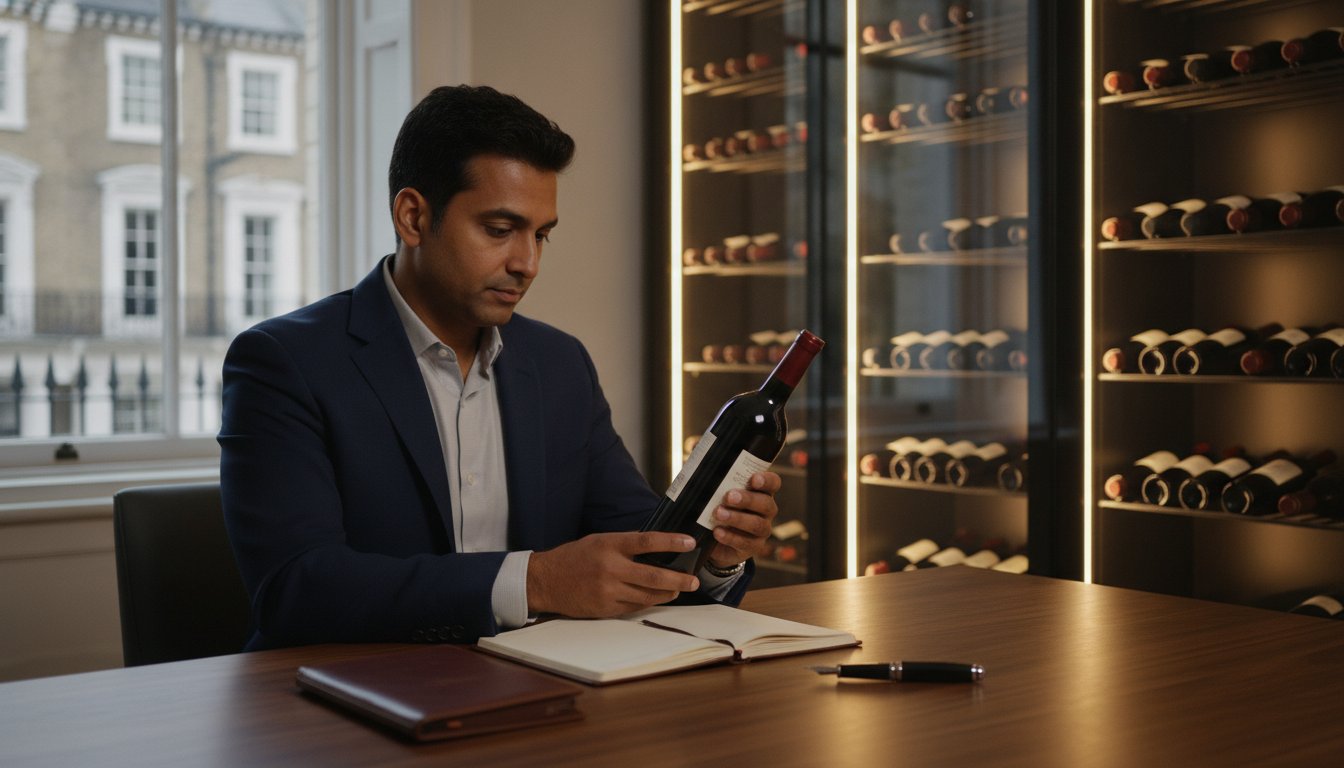
Cellarage is the professional care and supervised ageing of wine over a prolonged period. Effective organisation ensures you never miss a 'peak' drinking window. We recommend labelling your racks by region and, crucially, by 'drink-by' date. Whether you prefer a traditional leather-bound journal or a digital tracking app, recording how your Haut-Médoc or Rosé evolves is a fundamental part of learning how to start a wine collection that matures gracefully.
Vertical tastings are a fantastic way to sharpen your palate. By opening the same wine from different years, you'll see first-hand how weather patterns and cellarage impact the final profile. If you need help choosing a range for a vertical tasting or want to see how the experts do it, book one of our in-person wine tasting events.
Curating Your Cellar with a Trusted Independent Merchant
The final piece of the puzzle in how to start a wine collection is perhaps the most important: finding your guide. Unlike big-box retailers or impersonal supermarkets, an independent merchant offers a curated perspective that aligns with your own palate. Your first step should be to research and find a partner whose selection resonates with you. If you value traditional European craftsmanship, seek out those who champion small-batch producers over mass-market brands. Once you've found your match, start with a curated mixed case. This establishes a baseline of quality and helps your merchant understand what excites you.
As your confidence grows, consult your merchant on 'En Primeur' opportunities. This system allows you to purchase high-end Burgundy and Bordeaux whilst they are still in the barrel, often at a more favourable price point than when they reach the shelf. It's a strategic way to scale your collection from individual bottles to full case purchases. Over time, this relationship becomes your greatest asset, providing a paper trail of provenance that is essential for both insurance and future resale value.
The Independent Merchant Advantage
We take pride in accessing small-batch producers that never reach the high street, ensuring your cellar contains unique stories rather than just recognisable labels. This personalised approach is invaluable when selecting Wedding & Party Wine. Often, the wines chosen for a major celebration can serve as the perfect foundation for a new collection. A merchant who knows your personal history and preferences can suggest bottles that will age alongside your marriage or career milestones, creating a truly bespoke library of memories.
Expanding Your Horizons
Diversification is the key to a resilient cellar. We often recommend considering Magnums & Larger Formats for their superior ageing potential and the sense of occasion they bring to the table. Learning how to buy wine online whilst maintaining a personal relationship is a skill every modern collector should master. By combining digital convenience with expert consultation, you transition from a casual buyer to a respected collector within the wine community. This journey of how to start a wine collection is ultimately about the people and the passion behind the glass.
Begin Your Cellar Legacy Today
Building a cellar is a pursuit that pays dividends in both pleasure and history. You've learned that the secret to how to start a wine collection lies in balancing immediate enjoyment with long-term ageing, all whilst maintaining the perfect environment for your bottles to thrive. From the limestone slopes of Burgundy to the gravelly banks of Bordeaux, every bottle you select becomes a chapter in your personal story.
We invite you to draw upon our 25 years of expertise in sourcing the finest European wines. As independent proprietors and specialists in Burgundy and Bordeaux, we offer a level of personalised service that large retailers simply cannot match. We're passionate about helping you navigate complex regional classifications and identifying those hidden gems that will define your collection for decades to come. Don't let the fear of making mistakes hold you back from this rewarding hobby. Start your collection with our expertly curated cases today. We look forward to guiding you through every vintage and celebration with the care your cellar deserves.
Frequently Asked Questions
How much money do I need to start a wine collection?
You don't need a fortune to begin, but you should focus on quality over quantity. We recommend starting with a budget that allows for a dozen high-quality bottles rather than dozens of mass-produced ones. Focus on established regions where provenance is guaranteed. By starting small, you can learn your preferences without a massive initial outlay. Many collectors begin by setting aside a monthly amount to gradually acquire cases whilst their knowledge grows.
Which wines are best for long-term ageing?
Structured reds with high tannins and acidity, such as Cabernet Sauvignon from Bordeaux or Pinot Noir from the Côte d'Or, are the gold standard. Vintage Port and top-tier Italian reds like Barolo also possess the necessary structure to evolve over decades. It's about the balance of fruit, acid, and tannin. These components act as preservatives, allowing the wine to develop complex secondary flavours. Always check vintage reports, as not every year has the stamina for long-term cellaring.
Is it worth collecting wine if I don't have a cellar?
Yes, it's absolutely worth it, provided you utilise professional bonded storage or a high-quality wine cabinet. You shouldn't let the lack of a basement stop you from learning how to start a wine collection. Professional facilities offer perfect conditions and can even save you money on tax. If you prefer to keep bottles at home, avoid cupboards near radiators or kitchens. A cool, dark space with stable temperatures can suffice for short-term ageing of a few years.
What is the difference between a wine fridge and a cellar?
A cellar provides a natural, humid, and vibration-free environment, whereas a wine fridge is a mechanical appliance designed to mimic these conditions. While a cellar relies on the earth's natural thermal mass, a fridge uses a compressor or thermoelectric system. High-end wine cabinets are specifically built to maintain humidity and dampen vibrations, which standard kitchen fridges don't do. For long-term curation, a dedicated wine cabinet is a brilliant investment for those who want their collection close at hand.
How many bottles should a beginner wine collection have?
A collection of 24 to 36 bottles is a perfect starting point for most enthusiasts. This number allows you to follow the 80/20 rule, with plenty for current drinking and a few cases tucked away for the future. Starting with this volume prevents you from being overwhelmed whilst providing enough variety to host dinner parties or vertical tastings. As you discover more about how to start a wine collection, you'll naturally find your capacity and interests expanding alongside your palate.
Can I collect white wine as well as red wine?
Certainly, many of the world's most collectable and age-worthy wines are white. Top-tier White Burgundy, German Riesling, and sweet wines like Sauternes can age beautifully for thirty years or more. They develop incredible honeyed, nutty, and complex notes that you simply can't find in younger bottles. Including white wines adds a necessary layer of elegance and versatility to your cellar. It ensures you have the perfect pairing for everything from delicate seafood to complex, rich poultry dishes.


