

Could the simple act of leaving your Port bottle on the sideboard be ruining the very flavours you’ve paid to enjoy? It’s a common worry for many hosts. We understand the hesitation that comes with opening a special bottle, especially when you want to do justice to the years of careful ageing that have gone into every drop. Most enthusiasts agree that Port represents the ultimate finale to a curated meal, yet there’s often a lingering fear of serving it at the wrong temperature or causing confusion by decanting a style that doesn't actually require it.
This guide will teach you exactly how to serve port wine with the confidence of a seasoned connoisseur. We’ll share our personal expertise on the technical differences between Ruby, Tawny, and Vintage styles, covering everything from precise chilling requirements to the proper etiquette for passing the bottle. You’ll discover the essential techniques for decanting and glassware that elevate the sensory experience; this ensures your next dinner party is remembered for all the right reasons. Whether you’re a passionate purist or a curious newcomer, these tips will help you master the perfect pour every time.
Key Takeaways
- Identify whether your bottle is wood-aged or bottle-aged to choose the correct preparation method and ceremony for its specific character.
- Master how to serve port wine at the ideal cellar temperature of 15–18°C to ensure the rich fruit flavours aren't overshadowed by the spirit's warmth.
- Learn which styles require decanting to remove natural sediment and why modern, tulip-shaped glassware is essential for capturing a complex bouquet.
- Discover the traditional British etiquette for passing the decanter and why Port serves as the quintessential finale to a carefully curated dinner.
- Gain professional clarity on how long different Port styles stay fresh after opening and how to pair them perfectly with your favourite cheeses.
Mastering the Styles: Why Every Port Requires a Different Approach
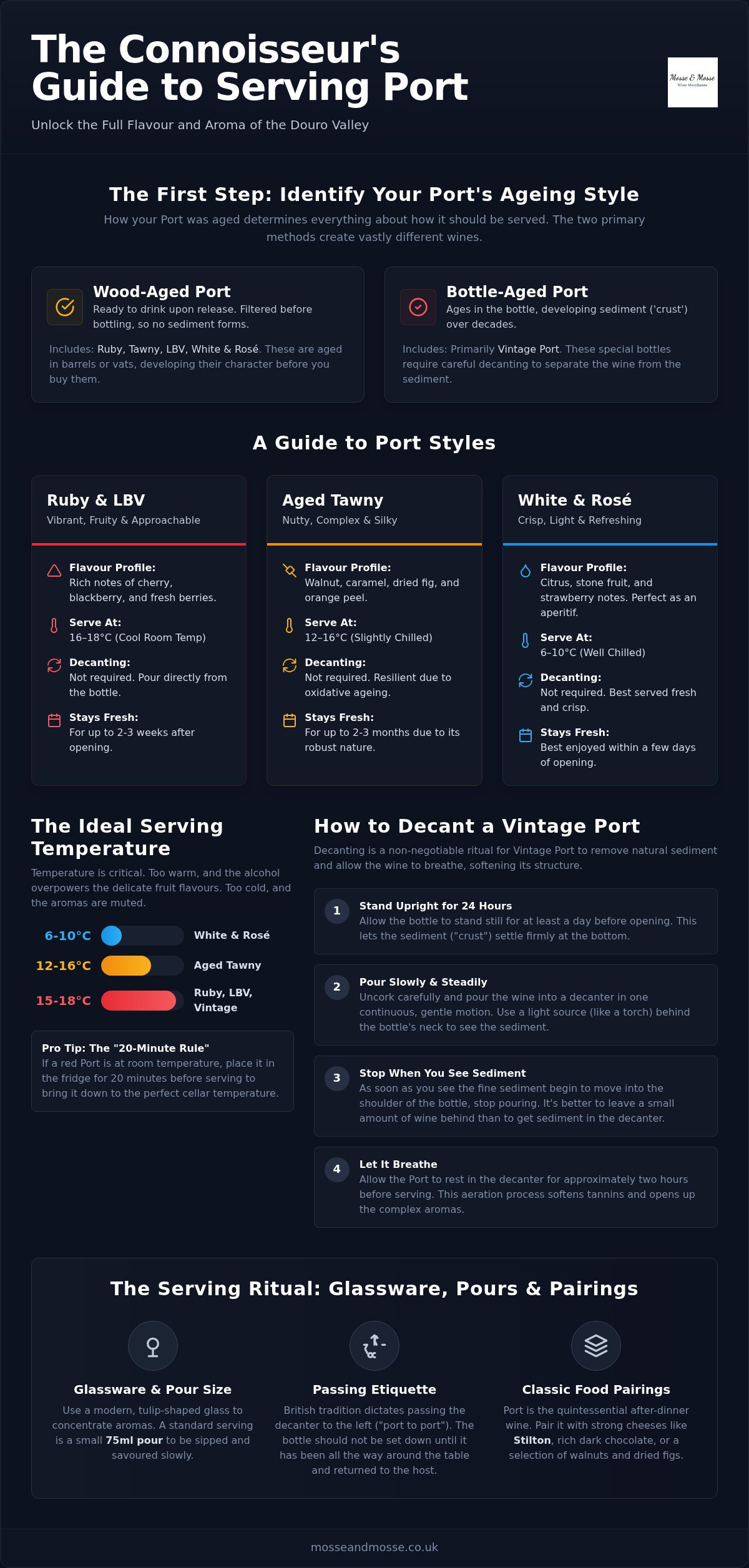
Understanding the nuances of each bottle is essential for any host. Port is a fortified wine from the Douro Valley with a unique ageing process. To master how to serve port wine, you must recognise that it isn't a monolith. The method you choose depends entirely on how the wine was aged. Because Port is fortified with grape spirit, it possesses a higher alcohol content than standard table wine, usually sitting between 19% and 22%. You should aim for smaller pours, typically 75ml, and a slower pace of enjoyment. Identifying whether your bottle is wood-aged or bottle-aged is the first step in your ceremony. You can explore the vast array of Port wine styles to see how these methods diverge.
Ruby and Late Bottled Vintage (LBV) Port
Ruby Ports are the most approachable for casual serving. They are aged in large tanks to preserve their vibrant, fruity character and deep crimson colour. These styles are best enjoyed at a cool room temperature, ideally between 16°C and 18°C. If you want the depth of a vintage without the hassle of sediment, LBV is the perfect bridge style. These wines spend longer in the vat than true Vintage Ports, meaning they are filtered before bottling. Pour them directly from the bottle whilst maintaining that fresh, berry-forward profile for several weeks.
Tawny Ports: The Nutty, Oxidised Exception
Tawny Ports are the nutty, oxidised exception to the rule. Unlike Rubies, these wines spend years in smaller oak barrels. This exposure to air makes them incredibly resilient. An aged Tawny, whether it's a 10, 20, or 30-year-old expression, is far more forgiving than a delicate Vintage style. Once opened, they stay vibrant for months. I often find that serving Tawny Port slightly chilled, between 12°C and 16°C, highlights the delicate notes of caramel and dried orange peel.
White and Rosé Port: The Modern Aperitif
Let's break the "after-dinner" rule. White and Rosé styles are the modern aperitifs of the Douro. They offer a refreshing alternative to heavier reds. A "Portonic", which is White Port mixed with tonic water and a sprig of mint, is a sophisticated alternative to a G&T. Knowing how to serve port wine correctly means adjusting your temperature based on the style; for these lighter variants, aim for 6-10°C to keep the palate crisp and lively before a meal.
Temperature and Decanting: Unlocking the Aromas of the Douro
Many of us have been served a glass of Port that felt more like a fire in the throat than a luxury in the glass. This usually happens because the bottle was too warm. When the temperature climbs, the alcohol overpowers the intricate fruit notes. Master how to serve port wine by adhering to the "Cellar Temperature" rule of 15-18°C for red styles. This range keeps the spirit in check whilst allowing the aromas of the Douro to shine. Decanting is the secret to unlocking these bottles; it serves the dual purpose of aeration and sediment removal. Whilst filtered styles like LBV are often ready to pour, a Vintage bottle requires a decanter to show its true potential.
The Step-by-Step Decanting Process
Vintage Port is famous for its "crust", a natural sediment that develops over decades. To handle this properly, stand your bottle upright for at least 24 hours before your event. This ensures the sediment sits firmly at the bottom. When pouring, use a steady hand and keep a light source, like a small torch, behind the neck of the bottle. Stop the pour as soon as the sediment reaches the shoulder. I recommend letting the wine breathe for about two hours. This short rest allows the oxygen to soften the structure, making the first sip as good as the last. To truly understand how to serve port wine with precision, you must treat the sediment with the respect it deserves.
Finding the Ideal Serving Temperature
Getting the chill right is a game of minutes. For an aged Tawny, 12-14°C is the perfect range to highlight those indulgent notes of walnut and dried fig. Vintage Port needs to be just a touch cooler than a room-temperature red to keep the spirit integrated. If your dining room is warm, use the "20-minute rule" by popping the bottle in the fridge shortly before your guests sit down. You can find more Pro Tips for Serving Port to refine your technique further. If you're ever unsure about a specific vintage in your cellar, you can always contact us for professional guidance on preparation and serving times.
Glassware and Etiquette: The British Tradition of Serving Port
The social ceremony of Port is as vital as the liquid itself. In British homes, the ritual of the final course has been refined over centuries. Understanding how to serve port wine requires an appreciation for the theatre of the dining table. For grander gatherings where the conversation flows as freely as the wine, we often recommend Magnums & Larger Formats to ensure the decanter makes its way around the room without running dry. This sense of occasion is what distinguishes Port from a standard red wine; it’s a shared experience that signals the peak of an evening.
Choosing the Right Glass
Gone are the days of the tiny, "thimble" glasses that once cluttered sideboards. These small vessels stifle the wine, preventing the complex bouquet from reaching your nose. I always suggest using a standard white wine glass if you don't own specific Port glassware. The key is a tapered rim, which concentrates the volatile aromas of an aged bottle. Aim for a 75ml pour. This leaves enough space in the bowl to swirl the wine, releasing the scents of dried fruit and spice whilst maintaining the alcohol balance. A larger glass allows the wine to breathe, which is particularly beneficial for Vintage styles that have been tucked away for decades.
The Tradition of "Passing the Port"
Etiquette dictates that the decanter should always be passed to the left. This tradition likely stems from the Royal Navy, ensuring the right hand remained free to reach for a sword, though today it simply keeps the service orderly. You might occasionally encounter a "Hoggit" decanter. These curious, round-bottomed bottles cannot be set down until they reach the host's wooden stand, ensuring the wine stays in constant motion amongst the guests. If the decanter stalls, the polite enquiry is to ask your neighbour, "Do you know the Bishop of Norwich?" It’s a gentle nudge to remind them that the Bishop was a lovely man who notoriously forgot to pass the Port. If you would like to host your own traditional evening, please enquire about our curated selections for your next event.
Beyond the Bottle: Food Pairings and Preserving Your Port
Port represents the ultimate finale to a curated meal. Knowing how to serve port wine doesn't end when the first glass is poured; it’s about creating a harmony of flavours that lingers long after the plates are cleared. The style of Port you select dictates the ideal flavour match, turning a simple cheese course into a memorable event. We frequently feature these versatile wines in our Corporate & Private Wine Gift Boxes because they offer such a sophisticated conclusion to any dining experience.
Classic and Contemporary Pairings
Stilton and Vintage Port is the quintessential British pairing for a reason. The creamy saltiness of the blue cheese provides a perfect counterpoint to the powerful, dark fruit and structural tannins of the wine. For those who prefer a sweeter finish, an aged Tawny Port with salted caramel or nut-based desserts is a revelation. The wine's oxidative character mirrors the roasted notes of walnuts and almonds beautifully. If you're feeling adventurous, try a bright Ruby Port with high-quality dark chocolate or even a selection of savoury charcuterie to start the evening.
How to Store Leftover Port
A common concern amongst our clients is how long a bottle stays fresh once the cork is pulled. Tawny Port is a hardy survivor. Because it's already been exposed to air during its years in the barrel, it will happily last for several weeks if kept in the fridge. In contrast, Vintage Port is far more fragile. Once decanted, you should aim to finish the bottle within 48 hours to enjoy its full complexity before the vibrant fruit begins to fade. Whilst a vacuum stopper can help preserve Ruby styles, I often find that simply recorking and chilling a bottle is sufficient for short-term storage. Mastering these small details is the final step in learning how to serve port wine with complete confidence.
Elevate Your Next Pour
Mastering the art of the perfect pour turns a simple glass into a true celebration of the Douro Valley. You now have the technical knowledge to manage everything from the delicate sediment of a Vintage bottle to the precise chilling required for a nutty Tawny. By respecting the traditions of glassware and etiquette, you ensure that every bottle you open reaches its full potential whilst honouring centuries of British heritage. It's about more than just the liquid; it's about the shared joy of a well-timed finale.
Knowing how to serve port wine allows you to host with genuine confidence and warmth. At Mosse and Mosse, our founders personally curate every bottle in our collection, prioritising quality and character over big-brand labels. We offer a bespoke service for weddings and corporate gifting, alongside national UK delivery on all our curated cases to help you stock your cellar with ease. Explore our curated selection of fine Ports and dessert wines and discover the difference that expert selection makes to your next dinner party.
Frequently Asked Questions
Do I really need to decant Port wine?
Decanting is essential for Vintage Port to separate the wine from its natural sediment, often called the "crust". Most Ruby and Tawny styles are filtered before bottling and don't require this step. If you're unsure how to serve port wine correctly, check the label for "Late Bottled Vintage" or "LBV". If it's unfiltered, it needs a decanter. This process also allows the wine to breathe, softening the tannins after years in the bottle.
Should Port be served chilled or at room temperature?
The ideal temperature depends entirely on the style you've selected. White and Rosé Ports should be served well-chilled at 6–10°C to maintain their crispness. For Tawny Port, aim for a slight chill between 12°C and 16°C to highlight its nutty complexity. Red Ports, including Ruby and Vintage, perform best at a cool room temperature of 16–18°C. Avoid serving them too warm, as the heat can make the alcohol feel overly aggressive on the palate.
How long does a bottle of Port last once opened?
Once opened, a bottle's lifespan varies by its ageing process. An aged Tawny is remarkably resilient and can stay fresh in the fridge for up to eight weeks due to its previous oxidation in the barrel. Ruby and LBV styles usually remain vibrant for two to four weeks. However, a Vintage Port is delicate and should be enjoyed within 48 hours. Exposure to air quickly dissipates the complex fruit flavours that have developed over decades.
What is the best glass for drinking Port?
We recommend using a tulip-shaped glass or a standard white wine glass rather than the traditional tiny "thimble" glasses. A larger bowl allows you to swirl the wine, which is a vital part of how to serve port wine to release its bouquet. The tapered rim concentrates the aromas, ensuring you catch every note of dried fruit and spice. Always aim for a 75ml pour to leave plenty of space for the wine to breathe.
Why is Port passed to the left at the dinner table?
Passing the Port to the left is a time-honoured British tradition with roots in the Royal Navy. By passing clockwise, guests ensured that their right hand remained free, historically to reach for a sword if necessary. Today, it simply maintains a steady flow around the table so no guest is missed. If the decanter stops moving, it’s polite to ask your neighbour if they "know the Bishop of Norwich" to gently prompt its return to circulation.
Can you serve Port with a main course or only dessert?
Whilst Port is the quintessential finale to a meal, it isn't strictly limited to the dessert course. White Port makes a refreshing aperitif when mixed with tonic, whilst a vibrant Ruby Port can pair beautifully with savoury charcuterie or rich pâté during a starter. For main courses, it’s less common, but the intense fruit of an LBV can occasionally complement venison or beef. However, its classic home remains alongside Stilton or rich, dark chocolate desserts.


