

What makes a white wine feel rich and rounded without being heavily oaked or sweet? Wine descriptions can make “full-bodied” sound like one particular style, but the term is really about texture and structure. These full-bodied white wine examples show why grape variety and winemaking matter, while oak and alcohol are only part of the picture.
If you’re unsure whether you’ll enjoy a fuller white, start with how it feels on the palate. It may seem weightier, creamier or more layered than a crisp, light-bodied wine, but that doesn’t automatically mean buttery, sweet or strong. Chardonnay, for instance, can range from lean and mineral to rich and rounded, depending on where and how it’s made.
We’ll explore Chardonnay, Viognier and Rhône varieties, along with regional styles, food matches and practical ways to choose a bottle. Mosse and Mosse, an independent Suffolk wine merchant, can also offer personal guidance if you’re choosing between a fresh, subtly oaked or creamier style.
Key Takeaways
- Think of “full-bodied” as a description of weight and texture, not a promise of sweetness or oak.
- Explore full-bodied white wine examples by grape and region, but remember that producer, vintage and winemaking can change the style.
- Check the grape, region and any winemaking details on the label, then consider whether you prefer freshness, creaminess or a balance of both.
- Match the wine’s texture and flavour to your meal. If you’re unsure, ask a specialist merchant for guidance.
What does full-bodied white wine mean? Understand the feel in the glass
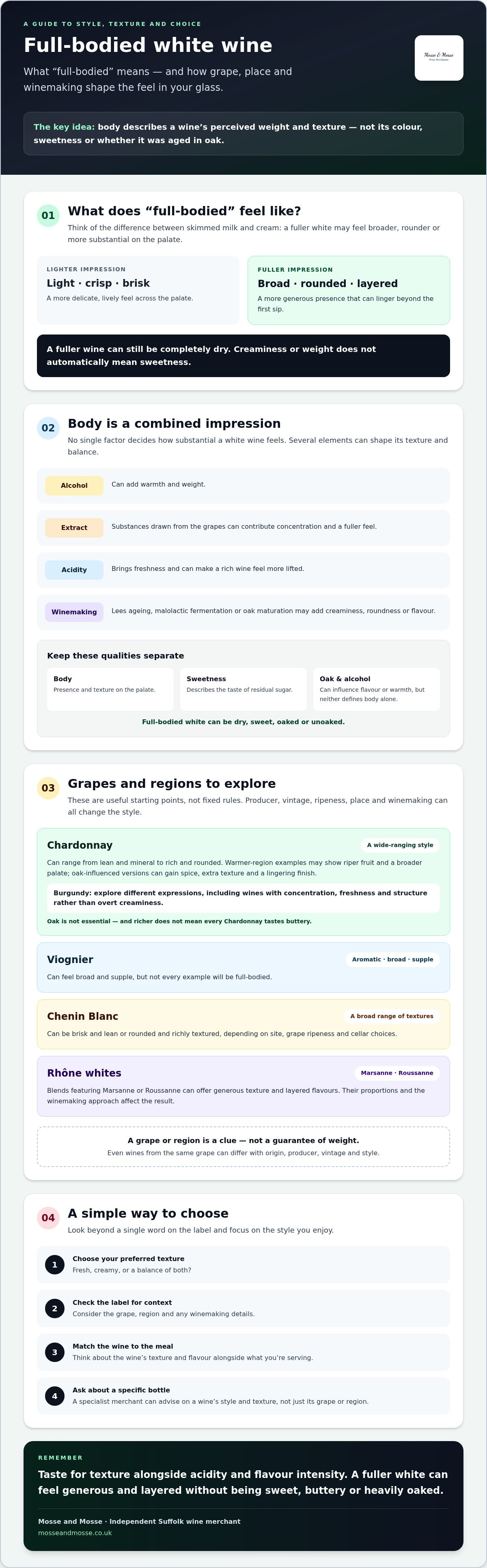
Full-bodied describes a white wine’s perceived weight and texture on the palate, not its colour or sweetness. Think of the difference between skimmed milk and cream: a fuller wine may feel broader, rounder or more substantial, though it can still be completely dry. Full-bodied white wine feels generous and textured in the mouth, with a presence that lasts beyond the first sip.
Body is a combined impression, not a quality determined by one factor. Alcohol can add warmth and weight; extract, the substances drawn from the grapes, can contribute concentration and a fuller feel. Acidity brings freshness and can make a rich wine feel more lifted. Winemaking choices, such as lees ageing, malolactic fermentation or oak maturation, may add creaminess, roundness or flavour. For an overview of how tasters describe these sensations, see wine tasting descriptors.
Imagine a loose spectrum rather than a fixed ranking. A light, crisp Pinot Grigio may feel delicate beside a richer Chardonnay, while Sauvignon Blanc can sit somewhere between, depending on its origin and how it was made. Even wines from the same grape can differ. Style, vintage and producer all shape the experience.
How can you recognise body when tasting white wine?
Notice how the wine moves across your palate. Does it feel light and brisk, or does it have a broader, silkier presence? Pay attention to how long the flavour remains after swallowing, too. Creaminess or weight doesn’t mean sweetness. A dry wine can still feel rounded. Taste for texture alongside acidity and flavour intensity, rather than relying on a single note such as “citrus” or “butter”.
Does full-bodied mean sweet, oaked or high in alcohol?
These are separate characteristics, even though they can overlap. Oak may bring vanilla-like flavours or added roundness, but a wine can be full-bodied without oak. Alcohol may contribute warmth, yet it doesn’t determine body on its own. Sweetness describes the taste of residual sugar, not how substantial the wine feels. A full-bodied white can be dry, sweet, oaked or unoaked. Body describes its presence and texture, not its sweetness.
Full-bodied white wine examples by grape and region
Grape and place offer useful clues, but neither guarantees a particular weight. Ripeness, producer choices, vintage and techniques such as oak ageing or lees contact all influence the finished wine. Treat these full-bodied white wine examples as styles to explore, rather than fixed rules for every bottle from a region or variety.
Chardonnay, some Viognier, ripe Chenin Blanc and blends featuring Marsanne or Roussanne can all offer fuller texture, depending on how they’re made. The contrasts are part of the appeal: a wine might feel rounded and creamy, or broad yet lively, with acidity bringing freshness to a richer texture.
Chardonnay: from broad, rounded styles to structured Burgundy
Chardonnay is a useful grape to explore because its style can shift markedly with climate and winemaking. Examples from warmer regions may show riper fruit and a broader palate, while oak-influenced versions can gain spice, extra texture and a lingering finish. Oak isn’t essential, though, and a richer impression doesn’t mean every Chardonnay tastes buttery.
Burgundy is worth exploring for the range of expressions found across its appellations and producers. Some wines combine concentration with freshness and structure rather than overt creaminess. For more regional context, browse this white Burgundy wine guide.
Viognier, Chenin Blanc and Rhône whites to seek out
Viognier is aromatic and can feel broad and supple, but not every example will be full-bodied. Chenin Blanc spans a wide range too. Site, grape ripeness and choices in the cellar can produce anything from brisk and lean to rounded and richly textured. Look beyond the grape name and check how the producer describes the wine.
In Rhône whites, Marsanne and Roussanne are often blended to create wines with generous texture and layered flavours. Their proportions and the winemaking approach affect the result, so the blend name alone isn’t a promise of weight.
For a bottle that fits your preferences, ask a specialist merchant about the style and texture of specific wines, not just the grape or region. Mosse and Mosse can offer personalised guidance on choosing a white to suit your taste and meal.
How to choose a full-bodied white without assuming it will taste sweet or oaky
A fuller style can be dry, gently textured and balanced by refreshing acidity. Rather than guessing from one word on a label, think about what you enjoy and what you’ll serve. These steps make it easier to choose among full-bodied white wine examples without expecting every bottle to taste alike.
- Decide on your preferred texture. Do you want a rounded, creamy feel, or a wine with more freshness and grip?
- Look for style clues. Note the grape, region and any stated production details, such as oak ageing. Labels vary, and none of these clues alone guarantees a wine’s body.
- Think about the food. Consider the sauce, seasoning and cooking method, not only the main ingredient.
- Ask for guidance. A merchant can help translate descriptions into a style that suits your palate.
Fuller body doesn’t automatically mean sweetness, heavy oak or high alcohol. A broad texture may come from several elements working together, while a dry wine can still feel rich and rounded. Choose by the texture you enjoy, the food you’re serving and the balance you want in the glass.
Match the wine to food and occasion
Richer-textured whites can work well with creamy dishes, poultry or substantial fish, but the details matter. A bright, acidic wine may lift a buttery sauce, while a gently rounded style could complement roast poultry. Herbs, spice and cooking method can shift the balance too. Treat pairings as a starting point, not a rule. Choose the combination you find most enjoyable.
Use the bottle details and ask useful questions
Check the grape, region, vintage and producer together. One descriptor rarely tells the whole story. Regional Chardonnay, including white Burgundy, can vary in texture and oak influence from one producer to another. If the label leaves you unsure, ask: “Is this dry?”, “How noticeable is the oak?” and “Would you describe it as creamy, broad or fresh?”
For personal help choosing a fuller white to suit your taste and meal, contact Mosse and Mosse, an independent Suffolk wine merchant.
Explore full-bodied white wine examples with Mosse and Mosse
Once you have a sense of the texture and flavours you enjoy, choosing a bottle becomes more personal than simply searching for a wine described as “full-bodied”. Mosse and Mosse is an independent Suffolk wine merchant with a curated white wine selection and personalised service for private clients. The team can help you compare styles in relation to your taste, meal and occasion, without assuming a particular grape or region guarantees a certain weight.
Which listed Chardonnay examples could you ask about?
The selection includes Chardonnay from Elgin Valley and Mâcon, as well as Petit Chablis and other white Burgundy. For example, you could ask about the 2025 La Brune Elgin Valley Chardonnay or the 2025 Mâcon Solutré-Pouilly Domaine Seve. These are examples to explore, not confirmed classifications of body. Ask about the specific wine’s texture, oak influence and vintage rather than relying on the region or grape alone. Check current details when choosing.
Turn your preferences into a confident choice
You don’t need specialist tasting vocabulary to explain what you like. Share whether you prefer a fresh or rounded texture, how noticeable you want oak to be, and what you’ll serve. Mention the occasion and your budget too, so recommendations can be tailored to what matters to you. If you’re unsure, describing a wine you’ve enjoyed before can be a helpful starting point.
These details give a merchant a clearer picture than asking for full-bodied white wine examples alone. Mosse and Mosse can offer personal guidance on the white wines in its selection and help you consider which styles may suit your preferences. Ask Mosse and Mosse for personal wine guidance and share the texture, food and occasion you have in mind.
Choose a fuller white that feels right for you
The best full-bodied white wine examples aren’t defined by one grape, region or winemaking choice. “Full-bodied” points to weight and texture, while sweetness and oak are separate parts of a wine’s character. Decide whether you enjoy a creamy, rounded feel or a fuller style lifted by freshness, then think about the food and occasion.
Labels can offer useful clues, but the producer and vintage shape the finished wine too. If the wording feels unfamiliar, you don’t need to decode it alone. A few details about what you like, what you’re serving and your budget can help narrow the choice.
Mosse and Mosse is an independent Suffolk wine merchant with a curated selection of wines and personalised service for private clients. For guidance on finding a white to suit your taste and table, ask Mosse and Mosse for personal wine guidance.
Frequently Asked Questions
What are some examples of full-bodied white wines?
Chardonnay is a useful starting point, particularly richer or oak-influenced styles. Viognier, some Chenin Blancs and white blends featuring Marsanne or Roussanne can also feel broad and weighty. These full-bodied white wine examples are style possibilities, not guarantees: region, producer, vintage and winemaking all shape a wine’s texture. Check details for the specific bottle rather than assuming every wine made from a particular grape will have the same body.
Is Chardonnay always a full-bodied white wine?
No. Chardonnay can range from lean and crisp to rounded and full, depending on where it grows and how it’s made. Oak maturation may add flavour or texture, and lees contact can contribute a broader feel, but neither is used in every style. Look for the producer’s description of the specific wine, or ask a wine merchant whether it’s fresh and taut, creamy or more substantial before choosing.
Does full-bodied white wine mean it is sweet?
No. Body describes perceived weight and texture, while sweetness describes the wine’s sugar balance. A white can feel rich, creamy or broad and still taste dry. If you prefer dry wines, check the bottle description for a dry-style indication or ask the seller directly. Don’t use words such as “full” or “rounded” as a shortcut for sweetness. They describe the impression of the wine in your mouth, not necessarily its sugar level.
Which full-bodied white wine goes well with food?
Choose according to the dish’s richness, seasoning and sauce, rather than body alone. A rounded Chardonnay can suit creamy dishes, poultry or substantial fish, while an aromatic or textured white may complement more boldly seasoned food. Acidity matters too: a fresher wine can balance a rich sauce, while the cooking method may change the match. Treat pairings as guidance, then choose the balance you most enjoy at the table.
Can a white wine be full-bodied without oak?
Yes. Oak can affect a wine’s flavour and texture, but it isn’t essential for a white to feel weighty or generous. Grape variety, ripeness, alcohol, lees contact and other winemaking choices can also shape its body. If you enjoy texture but prefer little oak influence, ask for a dry white with a broad feel and restrained or no oak. Check the producer’s notes, since label descriptions vary between wines.
How can I choose a full-bodied white wine if I cannot taste it first?
Start with the grape, region and producer, then look for clues about dryness, oak and texture in the wine description. Consider what you’ll serve and styles you’ve liked before. A specialist merchant can help make sense of unfamiliar terms. If you’re in Ipswich, Norwich, Bury St Edmunds, Sudbury, Stowmarket, Newmarket, Thetford, Diss, Attleborough, Southwold, Aldeburgh, Framlingham, Woodbridge, Long Stratton or Saxmundham, Mosse and Mosse is an independent Suffolk merchant offering personalised guidance to private clients.


