
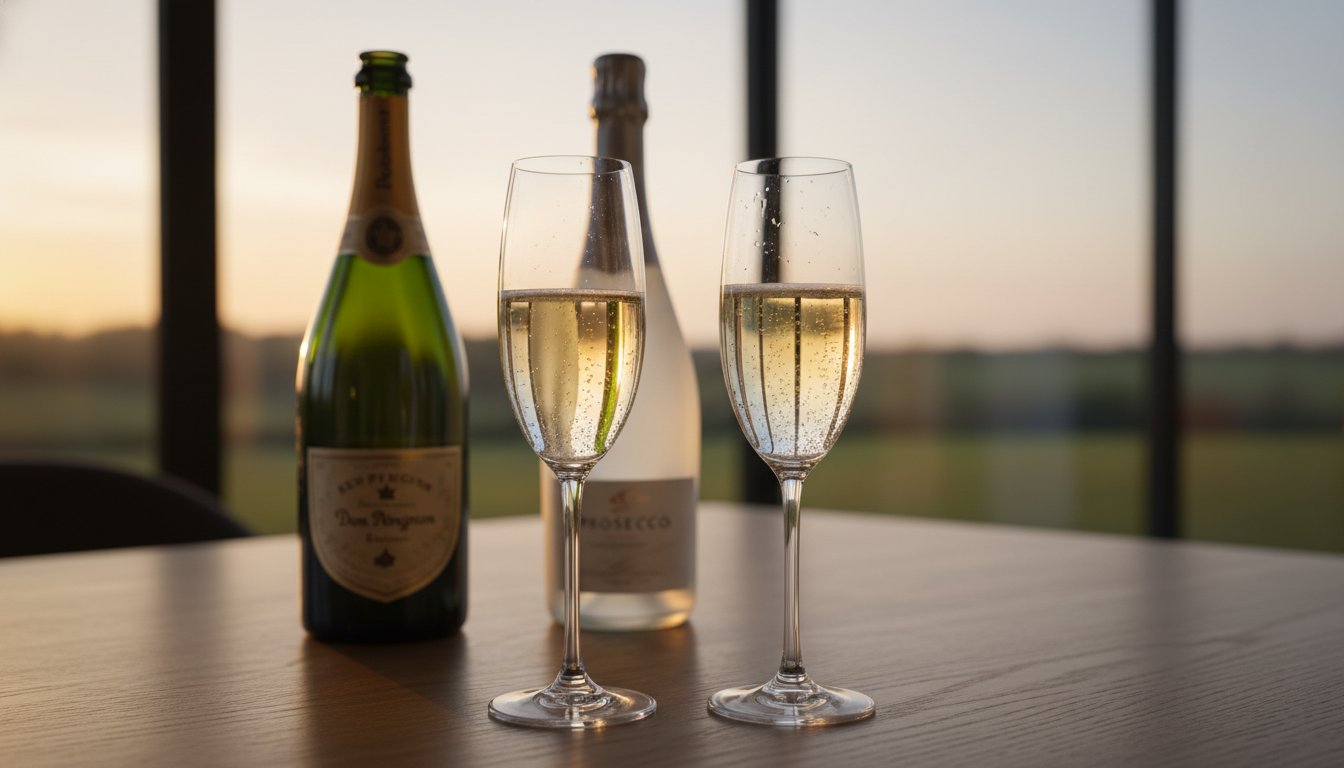
The $250 you spend on a standard bottle of Dom Pérignon might feel like a steep price for a brand name, but the liquid inside is a completely different creature than the $17.87 bottle of La Marca Prosecco you find at the shop. We want to help you evaluate the wines and spirits company dom perignon on champagne vs prosecco so you know exactly what is in your glass. It's easy to feel a bit lost when experts start tossing around terms like Traditional Method or Charmat, especially when you're just looking for a lovely bottle for a wine treat. We've all been there, standing in the aisle wondering if those extra zeros on the price tag actually translate to pure drinking pleasure.
In this guide, you'll discover the artisanal differences between the bottle-aged prestige of the 2015 vintage P1 release and the fresh, fruity charm of Italian Glera grapes. We'll break down the technical production secrets and the strict regulations that define these regions, giving you the confidence to talk wine like a true connoisseur at your next event. By the end, you'll know exactly when to reach for a complex vintage Champagne and when a value-driven sparkler is the better choice for your celebration.
Key Takeaways
- Learn why Dom Pérignon is defined as the prestige cuvée of Moët & Chandon and how its focus on blending created the standard for luxury Champagne.
- Understand the technical gap between "bottle-aged" secondary fermentation that builds complexity and the tank-based method used to preserve the fruitiness of Prosecco.
- Discover how to evaluate the wines and spirits company dom perignon on champagne vs prosecco by identifying the signature minerality and silkiness of a vintage bottle.
- Master the art of occasion mapping to ensure you choose the right sparkle for everything from corporate gifting to a personal wine treat.
- Find out which bottles are meant to be laid down for years and which are designed for pure drinking pleasure in their youth.
The Dom Pérignon Legacy: Defining the Pinnacle of Champagne
Dom Pérignon isn't just a label; it's a statement of artisanal intent. While many believe the popular myth that the monk Pierre Pérignon accidentally "invented" bubbles in the late 17th century, his real contribution was far more technical. He pioneered the blending of different grape varieties and introduced stronger glass bottles to the region. To truly understand Dom Pérignon's legacy, you have to look at his obsession with quality. He set the standard for what we now call the Champagne AOC, a strict designation that ensures only wine from this specific chalky corner of France can bear the name. It's a glorious tradition where every bottle must be "bottle-aged" for years to achieve its signature silkiness.
The brand follows a strict vintage-only philosophy. This means a new release only happens in years where the harvest is exceptional. As of 2026, the 2015 vintage is the current P1 release. If the grapes don't meet their exacting standards, the house simply won't produce a bottle that year. This makes every cork you pop a genuine wine treat from a single, remarkable season. It's all about what's in the bottle; that's the Mosse & Mosse way, and it's exactly why we hunt for these specific vintages.
Prestige Cuvée vs. Standard Champagne
A Prestige Cuvée is the absolute highest expression of a Champagne house’s craft. While a "house" non-vintage blend aims for a consistent taste year after year, a prestige bottle celebrates the unique character of a single harvest. Dom Pérignon sources fruit almost exclusively from the 17 Grand Cru vineyards and the historic Premier Cru of Hautvillers. This level of selection creates a depth of flavour and a fine, persistent mousse that a high-volume Prosecco simply isn't designed to reach. It’s the difference between a reliable daily sipper and a masterpiece laid down for a decade.
The Role of the Moët Hennessy Portfolio
When you evaluate the wines and spirits company dom perignon on champagne vs prosecco, you're looking at a brand that sits within the LVMH luxury framework. This corporate scale provides the financial freedom to be incredibly selective. They have the resources to maintain meticulous quality control across millions of bottles without losing the artisanal touch. Because these bottles are so sought after, it's vital to buy wine online from trusted independent merchants who understand the provenance and storage needs of such a prestigious portfolio. We take that responsibility seriously, ensuring your bottle arrives in perfect condition for your next big celebration.
Champagne vs Prosecco: The Clash of Production Methods
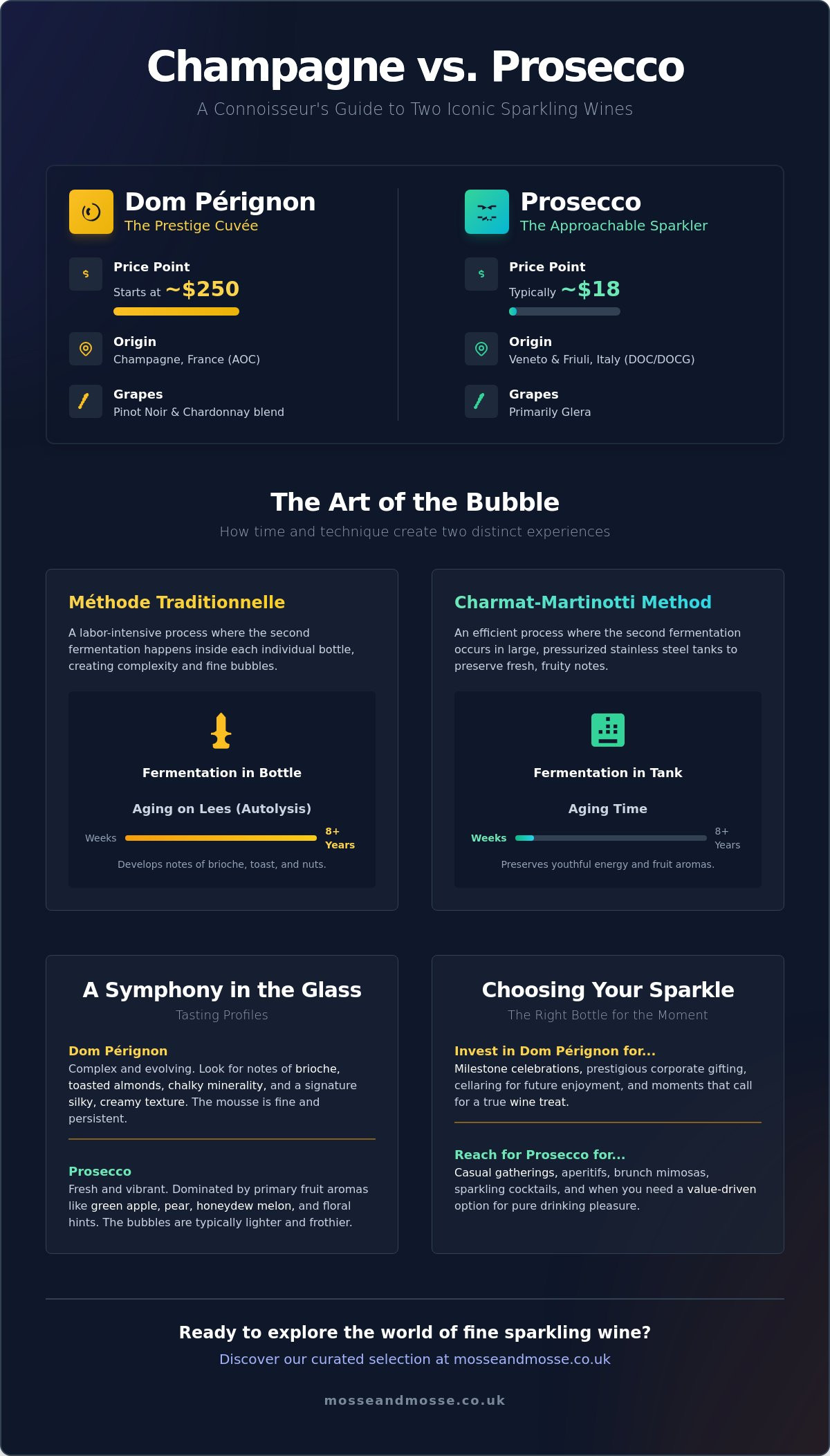
The fizz in your glass is more than just carbonation; it's a map of how the wine was made. To truly evaluate the wines and spirits company dom perignon on champagne vs prosecco, you have to look at the pressure building inside the cellar. Dom Pérignon is crafted using the Méthode Traditionnelle. This involves a second fermentation taking place inside each individual bottle. It's a labour-intensive, expensive process that creates a fine, persistent mousse that dances on the tongue. In contrast, Prosecco typically uses the Charmat-Martinotti method, where the second fermentation happens in large stainless steel tanks. This keeps the bubbles frothy and the production costs lower, which is why you'll find a standard bottle of La Marca for under $20 while a Dom Pérignon starts at $250.
Time is the secret ingredient that separates these two worlds. While Prosecco is often bottled and sold within weeks of its second fermentation to capture youthful energy, Dom Pérignon rests. Each vintage spends a minimum of eight years on the lees, which are the spent yeast cells. This extended slumber is what allows the wine to develop its famous complexity. You can read more about the technical differences between Champagne and Prosecco to see how these methods impact the final price point. If you're ready to taste the results of this patient process, we invite you to explore our curated selection of Champagne & Sparkling Wines for your next gathering.
Understanding Lees Aging and Autolysis
Lees aging is where the magic happens. Through a process called autolysis, the yeast cells break down and release glorious notes of brioche, toasted nuts, and warm biscuits into the wine. This is what gives a bottle-aged Champagne its creamy texture and "laid down" potential. Prosecco producers avoid this on purpose. They want to maintain a profile of fresh green apple and pear, which would be masked by those heavy, bready flavours. It's all about what's in the bottle; one is a complex treasure, the other is pure drinking pleasure in its youth.
Glera vs. The Champagne Trio
The grapes themselves tell a story of terroir. Prosecco relies on Glera, a high-acid, aromatic grape from the Veneto and Friuli regions. It's designed to be light and floral. Champagne, however, uses a powerful trio: Pinot Noir for structure, Pinot Meunier for fruitiness, and Chardonnay for elegance. This blend is influenced by the same "Old World" expertise found in the great estates of Burgundy and Bordeaux. These varieties have the backbone to handle years of aging, transforming from simple fruit into a sophisticated wine treat that evolves every year it stays in your cellar.
Evaluating the Sensory Experience: What’s in the Bottle?
When you lift a glass of the 2015 vintage Dom Pérignon, the first thing you notice is the texture. It isn't just bubbly; it's creamy. To truly evaluate the wines and spirits company dom perignon on champagne vs prosecco, you have to look past the label and focus on the sensory layers. A prestige Champagne offers a complex dance of silkiness and "bottle-aged" richness that develops over years in the cellar. In contrast, a standard Prosecco DOC is a burst of sunshine, designed for pure drinking pleasure in its youth. While Prosecco captures the immediate joy of white peach and honeysuckle, Dom Pérignon demands your attention with a profile that evolves in the glass from fresh citrus to smoky, toasted notes.
Ageability is the defining line here. You can cellar a bottle of Dom Pérignon for 20 or 30 years, watching it transform into a glorious, golden treasure. Prosecco, even high-quality DOCG bottles, should usually be enjoyed within two years of its vintage to catch that signature freshness. This difference changes how you pair these wines with food. While a light Prosecco is the ultimate aperitif, often enjoyed alongside the authentic Italian menu at Amore Mio, a vintage Champagne has the backbone to carry a full-course meal, from buttery lobster to roasted poultry. It's a versatile wine treat that rewards those who are patient enough to let it breathe.
The "Glorious" Palate of a Prestige Champagne
A mature Dom Pérignon reveals layers of primary fruit like Meyer lemon, secondary notes of warm brioche, and tertiary hints of dried fruit or honey. Minerality is the distinct, flinty sensation on the palate derived from the ancient, chalky Kimmeridgian soils of the Champagne region. What sets this prestige cuvée apart is the finish. A quality marker of any great wine is how long the flavour lingers after you swallow; with Dom Pérignon, that elegant, salty-sweet trail can last for minutes. This refined profile makes it a natural partner for high-end delicacies; you can learn more about TSARINE Caviar to see how this classic pairing enhances the tasting experience. It's a testament to the meticulous grape sourcing and years of quiet aging.
Prosecco: The Art of Freshness
Quality hunters should look for the "DOCG" label on the neck of the bottle. A premium Prosecco from the steep hills of Valdobbiadene is a different beast from mass-produced supermarket options, offering a more refined bubble and intense floral aromatics. If you're still deciding which style suits your palate, our guide to Champagne provides a deeper look at history and selection. Whether you want the complexity of the "Old World" or the bright charm of Italy, it's all about what's in the bottle. Explore our full collection of Champagne & Sparkling Wines to find the perfect match for your next celebration.
The Final Verdict: When to Invest in Dom Pérignon
Deciding between these two styles depends entirely on the moment you want to create. When you evaluate the wines and spirits company dom perignon on champagne vs prosecco, you aren't just comparing bubbles; you're choosing between a fleeting pleasure and a lasting memory. A $17 bottle of Prosecco is perfect for a casual brunch or a large garden party. However, for those milestone moments like weddings or significant anniversaries, the artisanal craft of a prestige cuvée is unmatched. It's an investment in a specific year's history.
Is it worth the price? If you value the eight years of patient aging and the strict vintage-only philosophy we've explored, the answer is a resounding yes. At Mosse & Mosse, we believe it’s all about what’s in the bottle. We hunt for the best so you can enjoy what’s in your glass. A well-stocked cellar should have room for both. Keep a few lovely bottles of Prosecco for pure drinking pleasure, but lay down a vintage Champagne for the moments that truly matter.
Gift Giving and Corporate Impressions
Dom Pérignon remains the gold standard for corporate gifting and luxury Christmas boxes. The emotional impact of a bottle-aged gift is profound. It carries a weight of prestige that a standard sparkler simply cannot match. It tells the recipient they're worth the very best. If you need help choosing for an upcoming event, just ask. Giving our customers that one-to-one special service is what we are all about. We love helping you find that perfect wine treat that leaves a lasting impression.
Building Your Sparkling Wine Knowledge
We always encourage our friends to explore beyond the famous labels to find hidden gems. The world of sparkling wine is vast and full of surprises. If you find yourself drawn to the elegant, Chardonnay-driven profile of luxury Champagne, you'll likely love White Burgundy wine. It offers that same glorious complexity and sense of place. Take a look at our curated selections and find your next glorious glass today.
Ready for Your Next Glorious Glass?
Choosing between the complexity of a prestige cuvée and the bright energy of an Italian sparkler comes down to the specific experience you want to create. You now have the technical tools to evaluate the wines and spirits company dom perignon on champagne vs prosecco by looking at the patient "bottle-aged" process versus the fresh Charmat method. While a fine Prosecco offers pure drinking pleasure today, a vintage Champagne remains a masterpiece that can be laid down for decades. It's all about what's in the bottle, and now you know exactly how to find it.
At Mosse & Mosse, we've been specialists in the treasures of the Old World since 1993. Tim and Sam Mosse personally select every bottle in our cellar to ensure it meets our exacting standards. We don't believe in faceless retail; we pride ourselves on giving you one-to-one service to find the perfect wine treat. Whether you're planning a corporate gift or a quiet celebration at home, we're here to help you choose with confidence. Our expertise in the regions of Burgundy and Bordeaux informs every selection we make.
Explore our curated collection of Champagne and Sparkling Wines and find a bottle that truly speaks to you. We look forward to helping you discover your next favourite vintage and ensuring your next celebration is truly glorious.
Frequently Asked Questions
Is Dom Pérignon a brand of Champagne or a company?
Dom Pérignon is a prestige cuvée brand produced by the Champagne house Moët & Chandon, rather than a standalone company. It represents the highest tier of their production and is named after the 17th century Benedictine monk who pioneered many local winemaking techniques. While it functions as an independent brand with its own Chef de Cave, it operates under the umbrella of the LVMH luxury group.
Why is Dom Pérignon so much more expensive than a premium Prosecco?
The price gap reflects the time-intensive Méthode Traditionnelle and the rarity of vintage-only production. A bottle of Dom Pérignon rests on its lees for a minimum of 96 months to develop complexity, whereas most Prosecco is produced in stainless steel tanks over a few weeks. When you factor in the land value of Grand Cru vineyards and a decade of storage, the cost naturally exceeds the $25 range of premium Italian sparklers.
Can you age Prosecco in the same way you age Dom Pérignon?
Prosecco is designed for immediate enjoyment and does not benefit from long-term cellaring like vintage Champagne. Most Prosecco DOC bottles should be consumed within 24 months of their vintage to enjoy the fresh, floral aromatics of the Glera grape. Dom Pérignon possesses the structural acidity and phenolic weight to be laid down for 20 years or more, evolving into a richer, more toasted wine treat.
What are the main grape differences between Champagne and Prosecco?
Champagne relies on a blend of Pinot Noir, Chardonnay, and Pinot Meunier, while Prosecco must be made from at least 85% Glera grapes. These French varieties provide the structure and longevity required for bottle-aging. Glera is a highly aromatic variety from the Veneto region that produces the lighter, fruit-forward profile of green apple and honeysuckle that defines the Italian style.
Does Dom Pérignon belong to the Moët Hennessy wines and spirits company?
Yes, Dom Pérignon is a flagship label within the Moët Hennessy portfolio, which is the wine and spirits division of LVMH. This corporate backing provides the resources for meticulous quality control across their 17 Grand Cru sites. When you evaluate the wines and spirits company dom perignon on champagne vs prosecco, it is clear that their global scale allows them to maintain a vintage-only philosophy that smaller producers might find financially impossible.
How should I store a bottle of vintage Champagne at home?
Store your vintage Champagne in a dark, vibration-free environment with a consistent temperature between 10 and 12 degrees Celsius. Keeping the bottle on its side ensures the cork remains moist, which maintains the airtight seal needed for decades of aging. Avoid kitchen storage or areas with frequent light exposure, as UV rays can damage the delicate flavours in as little as 60 minutes.


