If you think the Southern Hemisphere is only for "New World" wines, you haven't yet tasted the 340 year legacy of Constantia. It's easy to feel a bit confused when a region established in 1685 is grouped with modern experimental vineyards. You might be unsure which grape varieties truly excel here or how to tell the prestigious estates apart. At Mosse & Mosse, we believe it's all about what's in the bottle, and this historic valley offers some of the most glorious drinking pleasure you'll find anywhere in the world.
We'll help you discover the rich history and unique terroir of this cool-climate gem, from the legendary Vin de Constance favored by Napoleon to the crisp 2024 Sauvignon Blancs. You'll learn about the region's signature styles and the latest regulations from the Wine Certification Authority, which took over oversight on August 1, 2023. We'll preview the differences between the major estates so you can identify the perfect bottle for your collection. By the end of this guide, you'll feel confident choosing a bottle to lay down in your cellar or enjoy as a special wine treat this evening.
Key Takeaways
- Step back to 1685 and see how this historic region brings a distinct "Old World" elegance to South Africa's modern wine scene.
- Master the signature styles of constantia, from its crisp, mineral-heavy Sauvignon Blanc to the sophisticated Bordeaux-style red blends.
- Explore the legacy of Vin de Constance, the iconic sweet wine that graced the tables of emperors and legendary authors.
- Get expert tips on which prestigious estates to buy for your collection, ensuring you choose bottles with glorious drinking pleasure and long-term potential.
What is Constantia? The Cradle of South African Wine
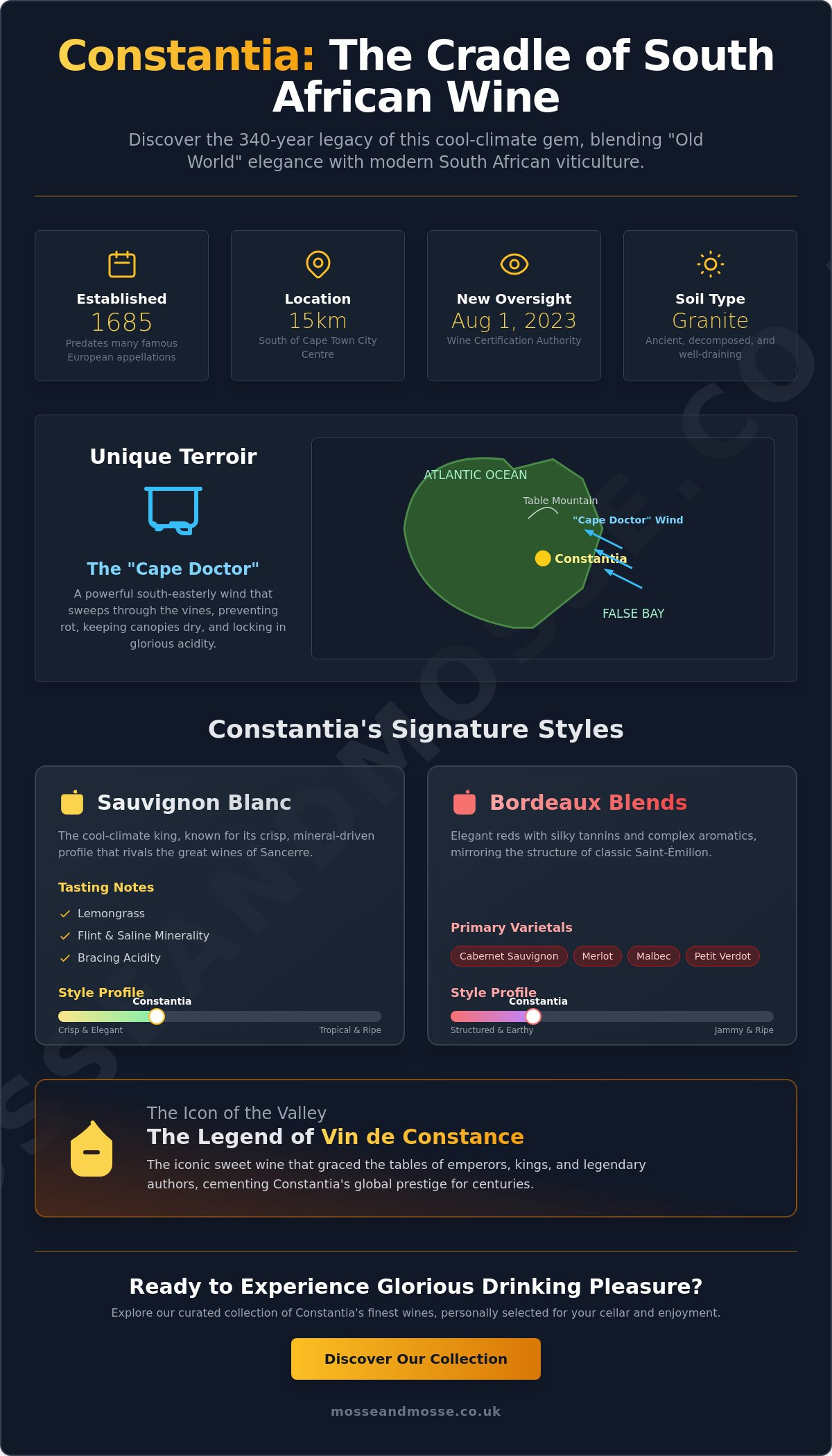
Tucked just 15 kilometres south of Cape Town's city centre lies a valley that feels more like a corner of Bordeaux than a typical New World outpost. Constantia is South Africa's oldest wine-growing region, a place where the air smells of salt spray and ancient history. Established in 1685 by Governor Simon van der Stel, this prestigious pocket of land predates many famous European appellations, including the official 1855 classification of the Médoc. Constantia stands as the definitive historical heart of Southern Hemisphere viticulture, a place where European tradition first took root in African soil.
The 1685 Legacy: From One Estate to Many
When we hunt for the best quality wines, we look for stories as much as structure. The history of Constantia wine began as a single, massive land grant from the Dutch East India Company. Following Van der Stel’s death in 1712, the original estate was eventually divided into the iconic farms we know today, such as Groot Constantia, Klein Constantia, and Buitenverwachting. While other early South African vineyards faded into obscurity, constantia survived because of its global reputation for excellence. It wasn't just a local favourite; it was a wine that the world’s elite demanded for their tables.
Geography and the 'Cape Doctor' Wind
The magic here isn't just in the cellar; it's in the unique terroir shaped by the shadow of Table Mountain. Constantia is defined by its proximity to both the Atlantic Ocean and False Bay, creating a cool-climate haven that’s perfect for producing elegant white wine and refined reds. A vital player in this ecosystem is the "Cape Doctor," a powerful south-easterly wind that sweeps through the vines. This wind is a natural blessing. It prevents rot and fungal diseases by keeping the canopy dry, while the cooling effect helps the grapes maintain that glorious acidity we love. Beneath the vines, the ancient, decomposed granite soils provide excellent drainage, ensuring the vines work hard to produce concentrated fruit. It's this combination of wind, soil, and sea that makes every glass of constantia a pure drinking pleasure.
Signature Styles: Sauvignon Blanc and Bordeaux Blends
While many South African regions lean into the sun-drenched, ripe fruit profiles typical of the New World, Constantia remains a bastion of restraint. Its wines are defined by a lean acidity and a structured elegance that mirrors the finest European estates. If you enjoy the precision and mineral tension of a white Burgundy wine, you'll find a similar intellectual appeal in this valley. It's all about what's in the bottle, and in Constantia, that means a focus on freshness and longevity over raw power. Unlike the riper, bolder styles found in Stellenbosch, these wines are prized for their cool-climate acidity and sophisticated balance.
Sauvignon Blanc: The Cool-Climate King
Constantia is world-renowned for its crisp, mineral-driven Sauvignon Blanc. Unlike the tropical "fruit bombs" found in warmer climates, these wines offer sophisticated notes of lemongrass, flint, and a distinct saline minerality. The high-altitude vineyard sites, some reaching over 200 metres above sea level, ensure fruit purity by extending the ripening period. This allows the grapes to develop complex aromatics without losing their bracing acidity. The 2024 and 2025 releases from top estates show incredible vibrance, proving why Constantia Sauvignon Blanc rivals the great wines of Sancerre in both quality and aging potential. It is a glorious wine treat for those who value precision.
The Constantia Red Blend: Bordeaux Elegance
The region's red wines are equally impressive, particularly the elegant blends of Cabernet Sauvignon, Merlot, and Malbec. Because the valley is cooled by ocean breezes, the grapes enjoy a long, steady ripening season that avoids the jammy characteristics of hotter inland regions. This results in silky tannins and a complex aromatic profile of cedar, graphite, and dark berries. The move toward classic Bordeaux varietals has been deliberate, with many producers now incorporating Petit Verdot to add depth and spice. The balanced structure and earthy undertones of these constantia reds closely resemble the profile of a classic Saint-Émilion, providing a refined drinking experience that feels right at home in a serious cellar.
We always look for wines that tell a story of their origin, and these cool-climate beauties offer pure drinking pleasure for the discerning palate. If you're looking to expand your collection with something truly unique, you might want to explore our curated collection of international gems that we've personally hunted for your enjoyment.
The Legend of Vin de Constance: The Wine of Kings
To understand the true prestige of constantia, one must look at the legendary sweet wine that once captivated the world’s most powerful figures. This isn't just a dessert wine; it is a cultural icon that defined the 18th and 19th centuries. It graced the tables of emperors and inspired the pens of literary giants. Jane Austen recommended it for its "healing powers" in Sense and Sensibility, while Charles Dickens and Baudelaire both immortalised it in their works. It's a wine that carries the weight of history in every golden drop.
Napoleon’s Final Solace
The historical record shows that Napoleon Bonaparte, during his final exile on the island of St Helena, found comfort in nothing else. He reportedly ordered 300 gallons of this wine every year, refusing almost all other refreshments on his deathbed in 1821. During this era, European royalty frequently chose this South African treasure over prestigious rivals like Sauternes or Tokaji. However, the original constantia vineyards were nearly lost to history following the phylloxera outbreak in the late 1800s. It wasn't until a dedicated resurrection in the 1980s, specifically with the first modern vintage of Vin de Constance in 1986, that this "wine of kings" returned to its former glory. We love hunting for these types of stories because they prove that quality eventually stands the test of time.
How Vin de Constance is Crafted Today
Unlike many sweet wines that rely on fortification, Vin de Constance is a natural masterpiece. It's made from Muscat de Frontignan grapes that are meticulously hand-harvested only after they have shrivelled into raisins on the vine. This process concentrates the sugars while maintaining a bright, balancing acidity that prevents the wine from being cloying. When you open a bottle, expect a glorious bouquet of dried apricot, honey, and warm spice. Because of its incredible concentration and structure, these bottles can be laid down for 20, 30, or even 50 years. It truly is a wine treat that evolves beautifully in the cellar, gaining complexity and depth as the decades pass.
If you're looking for a special bottle to add to your collection, browse our selection of fine wines to find your next great discovery.
Buying and Cellaring Constantia Wines
Constantia wines offer a level of complexity that rivals many prestigious French estates, often at a price point that makes them an exceptional value for the discerning collector. When you look at the quality inside the bottle, it's clear why we hunt for these gems. Top producers like Klein Constantia, Groot Constantia, Buitenverwachting, and Constantia Glen consistently deliver world-class results that belong in any serious cellar. Including these in your personal collection is a smart move, especially when you apply a thoughtful buy wine strategy that focuses on provenance and curation.
What to Look for on the Label
Provenance is everything. When examining a bottle, look for the 'Ward' of Constantia designation. This signifies the wine comes from this specific, cool-climate pocket rather than the broader Coastal Region. Identifying estate-bottled wines is a reliable way to guarantee the wine was grown, made, and bottled on the property. In this coastal zone, vintage variation plays a massive role in the final profile. For example, the 2024 Sauvignon Blanc from Klein Constantia and the 2025 release from Constantia Glen both highlight the vibrant acidity typical of these cooler years. Since the Wine Certification Authority took over oversight on August 1, 2023, the standards for these labels remain as rigorous as ever, ensuring you get exactly what's promised on the front.
Food Pairing with a Constantia Twist
To get the most out of these bottles, serving temperature is vital. Serve your Sauvignon Blanc chilled at 8 to 10°C to preserve those flinty, saline notes. It's a glorious partner for fresh seafood or tangy goat's cheese. For the elegant red blends, aim for 16 to 18°C. These reds, with their silky tannins, pair beautifully with herb-crusted lamb or a piece of aged cheddar. If you're opening a bottle of Vin de Constance, remember it's the ultimate partner for pungent blue cheese or fruit-based desserts like a simple apricot tart. These combinations aren't just meals; they're a pure drinking pleasure that celebrates the best of what the Southern Hemisphere has to offer. Whether you're looking for a midweek wine treat or a bottle to lay down for a decade, constantia delivers every time.
Secure a Piece of Liquid History
Constantia is more than just a valley south of Cape Town; it's a testament to the enduring quality of "Old World" winemaking in the Southern Hemisphere. Since its establishment in 1685, this region has proven that terroir and tradition can produce wines that stand alongside the greats of Europe. Whether you're drawn to the crisp, saline precision of its Sauvignon Blanc or the storied, sweet legacy of Vin de Constance, these bottles offer a unique blend of heritage and freshness. We've explored how the cooling ocean breezes and ancient granite soils create a refined profile that appeals to those who typically look toward Burgundy or Bordeaux.
At Mosse & Mosse, we believe it's all about what's in the bottle. Tim and Sam are dedicated to finding these glorious gems so you don't have to. We take pride in our expertly hunted quality and our commitment to giving you that one to one special service you deserve. If you're ready to add some constantia elegance to your collection, Explore our curated selection of 'Old World' style wines at Mosse & Mosse. We're here to help you find your next glorious wine treat that will provide pure drinking pleasure for years to come.
Frequently Asked Questions
What kind of wine is Constantia famous for?
Constantia is most famous for its legendary sweet wine, Vin de Constance, and its world-class, cool-climate Sauvignon Blanc. While the sweet Muscat de Frontignan put the region on the map in the 1700s, today's connoisseurs also hunt for its elegant red Bordeaux blends. These wines are prized for their restraint and "Old World" structure, offering a glorious alternative to riper styles found elsewhere in the Southern Hemisphere. It's all about the balance in the bottle.
Is Constantia wine sweet or dry?
The region produces both exceptional dry wines and world-renowned sweet wines. Most modern production focuses on dry, mineral-driven Sauvignon Blanc and sophisticated red blends of Cabernet Sauvignon and Merlot. However, the iconic Vin de Constance remains a benchmark for natural sweet wine. It's unfortified and left to shrivel on the vine, resulting in a luscious wine treat that avoids being cloying thanks to its naturally high acidity and concentrated fruit profile.
Who were the famous historical figures who drank Constantia wine?
This historic valley has been a favourite of emperors and icons for over 300 years. Napoleon Bonaparte famously ordered 300 gallons a year during his exile on St Helena until his death in 1821. Literary giants like Jane Austen, Charles Dickens, and the poet Baudelaire also featured the wine in their famous works. It was a staple on the royal tables of Europe long before many modern French regions gained their current global fame.
How does Constantia's climate affect the taste of the wine?
The cool-climate maritime conditions give constantia wines a signature elegance and high natural acidity. Being just 15 kilometres from the Atlantic Ocean and False Bay, the vineyards are cooled by sea breezes and the "Cape Doctor" wind. This prevents the grapes from over-ripening in the South African sun. The result is a palate defined by flinty minerality in whites and silky tannins in reds, providing pure drinking pleasure rather than jammy, high-alcohol fruit.
Where is the Constantia wine region located?
You'll find this prestigious wine ward located just 15 kilometres south of Cape Town’s city centre, nestled against the eastern slopes of the Constantiaberg mountains. It is a compact, high-quality area that benefits from the shadow of Table Mountain. Its proximity to the coast makes it one of the coolest wine-growing regions in South Africa. This unique position ensures the vines produce the concentrated, balanced fruit we look for when selecting bottles for our customers.
Can I age Constantia Sauvignon Blanc like a Burgundy?
Yes, the finest constantia Sauvignon Blancs are built to be laid down and can age beautifully for five to ten years. While many New World whites are meant for early drinking, the high acidity and mineral structure here mirror the longevity of a quality white Burgundy. These wines evolve from zesty lemongrass to complex notes of honey and toast. It's a lovely wine treat that rewards those with the patience to let it bottle-age in a cool cellar.


