

The 'green' in vinho verde has absolutely nothing to do with the colour of the wine in your glass. It's a confusing label that often leads people to dismiss this Portuguese icon as nothing more than a cheap, fizzy supermarket staple. You might even think it's just a simple thirst-quencher for a summer afternoon, rather than a serious contender for your dinner table.
We agree that the terminology is a bit of a muddle, but it's time to look past the basic bottles and see what's really happening inside. I've spent years hunting for quality, and the shift towards sophisticated, bone-dry whites in this region is truly glorious. You'll learn exactly what the 'green' name signifies, why the 2023 harvest has produced such exceptional fruit, and how to spot high-quality bottles from premium sub-regions like Monção and Melgaço. This guide will give you the confidence to pick a bottle that rivals the finest European whites for your next gathering.
Key Takeaways
- Demystify the ‘green’ label and discover how the Atlantic-influenced terroir of Northern Portugal creates such glorious, high-acidity wines.
- Explore the evolution from classic blends to sophisticated, single-varietal vinho verde like Alvarinho, which offers surprising ageing potential and pure drinking pleasure.
- Master the art of the pour by learning the ideal serving temperatures and glassware choices that elevate these refreshing whites beyond simple summer sippers.
- Discover why we look beyond the mass-market labels to find small, independent producers who capture the true essence of the Minho region.
- Learn how to pair these vibrant whites with food to create a lovely dining experience, ensuring every bottle you open is a genuine wine treat.
What is Vinho Verde? Demystifying the 'Green Wine' of Portugal
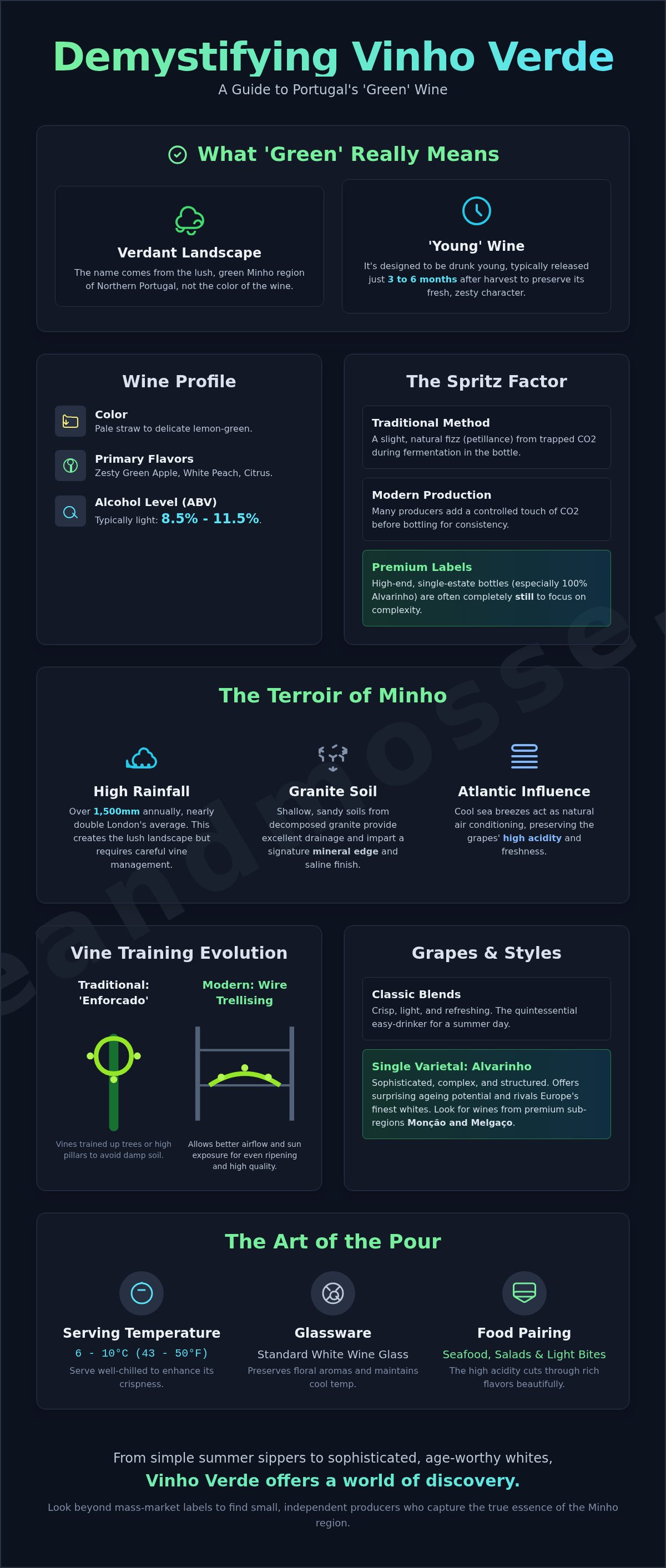
I've always believed that pure drinking pleasure shouldn't be complicated. In the lush, rain-drenched Minho region of Northern Portugal, winemakers have perfected a style that captures this sentiment perfectly. While many newcomers expect a lime-coloured liquid in their glass, the "green" in Vinho Verde actually refers to the region's verdant, rolling landscape and the wine's intended youth. This isn't a wine meant for the cellar; it’s a vibrant, high-acid treat designed to be enjoyed shortly after the harvest.
The historical roots of this region run deep, with the boundaries officially demarcated on 18 September 1908. Producers in this Atlantic-influenced corner of Portugal have spent over a century refining a style that balances crispness with a unique mineral edge. By 2026, these wines have become the ultimate choice for the health-conscious UK market. With alcohol levels often sitting between 8.5% and 11.5% ABV, they offer a lighter alternative to the heavier, high-alcohol whites found in warmer climates.
The 'Green' Misconception: Colour vs Age
Vinho Verde is a legally protected DOC (Denominação de Origem Controlada) region rather than a specific grape variety.
Producers typically release these wines just 3 to 6 months after the grapes are picked. This rapid turnaround preserves the primary fruit flavours, like zesty green apple and white peach, before they have a chance to evolve into heavier, honeyed notes. When you pour a glass, don't look for emerald tints. You'll find a visual profile ranging from pale straw to delicate lemon-green hues, reflecting the wine's freshness and lack of oak contact. It's all about what's in the bottle, and in this case, it’s pure, unadulterated energy.
The Spritz Factor: CO2 in Vinho Verde
One of the most charming traits of traditional vinho verde is its slight "petillance" or fizz. Historically, this occurred naturally when carbon dioxide was trapped during malolactic fermentation inside the bottle. It was a happy accident that became a signature style.
- Traditional Methods: Early 20th-century bottles relied on residual fermentation for that tiny prickle on the tongue.
- Modern Production: Today, many large-scale producers add a precise touch of CO2 before bottling to ensure consistency across every case.
- Premium Labels: Higher-end, single-estate bottles from sub-regions like Monção and Melgaço are often completely still, focusing on the complex structure of the Alvarinho grape instead.
Whether you prefer a playful sparkle or a sophisticated still white, the region offers incredible variety. I hunt for the best so you can enjoy what’s in your glass, and whether it’s a £10 easy-drinker or a £25 premium label, the quality of Portuguese viticulture shines through every time.
The Terroir of Minho: Granite, Rain, and the Atlantic Influence
Minho is Portugal's largest wine region, stretching across 21,000 hectares of lush, verdant landscape in the northwest. It's a place where the Atlantic Ocean dictates the rules of viticulture. Rainfall here often exceeds 1,500mm per year; that's nearly double the annual average of London. This abundance of water creates the "green" landscape that gives the region its name, but it also presents a challenge for growers who must fight rot and mildew with constant vigilance.
Granite is the geological backbone of the region. Most of the top-tier vinho verde comes from vines planted in shallow, sandy soils of decomposed granite. These soils are poor in nutrients but offer excellent drainage, which is vital given the high rainfall. This stony ground is responsible for the distinct mineral edge and saline finish found in the best bottles. It's a quality Tim always looks for when hunting for new additions to our cellar; that sense of place is what makes a wine truly special.
Vine management has evolved significantly. In the past, farmers used the "Enforcado" system, training vines to grow up trees or high stone pillars. This kept the fruit away from the damp soil and saved ground space for cabbage or corn. Today, most quality-focused estates have transitioned to modern wire trellising. These modern systems allow for better airflow and sun exposure, ensuring the grapes ripen evenly while maintaining their signature zest.
Atlantic Breezes and High Rainfall
The cool, damp climate is the secret behind the region's famous high acidity. Constant sea breezes act as a natural air conditioner, preventing the grapes from over-ripening and losing their "lovely" freshness. However, the climate is changing. Projections for 2026 from the Portuguese Institute of Sea and Atmosphere (IPMA) indicate that average temperatures in the Minho have risen by 1.5°C compared to the 1990 baseline. This shift is forcing growers to plant at higher altitudes or on cooler, north-facing slopes to preserve the crisp profile we love.
Monção and Melgaço: The Golden Sub-region
While much of the region is exposed to the sea, Monção and Melgaço are different. This sub-region is tucked away in the far north, protected by a ring of mountains that block the heaviest Atlantic rains. This microclimate is warmer and drier, making it the spiritual home of the Alvarinho grape. You'll notice a clear difference in style here:
- Coastal Wines: Light, zesty, and often lower in alcohol, usually around 9% to 11%.
- Inland (Monção e Melgaço): Weightier, more aromatic, and structurally complex, often reaching 13% alcohol.
Identifying "Monção e Melgaço" on the label is a hallmark of quality for those seeking a more serious, age-worthy bottle. If you're looking for a crisp white for a weekend lunch, we've found some lovely Portuguese selections that provide pure drinking pleasure and highlight this unique granite terroir.
Beyond the Blend: Exploring Grapes and Styles
While many drinkers recognise vinho verde as a light, fizzy aperitif, the region's true soul lies in its diverse grape varieties and evolving winemaking styles. It's all about what's in the bottle; that's important to me when hunting for quality. The traditional white blend typically relies on a trio of local stars: Loureiro for its aromatic lift, Arinto for its structural acidity, and Trajadura for its rounded mouthfeel. This classic combination produces the crisp, easy-drinking profile that has defined the region for decades.
Recent years have seen the rise of the 'Super-Verde'. These are often single-varietal Alvarinho wines from the Monção and Melgaço sub-regions. Since the early 2000s, producers have proved these wines possess serious ageing potential. A well-made 2018 Alvarinho can show incredible complexity today, moving away from simple fruit into honeyed, nutty territory. For those seeking pure drinking pleasure in the sun, Rosé Vinho Verde is a glorious alternative. Usually crafted from Espadeiro or Padeiro grapes, these wines burst with redcurrant and wild strawberry notes. They offer a refreshing, low-alcohol treat that rarely exceeds 11.5% ABV.
At the opposite end of the spectrum is Vinho Verde Tinto. This traditional red style is challenging and deeply idiosyncratic. It's bone-dry, high in malic acid, and often served in white ceramic bowls in local Portuguese tabernas. While only accounting for about 7% of current exports, it remains a fascinating, rustic experience for the adventurous palate.
The Leading Ladies: Alvarinho vs Loureiro
Alvarinho is the heavyweight of the region. It's weighty, tropical, and capable of significant bottle-ageing, often drawing comparisons to top-tier Riesling. Loureiro is more elegant and floral; it's often reminiscent of fine white burgundy wine due to its poise and mineral backbone. Arinto acts as the essential support, providing the searing acidity that keeps these blends fresh even in warmer vintages.
Identifying Quality: DOC vs Regional Classifications
To find the best juice, look for 'DOC Vinho Verde' on the back label. This ensures the wine meets strict regional standards. Estate-bottled wines, marked as 'Engarrafado na Propriedade', usually offer more character than mass-produced supermarket blends. Price is a reliable guide here. While you can find basic bottles for £8, spending £15 or more typically secures hand-harvested fruit from smaller family plots, where the focus is on terroir rather than volume.
The Art of the Pour: Serving and Food Pairing
To get the most out of your bottle, stop reaching for the ice bucket too early. While entry-level vinho verde is glorious when chilled to 8°C, premium bottles deserve a bit more warmth. If you are pouring a serious Alvarinho, aim for 11°C. This allows the complex stone fruit and mineral layers to actually reach your palate. We have moved past the days of drinking this from rustic ceramic bowls. A proper, tapered white wine glass is essential to concentrate those delicate floral aromas. It is all about what's in the bottle, and the right glass ensures you do not miss a single drop of that pure drinking pleasure.
The high acidity of this wine makes it a versatile partner for global cuisine. This "acidity bridge" is a secret weapon in food matching, as it cuts through the richness of fried foods and heavy fats. While traditionalists stick to Portuguese shores, this wine excels with aromatic Thai or Vietnamese dishes. The 2023 trend for pairing Loureiro with spicy Southeast Asian spices is popular for a reason; the wine's low alcohol and bright citrus notes provide a cooling counterpoint to heat.
Perfect Pairings: From Sea to Orchard
Classic matches include grilled sardines, salt cod (bacalhau), and spicy piri-piri chicken. For a local twist, take a bottle on a Suffolk picnic. The wine's zesty profile is a lovely match for a wedge of Baron Bigod cheese from Bungay or a fresh Cromer crab sandwich. The crispness of the wine balances the creamy texture of the Brie-style cheese perfectly. It is a simple wine treat that brings a bit of Portuguese sunshine to the British coast.
Storage and Longevity
Most vinho verde is designed for immediate enjoyment. You should drink 90% of these bottles within 12 months of the vintage date to enjoy that signature freshness. However, premium Alvarinho from sub-regions like Monção and Melgaço can develop beautifully over 3 to 5 years. Look for bottles with a bit more weight and structure if you plan to lay them down. If you do not finish the bottle, use a high-quality pressure stopper to keep the light spritz alive. This will preserve the "fizz" for up to 48 hours in the fridge.
Whether you are hosting a summer garden party or looking for a reliable partner for a spicy midweek curry, these wines offer incredible value. We hunt the best so you can enjoy what is in your glass without any guesswork.
Explore our curated selection of lovely white wines to find your next seasonal favourite.
Why Mosse & Mosse Curates Vinho Verde
At Mosse & Mosse, we live by a singular philosophy: it's all about what's in the bottle. This mantra guides every bottle Tim selects for our collection. We don't stock wines just because they have a famous label; we stock them because they offer a glorious drinking experience. When Tim goes hunting for the best, he looks for small, independent Portuguese producers who prioritise quality over volume. While our deep specialisation in burgundy red wine remains a cornerstone of our business, we've found that high-quality vinho verde provides the perfect structural contrast to those complex, earthy reds. It's the bright, refreshing partner every well-rounded cellar needs.
Our Selection Criteria
We apply the same rigorous standards to Portugal as we do to the finest estates in Bordeaux. Our focus remains on low-intervention winemaking and estate-grown fruit. We look for a precise balance where the vibrant acidity doesn't overpower the fruit concentration. In the 2026 market, Portuguese whites represent some of the best value available to UK collectors. We've observed that these wines often provide roughly 35% better value for money compared to equivalent quality levels in more established, over-inflated regions. We specifically seek out:
- Low-intervention methods: Wines that express the true character of the Minho soil without heavy-handed cellar techniques.
- Structural balance: A harmonious relationship between lower alcohol levels and high mineral drive.
- Artisanal scale: Producers who manage their own vineyards rather than buying bulk grapes from across the region.
The Personal Connection
Retail is in our bones, and building great relationships with winemakers is how we ensure quality for you. We visit these estates to see the vines and meet the families behind the labels. This personal touch allows us to secure small allocations of rare bottles you won't find in the supermarkets. If you're looking for a wine treat, we invite you to explore our seasonal mixed cases. These curated selections often feature our latest Portuguese gems alongside our favourite Old World classics. If you're unsure which bottle to open tonight, just ask Tim or Sam for their current favourite picks. We love giving our customers that one-to-one special service. Ultimately, a well-chosen vinho verde is the pure drinking pleasure your cellar deserves, offering a crisp, clean finish that makes every glass feel like a special occasion.
Bring the Refreshing Spirit of the Minho to Your Table
Vinho Verde is far more than just a simple summer sipper; it's a vibrant testament to the lush, rain-washed landscapes of Northern Portugal. You've discovered how the unique granite terroir and Atlantic influence create wines that range from light, spritzy blends to sophisticated, age-worthy Alvarinho. Since 1998, our philosophy has remained unchanged: it's always about what's in the bottle. Tim Mosse personally hunts for the finest quality to ensure every glass you pour delivers pure drinking pleasure. We've spent over 26 years building relationships with producers who prioritise character over mass production. Whether you're looking for a crisp companion for seafood or a complex white to lay down, the diversity of vinho verde offers something for every palate. We make it simple to enjoy these boutique finds with free UK mainland delivery on selected cases. It's time to move beyond the supermarket shelf and taste the authentic heart of Portugal.
Explore our hand-picked collection of glorious Portuguese wines
We look forward to helping you discover a bottle that truly inspires you.
Frequently Asked Questions
Is Vinho Verde always fizzy?
No, Vinho Verde isn't always fizzy. While 80% of the bottles you'll find on UK supermarket shelves have a slight spritz, many premium examples are completely still. This effervescence originally happened naturally in the bottle; however, most producers now add a touch of CO2 to maintain that refreshing style. If you're looking for a serious, still wine, seek out single-estate bottles from the Monção and Melgaço sub-region.
Does Vinho Verde contain high amounts of sugar?
Most Vinho Verde is dry, though some entry-level brands contain a small amount of residual sugar to balance the high natural acidity. You'll typically find sugar levels between 1g/L and 15g/L. For a bone-dry experience, look for 'Escolha' or 'Reserva' labels on the bottle. I always hunt for wines that let the fruit shine without needing extra sweetness to hide behind.
What grape is Vinho Verde made from?
Vinho Verde is made from several indigenous Portuguese grapes rather than just one variety. The 9 sub-regions of the DOC use different blends, but Loureiro, Alvarinho, and Arinto are the most common white grapes. Loureiro provides a lovely floral aroma, while Alvarinho brings structure and weight. If you're drinking a red version, it's likely made from the Vinhão grape, which accounts for about 7% of total production.
How long does a bottle of Vinho Verde last once opened?
You should finish a bottle of Vinho Verde within 1 to 3 days of opening if kept in the fridge with a stopper. Because these wines are prized for their fresh, aromatic profile, they lose their charm quickly once exposed to oxygen. The slight fizz in many bottles will dissipate within 24 hours. It's a wine designed for immediate pleasure, so I'd recommend sharing it with friends the moment you pull the cork.
Is Vinho Verde a low-alcohol wine?
Yes, Vinho Verde is traditionally a low-alcohol wine, making it a glorious choice for a light lunch. Most bottles fall between 8.5% and 11.5% ABV, which is significantly lower than a typical 14% French Chardonnay. However, premium Alvarinho bottles from the north often reach 13% or higher. This lower alcohol content is part of what makes vinho verde so incredibly drinkable on a warm British summer afternoon.
Can I age Vinho Verde in my cellar?
Most bottles are meant to be enjoyed within 1 or 2 years of the vintage date on the label. The "green" in the name refers to its youthful state, so you don't usually need to lay these down. That said, high-quality Alvarinho from top estates can age beautifully for 5 to 10 years. These older bottles develop complex honeyed notes that are a real wine treat for any collector.
What is the difference between Vinho Verde and Albariño?
The main difference is geography and blending traditions. Albariño is the Spanish name for the grape grown in Rias Baixas, while Alvarinho is the Portuguese name used in vinho verde. Spanish Albariño is almost always a still, single-varietal wine with more body. Portuguese versions are often blends and may have that signature spritz. Both share a distinct saline mineral quality because the vineyards sit so close to the Atlantic coast.
Why is it called 'Green Wine' if it's white?
The name refers to the wine being "young" rather than its actual colour. In Portuguese, "verde" implies the wine should be drunk shortly after bottling. This distinguishes it from "maduro" or mature wines that require ageing. You'll find white, rosé, and even deep red versions under this label. It's all about the vibrant, fresh energy in the glass, which is exactly what we look for when sourcing quality bottles.


