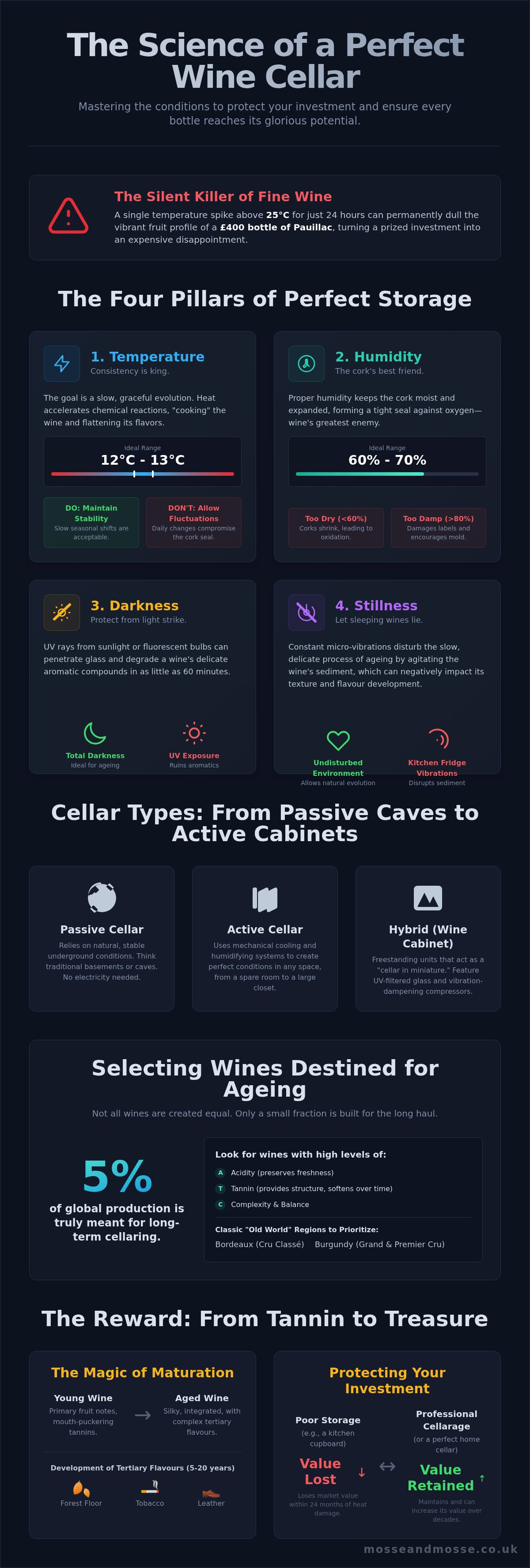
A single temperature spike above 25°C for just 24 hours can permanently dull the vibrant fruit profile of a £400 bottle of Pauillac. It’s a heartbreaking thought for any collector. You spend years hunting for that perfect case of Cru Classé Bordeaux, only to worry that a warm British summer or a dry spare room might turn your investment into expensive vinegar. We understand that anxiety because, for us, it's always about what's in the bottle. Creating the wine cellar of your dreams doesn't actually require digging a cavernous hole beneath your garden or spending a fortune on subterranean architecture.
We agree that the technical side of storage often feels more like chemistry than a hobby. That’s why we’ve put together this guide to help you master the science of ageing without the stress. You'll discover how to maintain the steady 13°C environment your bottles crave and learn which specific vintages from Burgundy and Bordeaux are truly worth laying down for the long haul. From practical humidity hacks for small urban spaces to selecting the most promising bottle-aged treats, we are here to ensure every cork you pull reveals nothing but pure drinking pleasure.
Key Takeaways
- Master the "Four Pillars" of storage to protect your investment from light and heat, ensuring your bottles reach their full potential.
- Understand why stability is more vital than a specific temperature when maintaining the wine cellar, and how to avoid the "cork catastrophe" caused by poor humidity.
- Explore modern alternatives to traditional underground dungeons, from clever under-stair conversions to professional UK-based cellarage services.
- Learn how to select the rare 5% of global production-primarily from Burgundy and Bordeaux-that is truly destined for long-term ageing.
- Discover the Mosse and Mosse philosophy of hunting the best "Old World" gems, helping you build a curated collection that promises glorious drinking pleasure.
What Is a Wine Cellar? Defining the Sanctuary of the Bottle
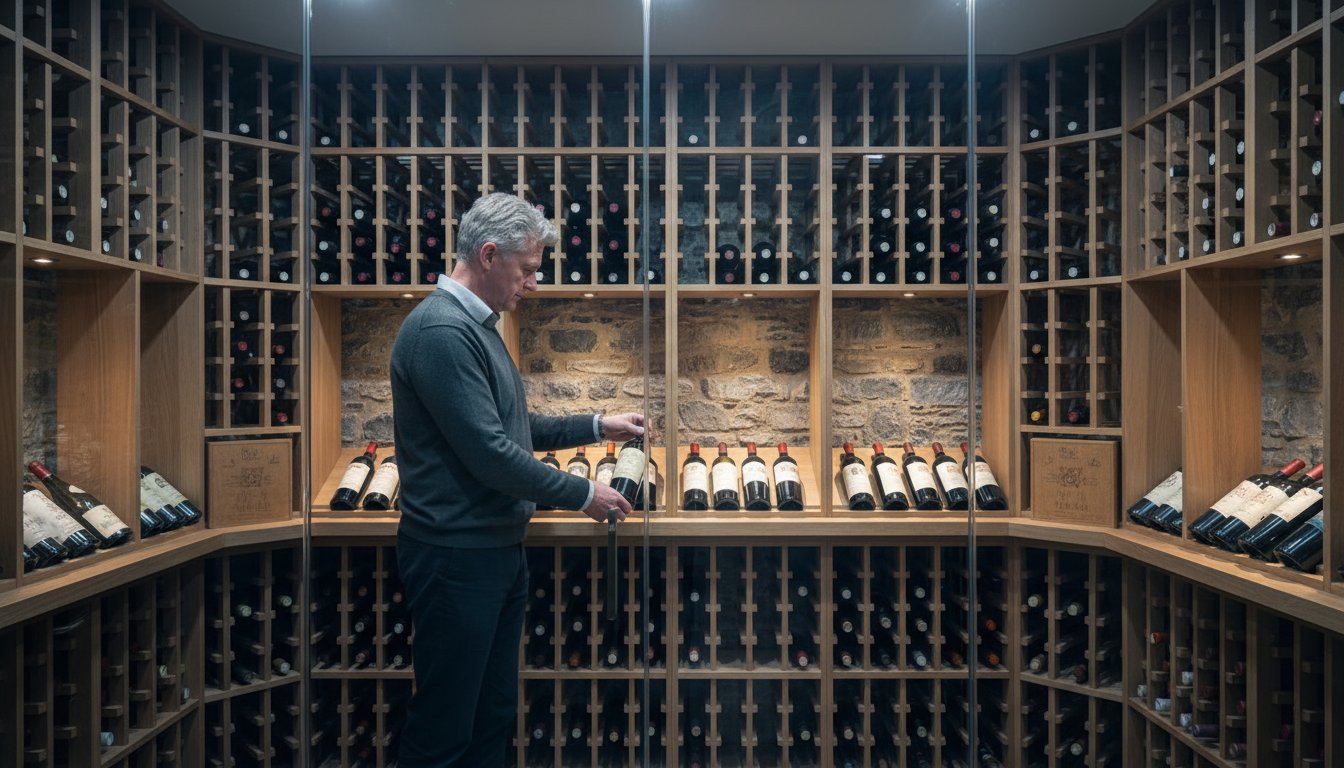
At Mosse & Mosse, we believe it's all about what's in the bottle. To ensure that "what" is a glorious glass of Pauillac or a delicate Burgundy, you need a sanctuary. A wine cellar isn't just a room; it's a defensive shield against the four enemies of wine: light, heat, vibration, and temperature fluctuation. Historically, the Old World traditions of France utilised limestone caves because they naturally held a steady 12°C. In the UK, we've mirrored this for centuries using the damp, cool basements of Victorian terraces. Today, the wine cellar is defined by its conditions rather than its physical location. You can create a perfect environment in a spare bedroom or even under a staircase if you have the right equipment.
The Purpose of Cellarage
Active vs. Passive Storage
Passive cellars rely on the earth's natural thermal mass. If your home has a basement that stays between 11°C and 14°C year-round, you've got a natural advantage. Active cellars use mechanical cooling systems to force these conditions in any environment. For many UK collectors without a traditional cellar, a hybrid solution is the answer. Modern wine cabinets act as the wine cellar in miniature, mimicking the humidity and stillness of a deep cave. These units are perfect for smaller spaces, ensuring your wine treat stays in peak condition until you're ready to pull the cork.
- Passive: No electricity, relies on thick walls and underground positioning.
- Active: Climate-control units that manage temperature to within 0.5°C.
- Hybrid: Freestanding cabinets with vibration-dampening compressors and UV-filtered glass.
Whether you're starting a collection or protecting a lifelong investment, the goal remains the same. You want to provide a stable, dark, and humid home where the wine can evolve at its own pace. It's about giving your bottles the respect they deserve so they can give you that one to one special experience when the time is right.
The Four Pillars of Perfect Wine Cellar Conditions
Creating the ideal environment for your collection is about more than just finding a dark corner. At Mosse & Mosse, we believe it's all about what's in the bottle; ensuring that a glorious bottle of Cru Classé Bordeaux reaches its full potential requires four specific environmental controls. The wine cellar acts as a protective cocoon, shielding your investment from the elements that cause premature spoilage. Without these controls, even the finest vintage can lose its character within a few short years.
Temperature Stability and the 12°C Rule
Consistency is your greatest ally. The universal standard for long-term ageing is 12°C (55°F). This allows red and white wines to develop complex tertiary flavours at a measured pace. A bottle of Pauillac kept at a steady 12°C will age beautifully over 20 years, whereas heat spikes above 25°C accelerate chemical reactions, leaving the wine tasting flat. While a slow seasonal shift is acceptable, daily fluctuations are bottle killers. They cause the liquid to expand and contract, eventually compromising the cork's seal.
The Role of Humidity and Darkness
Aim for humidity between 60% and 70% to keep corks supple. If the air is too dry, the cork shrinks, leading to oxidation. Conversely, humidity over 80% damages labels; a tragedy if you plan to resell your bottle-aged treasures later. Darkness is equally vital. UV rays penetrate glass, causing "light strike" which ruins delicate aromatics in as little as 60 minutes of exposure. Dark glass provides some protection, but it isn't enough for a decade of storage.
Beyond these factors, you must consider vibration and odour. A standard kitchen fridge is a poor substitute for the wine cellar because its compressor creates constant micro-vibrations that disturb the sediment and hinder the wine's natural evolution. Strong odours from nearby food or chemicals can also permeate the cork over time, tainting the pure drinking pleasure you've been waiting years to enjoy. Proper storage ensures that when you finally pull the cork, the wine is exactly as the winemaker intended, providing a lovely experience for you and your guests.
Myth vs. Reality: Do You Really Need a Dungeon?
You don't need a sprawling country estate or a cobweb-filled dungeon to house a serious collection. Many enthusiasts wrongly assume that the wine cellar is a luxury reserved for those with Victorian basements or stone-walled manors. In reality, about 75% of UK homes built after 1950 lack any subterranean space, yet the appetite for collecting fine Burgundy and Bordeaux has never been higher. We believe that protecting what's in the bottle is about consistency, not architecture.
Avoid the "Kitchen Fridge Trap" if you want your bottles to age gracefully. A standard domestic fridge stays at roughly 3°C to keep perishables safe, which is far too cold for the chemical evolution of wine. These appliances also strip moisture from the air to prevent frost, often dropping humidity below 20%. This environment shrivels corks and allows oxygen to seep in. For a "wine treat" to stay glorious, it needs a steady 12°C to 14°C and a humidity level near 65%.
Look for "dead space" in your home to create a micro-cellar. An under-stairs cupboard or a north-facing larder can often be converted for less than £1,000. These spots are naturally shielded from the two greatest enemies of wine: direct sunlight and rapid temperature fluctuations. By identifying a dark, quiet corner, you've already won half the battle in maintaining the wine cellar conditions your bottles deserve.
Innovative Home Storage Solutions
Modern technology has made professional storage accessible for any floor plan. A climate-controlled wine cabinet offers a professional environment within a standard 60cm kitchen footprint. If you want to go deeper, a spiral cellar can be excavated directly beneath a ground-floor room, storing up to 1,900 bottles in a concrete siloe that uses natural thermal mass. For smaller budgets, 50mm foil-backed insulation boards can turn a spare cupboard into a passive cellar that holds a steady temperature year-round.
Professional Cellarage Services
If you're buying wine as an investment or "laying down" cases for the future, off-site professional cellarage is often the smartest move. Storing "In Bond" (IB) means you don't pay the 20% VAT or the £2.67 per bottle Excise Duty until you decide to drink it. This creates a clear paper trail of perfect provenance, which is vital if you ever choose to sell your Cru Classé. At Mosse & Mosse, we know that professional-grade protection ensures that when you finally pull the cork, the wine is exactly as the winemaker intended.
Selecting the Best Wines for Your Cellar
Most bottles found on a supermarket shelf are crafted for immediate enjoyment. In fact, only 5% of global wine production genuinely improves with age. To find these rare bottles, we look for a specific structural backbone. A wine needs high acidity, firm tannins, and balanced alcohol to survive the years. Without these pillars, the fruit will simply fade away rather than evolving into something more complex within the wine cellar. It's all about what's in the bottle; if the structure isn't there on day one, time won't fix it.
Bordeaux: The King of the Cellar
Bordeaux remains the undisputed heavyweight of the cellaring world. When young, a top-tier Pauillac or Saint-Émilion often feels "tight" or even abrasive. This is due to the heavy tannin loads in Cabernet Sauvignon and Merlot. Over a period of 10 to 20 years, these tannins undergo a chemical transformation, shifting from a grippy texture to a silky, refined mouthfeel. We always advise focusing on "Cru Classé" estates or high-quality Right Bank producers where provenance is guaranteed. This year, Tim Mosse is particularly keen on the 2019 vintage. It's a glorious year for laying down, offering the pure drinking pleasure that defines the region's best outputs.
Burgundy: The Delicate Art of Ageing
While Bordeaux brings power, Burgundy offers an ethereal transformation. Pinot Noir is famous for moving from primary red fruit flavours to earthy, forest-floor complexities after a decade of rest. For white Burgundy, the wine cellar is an absolute necessity to mitigate the risk of premature oxidation, a phenomenon known as "premox" that has troubled some Chardonnay producers since 1996. While Village-level wines are lovely for mid-term drinking, you should look toward Premier Cru or Grand Cru bottles if you plan to keep them for 15 years or more. These higher classifications have the concentration required to go the distance.
One of the greatest joys of a home collection is the "vertical tasting." This involves opening three or more consecutive vintages of the same wine, such as a 2014, 2015, and 2016. It's a true wine treat that reveals how specific weather patterns and time change the liquid. It turns a simple glass of wine into a historical journey.
Start building your legacy today. Explore our hand-picked Burgundy and Bordeaux collections to find bottles truly worth the wait.
Building Your Cellar with Mosse and Mosse
At Mosse and Mosse, we don't just supply bottles; we hunt for the exceptional. Tim Mosse spends his time sourcing the finest Old World gems so you can experience pure drinking pleasure from your own collection. It's always about what's in the bottle. Whether you're searching for a grand Cru Classe or a hidden gem from a smaller grower, we ensure the wine cellar you build reflects your unique taste and level of patience. Sam Mosse brings a dedicated, service-oriented approach to the partnership, ensuring that every interaction feels like a personal consultation with a trusted expert.
Our philosophy focuses on the "wine treats" that make cellaring rewarding. We find everything from impressive magnums for milestone celebrations to exclusive bin-end deals on 6 x 75cl cases. These selections provide the variety needed to keep a collection interesting. By working closely with us, you'll discover wines that offer genuine character, moving beyond the predictable labels found on high street shelves.
Curated Selections for Every Palate
Our seasonal mixed cases offer the perfect entry point for any enthusiast. We organise these selections to provide a precise balance between "drink now" bottles and those that need to be laid down for 5 to 10 years. This variety ensures you aren't left waiting a decade for every cork in your collection. You'll find a mix of accessible daily luxuries and investment-grade bottles in every curated set.
Independent merchant expertise is our greatest asset. We specialise in finding the hidden treasures of Burgundy and Bordeaux that larger retailers often overlook. Building a one-to-one relationship with us ensures your collection grows alongside your evolving palate. We take the time to learn exactly what you enjoy, making the wine cellar a true reflection of your personality.
Starting Your Journey Today
Beginning a collection doesn't require thousands of pounds upfront. We recommend focusing on quality over quantity from the very first purchase. A well-chosen case of bottle-aged Saint-Emilion or a structured Pauillac provides an immediate taste of what’s possible when wine is kept in the right conditions. These mature bottles offer a glimpse into the complexity that time adds to a great vintage.
You can explore our curated Burgundy and Bordeaux collections to start your cellar today. Whether you're looking for a specific vintage or a diverse mixed case to get you started, we're here to guide you. Every bottle we select is a testament to our passion for quality and our commitment to your drinking pleasure.
Start Building Your Personal Sanctuary for Fine Wine
Creating the perfect environment for your bottles isn't just about storage; it's about protecting an investment in pure drinking pleasure. You've learned that the wine cellar relies on four critical pillars: stable temperatures, controlled humidity, darkness, and stillness. Whether you're converting a spare cupboard or a dedicated room, these conditions ensure every Cru Classe bottle develops its full potential over time. It's all about what's in the bottle, and getting the environment right is the first step toward a glorious tasting experience years down the line.
At Mosse and Mosse, we've spent 25 years hunting for the best quality so you can simply enjoy what's in your glass. We are independent specialists in hand-picked Burgundy and Bordeaux, selecting only the most exceptional wines that are truly worth laying down. When you're ready to fill your racks, we offer free UK mainland delivery on all orders over £150. Trust our family-run expertise to help you find those lovely bottle-aged treats that make every occasion special.
Explore our curated collections and start your wine cellar journey today
We can't wait to help you discover your next favourite vintage and watch your collection flourish.
Frequently Asked Questions
How long can I store wine without a proper cellar?
Most everyday wines will stay fresh for 6 to 12 months if kept in a cool, dark cupboard away from direct sunlight. Beyond a year, the temperature fluctuations in a standard UK kitchen, which often swings between 18°C and 24°C, will start to degrade the cork. If you've invested in a fine 2018 Bordeaux, you'll lose that pure drinking pleasure if it's left on an open rack for more than 300 days.
What is the ideal temperature for a wine cellar in the UK?
The golden rule for long-term storage is a constant temperature between 12°C and 14°C. Stability is actually more important than the exact number on the thermometer. While a slow shift from 10°C in January to 16°C in August won't harm your bottles, a 5°C spike in a single afternoon can force air past the cork. Maintaining the wine cellar at a steady 13°C mimics the perfect conditions of a traditional limestone cave.
Can I use a regular fridge as a wine cellar?
No, a standard kitchen fridge is far too cold and dry for anything other than short-term chilling. Domestic fridges typically run at 3°C or 4°C, which stunts the wine's development and can cause the cork to lose its seal within 45 days. The constant vibration from the fridge motor also agitates the sediment. It's fine for a bottle of Sauvignon Blanc you'll open tonight, but it's a disaster for a Cru Classe meant for ageing.
Do all red wines improve with age in a cellar?
Only about 1% of all wine produced globally is intended for long-term cellaring. Most supermarket reds are crafted to be enjoyed within 18 months of their release date. However, high-tannin bottles like a structured Pauillac or a fine Burgundy can evolve beautifully over 10 to 20 years. If you've bought a bottle for under £15, it's usually best to drink it now rather than tucking it away for a decade.
How do I know if a wine is "corked" or just old?
A corked wine smells like damp cardboard or a musty basement due to TCA contamination, which affects roughly 3% of natural corks. An old wine that has passed its peak will instead smell like vinegar, stewed fruit, or Sherry. If your 1998 Rioja lacks fruit but smells like a wet dog, it's corked. If it just tastes thin and acidic, the wine has simply reached the end of its natural life.
What is the difference between a wine cellar and a wine cooler?
A wine cellar is a dedicated, humidity-controlled space for long-term ageing, while a cooler is often designed just to reach serving temperatures. Many entry-level coolers lack the 60% humidity levels required to keep corks from drying out over several years. Investing in the wine cellar ensures your collection is protected from light and vibration for decades. It's the only way to safely store a 12-case stash of fine Bordeaux.
Is humidity really that important for wine storage?
Yes, maintaining a humidity level between 55% and 75% is vital to prevent corks from drying out and shrinking. If the air is too dry, oxygen seeps into the bottle and ruins the wine through rapid oxidation. Conversely, humidity above 80% won't hurt the liquid, but it will rot your labels. We've seen 40-year-old bottles with pristine wine inside but completely unreadable labels because the cellar environment was far too damp.
How should I organise my wine cellar for easy access?
Group your bottles by region and then by "drink-by" date to ensure you never miss a wine's peak drinking window. Use a simple grid system or a digital app to track your collection so you don't have to disturb the bottles. Place your everyday reds at waist height and your special wine treats or magnums on the lower, cooler shelves. Labelling the rack ends with the vintage year saves you from pulling out every bottle to find a specific 2010 Saint-Emilion.


