
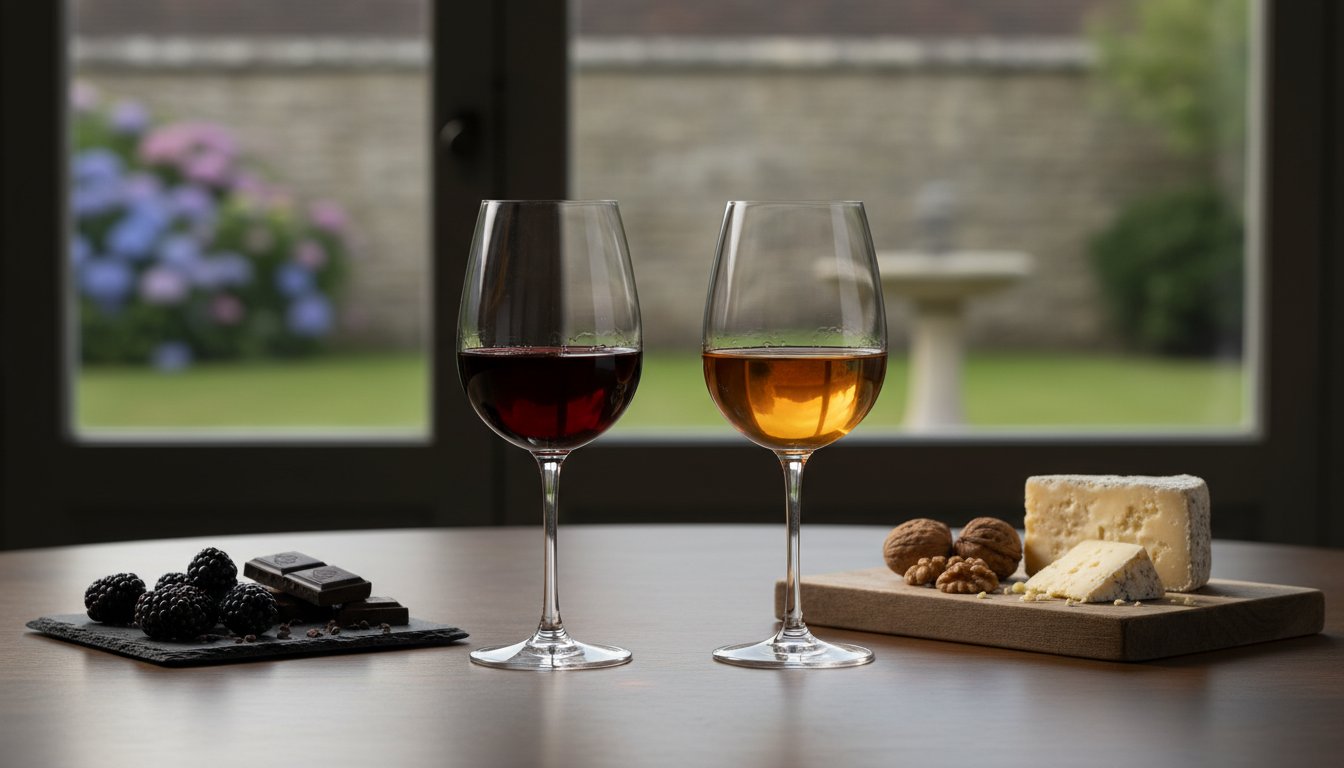
Last Saturday, a customer named Sarah visited our shop worried that her previous bottle of Port was far too syrupy and heavy for her evening cheeseboard. She'd fallen into a common trap, picking a bottle based on the label rather than understanding the liquid inside. We know that comparing tawny vs ruby port can feel like a minefield when you simply want a glorious glass to end the night. You want that pure drinking pleasure without the nagging worry that the wine will lose its character just 48 hours after you've pulled the cork.
It's all about what's in the bottle, and we're here to help you get it right every time. This guide will reveal the essential differences in flavour, ageing, and food pairings so you can find a style that truly suits your palate. We'll explore why a chilled Tawny might be your new favourite treat and how to tell a standard Ruby from a complex Vintage. By the end of this article, you'll have the confidence to select a bottle from any merchant and know exactly which cheese or dessert will make it sing.
Key Takeaways
- Understand how aging methods create the fundamental distinction between a vibrant, fruit-led Ruby and the mellow, oxidised character of a barrel-aged Tawny.
- Master the tawny vs ruby port flavour profiles to identify whether you prefer youthful notes of blackberry and chocolate or the complex, nutty finish of butterscotch and walnut.
- Discover the secret to the perfect pour by learning why Ruby Port shines at room temperature while a fine Tawny is often best enjoyed with a slight chill.
- Elevate your next dinner party with expert food pairing tips that prove these versatile wines are a glorious match for more than just the cheese board.
- Learn how to hunt for the best quality by focusing on independent producers who prioritise character and traditional craftsmanship over mass-market volume.
Tawny vs Ruby Port: The Fundamental Difference in the Bottle
Every bottle of Port begins its journey in the rugged, sun-drenched terraces of the Douro Valley, a region officially demarcated since 1756. Whether you are pouring a glass of vibrant Ruby or a mellow Tawny, the base liquid is the same fortified grape spirit. The real magic happens after the harvest. The choice between tawny vs ruby port isn't just about personal preference; it's a decision between two entirely different ageing philosophies. I've always believed that it's all about what's in the bottle, and with Port, the vessel used for maturation dictates every drop of character you eventually taste.
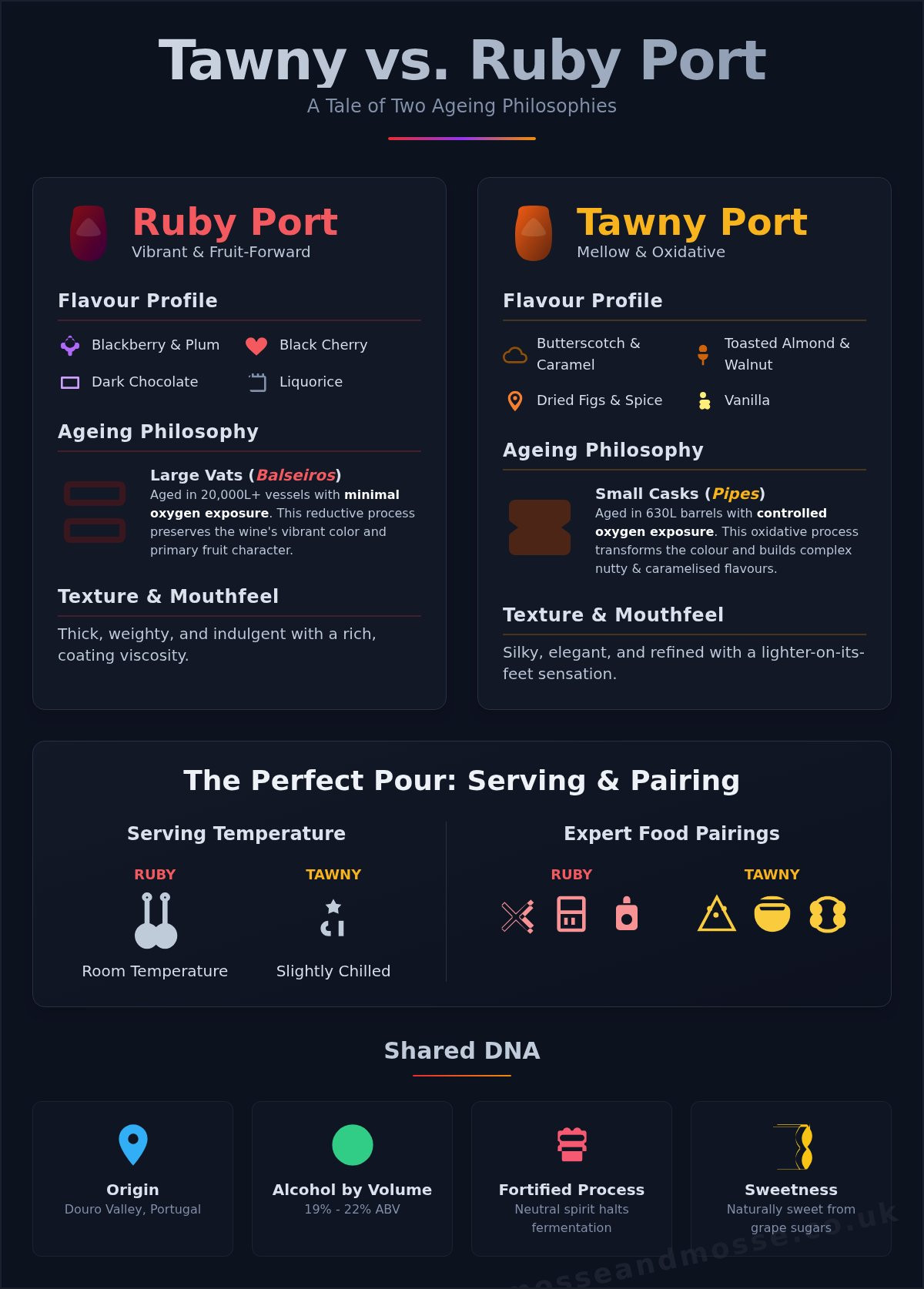
Ruby Port is the youthful, exuberant sibling. It stays in large tanks or is bottled early to lock in those primary fruit flavours. You'll recognise it by its deep crimson or purple hue, reminiscent of crushed blackberries. On the palate, it's a riot of fresh cherries and plums. In contrast, Tawny Port is the sophisticated elder. It spends years, sometimes decades, in smaller wooden casks. This exposure to air transforms the colour to a glorious amber-brown, shifting the flavour profile toward nutty caramel, dried figs, and spice. When I hunt for the best Port for our customers, I look for that specific clarity of style that defines these two paths.
The Role of Oxygen and Wood
The primary driver of the difference is the size of the ageing vessel. Ruby Ports are typically kept in massive oak vats called balseiros, which can hold upwards of 20,000 litres. These giant containers have a low surface-to-volume ratio, which means very little oxygen touches the wine. This preserves the "ruby" colour and intense fruit. For a traditional Port wine experience that feels fresh and lively, this lack of oxidation is key.
Tawny Port takes the opposite route. It ages in smaller 630-litre oak casks known as pipes. These smaller barrels allow the wine to breathe through the wood staves. This controlled oxidation evaporates a small percentage of the liquid, concentrating the sugars and acids while turning the wine from red to tawny. This process creates a silky texture that you won't find in younger Ruby styles. The wood doesn't just change the colour; it adds layers of toasted almond and vanilla that are pure drinking pleasure.
Sweetness and Alcohol Levels
Both styles are naturally sweet because fermentation is halted by adding a neutral grape spirit, usually at 77% ABV, while natural sugars remain. This fortification results in a final product typically ranging between 19% and 22% ABV. You'll find that a quality Ruby from an independent merchant has a thick, coating viscosity. It feels heavy and indulgent. A 10 or 20-year-old Tawny, however, offers a refined silkiness. It's lighter on its feet despite having the same sugar content, making it a wonderful wine treat at the end of a meal. Whether you prefer the weight of a Ruby or the elegance of a Tawny, both offer a level of complexity that justifies their place in any serious cellar.
Ruby Port: Capturing the Vibrant Fruit of the Douro
Ruby Port is the powerhouse of the Douro Valley. It’s designed to be youthful, vibrant, and unashamedly fruit-forward. While some wines crave decades of cellar time to show their best, Ruby Port is all about capturing the immediate, raw intensity of the harvest. It’s the classic style most of us associate with British traditions, dating back to the 17th century when merchants first sought a fortified wine that could survive the journey from Porto to London in oak barrels. When you pour a glass, you aren't just drinking wine; you’re tasting the history of a trade that has defined the Douro for over 300 years.
The flavour profile is a concentrated burst of the orchard and the forest floor. You can expect to find deep, primary notes including:
- Blackberry and blackcurrant: The backbone of the wine’s fruit profile.
- Plum and black cherry: Providing a fleshy, succulent sweetness.
- Dark chocolate: A common secondary note that adds a luxurious finish.
- Liquorice: Often found in higher-quality bottles, adding a spicy depth.
At Mosse and Mosse, we believe it’s always about what’s in the bottle. Mass-produced supermarket Rubies can sometimes feel one-dimensional; they lack the soul of the soil. When you choose a high-quality Ruby, you’re tasting the rugged schist of the Douro hillsides. Understanding the different styles of Port wine helps you spot the difference between a simple drink and a true experience. If you’re weighing up tawny vs ruby port, remember that Ruby is for the moments you want weight, warmth, and a burst of fresh berry fruit.
Standard Ruby vs Reserve Ruby
Standard Ruby is your entry point. It’s typically aged in large stainless steel or concrete vats for two or three years to prevent oxidation and keep that bright red colour. It’s reliable, but for a real treat, look for a Reserve. Reserve Ruby is a blend of several vintages aged for three to five years. This extra time in the cellar adds a velvety texture and more concentrated fruit. It’s the perfect choice for a casual Tuesday evening when you want something better than the basic tier but don't want to break the bank. You can usually find a superb Reserve for under £20, offering incredible value for the quality provided.
Late Bottled Vintage (LBV): The King of Rubies
LBV is the smart buyer’s alternative to expensive Vintage Port. While a true Vintage Port spends only two years in wood and decades in the bottle, an LBV stays in the vat for four to six years. This longer wood-ageing process means it’s ready to drink the moment you pull the cork. You get the complexity of a vintage style without the need for decanting or a 20-year wait. The debate of tawny vs ruby port usually comes down to whether you prefer fresh berries or nutty caramel; if it's the former, LBV is the pinnacle. It’s a glorious wine to have on hand for guests. Try pairing an LBV with a piece of crumbly Stilton or a 70% cocoa dark chocolate. The saltiness of the blue cheese cuts through the rich plum notes perfectly. If you are looking for a wine treat that punches well above its weight, a 2017 or 2018 LBV is a fantastic place to start.
Tawny Port: The Mellowed Aristocrat of Fortified Wine
Tawny Port is defined by its maturity. It’s a wine that has spent years, often decades, breathing through the grain of oak staves. Unlike the protective environment of a Ruby Port, Tawny lives in seasoned 630-litre casks known as pipes. This controlled exposure to air is where the magic happens. When debating tawny vs ruby port, the primary difference lies in this oxidation. The air gently coaxes the wine away from its youthful, purple intensity toward a translucent, golden-brown hue. This colour isn't a sign of decay; it's a badge of honour earned through patient cellaring in the lodges of Vila Nova de Gaia.
The flavour profile undergoes a total transformation during this process. You'll lose the primary punch of fresh blackberries found in younger styles. In their place, you'll find a sophisticated tapestry of dried figs, toasted walnuts, and creamy butterscotch. There's also that characteristic rancio note on the finish. It’s a savoury, nutty complexity that reminds me of old libraries or fine leather. It provides a glorious counterpoint to the wine’s natural sweetness, making it a pure drinking pleasure for those who prefer nuance over brute force.
Aged Tawnies: 10, 20, 30, and 40 Years
The age on a Tawny label is a target style, not a minimum age requirement. The IVDP (the Port and Douro Wine Institute) tastes these blends to ensure they match the characteristics of that specific age category. I often find the 20-year-old Tawny is the real sweet spot for balance. It retains enough acidity to feel fresh while displaying the complex, rancio-driven notes of age. By the time you reach 30 or 40-year-old bottles, the wine has concentrated through evaporation, losing roughly 2% of its volume every year to the angels' share. These bottles offer incredible intensity, often tasting like liquid gold with notes of roasted coffee and dark honey. They are rare treats that show exactly why we love the Old World approach to winemaking.
Colheita Port: The Single-Year Tawny
Colheita represents a unique niche in the tawny vs ruby port conversation. While Vintage Port is bottled young to age in glass, a Colheita is a single-harvest wine that stays in the cask until it’s ready to be enjoyed. It must spend at least seven years in wood, though many stay for much longer. I've seen Colheitas from 1974 or 1966 that still possess a vibrant energy despite their age. They offer some of the best value for collectors, often priced 25% lower than a Vintage Port of the same year while providing a ready-to-drink experience. It's all about what's in the bottle, and a well-sourced Colheita rarely disappoints.
- Appearance: Ranges from deep amber to pale onion skin.
- Service: Best served slightly chilled at 12 to 14°C to highlight the acidity.
- Storage: Unlike Ruby, an opened bottle of Aged Tawny will stay fresh in the fridge for up to 8 weeks.
The Practical Guide: Serving, Pairing, and Storing
Forget the dusty bottle at the back of the cupboard that only appears for a Christmas toast. Port is a year-round delight that deserves better treatment than a neglected shelf. Getting the most out of your bottle starts with the right temperature. Most drinkers serve Ruby Port far too warm; it actually shines at a cool room temperature, ideally around 16°C. Tawny Port requires a different approach. It loves a chill. Pouring a 10-year-old Tawny straight from the fridge at 10°C reveals layers of nuttiness that simply vanish if the wine is served at ambient room heat. It's all about what's in the bottle, and temperature is the key that unlocks those hidden flavours.
Stop using those tiny thimble glasses. They are a relic of the past and they trap the aromas you've paid for. I always recommend using a standard white wine glass or a proper ISO tasting glass. This gives the wine enough surface area to breathe. It allows you to actually smell the intense blackberry in a Ruby or the delicate butterscotch in a Tawny. This simple change in glassware transforms the experience from a quick sip to a proper tasting. Understanding the nuances of tawny vs ruby port is as much about the service as it is about the liquid itself. It's about giving the wine the space it needs to tell its story.
Occasions and Food Pairings
Ruby Port is a powerhouse for dessert. Try an LBV with a 72% cocoa dark chocolate fondant. The wine's natural acidity cuts through the heavy cocoa richness perfectly. For a savoury turn, a mature Stilton or a sharp Montgomery’s Cheddar provides the classic salty contrast to the fruit. Tawny Port offers a more mellow profile. Its oxidative notes of caramel and dried fruit pair beautifully with a classic crème brûlée or a dense almond tart. If you want to impress at a dinner party, serve a chilled 20-year-old Tawny with savoury foie gras. For a refreshing aperitif, mix 50ml of 10-year-old Tawny with 100ml of premium tonic water over ice. Garnish with a slice of orange for a drink that rivals any gin and tonic.
Shelf Life and Decanting
A common question I hear is how long a bottle stays fresh once the cork is pulled. Ruby Ports, particularly Late Bottled Vintage (LBV), are best finished within 7 days. They are fruit-forward wines, and once they meet oxygen, that vibrant fruit starts to fade. Tawny Port is the resilient member of the family. Because it has already spent decades ageing in wooden casks, it's used to oxygen. You can keep an opened bottle of Tawny in the fridge for up to 30 days without losing its character. Decanting depends entirely on the bottle style. Most LBVs and Tawnies are filtered before bottling, so you can pour them straight away. However, Vintage Port or Crusted Port will have a heavy sediment. Stand these bottles upright for 24 hours before opening, then carefully decant them into a clean carafe. When deciding between tawny vs ruby port, remember that your storage habits might dictate your choice.
Finding Your Favourite Port with Mosse and Mosse
Deciding between tawny vs ruby port doesn't have to be a solo journey. At Mosse and Mosse, we spend our time hunting for the very best so you can enjoy exactly what's in your glass. Our philosophy is simple; it's all about what's in the bottle. We avoid the mass-produced labels found on high-street shelves, choosing instead to partner with independent producers who value character and heritage over sheer volume. This focus ensures that every glass you pour delivers pure drinking pleasure rather than a generic experience.
We've always believed that Port is a "wine treat" that deserves a dedicated spot in every British cellar. Whether it's a rich, berry-forward Ruby or a nutty, mellow Tawny, these wines offer a level of complexity that few other styles can match. They are the perfect conclusion to a Sunday roast or a cold winter evening by the fire. By keeping a few well-chosen bottles laid down, you're always ready to elevate a simple meal into something truly special. Port isn't just for Christmas; it's a versatile companion for cheeses, chocolates, and quiet moments of reflection.
Our Curated Port Collection
Our current seasonal selection highlights the incredible versatility of Late Bottled Vintages (LBVs) and Aged Tawnies. An LBV provides the punchy, fruit-driven intensity of a Vintage Port without the decades of waiting; it’s ready to drink the moment you pull the cork. In contrast, a 10 or 20-year-old Tawny offers a sophisticated, silk-like texture that pairs beautifully with almond-based desserts or salty blue cheeses. These bottles are brilliant additions to a mixed case, especially for corporate gifting where quality reflects your own business standards. Every bottle in our Suffolk warehouse is hand-selected by Tim Mosse for its exceptional quality.
Expert Advice from the Mosse Family
We pride ourselves on a "one-to-one" service that larger, faceless retailers simply can't replicate. Tim and Sam Mosse are involved in every step, ensuring you receive advice that’s as personal as it is professional. If you're organising a wedding for 150 guests or looking for a single milestone birthday gift, we'll help you find the right bottle. Our goal is to ensure you never buy a bottle you won't absolutely love. We take the guesswork out of the tawny vs ruby port debate by matching the wine's profile to your specific palate and the occasion at hand.
If you're still weighing up which style to choose for your next event, get in touch with us directly. We provide bespoke recommendations based on your specific tastes and budget, drawing on years of experience in the wine trade. Whether you're looking for a single gift or stocking a private cellar with Old World classics, our family-run approach ensures you get the best possible value and service. Explore our latest Port arrivals and find your new favourite bottle today.
Discover Your Signature Port Style
Choosing between the vibrant, berry-forward intensity of a Ruby and the complex, nutty elegance of a Tawny isn't just about technicalities; it's about what brings you pure drinking pleasure. Whether you prefer the fiery spirit of a young Ruby or the mellowed, wood-aged sophistication of a fine Tawny, both styles offer a glorious finish. Understanding the nuances of tawny vs ruby port helps you select the right bottle for a cosy evening or a formal dinner.
At Mosse and Mosse, we've been hunting for quality as an independent Suffolk wine merchant since 1999. We specialise in Burgundy, Bordeaux, and fine fortified wines, ensuring every bottle meets our exacting standards. Tim and Sam Mosse provide a personal, one-to-one service to help you find exactly what you like. We believe it's all about what's in the bottle, and we've curated a selection that represents the very best of the Douro Valley.
Shop our curated selection of fine Ports and mixed cases
We're here to help you find your next wine treat. Cheers to finding your new favourite!
Frequently Asked Questions
Is Tawny Port sweeter than Ruby Port?
No, Tawny Port isn't necessarily sweeter than Ruby Port as both styles typically contain around 100 grams of residual sugar per litre. The perceived difference comes from the flavour profile. Ruby Port is packed with fresh red berry notes, while Tawny offers nutty, caramelised flavours from its time in small oak casks. These oxidative notes often give the impression of a richer, more mellow sweetness on your palate.
Do I need to decant Tawny Port?
You don't need to decant Tawny Port because it's filtered and aged in oak before being bottled. Since it has already spent 10 to 40 years interacting with oxygen in the barrel, it won't throw a sediment in the bottle like a Vintage Port does. You can pour it straight from the bottle into your glass to enjoy those glorious woody aromas and dried fruit flavours immediately.
What is the best cheese to pair with Ruby Port?
A creamy Stilton is the classic and best pairing for a rich Ruby Port. The salty punch of the blue cheese perfectly balances the intense fruitiness of the wine. For a 75cl bottle of Reserve Ruby, we recommend serving 150g of Colston Bassett Stilton. This combination creates a pure drinking pleasure that has been a staple of British dining rooms for over 200 years.
How long does Port last once opened?
A bottle of Ruby Port stays fresh for about 3 to 4 weeks, while a Tawny Port can last for 12 to 16 weeks if kept in a cool place. Because Tawny has already been exposed to oxygen during its long ageing process, it's much more resilient. Always replace the stopper firmly after pouring. If you've treated yourself to a lovely 20 year old Tawny, keeping it in the fridge helps preserve those delicate nutty notes.
Should Tawny Port be served chilled?
Yes, you should serve Tawny Port slightly chilled at a temperature between 12°C and 14°C to best appreciate its complexity. Chilling the wine lifts the aromas of dried orange peel and walnuts while tempering the warmth of the alcohol. When considering the choice of tawny vs ruby port for an evening, remember that Ruby is best enjoyed at a slightly warmer 16°C to highlight its bold, juicy berry flavours.
What is an LBV Port and is it a Ruby or Tawny?
An LBV, or Late Bottled Vintage, is a premium Ruby style Port produced from a single year's harvest. It's aged in large wooden vats for 4 to 6 years before bottling, which is longer than a standard Ruby but without the heavy oxidation of a Tawny. This style offers a fantastic middle ground for those exploring tawny vs ruby port, providing the depth of a vintage wine without the fuss of decanting.
Can I age Ruby Port in my own cellar?
Most Ruby Ports are bottled ready for immediate drinking and won't improve with further ageing in your cellar. While a rare Vintage Port can lay down for 50 years, standard Ruby and LBV styles are filtered to be enjoyed while their fruit is vibrant. If you have a bottle in your rack, it's best to open it within 12 to 24 months to enjoy that fresh, punchy character we hunt for.
Why is Tawny Port brown instead of red?
Tawny Port takes on a brownish, amber hue because it's aged in small 630 litre oak barrels that allow controlled contact with oxygen. This long term oxidation breaks down the bright red pigments found in the grape skins. Over a period of 10 to 40 years, the wine slowly transforms from a deep crimson to the beautiful tawny colour that gives the style its name, developing lovely flavours of raisins and spice.


