You don't need to spend £500 on a prestigious Grand Cru label to experience the ethereal magic of a world-class Pinot Noir. In fact, 85% of the most rewarding drinking experiences come from the smaller, family-run estates that often fly under the radar of the big auction houses. If you've ever felt overwhelmed by a wall of French labels or worried about wasting money on an inconsistent producer, you aren't alone. It's a common frustration for even the most seasoned collectors. Finding the right bourgogne red burgundy wine is all about looking past the prestige and focusing on what's actually in the bottle.
We agree that the complexity of the Côte d'Or can be daunting, especially when prices for top-tier names have risen by over 12% since the 2024 harvest reports. This guide will help you cut through the jargon so you can spot a glorious, bottle-aged bargain at twenty paces. You'll learn to decode labels with confidence, identify the specific village appellations offering the best value in 2026, and find a merchant who treats your wine rack with the same care as their own. We've curated the essential knowledge you need to fill your cellar with bottles that offer genuine character and pure drinking pleasure.
Key Takeaways
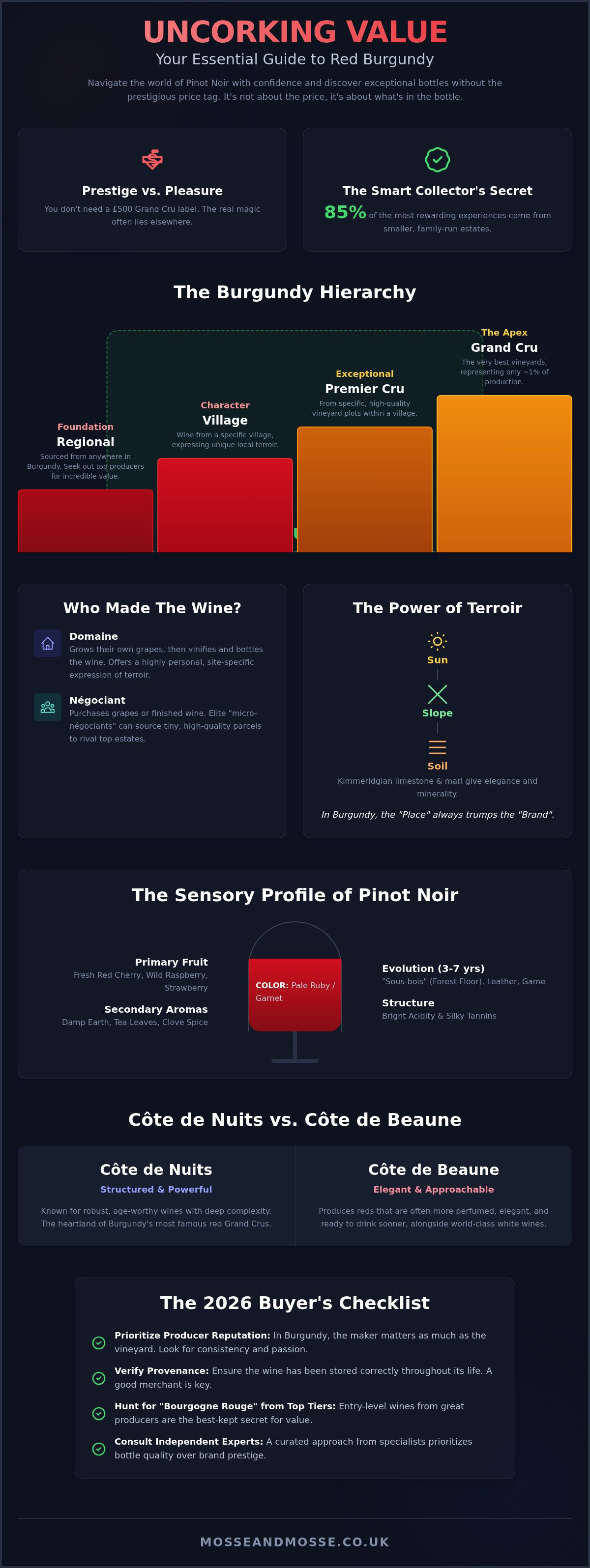
- Navigate the intricate Burgundy classification system to uncover exceptional value, identifying why entry-level labels from top-tier producers are often the best-kept secrets in the cellar.
- Understand how terroir and specific winemaking techniques distinguish the structured profiles of the Côte de Nuits from the more elegant, approachable styles found in the Côte de Beaune.
- Master the essential buyer’s checklist for the 2026 market, focusing on why producer reputation and provenance are vital when selecting a high-quality bourgogne red burgundy wine.
- Learn professional tips for storing and serving your collection to ensure every bottle reaches its full potential for a truly glorious drinking experience.
- Discover the advantage of a curated approach from independent Suffolk-based experts who prioritise the quality of what is in the bottle over mere prestige.
What Defines an Authentic Bourgogne Red Burgundy Wine?
Authentic bourgogne red burgundy wine represents more than just a grape variety; it's a liquid map of a very specific part of France. While the region produces world-famous Grand Crus, the "Bourgogne" designation serves as the vital foundation. Established under the Appellation d'Origine Contrôlée (AOC) laws in 1937, this category ensures that every bottle meets strict standards regarding yield, alcohol content, and production methods. At Mosse & Mosse, we believe it's all about what's in the bottle, and even at this regional level, you'll find the pure expression of Pinot Noir that made this area legendary. Unlike the heavy, high-alcohol reds from warmer climates, a Burgundy wine focuses on transparency and finesse.
Pinot Noir is the soul of the region, and Burgundy is its spiritual home. This grape is notoriously difficult to grow, yet it thrives in the cool, continental climate of eastern France. The identity of the wine is tied to its structure; it offers a lighter body and lower tannins compared to a Bordeaux, but with a complex aromatic profile that develops beautifully over time. It's a wine that invites you to linger over the glass rather than rushing the experience.
The Terroir Philosophy: Soil, Slope, and Sun
The magic of Burgundy lies in its complex geology, specifically the Kimmeridgian limestone and marl soils. These ancient seabed deposits provide the drainage and mineral content that Pinot Noir craves to produce elegant fruit. In this region, the "place" always trumps the "brand." A winemaker might only own three rows of vines in a specific plot, yet those rows produce a wine entirely distinct from the neighbour's. This small-scale production is why you'll see such varied results; a 0.5-hectare plot can yield a masterpiece while the field next door produces something completely different. It's a hunter's game to find the best, and that's exactly why we spend our time searching for those hidden gems.
Recognising the Sensory Profile of Pinot Noir
When you pour a glass of bourgogne red burgundy wine, notice the colour first. It's often a pale ruby or garnet, never the opaque purple of a Malbec or Syrah. The nose typically explodes with bright red fruit and earthy undertones. Typical flavour notes include:
- Primary fruit: Fresh red cherry, wild raspberry, and strawberry.
- Secondary aromas: Damp earth, tea leaves, and a hint of clove spice.
- Evolution: As it ages, usually over 3 to 7 years for regional bottles, you'll find "sous-bois" (forest floor), leather, and gamey notes.
These evocative, earthy notes create a profound, atmospheric quality in the glass. For readers who appreciate a similar mood in storytelling, the literary settings explored in Graham Mulvein's World of Horrors offer a compelling parallel.
Red Burgundy is defined as a balance of bright acidity and silky tannins.
Navigating the Burgundy Classification System
The Côte d’Or remains the undisputed heart of premium production, a narrow limestone escarpment where the world's most coveted Pinot Noir is born. Understanding this region isn't about memorising brands; it's about grasping a hierarchy tied to the soil itself. Unlike Bordeaux, where the estate name takes centre stage, Burgundy focuses on the specific plot of land. Over 3,000 individual winegrowers work these slopes, making the producer's name just as vital as the vineyard designation.
You'll often choose between a "Domaine" and a "Negociant" when buying. A Domaine grows, vinifies, and bottles its own grapes, often resulting in a very personal, site-specific expression. Negociants, or "Maisons," buy grapes or wine from various growers. While some larger houses produce high volumes, elite Negociants function like "micro-negociants," sourcing tiny parcels of high-quality fruit to create exceptional bourgogne red burgundy wine that rivals the top estates.
Regional and Village Levels: The Entry Points
Bourgogne Rouge serves as the foundation of the system. These bottles can be sourced from across the entire region, offering a versatile and accessible style. While many are simple, savvy buyers look for Bourgogne AOC labels from prestigious producers. These often represent Amazing Value Wines because the fruit frequently comes from younger vines located just outside the more expensive village boundaries. You can often find a bottle with serious pedigree for under £35.
Village wines represent a significant step up in character. When a label says "Gevrey-Chambertin" or "Meursault," every grape must come from that specific commune. These wines offer a clear sense of place and typically retail between £45 and £90. For most enthusiasts, the village level is the best balance of price and prestige, providing a clear window into the distinct personality of a specific town's terroir.
Premier Cru and Grand Cru: The Peak of Quality
Grand Cru is the absolute pinnacle, representing only 1.4% of Burgundy's total annual production. There are only 33 of these vineyards in existence. These wines are built for the long haul, often requiring a decade of bottle-ageing to reveal their true glory. Because of their extreme rarity and global demand, prices often start at £250 and can exceed £5,000 for the most famous sites.
Premier Cru is the sweet spot for the serious collector. These wines come from specifically designated "Climats" within a village that have historically produced superior fruit. You'll spot them easily on a label as they list the village followed by the vineyard name, such as "Pommard 1er Cru Les Épenots." They offer more complexity and structure than village wines but remain far more attainable than Grand Crus. If you're hunting for a bourgogne red burgundy wine that delivers a truly glorious experience, our hand-picked Burgundy selection focuses on these standout parcels that offer pure drinking pleasure.
Identifying Your Preferred Style: From Light to Structured
Finding your perfect bourgogne red burgundy wine requires a bit of detective work. It’s all about what’s in the bottle, and the style shifts dramatically based on which side of the hill the grapes grew. I hunt the best quality so you can enjoy a glorious glass, but your personal palate is the final judge. Some enthusiasts crave the ethereal, perfume-heavy Pinot Noir that dances on the tongue, while others want a bottle with the grit and tannin to stand up to a Sunday roast.
Winemaking techniques play a massive role in this final profile. Many producers now use whole-cluster fermentation, where the stems are kept during the soak. This often adds a distinct herbal spice and a firmer structure to the wine. Ageing also dictates the texture. A wine aged for 14 months in 30% new French oak will have a creamy, toasted finish compared to one kept in stainless steel or older "neutral" barrels. For a deeper look at the standards that define these styles, the Official Bourgogne Appellation Profile provides the essential technical foundation for the region's output.
Côte de Nuits: The Powerhouse of Pinot
This northern strip is where Pinot Noir finds its most muscular expression. The soils here contain a higher proportion of limestone and marl, producing wines that are structured and built to be laid down for a decade or more. If you enjoy dark fruit flavours like black cherry and plum, this is your territory. I often recommend Nuits-Saint-Georges for those who want a wine with real backbone. Villages like Vosne-Romanée offer a legendary density and "oriental spice" character that makes them a true wine treat for any collector.
Côte de Beaune: Elegance and Finesse
South of the town of Beaune, the reds generally become more approachable and floral. These wines are often a pure drinking pleasure in their youth, typically reaching a beautiful drinking window within 4 to 6 years of the vintage. You will find two fascinating stylistic opposites here:
- Volnay: Renowned for its lacy texture, high-toned violet aromas, and incredible grace.
- Pommard: The "iron fist in a velvet glove." It's famous for being the most tannic and robust red in the Côte de Beaune.
Choosing the right bourgogne red burgundy wine comes down to the occasion. A delicate Volnay is a lovely match for poultry, whereas a structured Nuits-Saint-Georges needs the richness of beef or game to truly shine. We take pride in giving our customers that one to one special service to help match these specific village profiles to your own taste preferences.
Practical Tips for Buying, Storing, and Serving Red Burgundy
Hunting for the perfect bottle requires more than just a glance at a label. In the 2026 market, the sheer demand for bourgogne red burgundy wine means you'll often find prices that don't always reflect the quality inside the glass. We've always believed it's all about what's in the bottle; that's why your first step should be finding a producer you trust. Look for names like Rousseau, Roumier, or rising stars like Berthaut-Gerbet. A reputable independent merchant is your best ally here. They provide the one-to-one service and provenance guarantees that large supermarkets simply can't match, ensuring your £80 or £500 investment hasn't been sitting in a warm warehouse.
Storage and service are where many enthusiasts lose the nuance of Pinot Noir. You don't want to serve these wines at "room temperature," which in a modern UK home is often 21°C. That's too warm. Aim for the "Goldilocks" zone of 14-16°C. This cooler temperature keeps the fruit vibrant and the alcohol in check. Glassware is equally vital. You need a wide-bowl Burgundy glass with a tapered rim. This specific shape creates a larger surface area for oxygen to release those delicate floral and earthy aromas, then funnels them directly to your nose. It's a glorious experience when done right.
Vintage Considerations for 2026
If you're browsing shelves this year, look for 2019 and 2020 bottles for sheer power and longevity. The 2022 vintage is also showing incredible promise for those who enjoy a plusher, more immediate fruit profile. Younger wines from cooler years like 2021 offer higher acidity, making them brilliantly refreshing but sometimes requiring a bit more air to open up. Climate shifts are changing the landscape rapidly; since 1990, the median harvest date in the Côte d'Or has moved forward by approximately 13 days, frequently pushing start dates into late August to preserve acidity.
Food Pairing: Beyond the Classic Beef Bourguignon
While a slow-cooked stew is lovely, Pinot Noir is a versatile partner for many dishes. The bright acidity and low tannins of bourgogne red burgundy wine make it a rare red that pairs beautifully with fatty fish like pan-seared salmon or roasted trout. For a more traditional route, game birds like pheasant or partridge offer a lean, savoury profile that complements the wine's earthy undertones. Don't forget the local Burgundian rule for cheese: "what grows together, goes together." The pungent, creamy Epoisses is the ultimate match, though earthy wild mushroom risotto is a spectacular vegetarian alternative.
Ready to find your next favourite bottle? We hunt the best so you can enjoy what's in your glass. Explore our curated selection of Burgundy & Bordeaux today.
The Mosse and Mosse Curation: Hand-Picked Red Burgundy
At Mosse and Mosse, we don't believe in buying labels just for the sake of prestige. Tim Mosse’s philosophy is straightforward: he spends his time "hunting the best so you can enjoy what’s in your glass." As an independent wine merchant based in the heart of Suffolk, we offer a level of scrutiny that larger retailers simply cannot match. We've spent over 25 years building relationships with smaller growers who prioritise soil health and traditional vinification over mass-market appeal.
For us, it's all about what’s in the bottle. We ignore flashy marketing campaigns and expensive gold foil. Instead, we look for that glorious purity of fruit and the distinct terroir of the Côte d’Or. This commitment ensures that every bourgogne red burgundy wine we stock represents genuine value, whether it's a vibrant village-level gem or a bottle-aged Grand Cru. If you're looking to explore the region without the guesswork, our curated mixed cases provide a perfect introduction. These cases are hand-picked to showcase the diversity of Pinot Noir, moving from the light, crunchy reds of the Côte de Beaune to the more structured, earthy profiles found in the Côte de Nuits.
Personalised Service and Wedding Consultations
Choosing wine for a big day shouldn't feel like a chore. We provide tailored wedding consultations to help you select a bourgogne red burgundy wine that complements your specific menu and fits your budget. Whether you need 60 bottles for a summer reception or 12 cases for corporate gifting and staff Christmas boxes, we offer a one-to-one relationship that you won't find on a supermarket shelf. Sam Mosse brings her years of retail expertise to ensure every detail, from bespoke gift notes to reliable UK-wide delivery, is handled with genuine care. We pride ourselves on being accessible; you can always pick up the phone to discuss a vintage before you buy.
Explore Our Current Burgundy Collection
Our current selection features some of our favourite finds from across the Côte d’Or, including small-batch producers who are currently redefining what modern Pinot Noir can be. These are wines we drink at our own table, chosen for their balance and pure drinking pleasure. For a deeper dive into the regions and styles we love, visit our primary guide: Red Burgundy: A Guide to France’s Finest Pinot Noir.
We invite you to browse our online shop for your next wine treat. We offer secure ordering and efficient delivery across the UK, ensuring your bottles arrive in pristine condition. Whether you're looking for a single bottle to enjoy this weekend or a case to lay down in your cellar, we're here to help you find something truly special.
Secure Your Next Glorious Bottle of Burgundy
Finding the perfect Pinot Noir shouldn't be a chore. Whether you're hunting for a delicate Village level gem or a structured Premier Cru, success comes down to understanding the classification system and knowing which producers prioritise quality over prestige. Navigating the nuances of bourgogne red burgundy wine is far simpler when you have a trusted partner to guide your selection.
At Mosse and Mosse, we've spent over 25 years as an independent Suffolk merchant focusing on one thing: what's in the bottle. Since 1999, Tim has personally hunted for wines that offer pure drinking pleasure, ensuring every vintage we stock meets our rigorous standards for character and terroir. We believe that buying world-class wine should be a personal, welcoming experience tailored to your specific tastes.
Explore our hand-picked Red Burgundy collection and buy online today. With free UK mainland delivery available on selected orders, your next wine treat is only a few clicks away. We look forward to helping you discover a bottle that truly delights your palate.
Frequently Asked Questions
Is Bourgogne red Burgundy the same as Pinot Noir?
Yes, almost every bottle of bourgogne red burgundy wine you encounter is made from 100% Pinot Noir grapes. While French law allows a tiny percentage of Caesar grapes in specific northern areas like Irancy, Pinot Noir is the absolute soul of the region. It's the grape that captures the unique terroir of the Côte d'Or, delivering that elegant, silky texture we look for in a quality bottle.
How much should I expect to spend on a good bottle of Red Burgundy?
You should expect to pay between £25 and £40 for a reliable, entry-level regional bottle in 2026. If you want the pure drinking pleasure of a Village-level wine from a top grower, prices typically start at £55 and can reach £95. For those seeking a special wine treat like a Premier Cru, budget between £110 and £220 depending on the prestige of the specific vineyard and producer.
Does Red Burgundy need to be decanted before serving?
Most Red Burgundy doesn't require long decanting because the Pinot Noir grape is delicate and can lose its floral aromas if exposed to too much oxygen. We suggest pouring a glass 30 minutes before your meal to let it breathe naturally. If you've a young, tightly wound 2023 vintage, a quick 15 minute splash in a decanter helps, but don't leave older, fragile bottles sitting out for hours.
How long can I cellar a bottle of Bourgogne AOC?
A standard bottle of Bourgogne AOC is best enjoyed within 3 to 5 years of its vintage date. These regional wines are crafted for immediate charm and vibrant fruit rather than decades of ageing. While a few exceptional bottles from elite producers like Coche-Dury can last 8 years, most lose their lovely freshness if you leave them in the cellar for too long.
What is the difference between Red Burgundy and Bordeaux?
The primary difference is the grape variety and the structure of the wine in your glass. Red Burgundy is 100% Pinot Noir, creating a lighter, more aromatic wine with high acidity. Bordeaux is a blend of Cabernet Sauvignon and Merlot, which results in a heavier, more tannic profile. Burgundy focuses on the individual plot of land, whereas Bordeaux is usually defined by the style of a large estate or Chateau.
Why is Burgundy wine more expensive than other French reds?
Scarcity drives the price because Burgundy produces only 25% of the volume found in Bordeaux. The region is a patchwork of tiny parcels; some famous vineyards are smaller than 2 hectares, meaning only a few thousand bottles are produced for the entire world. High land costs in the Côte d'Or, which hit over £6 million per hectare for Grand Cru sites in 2023, also increase the price of every bottle.
What does "Mis en bouteille au domaine" mean on a label?
This phrase means the wine was "bottled at the estate," which tells you the grower who tended the vines also managed the winemaking and bottling. It's a sign of authenticity and quality that we always look for. It ensures the wine hasn't been sold in bulk to a large merchant, meaning the character in the bottle is a direct reflection of the producer's personal hard work.
Is 2026 a good time to buy older Burgundy vintages?
2026 is a brilliant time to buy 2017 and 2019 vintages because they're reaching their peak drinking windows right now. The 2017s are showing wonderful elegance and soft tannins, while the riper 2019s have settled into a period of glorious balance. Avoid buying 2021 reds for long-term cellaring, as that vintage produced leaner wines that are better suited for drinking within the next 18 months.


