
Last Saturday, a regular customer visited our shop looking for a "reliable Sauvignon Blanc" but walked straight past the sancerre wine shelf because the label didn't mention a single grape. It's a common frustration. French labelling often feels like a secret code, and when you're spending £20 or £30 on a bottle, you want to be certain it won't be a shrill, acidic disappointment that lacks the glorious balance you're after.
We understand that choosing the right bottle can feel like a gamble. That's why we're pulling back the curtain on this Loire Valley icon to give you the confidence of a true connoisseur. You'll discover how the unique flinty soils create those elegant flavours and learn exactly how to pick a bottle that offers pure drinking pleasure for your next occasion. We'll explore the magic of terroir, the best food pairings for your dinner table, and why buying from an independent merchant ensures you get the quality you deserve.
Key Takeaways
- Understand why this French AOC is the global benchmark for Sauvignon Blanc and why the grape name never needs to appear on the label.
- Discover how the unique "flinty" terroir and hilltop geology of the Loire Valley produce such distinctively elegant and mineral-rich flavours.
- Learn to distinguish between explosive New World styles and the restrained, sophisticated elegance of a classic sancerre wine.
- Master the ideal serving temperatures and glassware choices to ensure every delicate aromatic in your bottle has the space to bloom.
- Gain the confidence to choose between artisan producers and generic blends, ensuring you always bring home a bottle of pure drinking pleasure.
What is Sancerre Wine? Understanding the Loire’s Benchmark
Sancerre sits proudly on the left bank of the Loire River, acting as the spiritual home and global benchmark for Sauvignon Blanc. As an Appellation d'Origine Contrôlée (AOC) in the eastern Loire Valley, this region produces wines that define elegance and precision. While the label rarely mentions the grape variety, a white Sancerre wine is always 100% Sauvignon Blanc. This tradition is born from a landscape of rolling limestone hills and a climate that pushes the grapes to their absolute limit of ripeness.
The history of the region is long and storied. Viticulture here dates back to Roman times, though the vineyards looked very different centuries ago. Before the late 19th century, Sancerre was primarily known for its red wines. When the phylloxera beetle devastated European vineyards in the 1860s, local growers made a strategic shift. They found that Sauvignon Blanc grafted particularly well onto American rootstocks, leading to the crisp, white style we adore today. At Mosse and Mosse, we believe it's all about what's in the bottle. Tim spends his time hunting for the finest expressions from these historic slopes; we want to ensure you experience the pure drinking pleasure that only a top-tier producer can provide.
The Grape Varieties: Not Just White Wine
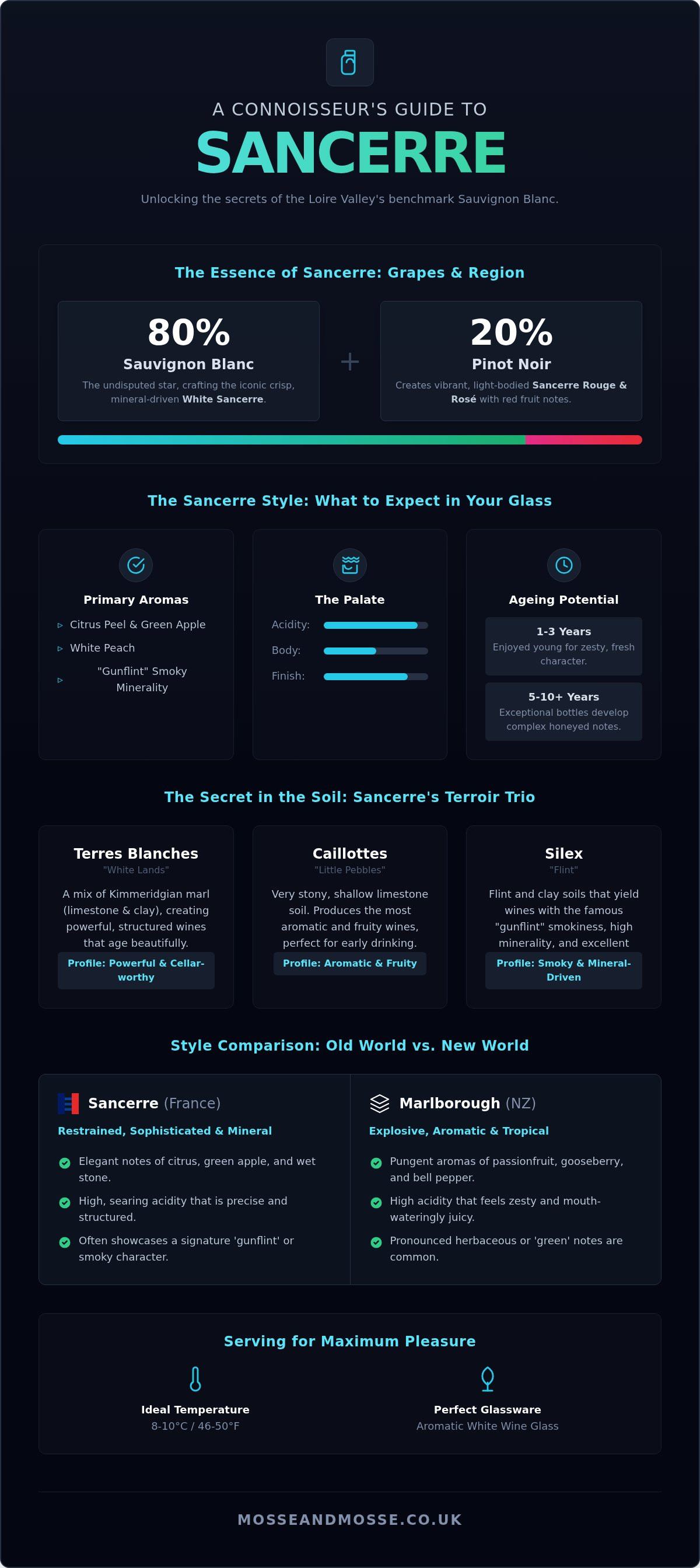
Sauvignon Blanc is the undisputed star of the show. It thrives in the region's diverse soils, producing wines with a vibrating mineral backbone and searingly fresh acidity. However, Sancerre isn't a one-trick pony. About 20% of the region's production is dedicated to Pinot Noir. This grape is used to create Sancerre Rouge and Rosé, offering a light, "crunchy" red fruit profile that feels incredibly vibrant. If you are a fan of red Burgundy wine, these reds are a fantastic alternative. They offer a similar finesse and earthy charm but often at a more accessible price point for your midweek wine treat.
The Sancerre Style: What to Expect in Your Glass
Pouring a glass of Sancerre usually reveals a pale, straw-coloured liquid that jumps out of the glass with intensity. You should expect a specific set of characteristics that define the sancerre wine experience:
- Primary Aromas: Vibrant notes of citrus peel, green apple, and white peach are common. You will also find the famous "gunflint" smokiness, a direct result of the flint-heavy silex soils found in certain vineyards.
- The Palate: Expect high acidity that makes your mouth water, a medium body, and a long, stony finish. It feels structured and purposeful.
- Ageing Potential: Most bottles are designed for youthful, zesty consumption within 1 to 3 years. However, exceptional cuvées from specific parcels can be laid down for 5 to 10 years, developing complex honeyed and dried fruit notes over time.
Whether you're looking for a bottle-aged gem or a fresh, zesty bottle for a summer lunch, Sancerre remains the gold standard for French Sauvignon Blanc.
The Secret in the Soil: Why Sancerre Flavours are Unique
Great wine starts with the dirt. In Sancerre, the terroir is everything. The village sits on a high ridge 312 metres above sea level, overlooking the Loire, which creates a natural drainage system for the vines. This hilltop position ensures the grapes soak up the sun, helping them reach peak ripeness even when the weather turns chilly. At Mosse & Mosse, we've always believed that the best producers are those who let their specific plot of land speak for itself. Tim spends his time hunting for growers who respect this heritage, because that's how you get the most honest expression of sancerre wine in your glass.
Understanding the local geology means looking back millions of years. You'll often hear us talk about the Kimmeridgian link. This is the same ancient, fossil-rich seabed you find in Chablis, located roughly 100 kilometres to the east. It's why many Sancerre bottles share that elegant, chalky mineral character found in top-tier Burgundies. To help you recognise these nuances, exploring Sancerre tasting notes and food pairings can be incredibly helpful for spotting these distinct geological markers.
The Three Famous Soil Types
- Terres Blanches: These "white lands" consist of Kimmeridgian marl, a mix of limestone and clay. Wines from these plots are typically powerful and structured. They often require a bit of patience, as they develop beautifully with a few years in the cellar.
- Caillottes: This soil is very stony and shallow. It produces the most delicate, aromatic styles. If you're looking for something bright and easy-drinking on a summer afternoon, these are the bottles to seek out.
- Silex: Pure flint soil. This is famous for giving the wine a distinct "burnt match" or smoky aroma. It's a signature style that many enthusiasts prize above all others for its intense mineral backbone.
Climate and the Loire River
The Loire Valley has a continental climate, meaning the winters are sharp and the summers are warm. This temperature swing is exactly what keeps the acidity high and the fruit flavours fresh. The Loire River acts as a giant radiator, regulating the temperature and protecting the delicate buds from spring frosts. Every year is different; a cooler vintage might give you zesty green apple, while a warmer year brings out white peach and tropical notes. It's a fascinating way to see how sancerre wine changes based on the weather. We invite you to explore our hand-picked selection to taste how these soils and seasons come together in the bottle.
Sancerre vs Marlborough: Choosing Your Sauvignon Blanc Style
Most of us have enjoyed a glass of Marlborough Sauvignon Blanc. It's become a global phenomenon for a reason. These wines are loud, punchy, and instantly recognisable. However, when you step into the world of Sancerre wine, you're entering a different conversation entirely. While New Zealand offers an explosive fruit basket, Sancerre provides a masterclass in restraint and mineral elegance. It's the difference between a high-definition blockbuster and a beautifully composed classic film. Both have their place, but they serve very different moods.
The Stylistic Showdown
New World Sauvignon Blanc, particularly from Marlborough, typically hits you with tropical aromatics. You'll find intense notes of passionfruit, guava, and sometimes a hint of jalapeño. These wines often carry a tiny touch of residual sugar to balance their piercing acidity. Sancerre is the antithesis of this "shouting" style. It focuses on citrus zest, white peach, and herbaceous notes like freshly cut grass or nettle. The finish is almost always bone-dry and saline. If you prefer a wine that tastes like a summer fruit salad, stick with the New World. If you want something that reflects the flinty soils of the Sancerre wine region, the Loire is your spiritual home.
Value for Money and the "Fine Wine" Factor
You'll notice Sancerre carries a higher price tag. In 2024, a decent bottle usually starts around £25, whereas Marlborough can often be found for £12. This isn't just about the name on the label. Sancerre is a small, protected appellation with limited acreage. Many producers still hand-harvest on steep slopes, unlike the vast, machine-harvested plains of New Zealand. This artisanal approach is why we at Mosse & Mosse, as fine wine merchants, focus so heavily on these French classics. There's an inherent quality and "laid down" potential here that mass-market bottles lack.
While most Sauvignon Blanc is meant for immediate consumption, top-tier Sancerre can evolve beautifully over 3 to 5 years. It develops a honeyed, nutty complexity that's simply glorious. For a sophisticated dinner party, Sancerre is almost always the better partner. Its high acidity and mineral backbone cut through goat's cheese or grilled sea bass without overwhelming the delicate flavours of the food. It's all about what's in the bottle. Whether you're hunting for a special gift or a personal treat, choosing sancerre wine ensures a level of finesse that's hard to beat. At the end of the day, it's about pure drinking pleasure and finding the bottle that makes your evening feel a little more special.
How to Serve and Pair Sancerre for Maximum Pleasure
To get the best from your sancerre wine, you must resist the urge to serve it ice cold. While many people keep white wine in a domestic fridge at 4°C, this temperature actually masks the delicate flinty notes and citrus aromatics that define the region. We recommend serving it between 8 and 10 degrees Celsius. This specific range allows the wine to express its full personality without losing its refreshing edge.
Tim and I always share one vital tip with our customers: don't pour it the second the cork is pulled. Let the bottle sit on the table for ten minutes after taking it out of the fridge. This brief period of breathing allows the bouquet to bloom, turning a tight, cold liquid into a glorious sensory experience. It's a small change that makes a massive difference to what is in your glass.
Glassware choices are equally important for enjoying this Sauvignon Blanc. You should reach for a traditional tapered white wine glass rather than a wide Chardonnay bowl. The narrower rim concentrates the floral and mineral scents, directing them straight to your nose. Most bottles won't require decanting; however, if you've found a particularly young or high-acid vintage, a quick splash into a carafe can help soften the edges and open up the fruit profile.
The Classic Pairing: Crottin de Chavignol
Local tradition dictates that what grows together, goes together. This philosophy perfectly explains the affinity between Sancerre and Crottin de Chavignol, a goat's cheese produced in the same Loire hills since the 16th century. The sharp, high acidity of the wine cuts through the creamy, tangy fat of the cheese with surgical precision. If you are building a British cheeseboard for your next party, look for local alternatives like Ticklemore or a fresh Golden Cross to achieve a similar balance of flavours.
Beyond Cheese: Seafood and Summer Salads
This wine is a natural partner for the treasures of the sea. It pairs beautifully with grilled sea bass, fresh oysters, or pan-seared scallops where the mineral finish of the wine echoes the saltiness of the shellfish. Because Sancerre often carries herbaceous undertones, it excels alongside dishes featuring green vegetables. A fresh pea risotto or lightly charred asparagus with lemon zest will highlight the wine's vibrant green notes.
We often recommend sancerre wine for wedding catering and garden parties because of its universal appeal and elegant profile. It provides pure drinking pleasure on a warm afternoon and holds up well against a variety of canapés. Whether you're hosting a formal dinner or a relaxed lunch, it remains one of the most reliable choices for any host who values quality.
For creating memorable canapés or enriching a cheeseboard, exploring artisanal French preserves is a wonderful idea. The gourmet products from Conserverie Maison Marthe can offer a fantastic complement, showcasing the kind of quality and tradition that pairs perfectly with a fine Sancerre.
Ready to experience the best of the Loire Valley? Explore our hand-picked selection and buy sancerre wine from our family-run cellar today.
Finding Your Perfect Bottle: A Personal Approach to Sancerre
Choosing a great sancerre wine involves more than just recognising the name on the front of the bottle. You'll want to look for the producer's name specifically. Domain-bottled wines, often marked with "Mis en bouteille au domaine," generally offer more traceability and character than mass-market negociant blends. These larger blends are frequently made from grapes sourced from dozens of different growers, which can strip away the unique identity of the soil. At Mosse and Mosse, we focus on wines that reflect their specific origin. We believe that what's in the bottle is the only thing that matters, and we hunt for those smaller producers who prioritise quality over volume.
Buying from an independent merchant like us means you aren't just a number in a database. Tim and Sam Mosse personally select every bottle, ensuring it meets our standard for "pure drinking pleasure." Whether you're a seasoned collector or just starting your journey, we provide the expert guidance needed to avoid the disappointment of a thin, acidic supermarket bottle. Our curated collections are designed to offer variety and value, often including hidden gems that the bigger retailers simply overlook.
Questions to Ask Your Wine Merchant
When you're chatting with us or visiting a specialist shop, don't be afraid to get specific. Ask if the wine is a single-vineyard bottling or a regional blend. Single-vineyard expressions often provide a more intense, focused experience of the terroir. You should also enquire about which of the three soil types the wine comes from; Silex soils typically produce a flinty, smoky style, while Terres Blanches offers more weight. Finally, ask if the wine is ready to drink now. While most Sancerre is glorious within 2 to 3 years of the vintage, some premium bottles benefit from another 12 to 24 months in the cellar to soften their edges.
The Mosse and Mosse Personal Service
We pride ourselves on giving our customers that one-to-one special service that's so rare today. If you're planning a wedding for 120 guests or need bespoke corporate gifting that stands out, we're here to help you manage the selection and logistics. We love helping clients organise mixed cases for the season, perhaps pairing a zesty sancerre wine with a more structured white Burgundy wine to suit different menus. Our goal is to build a relationship with you so we can recommend exactly what suits your palate every time you order.
Our latest arrivals are always changing as we find new treasures from the Loire and beyond. We invite you to explore our latest Sancerre arrivals and curated white wines to discover your next favourite glass.
Bring the Spirit of the Loire to Your Table
Choosing the right sancerre wine means looking beyond the label to understand the unique flinty silex and limestone soils that define this iconic region. Unlike the punchy tropical notes found in New Zealand bottles, these Loire Valley classics offer a sophisticated mineral crispness that has set the benchmark for Sauvignon Blanc for decades. Whether you're pairing a crisp glass with local goat's cheese or serving it chilled at a summer garden party, the focus should always remain on quality and character.
Tim Mosse has spent over 25 years building relationships with independent growers to ensure our cellar only holds the best. He personally tastes every vintage because, as he says, "It’s all about what’s in the bottle." We aren't a faceless retailer; we're a family business dedicated to finding those glorious wine treats that bring genuine pleasure to your glass. You can rely on our expertise to guide you toward a bottle that truly sings.
Explore our hand-picked Sancerre and Loire Valley collection and discover the difference that 25 years of specialist knowledge makes. We offer free UK mainland delivery on qualifying orders, making it easier than ever to stock your cellar with excellence. We can't wait to help you find your next favourite pour.
Frequently Asked Questions
Is Sancerre always made from Sauvignon Blanc?
No, Sancerre isn't exclusively a white wine region. While 100% of the white Sancerre wine produced is made from Sauvignon Blanc, the region also produces red and rosé wines. These alternative styles are made entirely from Pinot Noir. These Pinot-based bottles account for approximately 20% of the total output from the district's 3,000 hectares of vineyards.
How long can I keep a bottle of Sancerre in my cellar?
You should generally enjoy your white Sancerre within 1 to 3 years of the vintage date to appreciate its signature freshness. If you've laid down a bottle from a top-tier producer like Domaine Vacheron, it can age beautifully for 7 to 10 years. These bottle-aged examples develop complex notes of honey and dried fruit that offer pure drinking pleasure.
What is the difference between Sancerre and Pouilly-Fumé?
Sancerre and Pouilly-Fumé sit on opposite banks of the Loire River, but their distinct soils create different personalities. Sancerre often feels more vibrant and citrus-forward because of its chalky limestone soils. In contrast, Pouilly-Fumé is famous for its "silex" or flint soil, which gives the wine a pronounced smoky aroma. Both are glorious expressions of the grape, yet they offer different mineral profiles.
Why is Sancerre wine usually more expensive than other Sauvignon Blancs?
The higher price reflects the prestige of the AOC and the labour-intensive nature of its production. Land in this region is strictly limited, making supply much tighter than mass-produced wines from larger international regions. Many family estates still hand-harvest on steep slopes, which increases costs. You'll typically find a quality bottle of Sancerre wine starts at £20 or more in UK specialist shops.
Can Sancerre be a red wine?
Yes, Sancerre produces lovely red wines made from 100% Pinot Noir grapes. These reds are known for being light-bodied and elegant, featuring bright cherry and raspberry flavours. While they represent a smaller portion of the market, they're a fantastic alternative for Burgundy lovers looking for excellent value. Look for bottles from recent successful vintages like 2019 or 2020 for the best balance.
What temperature should I serve Sancerre at for the best flavour?
You should serve white Sancerre chilled between 8°C and 10°C to preserve its crisp acidity and delicate aromatics. If the wine is too cold, you'll miss those lovely floral notes that make the region famous. For red Sancerre, aim for a slightly warmer 12°C to 14°C. Taking the bottle out of the fridge 15 minutes before pouring often makes a world of difference to the taste.
Does Sancerre go well with spicy food?
Sancerre isn't the traditional choice for fiery heat, but it pairs beautifully with mildly spiced aromatic dishes. Its high acidity cuts through the richness of Thai green curries or Vietnamese summer rolls. Avoid pairing it with heavy chilli-laden dishes that might overwhelm the wine's elegance. Stick to dishes featuring fresh herbs like coriander or lime leaf to see the wine truly shine.
Is Sancerre a dry or sweet wine?
Sancerre is almost exclusively a dry wine with very little residual sugar. It's famous for its bone-dry finish and high acidity, which makes your mouth water. While some producers might experiment with late-harvest styles in exceptional years, 99% of what you find on the shelf will be crisp and refreshing. It's all about that pure, mineral character in every glass.


