

Why settle for a glass of fizz that leaves you with a dull headache by 4:00 PM just because the label looked pretty? We've all been there, standing in the supermarket aisle feeling the pressure to grab a bottle of prosecco while worrying it might taste like metallic sugar. You want that glorious, fresh Italian style without the social anxiety of not serving Champagne or the regret of a poor purchase. It's a common frustration, especially when the shelves are flooded with mass-produced bottles that prioritise branding over the actual liquid.
I've spent years hunting for what is truly in the bottle, and I can tell you that understanding the difference between a basic £8 DOC and a refined £18 DOCG Valdobbiadene will change your drinking experience forever. You deserve to feel confident when reading a label and knowing exactly which merchant to trust for a quality bottle. This guide breaks down the Italian quality hierarchy and explains the flavour profiles that make 2026 a standout year for enthusiasts. You'll learn how to spot the real gems and ensure your next toast is one of pure drinking pleasure.
Key Takeaways
- Understand why the Charmat-Martinotti method is the secret to preserving those glorious, fresh notes of green apple and pear that define premium prosecco.
- Navigate the quality pyramid with ease, learning to spot the difference between standard DOC and the superior DOCG bottles where it really is all about what’s in the bottle.
- Elevate your tasting experience by mastering the ideal serving temperature and choosing the perfect tulip-shaped glass to release every aromatic nuance.
- Learn how to avoid supermarket mediocrity by seeking out independent producers who focus on character, heritage, and pure drinking pleasure.
- Gain expert insight into finding the perfect bottle for any celebration, ensuring your next wine treat is a truly memorable one for you and your guests.
What is Prosecco? Understanding Italy's Iconic Sparkling Wine
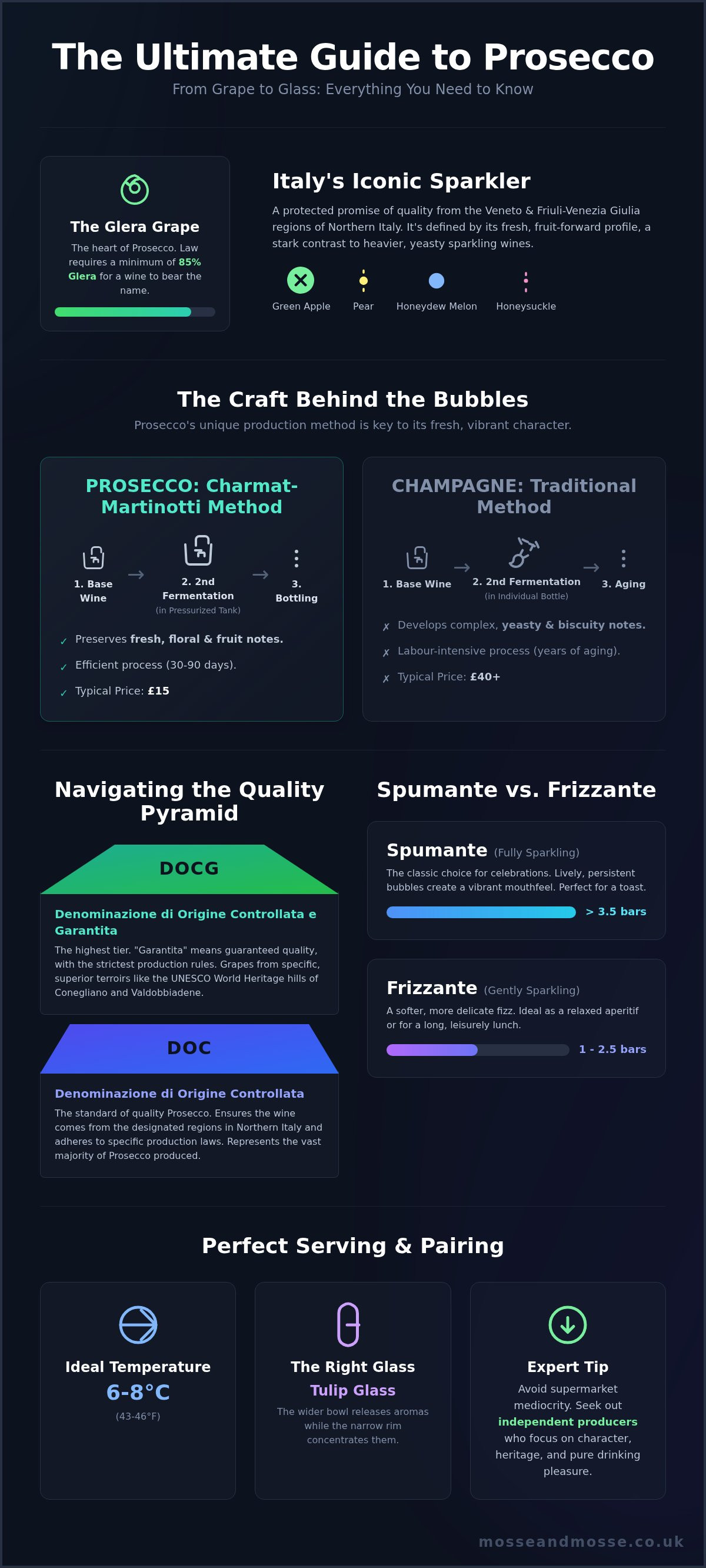
Prosecco isn't just a label; it's a protected promise of quality that originates from the sun-drenched hills of Northern Italy. Specifically, this wine must come from the Veneto and Friuli-Venezia Giulia regions to carry the name. If you're asking What is Prosecco?, the answer begins with its status as a DOC (Denominazione di Origine Controllata) or DOCG (Garantita) product. These designations ensure that every bottle adheres to strict Italian production laws, preserving the integrity of the wine we've all come to love. It's all about what's in the bottle, and in this case, it's a vibrant expression of Italian terroir.
To truly appreciate this fizz, you have to understand its aromatic profile. It's a glorious, fresh experience defined by primary fruit flavours rather than the heavy yeastiness found in other sparkling wines. You'll typically find lovely notes of crisp green apple, honeydew melon, and pear, often accompanied by delicate floral scents like honeysuckle. This accessible, fruit-forward nature has made it the UK’s favourite 'any-time' drink. In 2022 alone, the UK imported over 130 million bottles, proving that our thirst for this Italian sparkler shows no sign of slowing down.
Most of the magic comes from the Glera grape. This thin-skinned, green variety must make up at least 85% of any prosecco blend. Glera is naturally high in acidity and possesses a neutral aromatic palette that allows the fresh, floral characteristics to shine through during the fermentation process. Because the wine is usually made using the 'Tank Method' (Charmat-Martinotti), the bubbles stay light and the fruit stays front and centre. It's pure drinking pleasure without the pretension often associated with high-end sparkling wines.
The History and Heritage of the Veneto Region
Tracing the roots of this wine takes us to the village of Prosecco, tucked away near Trieste. While the name is historic, the modern identity of the region was solidified on 7 July 2019, when the Prosecco hills of Conegliano and Valdobbiadene were named a UNESCO World Heritage site. The steep, hand-tilled slopes and mild, breezy climate create a unique microclimate. This environment ensures the grapes retain that signature crisp acidity even in warmer vintages.
Spumante vs Frizzante: Knowing the Difference
Choosing the right bottle depends on how much 'fizz' you want. Spumante is the full-sparkling version, bottled under at least 3.5 bars of pressure to create persistent, lively bubbles. It's the perfect choice for a celebratory toast or a big party. Frizzante is a gently sparkling alternative, usually between 1 and 2.5 bars of pressure. We often recommend a Frizzante as a relaxed aperitif; it's softer on the palate and incredibly easy to drink during a long lunch.
We believe that wine should be about personal connection and genuine enjoyment. Whether you're picking up a bottle for a Tuesday night treat or a weekend wedding, understanding these basics helps you find exactly what you like. Italy's iconic sparkler offers a range of styles that cater to every palate, from bone-dry Extra Brut to the slightly sweeter Demi-Sec. It's a testament to the skill of the producers in Veneto that they can maintain such high standards of quality while keeping the wine so approachable and fun.
The Craft Behind the Bubbles: How Prosecco is Made
The magic of prosecco lies in its vibrancy and immediate charm. Unlike Champagne, which undergoes a second fermentation inside each individual bottle, these Italian bubbles are crafted using the Charmat-Martinotti method. This technique involves secondary fermentation in large, pressurized stainless steel tanks called autoclaves. It is a deliberate choice by winemakers to capture the pure, aromatic essence of the grape. By keeping the wine in these tanks for a period of 30 to 90 days, producers prevent the heavy, yeasty notes found in French sparkling wines from masking the delicate fruit profiles we love.
This method is significantly more efficient than the labour-intensive 'Traditional Method'. It explains why a glorious bottle of Italian sparkling wine might cost you £15, whereas a comparable Champagne often starts at £40. You aren't just paying for a name; you're paying for different levels of manual labour and cellar aging. For us, it's all about what's in the bottle. If you want a fresh, floral wine treat that tastes like a crisp summer morning, the tank method delivers that pure drinking pleasure without the hefty price tag associated with years of bottle maturation.
Why the Glera Grape Matters
To be legally labelled with the famous name, the wine must consist of at least 85% Glera grapes. This thin-skinned, green variety is the backbone of the region's success. It possesses a naturally high acidity and a palette of flavours that act as a canvas for notes of green apple, honeysuckle, and pear. The remaining 15% can include local varieties like Perera or Verdiso, which add structure, or international grapes like Chardonnay. According to the Prosecco DOC consortium, these strict rules ensure the wine maintains its historic identity and quality standards. If you're looking for a bottle that truly expresses this unique terroir, you might explore our curated Italian selection to see how these specific grapes shine.
The Rise of Prosecco Rosé
Everything changed for pink-loving enthusiasts on 11 August 2020. This was the date the Italian Ministry of Agriculture officially approved the production of Prosecco Rosé DOC, bringing a new level of regulation to the category. Before this, pink bubbles from the region were simply sold as "Spumante" without the prestigious DOC status. To qualify, the wine must be a blend of Glera and 10% to 15% Pinot Noir.
The Pinot Noir isn't just there for the delicate pale pink colour; it provides a structural depth and lovely hints of wild strawberry and redcurrant. When you're shopping for an authentic bottle, always look for the word 'Millesimato' on the label. This term confirms the wine is from a single vintage, which is a mandatory requirement for all official Rosé versions. This ensures you're drinking the freshest expression of that specific year's harvest rather than a blend of older stock.
Navigating the Quality Pyramid: DOC vs DOCG
Understanding the labels on a bottle of Italian sparkling wine is the best way to ensure you're getting a quality pour. At Mosse and Mosse, we believe it's all about what's in the bottle; that's the only thing that truly matters when you're sitting down to enjoy a glass. The Italian classification system acts as a roadmap for this journey. At the base of the pyramid, you'll find the DOC (Denominazione di Origine Controllata). Established in 1969, this tier covers a vast area across nine provinces in the Veneto and Friuli-Venezia Giulia regions. It's the engine room of production, yielding over 500 million bottles annually. While DOC wines are reliable and accessible, they are often designed for high-volume consumption rather than reflecting a specific, unique terroir.
When you move up to the DOCG (Denominazione di Origine Controllata e Garantita) level, the quality takes a significant leap. This "Guaranteed" status, awarded to the region in 2009, demands stricter production standards and lower grape yields per hectare. You'll spot these bottles by the distinctive gold or blue government seal wrapped around the neck. These wines aren't just about bubbles; they represent a commitment to the historical soul of the region. Choosing a DOCG bottle means you're tasting prosecco that has passed a rigorous tasting panel and originated from the most prestigious, hillside vineyards where the fruit develops more concentrated flavours.
The Crown Jewels: Conegliano Valdobbiadene
The hills of Conegliano Valdobbiadene are a UNESCO World Heritage site where the slopes are so steep that every single grape must be harvested by hand. This "heroic viticulture" results in wines of incredible elegance. If you see the word "Rive" on a label, you're looking at a wine from one of 43 specific town-land plots known for their exceptional soil. The absolute pinnacle is Cartizze, a tiny sub-zone of just 107 hectares. Often called the "Grand Cru" of the region, Cartizze produces a prosecco with a creamy texture and complex notes of rose and glazed nuts that command a premium price, often exceeding £30 per bottle.
Sweetness Levels: From Brut to Dry
The terminology used for sweetness can be quite confusing for the uninitiated. Brut is actually the driest common style, containing between 0 and 12 grams of residual sugar per litre. It's the perfect choice for a crisp aperitif or to pair with salty appetisers. In a twist of logic, "Extra Dry" is actually sweeter than Brut, typically containing 12 to 17 grams of sugar. This is the traditional style of the region and remains a crowd-pleaser for wedding toasts because the slight sweetness balances the natural acidity of the Glera grape beautifully.
- Brut: 0-12g/l sugar. Crisp, modern, and perfect for seafood.
- Extra Dry: 12-17g/l sugar. The classic balance of fruit and fizz.
- Dry: 17-32g/l sugar. Noticeably sweeter; pairs well with spicy Asian cuisine.
- Demi-Sec: 32-50g/l sugar. A luscious treat that stands up to fruit-based desserts.
A simple rule of thumb for your next gathering: stick to Brut if you're serving food like smoked salmon or light pasta. If you're hosting a party where the wine is being served on its own, an Extra Dry often feels more rounded and approachable for a variety of palates. It's these small details that turn a simple drink into a genuine wine treat.
Perfect Pairings and Serving Etiquette for the Enthusiast
At Mosse & Mosse, we often say it's all about what's in the bottle. However, even the finest prosecco can lose its charm if it isn't served with a bit of care. To experience that pure drinking pleasure we hunt for, you must pay attention to the details of temperature and glassware. Chilling is your first priority. Aim for a serving temperature between 6°C and 8°C. If the wine is too warm, the carbon dioxide escapes too quickly, leading to a coarse mouthfeel. If it's freezing, you'll mute those lovely notes of honeysuckle and green apple. A standard domestic fridge takes about three hours to reach this point, but an ice bucket filled with equal parts cold water and ice will get you there in 20 minutes.
Your choice of glass changes everything. While the narrow flute is a traditional favourite for celebrations, its tight rim actually stifles the bouquet. We suggest using a tulip-shaped glass instead. The wider mid-section allows the wine to breathe, while the narrower top captures the aromas. It makes a world of difference when you're trying to appreciate the nuance of a high-quality bottle. Don't forget the bubbles once the cork is popped. A 2022 industry report found that an open bottle loses 15% of its carbonation within just one hour if left unsealed. Forget the old wives' tale about putting a silver spoon in the neck; it doesn't work. Invest in a professional pressure-seal stopper to keep your wine fresh for up to 72 hours.
Food Pairings Beyond the Aperitif
This wine is a glorious companion for more than just a pre-dinner toast. If you're pouring a Brut, which has less than 12 grams of sugar per litre, pair it with salty snacks like Parmesan crisps or a light seafood linguine. For Extra Dry versions, the higher sugar content acts as a bridge for spicy Asian cuisine. Try it with a Thai red curry or a creamy Gorgonzola. It's also a lovely addition to a traditional afternoon tea, cutting through the richness of clotted cream and scones.
Storing Your Bottles at Home
Unlike the bottle-aged reds of Bordeaux, prosecco is generally crafted for immediate enjoyment. Most bottles should be consumed within 12 to 18 months of purchase to ensure the fruit flavours remain vibrant. If you need to store it for a few weeks, find a cool, dark spot away from any sources of vibration, such as a washing machine. Avoid keeping bottles in your kitchen fridge for more than four days. The constant vibration and the dry environment can damage the cork and flatten the wine's profile prematurely.
Ready to put these tips into practice for your next gathering? You can organise your next wine treat by exploring our curated selection of sparkling gems today.
Choosing Your Perfect Bottle: The Mosse and Mosse Curation
Tim Mosse doesn't just list wines; he hunts them. We've spent decades tasting through thousands of samples to ensure you don't have to settle for the uninspired, mass-produced bottles found on supermarket shelves. Often, those big-brand options are designed for volume rather than character. We look for the opposite. Our focus remains fixed on independent producers who pour their heart into every harvest. It's all about what's in the bottle. That's the core philosophy that drives our business every single day.
When we select a prosecco for our collection, we look for that precise balance of crisp acidity and delicate fruit that only smaller, dedicated estates can achieve. These winemakers aren't interested in cutting corners. They care about the soil, the vine, and the legacy of their land. By choosing these independent labels, we provide our customers with a level of quality and provenance that high-street retailers simply cannot match. You get a wine that tastes like its origin, not a factory line.
Giving our customers that one-to-one special service is what we're all about. Whether you're a seasoned connoisseur or just starting your journey, we're here to guide you personally. If you're unsure where to start, our mixed cases provide a brilliant way to explore new styles. Since 2022, we've seen a 30% increase in customers discovering their new favourite label through these curated selections. It takes the guesswork out of the process. We've done the hard work of vetting the vineyards, so you can focus on the pure drinking pleasure of a glorious glass of fizz.
Why Buy from an Independent Wine Merchant?
Expert knowledge isn't just a buzzword here; it's our way of life. We build direct relationships with vineyards to guarantee the quality of every case we sell. You aren't just buying a label; you're buying a story and a guarantee of excellence. We handle the logistics so you can focus on the enjoyment. For all UK mainland orders, we offer free delivery options, ensuring your wine arrives safely at your doorstep without hidden costs. Buying from us means you're supported by a family-run team that genuinely cares about your experience from the first click to the final sip.
Corporate Gifting and Wedding Services
Planning a large event or looking for a meaningful business gift requires a personal touch. We specialise in creating bespoke wine treats for businesses, helping companies across the UK since 2015 to leave a lasting impression on their clients. From selecting the right prosecco for a wedding toast to shipping 100 individual gift boxes to remote employees, our team manages every detail. We understand that every bottle represents your brand or your big day. Explore our curated sparkling wine collection to find the perfect match for your next celebration. Whether it's a single bottle aged to perfection or a bulk order for a gala, we ensure the quality inside the glass is nothing short of spectacular.
Bring Home the Brilliance of the Italian Hills
Choosing the right bottle means looking beyond the label to understand the steep hills of Conegliano Valdobbiadene and the latest 2026 trends in sustainable viticulture. Whether you're selecting a crisp DOC for a weekend lunch or a refined DOCG Rive for a major milestone, it's the precise craft in the cellar that defines your experience. At Mosse and Mosse, we've spent 25 years perfecting the art of corporate gifting and sourcing exceptional Old World wines for our clients. While our expertise is rooted in the prestigious estates of Burgundy and Bordeaux, we apply those same rigorous standards to every prosecco we curate for our collection.
Tim and Sam Mosse provide a dedicated, personal service that ensures every bottle delivered to your door is nothing short of glorious. We've built our reputation on one to one relationships and a passion for what's actually in the bottle. You don't have to settle for mass-produced fizz when you can enjoy a hand-selected wine treat that's been vetted by specialists with decades of experience. Discover our hand-picked Prosecco and Sparkling Wine collection and let us help you find your next favourite pour. It's time to elevate your celebrations with a glass of something truly special.
Frequently Asked Questions
What is the main difference between Prosecco and Champagne?
The primary difference lies in the production method and regional origin; Champagne comes from France using the traditional method, while Prosecco is an Italian sparkler made via the Charmat method. In the Charmat process, the second fermentation happens in large stainless steel tanks rather than individual bottles. This preserves the fresh, floral aromas of the Glera grape. While Champagne often ages for 15 months or more, most producers release their wine within 30 to 90 days of bottling to ensure a vibrant, fruity profile.
Is Prosecco always sweet or can I find dry versions?
You can find exceptionally dry versions of this wine, although the labelling can be slightly confusing for newcomers. Look for "Brut" if you want a dry wine with less than 12 grams of sugar per litre. If you prefer something with a hint of sweetness, "Extra Dry" contains 12 to 17 grams of sugar, while "Dry" is actually the sweetest common style with up to 32 grams. We always hunt for the best balanced bottles to ensure you get a lovely, crisp finish regardless of the sugar level.
How long can I keep a bottle of Prosecco before it goes off?
Most bottles should be enjoyed within 1 to 2 years of their vintage to experience that glorious, fresh fruit character. Unlike vintage Champagne that can be laid down for decades, this Italian sparkler is designed for immediate drinking pleasure. If you have an open bottle, use a high quality pressure stopper and keep it in the fridge; it will usually stay fresh for 24 to 48 hours before the bubbles start to fade.
Why does some Prosecco give me a headache while others don't?
Headaches are often caused by high sugar levels or poor quality mass-produced wines rather than the bubbles themselves. Many entry-level bottles at the £5 to £8 price point contain higher residual sugar to mask flaws, which can lead to a nasty morning after. Choosing a high quality DOCG bottle ensures better viticulture and fewer additives. We believe it's all about what's in the bottle, so we select wines with clean fermentation profiles to ensure your wine treat remains enjoyable.
What does 'DOCG' on a Prosecco label actually mean?
DOCG stands for Denominazione di Origine Controllata e Garantita, which is the highest tier of Italian wine classification. This label guarantees the wine comes from the premier hills of Conegliano Valdobbiadene or Asolo, where 100% of the grapes are often harvested by hand on steep slopes. These areas represent only about 20% of total production. When you see this seal, you're getting a superior expression of the Glera grape with more complexity and refined bubbles.
Can I use Prosecco for cocktails like Mimosas or Aperol Spritz?
Prosecco is the ideal base for cocktails like the Aperol Spritz or a classic Mimosa because of its bright acidity and fruity notes. For a perfect 3-2-1 Spritz, mix 75ml of wine with 50ml of Aperol and 25ml of soda water. Since the mixers add sweetness, we recommend using a Brut style to keep the drink refreshing. It's a wonderful way to serve a crowd, and the lower price point compared to Champagne makes it a practical choice for parties.
Is there such a thing as a vintage Prosecco?
Yes, vintage versions exist and are labelled as "Millesimato" on the bottle. To carry this title, Italian law requires that at least 85% of the grapes used must come from a single harvest year. While non-vintage blends offer consistency, a 2022 or 2023 Millesimato allows you to taste the specific characteristics of that growing season. These bottles often showcase the very best fruit from a producer's top vineyards, offering a more nuanced drinking experience.
What is the best glass to serve Prosecco in for the best flavour?
A diamond-shaped tulip glass or a standard white wine glass is the best choice for serving this wine to maximise its aromatic profile. While the narrow flute is traditional, it often traps the delicate floral scents that make these bottles so lovely. A wider bowl allows the wine to breathe, giving you the full impact of the peach and honeysuckle notes. Always serve it chilled between 6 and 8 degrees Celsius to ensure the bubbles remain tight and refreshing.


