
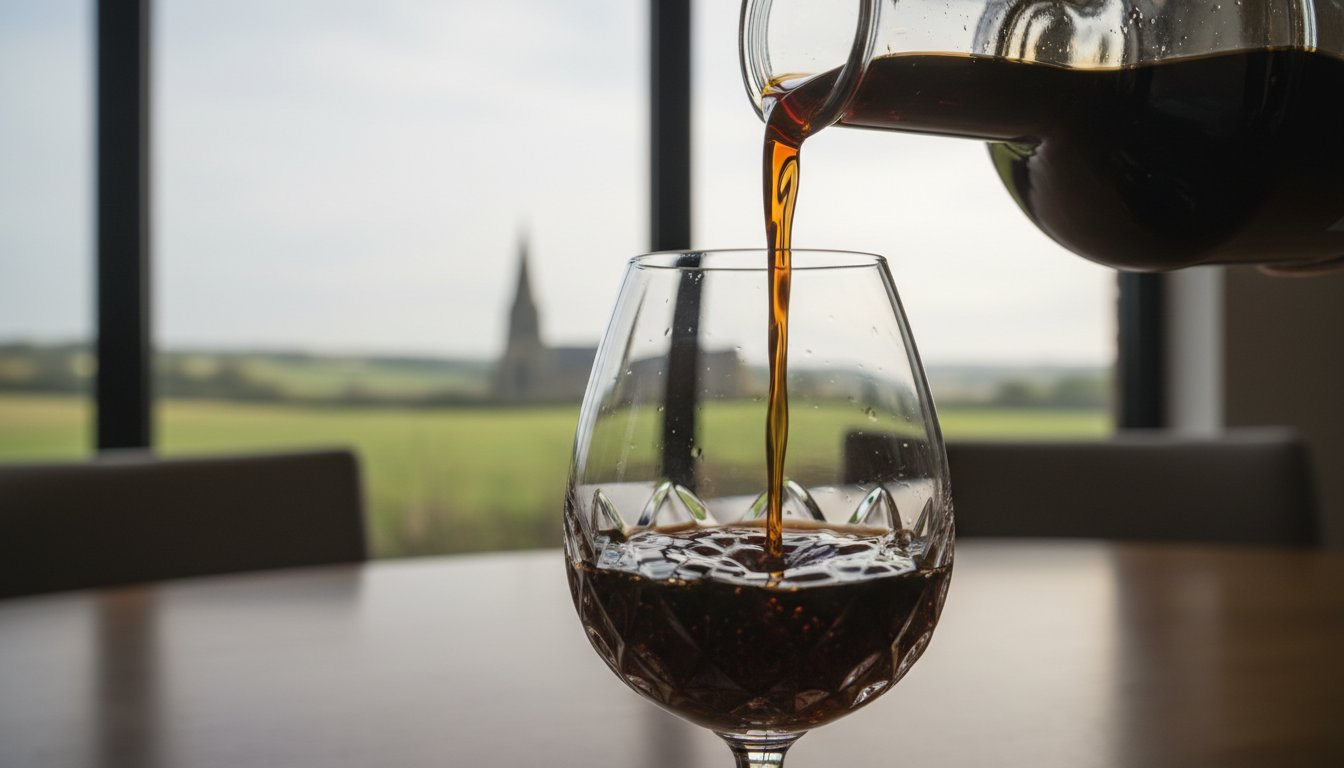
You might think a wine containing over 400 grams of residual sugar per litre would be far too cloying to enjoy, but one sip of a well-aged pedro ximenez proves that true quality is all about balance. We understand why many enthusiasts feel hesitant. When you see names like PX or Sherry on a label, it's easy to worry the contents will be nothing more than a heavy syrup. At Mosse & Mosse, we believe it's all about what's in the bottle; and this dark, mahogany nectar is one of the most complex treasures you can lay down in your cellar.
We're going to demystify this "liquid gold" by exploring its 500-year history and the traditional soleo sun-drying production method. You'll learn exactly how to serve it to unlock those glorious notes of raisins and toasted nuts. We'll also give you the confidence to distinguish between a standard bottle and a rare 30-year-old VORS, ensuring your next wine treat is a moment of pure drinking pleasure.
Key Takeaways
- Learn the secrets behind the mahogany syrup profile of this unique wine and why it is considered the ultimate treat for any connoisseur's cellar.
- Discover the traditional 'Soleo' process where grapes are sun-drenched on esparto mats to create a glorious, concentrated nectar.
- Uncover the complex flavour profile of pedro ximenez, identifying notes of dried figs and roasted coffee that offer pure drinking pleasure.
- Master professional serving tips, from ideal temperature control to choosing the right glassware, to ensure every glass is perfectly balanced.
- Learn how to hunt for quality by identifying the specific bodegas and ageing processes that set exceptional bottles apart from mass-produced labels.
What is Pedro Ximénez? Defining the King of Sweet Wines
Pour a glass of genuine pedro ximenez and you'll immediately notice it doesn't behave like a standard white wine. It pours with a thick, syrupy consistency, coating the glass in deep mahogany and ebony hues that look more like liquid treacle than fermented grape juice. This is often called "Liquid Gold" by those in the know. At Mosse & Mosse, we've always said it's all about what's in the bottle, and a well-aged PX is one of the most glorious experiences a wine lover can have. Critics like Robert Parker have famously awarded 100-point scores to top examples, such as the Alvear Selección de Robles 1927, because the sheer depth of flavour is unmatched. It's a wine treat that delivers pure drinking pleasure through intense layers of dates, dried figs, and dark chocolate.
The Grape vs. The Style
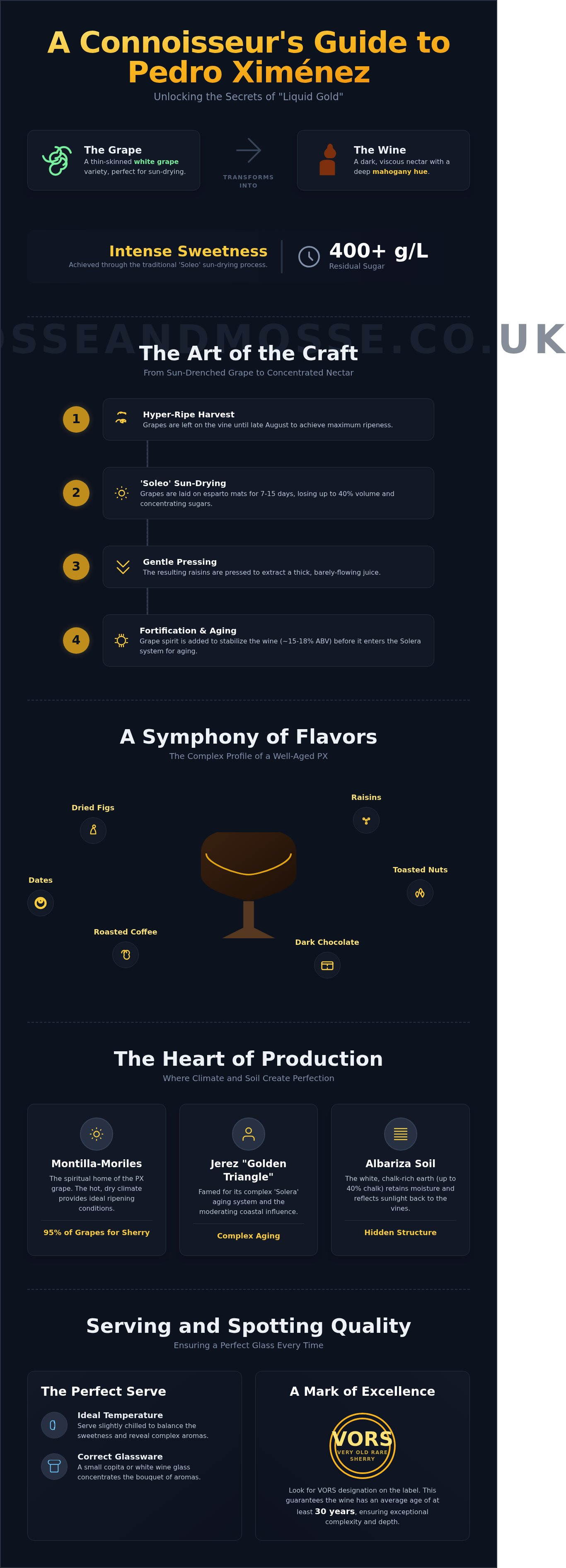
The Pedro Ximénez grape is actually a white variety, despite the ink-dark liquid it eventually produces. This transformation happens through intense oxidation and the traditional "soleo" process. After harvest, workers lay the grapes on grass mats to dry in the scorching Spanish sun for up to 14 days. This raisining concentrates the sugars to incredible levels, often exceeding 400 grams per litre. Because the skins are exceptionally thin, they lose moisture rapidly, which is why this variety is so perfect for this style. While you'll often find it used as a sweetening component in "Cream" Sherries, the real magic happens when it's bottled as a varietal wine. These are fortified, bottle-aged treasures that can sit in your cellar for decades without losing their lustre.
Where it Grows: The Golden Triangle and Beyond
Most enthusiasts associate this style with the Sherry "Golden Triangle" consisting of Jerez de la Frontera, Sanlúcar de Barrameda, and El Puerto de Santa María. However, a little-known fact is that around 95% of the grapes used for Sherry actually come from the neighbouring Montilla-Moriles region near Córdoba. The climate there is significantly hotter and drier, which provides the ideal conditions for the grapes to reach peak ripeness. In Jerez, the famous Albariza soil, which contains up to 40% chalk, helps retain vital moisture during the dry months while reflecting sunlight back onto the vines. This creates a slightly different profile compared to the more clay-heavy soils found further inland.
- Jerez-Xérès-Sherry: Famed for the complex solera ageing system and coastal influence.
- Montilla-Moriles: The spiritual home of the grape where it often reaches high natural alcohol levels.
- Albariza Soil: The white, calcium-rich earth that gives these wines their hidden structure.
The official DO status for Montilla-Moriles was established in 1932 and for Jerez in 1933, marking them as two of the oldest and most respected regulated wine regions in Spain.
The Art of the Craft: How Pedro Ximénez is Made
The journey of a great bottle starts in the intense heat of late August. While most grapes are rushed to the press to preserve freshness, the pedro ximenez grapes are left to hang until they reach a state of hyper-ripeness. This isn't just about sugar; it's about building the foundation for a wine that can age for half a century. Once picked, the fruit doesn't head straight to the cellar. Instead, it begins an outdoor transformation that defines its character.
Soleo: The Magic of the Sun
The grapes are spread out on esparto grass mats to bake under the Andalusian sun for 7 to 15 days. This traditional practice, known as 'Soleo', is a painstaking process where workers turn the bunches by hand to ensure even drying. During this time, the sun evaporates water and concentrates the natural sugars and acids. The physical change is dramatic. Grapes turn into raisins, losing up to 40% of their original volume. As they shrivel, they develop the intense aromas of honey and fig that make these Spanish dessert wines so distinctive. It’s a glorious, sticky mess that represents the soul of the region.
When the raisins finally reach the press, the juice is so thick it barely flows. Fermentation is a slow, difficult struggle. Because the sugar levels often exceed 400 grams per litre, the yeast can't survive for long. It usually gives up after reaching only 1% or 2% alcohol. To stabilise the wine and reach the required strength, it's fortified with grape spirit to around 15% or 18% alcohol. This high sugar content is why the wine feels so luscious on the palate.
The Solera and Criadera System
Consistency is the hallmark of a boutique producer. To achieve this, pedro ximenez enters the Solera system, a fractional blending method using rows of 600-litre American oak butts. Here’s how it works:
- The Solera: The bottom row of barrels containing the oldest wine.
- The Criaderas: The upper rows containing younger wines of varying ages.
- The Blend: When wine is bottled from the Solera, it's replaced with wine from the first Criadera, which is then topped up by the second, and so on.
This means there's no single vintage year on most bottles. Instead, you're drinking a blend that includes traces of wine from decades ago. Unlike Fino sherry, PX doesn't develop a protective layer of 'flor' yeast. It ages oxidatively, meaning the wine is in constant, controlled contact with air through the porous oak. This oxygen exposure is what turns the pale juice into a deep, dark mahogany liquid with a complex, tawny colour. I always look for this specific depth when I'm hunting for a wine treat for our customers, as it proves the wine has spent the necessary years in wood to develop its full potential.
Tasting Notes: What to Expect from a Glass of PX
Pouring a glass of pedro ximenez is a visual treat that starts well before the first sip. You'll immediately notice the wine's incredible viscosity. It moves slowly, clinging to the sides of the glass with thick, persistent "tears" or "legs." These are a direct result of the wine's massive sugar content, which often exceeds 400 grams per litre. The colour is equally striking, ranging from deep amber to a dark, opaque mahogany that looks almost like liquid ebony in the glass.
Balance is the hallmark of a truly great PX. While the sweetness is intense, the best producers ensure there's a firm backbone of acidity to hold everything together. I always look for that vital lift. Without it, the wine becomes cloying and flat. A well-made bottle from a respected house like Bodegas Tradición offers a complex interplay between the sugary weight and a refreshing, citrus-like edge. It's this structure that makes the wine so rewarding to drink slowly.
The Flavour Profile Breakdown
The nose is an explosion of concentrated aromas. You'll find intense notes of Christmas cake, treacle, and toasted walnuts. It's a heady mix that promises a lot, and the palate certainly delivers. The texture is unctuous, coating the mouth completely with a velvety feel. You'll taste dried figs, dates, and liquorice, often followed by a hint of roasted coffee beans. The finish is remarkably long. A high-quality glass can leave a warming, spicy sensation on your palate for eight minutes or more.
Age Matters: VOS and VORS Explained
If you want to experience the absolute pinnacle of this style, you need to understand the ageing classifications. The Consejo Regulador in Spain uses two specific designations for older sherries. VOS stands for Vinum Optimum Signatum and identifies wines with an average age of at least 20 years. VORS, or Vinum Optimum Rare Signatum, is reserved for the very best bottles aged for 30 years or more.
- VOS (20 Years): These wines show a beautiful harmony between fresh fruit and the first signs of wood ageing.
- VORS (30 Years): At this age, the sweetness evolves. You'll find savoury notes of cedar, old tobacco pipes, and exotic spices.
This extended time in the solera system concentrates the wine through evaporation. It results in a more complex, structured pedro ximenez that offers layers of flavour you simply won't find in younger, fresher versions. It's pure drinking pleasure in a glass.
Serving and Pairing: Beyond the Dessert Spoon
Pouring a glass of pedro ximenez should be a moment of pure drinking pleasure. However, many enthusiasts do themselves a disservice by serving it in tiny, cramped glassware at room temperature. To truly appreciate the layers of raisins, dates, and liquorice, you must control the temperature. Aim for a serving window of 12 to 14 degrees Celsius. A slight chill provides the necessary structural balance, preventing the 400 grams of residual sugar per litre from feeling heavy or cloying on the palate.
Ditch the traditional 50ml schooner. These small glasses trap the aromas and make the wine feel one-dimensional. Instead, reach for a standard white wine glass. The wider bowl allows the complex volatiles to breathe, while the tapered rim focuses the bouquet towards your nose. It's a simple change that makes a world of difference to your tasting experience. We always say it's all about what's in the bottle, but the right glass helps that quality shine.
The Perfect Pour
Part of the joy is the visual theatre. This wine doesn't splash; it glides into the glass with the viscosity of liquid mahogany. It's a thick, luxurious sight that always impresses dinner guests. You don't need to worry about finishing the bottle in one sitting. Because it's a fortified style, a bottle will stay fresh and vibrant in your fridge for up to 60 days. This long shelf life makes it a brilliant staple for your home cellar, ready whenever you fancy a small wine treat after a long day.
Innovative Food Pairings
While the iconic "PX over vanilla ice cream" remains a classic for a reason, this wine is surprisingly versatile when you move into savoury territory. The contrast between the intense sweetness and salty notes is where the real magic happens. Consider these pairings for your next gathering:
- Strong Blue Cheeses: The saltiness of a mature Stilton or a creamy Roquefort creates a stunning counterpoint to the wine's weight.
- High-Cocoa Dark Chocolate: Pair with a bar containing at least 75% cocoa solids. The bitterness of the chocolate cleanses the palate between sips of the rich pedro ximenez.
- The Suffolk Sunday: Use the wine as a decadent glaze for a roasted gammon or serve it alongside a rich, buttery bread and butter pudding.
Tim and Sam hunt the best bottles so you can enjoy exactly what's in your glass. Explore our carefully curated selection of dessert wines and find your next glorious bottle.
Finding Quality: The Mosse & Mosse Selection
Tim Mosse spends his life hunting for wines that offer pure drinking pleasure. We don't stock bottles just because they have a famous name on the label; we care about the liquid inside. For a wine as intense as pedro ximenez, quality is everything. Cheap, mass-produced versions often rely on cloying sweetness to hide a lack of structural depth. We look for the traditional solera systems in Jerez and Montilla-Moriles where the wine has developed genuine complexity over decades. It's a meticulous process that can't be rushed by industrial methods.
When you're looking at a label, the bodega name is your first clue to quality. Established houses like Gonzalez Byass or Valdespino are reliable, but the real magic often lies in the smaller, independent producers. Look for specific aging designations. A bottle marked VOS (Vinum Optimum Signatum) has an average age of 20 years, while VORS (Vinum Optimum Rare Signatum) indicates 30 years or more. These wines aren't just sweet; they're historical records of Spanish sunshine captured in glass.
The Independent Advantage
Supermarket shelves are often crowded with generic Sherries that lack soul. Our Suffolk shop takes a different path. We've built relationships with smaller, family-run bodegas that prioritise craft over volume. It's all about what's in the bottle. When you choose a bottle from us, you're getting a direct link to the sun-baked vineyards of Spain. You can explore our curated wine cases to find the perfect seasonal accompaniment, whether it's for a winter evening by the fire or a summer garden party. We select our range based on personal tastings and a commitment to authentic flavours that larger retailers often overlook.
Starting Your PX Journey
If you're new to this style, a 'starter' bottle with 10 to 15 years of age is a fantastic entry point. It offers those classic raisin and chocolate notes without the high price tag of a rare vintage. These bottles are incredibly versatile for corporate gifting or as a unique addition to a dinner party gift box. Because pedro ximenez is so rich, a standard 75cl bottle can easily provide 12 to 15 servings. It's a wine treat that lasts; once opened, a bottle will remain fresh in the fridge for up to 12 weeks, allowing you to enjoy a small glass whenever the mood strikes.
Every serious wine collection needs at least one bottle of this liquid sunshine. It rewards your curiosity with flavours of fig, date, and molasses that no other grape can replicate. Whether you're pouring it over a high-quality vanilla bean ice cream or pairing it with a salty Stilton, it provides a glorious finish to any meal. It's the ultimate reward for any wine lover who values patience and traditional craftsmanship.
The deep, atmospheric character of this wine pairs wonderfully not just with food, but with mood. For an evening of pure escapism, consider settling in with a glass and a good book. To complement the wine's dark, complex notes, you can learn more about Graham Mulvein's World of Horrors, a perfect pairing for lovers of gothic fiction.
Bring a Taste of Andalusia to Your Glass
Finding the perfect bottle of pedro ximenez means looking for that precise balance of sun-drenched sweetness and complex acidity. You've discovered how the traditional soleo method transforms grapes into a luscious nectar containing over 400 grams of residual sugar per litre. This process creates those iconic, glorious notes of treacle, dates, and dark chocolate that define the world's finest dessert wines. Whether you're drizzling it over a bowl of vanilla ice cream or pairing it with a sharp Stilton, it's a wine treat that never fails to impress.
At Mosse & Mosse, it's all about what's in the bottle. Tim Mosse has spent over 25 years hunting for the highest quality sherries, ensuring our collection only features wines that offer pure drinking pleasure. As an independent Suffolk-based merchant, we provide a personalised one-to-one service to help you find exactly what you like. We don't just sell wine; we share our passion for the craft. Discover our hand-picked selection of Pedro Ximénez and fine Sherries and let us help you find your next favourite bottle.
Frequently Asked Questions
Is Pedro Ximénez a Sherry?
Yes, Pedro Ximénez is a naturally sweet style of Sherry produced within the Jerez-Xérès-Sherry triangle in Andalusia. While many people think of dry finos first, this luscious treat is made from the grape of the same name. It is legally protected by the Spanish Consejo Regulador, ensuring every bottle meets strict aging and production standards before it reaches your glass.
How long does a bottle of Pedro Ximénez last once opened?
A bottle of opened pedro ximenez will remain in excellent condition for one to three months if kept in a cool, dark place or a fridge. Its high sugar content of at least 212 grams per litre acts as a natural preservative. You don't need to rush; the wine's stability means you can enjoy a small glass over several weeks without losing that glorious, rich flavour profile.
Why is Pedro Ximénez wine so dark if it is made from white grapes?
The dark, mahogany colour comes from the "soleo" process where white grapes are dried in the sun for up to 15 days. This evaporates water and concentrates sugars and acids. During years of oxidative aging in traditional solera systems, the wine interacts with oxygen in the barrel. This transformation turns the juice from a pale gold to a deep, opaque brown that looks like liquid ebony.
Can you drink Pedro Ximénez on its own or is it just for cooking?
You can absolutely drink it on its own as a spectacular dessert wine or "postre" in a glass. It is a pure drinking pleasure when sipped slowly at the end of a meal. While many chefs use it to create rich sauces or pour it over vanilla ice cream, its complexity is best appreciated when served in a small Sherry glass to show off its notes of raisins and figs.
What is the difference between PX and Cream Sherry?
The main difference is that Pedro Ximénez is a monovarietal wine made from 100% PX grapes, whereas Cream Sherry is a blend. Cream Sherry typically uses a dry base like Oloroso and is sweetened with a smaller percentage of PX or concentrated must. A pure PX is significantly thicker and sweeter, often containing over 400 grams of sugar per litre compared to the 115 grams found in many Cream Sherries.
What temperature should I serve Pedro Ximénez?
Serve your pedro ximenez slightly chilled between 12°C and 14°C to balance its intense sweetness. If you serve it too warm, the alcohol can feel a bit heavy on the palate. For a refreshing summer treat, some enthusiasts even pour it over a large cube of ice. This slight chill ensures the wine's acidity cuts through the richness, making every sip feel balanced and elegant.
Is Pedro Ximénez vegan-friendly?
Many modern Pedro Ximénez wines are vegan-friendly, but you must check the specific producer's methods. Some traditional bodegas still use fining agents like albumin or gelatin to clarify the wine. However, many premium estates now use bentonite or choose not to fine their wines at all. If the label doesn't specify, we recommend looking for "unfined" or "unfiltered" bottles to ensure they meet vegan standards.
How many units are in a glass of Pedro Ximénez?
A standard 50ml glass of Pedro Ximénez typically contains about 0.9 units of alcohol. This calculation is based on an average ABV of 17%, which is common for this style of fortified wine. If you pour a larger 75ml measure, the unit count increases to roughly 1.3 units. Always check the label, as some intense versions can reach 20% alcohol, slightly increasing the unit count per serving.


