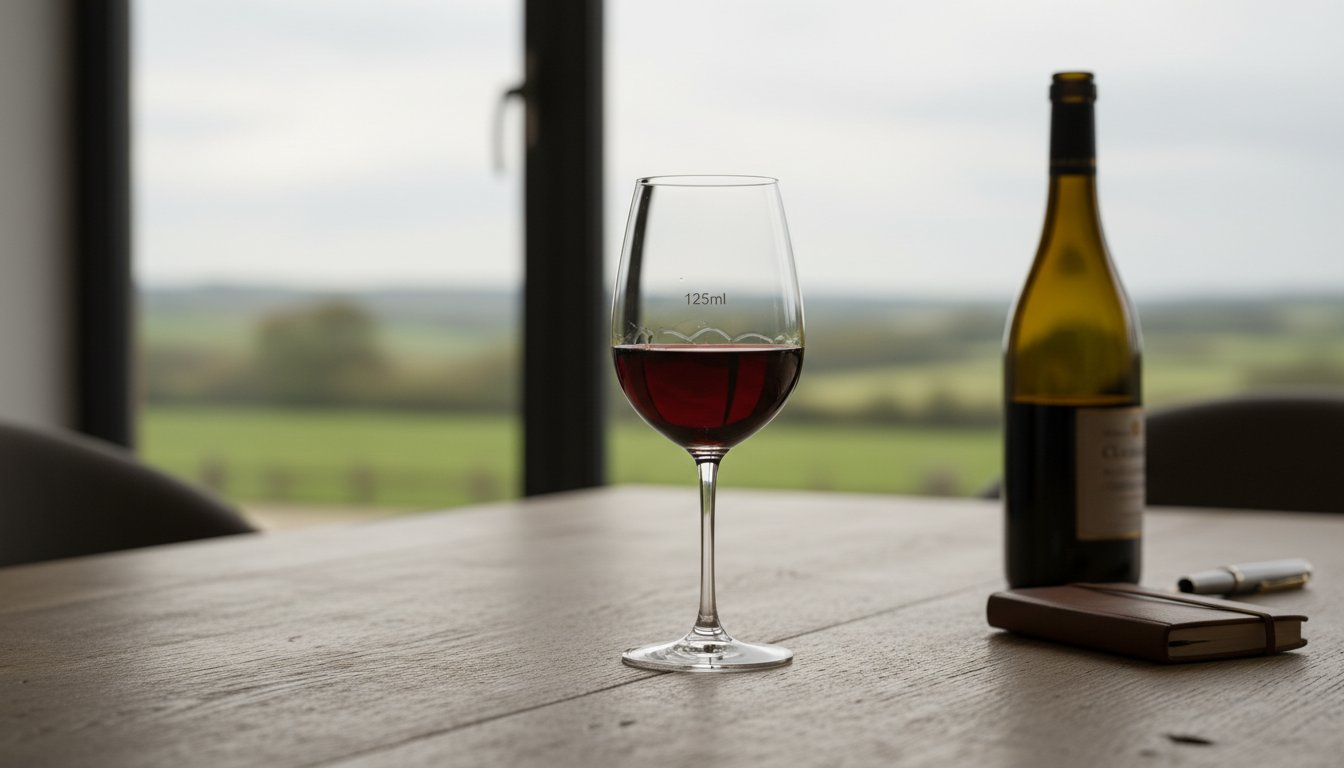
What if the secret to a better evening isn't drinking less wine, but simply knowing exactly what’s in your glass? Many enthusiasts find that a single 250ml pour of a heavy New World Shiraz can pack 3.5 units, which is a significant jump from the 2.1 units found in a traditional 125ml glass of Claret. It’s easy to feel overwhelmed by inconsistent pour sizes and shifting ABV percentages when trying to figure out how many units in a glass of wine. You’re likely here because you want to enjoy a lovely bottle without the lingering worry of overdoing it.
I've always said it’s all about what’s in the bottle, and mastering the maths is the first step toward a more mindful, pleasurable experience. I promise to show you the exact formula to calculate units in any pour and why certain Old World regions naturally offer a lighter touch. We’ll explore the specific unit counts for common UK measures and discuss how to prioritise quality over quantity for a truly glorious drinking experience. It’s time to replace clinical guilt with expert knowledge.
Key Takeaways
- Learn the history of UK unit counting and how to accurately define a single measure to better track your consumption.
- Master the calculation between ABV and volume to discover exactly how many units in a glass of wine, helping you sip with confidence.
- Understand how modern glass shapes and generous home pours can lead to "hidden units" compared to standard restaurant measures.
- Explore how geography influences alcohol content, from light, cool-climate whites to the deeper, more complex reds of the Old World.
- Discover why prioritising "what’s in the bottle" through high-quality, bottle-aged wines offers a more satisfying experience with smaller volumes.
What Is an Alcohol Unit? Defining the Measure for Wine Drinkers
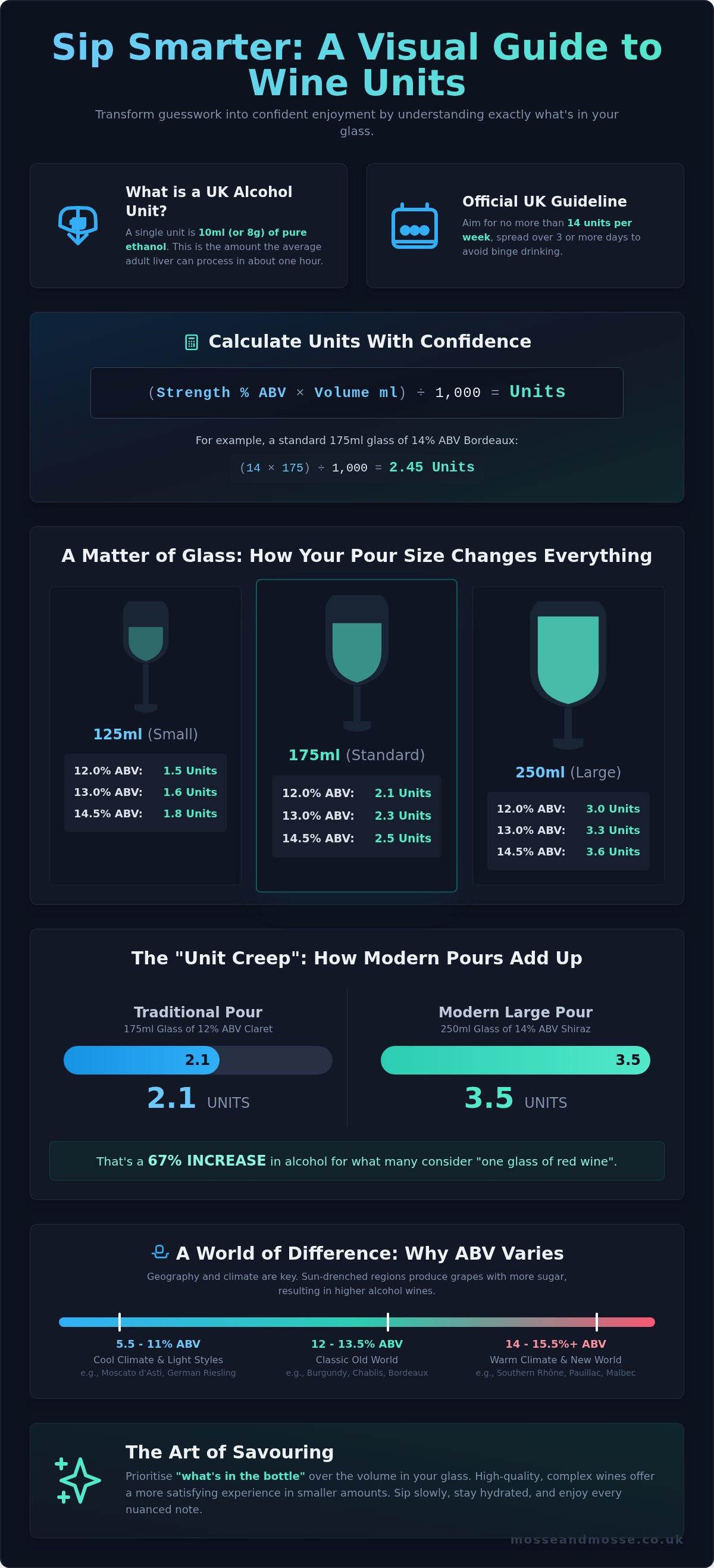
When you pour a glass of a glorious Saint-Émilion or a crisp Chablis, you're likely thinking about the bouquet and the terroir rather than chemistry. However, understanding What Is an Alcohol Unit? is the first step to enjoying your bottle responsibly. In the UK, a single unit is defined as exactly 10ml (or 8g) of pure ethanol. This is the amount of liquid the average adult liver can process in roughly 60 minutes. The UK government introduced this system in 1987 to simplify how we track our consumption. Instead of expecting everyone to calculate grams of alcohol, they gave us a simple shorthand to measure the impact of our favourite drinks.
The UK Chief Medical Officers updated the national guidelines in January 2016 to reflect modern health data. They recommend that both men and women should not regularly exceed 14 units per week. They also suggest spreading these units over three days or more rather than "saving them up" for a single evening. If you're wondering how many units in a glass of wine you're actually consuming, it's rarely as simple as "one glass equals one unit." That old rule of thumb vanished decades ago as wine styles evolved and average alcohol percentages climbed.
Wine presents a unique challenge compared to lager or ale. A pint of session bitter often sits predictably around 3.8% or 4% ABV. In contrast, a bottle of wine can range from a light 5.5% Moscato d’Asti to a powerful 15% Pauillac or a heavy Malbec. This massive 9.5% variance means two identical-looking glasses can have vastly different impacts on your body. Because we hunt the best quality for our customers, we often see these variations in the "Old World" classics we love. A delicate Burgundy might sit at 12.5%, while a sun-drenched Southern Rhône can easily hit 14.5%.
The Basic Unit Formula
To find the answer, you need a simple bit of maths. A unit is defined as the volume of a drink multiplied by its percentage of alcohol. Use this formula: (Strength ABV x Volume ml) ÷ 1,000 = Units. For example, a 175ml glass of a 14% ABV Bordeaux contains 2.45 units. Because modern wine glasses have grown from the 125ml standard of the 1980s to the 250ml "large" pours common today, "one glass" is never a standard unit in the modern wine world. Knowing how many units in a glass of wine depends entirely on the pour size and the bottle's specific ABV.
Why Units Matter for Flavour and Health
Alcohol provides the "body" and structure of a wine. When you swirl a glass and see those "legs" or "tears" sliding down the side, you're seeing the Marangoni effect; this is largely driven by alcohol content. High-alcohol wines often feel richer and more viscous on the palate. Tracking units isn't just about health; it's about appreciation. By understanding the strength, you can better plan how to enjoy a bottle over several days, ensuring every drop remains a wine treat. Drinking a glass of water alongside your wine is the best way to keep your palate sharp and your hydration levels stable. This balance ensures you catch every nuance of a bottle-aged Cru Classé without the fog of over-consumption. It's all about what's in the bottle, and enjoying it at its best requires a little bit of knowledge.
The Calculation: How ABV and Volume Determine Your Units
Understanding what's in your glass starts with the label. When you pick up a bottle of Pauillac or a crisp Chablis, you'll see a percentage followed by 'vol' or 'ABV'. This stands for Alcohol by Volume. It tells you exactly what portion of the liquid is pure alcohol. While a 1% difference might seem negligible when you're browsing the shelves, it changes the unit count significantly. A jump from 12% to 14% ABV isn't just a 2% increase in strength; it represents a 16.6% increase in the actual amount of alcohol you're consuming per sip.
To accurately track your intake, it helps to understand how many units in a glass of wine are actually present based on the specific bottle you've chosen. The UK government defines one unit as 10ml or 8g of pure alcohol. Because wine varies so much in strength, the "one glass equals one unit" rule is a total myth that hasn't been true since the lower-strength harvests of the 1970s. Today, most wines sit between 12.5% and 14.5% ABV, meaning even a small glass usually exceeds a single unit.
Standard UK glass sizes are typically served in three measures:
- 125ml: Often called a 'small' or 'tasting' glass, though many pubs don't list it prominently.
- 175ml: The standard 'medium' pour you'll receive in most wine bars.
- 250ml: The 'large' pour, which is precisely one-third of a standard 750ml bottle.
Breaking Down the Percentages
The style of wine dictates the ABV. A traditional European standard, like a delicate 12% ABV Mosel Riesling, contains 1.5 units in a 125ml glass. Move to a bold 14.5% ABV New World Shiraz or a high-alcohol Bordeaux, and that same small glass jumps to 1.8 units. Fortified wines like Port are a different beast entirely. Because they're bolstered with grape spirit, they often hit 20% ABV. A tiny 50ml pour of Port contains 1 unit, making it twice as concentrated as standard table wine.
Volume Matters: From Tasters to Magnums
The size of the vessel is just as vital as the strength of the liquid. A 50ml 'tasting pour' used by merchants at a bin-end sale is roughly 0.6 units for a 13% wine. However, the 250ml 'pub pour' is where many people lose track. At 14% ABV, a single large glass is 3.5 units. If you're hosting a dinner party and open a 1.5L Magnum, you're dealing with double the volume of a standard bottle. A Magnum of 13.5% ABV wine contains roughly 20 units, so it's best shared amongst a larger group.
The 'Bottle Trap' is a common pitfall for those enjoying a quiet evening at home. A standard 750ml bottle of wine at 13.5% ABV contains 10.1 units. If the ABV is 14.5%, that bottle hits nearly 11 units. It's easy to see why finishing a bottle between two people often leads to exceeding the daily recommended limits. Knowing these numbers ensures you can enjoy the pure drinking pleasure of a fine vintage while staying informed about exactly what's in your glass.
Glass Sizes and Pouring Habits: The Hidden Units in Your Glass
It's all about what's in the bottle, but the vessel you choose dictates how much you actually consume. Modern wine glasses have grown significantly over the centuries. Research from the University of Cambridge shows that the average wine glass capacity increased sevenfold between 1700 and 2017, rising from a modest 66ml to a staggering 449ml. These cavernous bowls are designed to let a fine Bordeaux or a delicate Burgundy breathe, but they also trick the eye. When you pour into a large glass, a standard measure looks meagre. This often leads to a "hidden" over-pour that increases the total how many units in a glass of wine without you even noticing the difference.
Pouring habits differ wildly between the dining room and the living room. Most people pour 12% more wine when using a wide glass than they do with a standard, narrower one. At home, the lack of a measured jigger often results in a 20% increase in volume compared to restaurant standards. The shape of the glass plays a major role in this deception. We tend to pour more into wide balloon glasses than tall, narrow flutes because our brains focus on the height of the liquid rather than the width. This visual illusion makes it incredibly easy to underestimate the alcohol units in wine when you're relaxing on the sofa after a long day.
The Three Standard Pours Compared
Knowing the numbers helps you stay in control of your evening while still enjoying your favourite vintage. For a typical bottle with 13% ABV, the unit counts vary sharply by size. A 125ml "small" glass contains 1.6 units. This is the traditional tasting size and remains the best friend of the conscious wine lover. Moving up to a 175ml "medium" glass brings you to 2.3 units, which is the standard house pour in most UK pubs. The 250ml "large" glass is where things become tricky, as it contains 3.3 units. This represents a full third of a bottle and exceeds the daily recommendation for many people in a single serving. If you're curious about the total impact of your purchase, you should also check our guide on how many units are in a bottle of wine to see how these glasses add up over a week.
Measuring at Home Without the Jigger
You don't need lab equipment to be precise at the dinner table. A simple, practical trick is the "two-finger rule." In a standard-sized wine glass, pouring to the width of two fingers usually hits the 125ml mark fairly accurately. If you want to "eye-ball" a 175ml measure, look for the widest part of the glass bowl; filling to just below this point usually gets you close to a medium pour. Using smaller, traditional glasses for daily enjoyment is another effective strategy. It makes a modest pour look generous and satisfying rather than lost in a giant bowl. Decanting your wine into a carafe before serving also helps your tracking. It allows you to see the total volume clearly, making it easier to monitor how many units in a glass of wine you've enjoyed. It's a more deliberate way to appreciate the "pure drinking pleasure" of a well-chosen bottle while keeping your health in mind.
Wine Styles and Unit Counts: From Light Whites to Heavy Reds
Understanding what's in the bottle starts with geography. The sun is the primary engine for alcohol production. In warmer climates like South Australia or Central California, grapes soak up intense heat, creating high sugar levels that ferment into higher alcohol volumes. Conversely, the cooler breezes of the Loire Valley or the Mosel keep sugar levels modest, resulting in wines that are naturally lighter on the palate and the liver. It's a simple rule of thumb: more sun usually equals more units.
When you consider how many units in a glass of wine you are consuming, the style matters immensely. A crisp Italian Pinot Grigio at 12% ABV delivers 2.1 units in a standard 175ml pour. Switch that for a buttery Californian Chardonnay at 14.5% ABV, and you've jumped to 2.5 units in the same glass. It's a subtle shift in percentage that makes a significant difference over an evening, especially if you're enjoying a second glass with a meal.
Red wines often carry a heavier load due to longer ripening periods. A delicate Pinot Noir from Burgundy might sit comfortably at 13% ABV. However, modern "blockbuster" reds like a Barossa Shiraz or a Californian Zinfandel frequently hit 15% or 15.5% ABV. In these cases, a large 250ml glass can contain nearly 4 units, which is a substantial portion of the weekly recommended limit in just one serving. We always recommend checking the label, as even traditional regions are seeing ABV creep up due to warmer harvest seasons.
Sparkling wines offer a lighter touch for those watching their intake. Champagne and Prosecco are typically harvested earlier to maintain acidity, usually hovering between 11% and 12% ABV. Because the bubbles create a sense of fullness, many people find they sip these more slowly than still wines. A standard 125ml flute of 12% Champagne contains exactly 1.5 units, making it a sophisticated and moderate choice for celebrations.
Lower ABV Favourites
If you prefer a lighter style, look towards Northern Europe or coastal regions. Vinho Verde from Portugal is a fantastic "lunchtime wine," often sitting at just 9% or 10.5% ABV. German Rieslings from the Mosel can be even lower, sometimes reaching only 8.5% ABV while retaining glorious fruit flavours. These regions produce wines that allow for pure drinking pleasure without the heavy head the next morning. We find that French regions like the Loire Valley consistently offer moderate 11.5% options that pair beautifully with seasonal food.
The Big Hitters: High Unit Wines
Some styles are designed for power and intensity. Amarone della Valpolicella uses partially dried grapes to concentrate sugars, often resulting in 16% ABV. Similarly, Châteauneuf-du-Pape relies on the intense heat of the Southern Rhône to reach 15% ABV. These "big hitters" require smaller 125ml pours to keep your count manageable. Fortified wines like Port or Sherry are in a different league entirely; at 20% ABV, a small 50ml glass contains 1 unit. Knowing how many units in a glass of wine helps you appreciate these treats responsibly. If you're looking for a special bottle with character and history, you can explore our hand-picked Burgundy and Bordeaux collections to find the perfect balance of strength and elegance.
The Art of Savouring: Why Quality Beats Quantity Every Time
At Mosse and Mosse, we live by a simple rule: "It’s all about what’s in the bottle." This isn't just a catchy phrase; it's a commitment to the hunter’s spirit. When you understand how many units in a glass of wine you're consuming, the focus naturally shifts from volume to value. A complex, bottle-aged Bordeaux or a refined Burgundy offers a sensory experience that generic, mass-produced bottles simply can't match. We believe that drinking wine should be an event, not a habit. By choosing quality, you transform a routine drink into a moment of pure drinking pleasure.
Understanding the chemistry of a great vintage helps you appreciate why less is often more. Mass-market wines are frequently engineered for immediate impact, often relying on high residual sugar or high alcohol to mask a lack of depth. In contrast, an elegant Old World wine relies on structure, acidity, and tannin. These elements create a profile that evolves in the glass, rewarding the patient drinker. You'll find that you naturally slow down when the liquid in your glass has a story to tell.
Drinking Better, Drinking Less
Take a fine Burgundy as a prime example. The intensity of a well-crafted Pinot Noir means you don't need a massive 250ml pour to feel satisfied. A smaller 125ml glass allows the delicate floral and earthy notes to shine without overwhelming the senses. Letting a 2015 vintage breathe for 45 minutes unlocks layers of flavour that satisfy the palate instantly. A complex wine offers a longer finish, reducing the urge for a quick second glass. This lingering aftertaste, often lasting several minutes, provides a physical reminder of the wine's quality long after the sip is gone. When the flavour is this glorious, you'll find yourself wondering how many units in a glass of wine you actually need to feel truly content. Often, the answer is far fewer than you think.
Spending your budget wisely is the most effective way to moderate. Consider the financial logic of your cellar. Instead of buying three generic supermarket bottles at £12 each, spend that £36 on one stunning bottle of Pauillac. The cheaper options often contain less than £1 worth of actual wine once you subtract UK excise duty, VAT, and packaging costs. By spending more on a single bottle, you're paying for the skill of the winemaker and the heritage of the vineyard. This shift in mindset ensures that every unit you consume is of the highest possible standard.
Curating Your Weekly 14 Units
The UK Chief Medical Officers recommend not exceeding 14 units a week. Organising your week to include four wine-free days doesn't have to feel like a sacrifice. It's about anticipation and reward. We love helping our customers build a curated mixed case to ensure variety is built into their routine. This approach allows you to plan your "wine treats" around specific meals or occasions. Building a relationship with your wine merchant helps you find balanced, elegant wines that respect both your health and your palate. Tim and Sam are always on hand to provide that one-to-one special service, helping you hunt the best so you can enjoy every drop. Wine is a treat to be explored, not a commodity to be consumed.
Master the Art of Informed Sipping
Understanding exactly how many units in a glass of wine you're pouring transforms your evening from guesswork into a genuine appreciation of the craft. A standard 175ml glass of 13% ABV wine contains 2.3 units, meaning just a few generous pours can quickly approach the UK weekly limit of 14 units. By paying attention to the ABV on the label and opting for smaller 125ml measures, you ensure that every sip remains a conscious choice. It's about choosing balance over volume and quality over quantity every time you pull a cork.
At Mosse & Mosse, we've spent 25 years as an independent Suffolk merchant helping enthusiasts find that perfect equilibrium. Tim and Sam Mosse provide a personalised service that larger retailers can't match, specialising in sourcing high-quality, balanced French wines where the terroir outshines the alcohol percentage. We believe it's all about what's in the bottle, focusing on elegant structures that offer pure drinking pleasure without the heavy-handedness of mass-produced alternatives. Explore our curated selection of fine Burgundy and Bordeaux to discover your next glorious bottle. Raise a glass to drinking better and enjoying every drop.
Frequently Asked Questions
How many units are in a 175ml glass of 13% white wine?
A 175ml glass of 13% white wine contains exactly 2.3 units. This is the most common medium serve you will find in UK pubs and restaurants. When you are enjoying a crisp Chablis or a dry white from our collection, it's helpful to remember that just two of these glasses will bring you close to half of the recommended weekly limit. We always suggest pouring with care to keep track.
Is a large 250ml glass of wine too many units for one day?
A large 250ml glass of wine at 13% ABV contains 3.3 units, which is a significant portion of the 14-unit weekly recommendation. While the NHS doesn't set a strict "per day" limit, they advise spreading consumption over three or more days. Pouring a large glass can make it harder to monitor how many units in a glass of wine you are actually consuming. We often prefer smaller 125ml measures to savour the complex notes of a fine Bordeaux.
How many units are in a standard 75cl bottle of red wine?
A standard 75cl bottle of 13.5% red wine contains approximately 10.1 units. If the alcohol volume reaches 14.5%, as is common with robust Malbecs or some bottle-aged reds, the count rises to 10.9 units per bottle. Understanding how many units in a glass of wine helps you pace yourself when opening a special bottle for a weekend treat. It's all about what's in the bottle, and quality is best enjoyed in moderation.
Does expensive wine have more or fewer units than cheap wine?
Price doesn't dictate the unit count, as alcohol volume depends entirely on the grape's sugar content and the fermentation process. A premium £80 Cru Classe Bordeaux might have 13% ABV, while a budget supermarket bottle could be 14.5%. We focus on the craft and the terroir rather than just the strength. High-quality wine is about the balance of tannins and fruit, providing a lovely experience regardless of the specific alcohol percentage.
How many units are in a glass of Prosecco compared to Champagne?
A 125ml glass of Prosecco at 11% ABV contains 1.4 units, while a standard Champagne at 12% ABV has 1.5 units. The difference is minimal, though Champagne often feels more substantial due to the traditional method of production and longer ageing. Both are glorious choices for a celebration. These smaller flute measures make it much easier to stay within your limits during a long event or a family wedding.
Can I drink a full 14 units in one night if I don't drink the rest of the week?
No, the UK Chief Medical Officers advise against saving up your units for a single night. Binge drinking poses much higher health risks than moderate consumption spread over several days. We believe wine is a pleasure to be savoured slowly over time. Enjoying a glass of lovely Burgundy with a mid-week meal is far better than rushing through a week's worth of units during one Saturday evening.
How many units are in a small 125ml glass of 14.5% Malbec?
A small 125ml glass of 14.5% Malbec contains 1.8 units. High-altitude reds often have higher alcohol levels because the grapes receive intense sunlight, creating more sugar for fermentation. Even in a small measure, the intensity of the fruit and the higher ABV mean the units add up quickly. It's a glorious choice for a steak dinner, providing plenty of flavour and a rich, warming mouthfeel in a compact serve.
What is the lowest unit wine I can buy that still tastes good?
Look for a German Riesling or a Hunter Valley Semillon, which often sit between 8% and 10% ABV, resulting in roughly 1 to 1.2 units per 125ml glass. These wines offer pure drinking pleasure without the heavy hit of a high-alcohol red. Many of our customers find that these lighter, bottle-aged whites provide a refreshing experience. They make it very simple to track how many units in a glass of wine you have consumed.


