
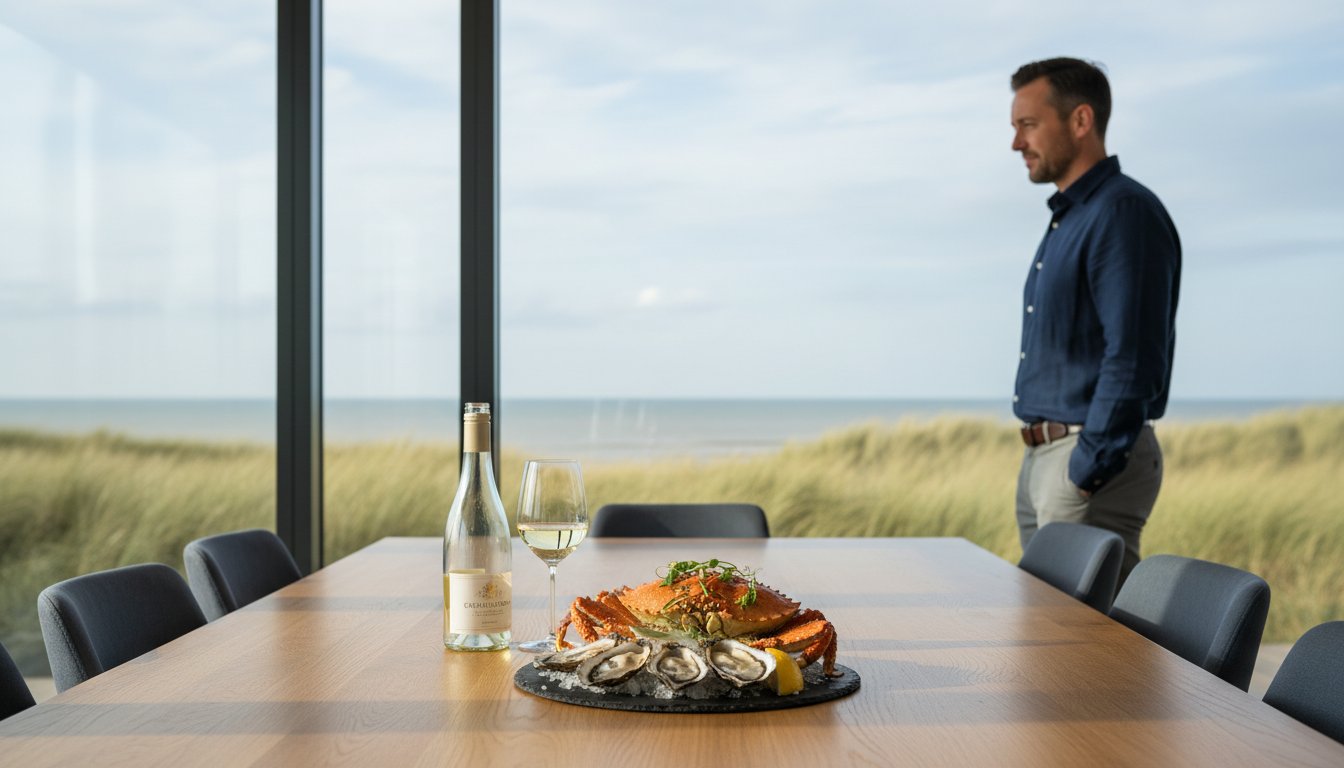
The most savvy collectors in London aren't just chasing £500 bottles of Meursault; they're hunting for the "declassified" gems that sit right under our noses. To the untrained eye, the label bourgogne chardonnay looks like a generic entry-level wine, but in the hands of a top-tier grower, it's the ultimate insider secret. In 2023, while village level prices climbed by another 15%, these regional bottlings remained the most reliable way to experience authentic terroir without the eye-watering invoice.
It's understandable to feel cautious when trying to decipher Burgundy's complex hierarchy, especially when you've previously paid £40 for a bottle that lacked soul. You want that glorious, buttery texture and mineral backbone without the fear of overpaying for a label. At Mosse & Mosse, we believe it's all about what's in the bottle. We'll show you how to find a "mini-Meursault" for under £30, which specific producers we trust for pure drinking pleasure, and how to pair these vibrant whites with your favourite British seafood.
Key Takeaways
- Understand why this 'Baby Burgundy' category offers the same prestigious DNA as elite village-level wines at a fraction of the price.
- Learn how to navigate regional variations, from the structured, age-worthy bottles of the Côte d'Or to the sun-ripened, approachable styles found in the Mâconnais.
- Discover the stylistic divide between terroir-driven bourgogne chardonnay and fruit-forward New World alternatives to find your perfect match.
- Master the art of serving these whites at the ideal temperature and choosing the right glassware to unlock their full aromatic potential.
- Benefit from Tim Mosse’s personal 'hunting' process to identify the exceptional, hand-picked producers currently tucked away in our curated cellar.
What is Bourgogne Chardonnay? Understanding 'Baby Burgundy'
We often tell our customers that the real soul of Burgundy isn't found in the locked trophy cabinets of collectors. It lives in the "Regional" bottles that winemakers produce with just as much care as their grandest crus. Officially established by the 1937 AOC decrees, bourgogne chardonnay represents the foundation of the region's quality pyramid. It's a category that offers pure drinking pleasure without the stuffy pretension or the eye-watering price tags often associated with the Côte d'Or.
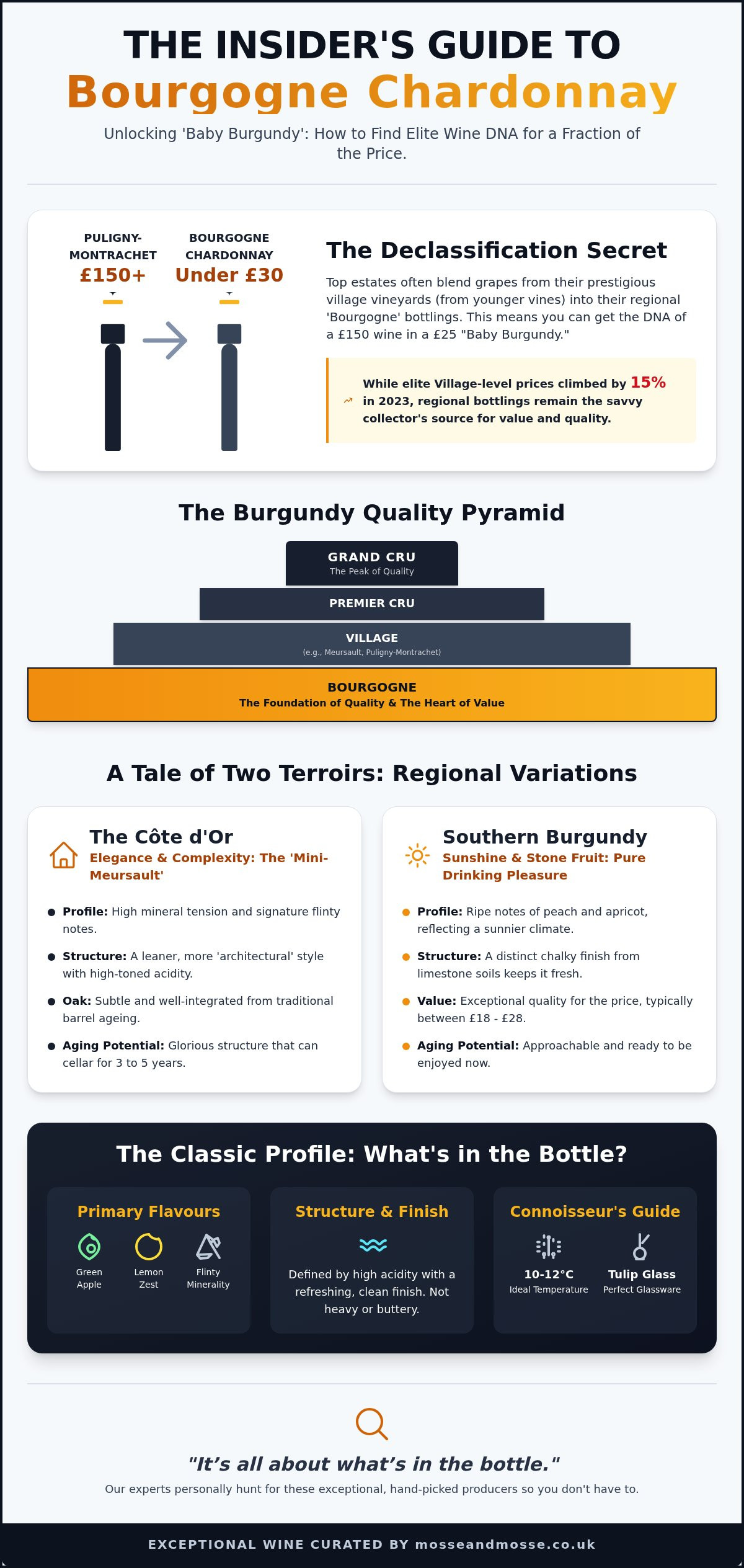
The "insider secret" that we love to share is the practice of declassification. Top-tier estates, such as Domaine Leflaive or Etienne Sauzet, frequently include grapes from younger vines located within famous village boundaries like Puligny-Montrachet in their regional blends. This means you might find the DNA of a £150 bottle inside a £25 "Baby Burgundy." It’s all about what’s in the bottle; that’s the Mosse & Mosse philosophy. These wines provide a glorious glimpse into a producer’s house style at a fraction of the cost.
The Hierarchy Explained: Where Bourgogne Blanc Sits
Understanding the hierarchy helps you spot the best value. At the base sits the Bourgogne AOC, followed by Village wines like Meursault, then Premier Cru, and finally Grand Cru at the peak. When you see bourgogne chardonnay on a label, it guarantees the wine is 100% Chardonnay, a rule enforced across the region's 384 separate AOCs. For a collector, these regional wines are essential "cellar protectors." They're the lovely, fresh bottles you open on a Tuesday night while your heavy hitters continue to age in the rack.
What’s in the Bottle? The Classic Profile
You won't find the heavy, buttery oak common in many New World styles here. Instead, expect a vibrant profile defined by green apple, lemon zest, and a distinct flinty minerality that reflects the Kimmeridgian limestone soils. While some producers use French oak, the influence is usually a subtle creaminess rather than a dominant flavour. We find these wines typically hit their peak 2 to 4 years after the vintage date. Bourgogne Chardonnay is the essential entry point for any serious white wine lover.
- Primary Flavours: Crisp pear, citrus peel, white blossom.
- Structure: High acidity with a refreshing, clean finish.
- Best Served: Chilled to 10-12°C in a classic tulip glass.
Regional Variations: From the Côte d'Or to the Mâconnais
Geography dictates every penny you spend on bourgogne chardonnay. In Burgundy, a simple farm track often separates a generic regional plot from a world-famous Premier Cru. Tim and Sam Mosse spend their time hunting for these specific parcels that sit right on the edge of greatness. We look for wines that punch well above their weight; it's the only way to find true value in a market where prices have risen by roughly 15% since 2022. Tim specifically hunts for producers who own tiny slivers of land in 'declassified' zones. These are often the best-kept secrets in the trade. It's all about what's in the bottle, and sometimes the best contents are found just a few metres from a legendary vineyard.
The Côte d'Or: Elegance and Complexity
When you buy a bottle from the Côte d'Or, you're often getting what we call the 'Mini-Meursault' effect. These vines frequently sit just 10 metres outside the official village boundaries of Puligny-Montrachet or Meursault. You'll find that signature 'tension' and high-toned acidity that defines the northerly reaches of the region. Top-tier producers like Domaine Leflaive or Etienne Sauzet treat their regional fruit with the same respect as their Grand Crus. This results in a wine with glorious structure and the potential to sit in your cellar for 3 to 5 years. You can expect:
- High mineral tension and flinty notes.
- Subtle, well-integrated oak from traditional barrel ageing.
- A leaner, more 'architectural' style compared to the south.
Southern Burgundy: Sunshine and Stone Fruit
Travel south to the Mâconnais or the Côte Chalonnaise for a completely different profile. The sun shines a bit brighter here; the wines reflect that with lovely notes of peach and ripe apricot. These southern expressions of bourgogne chardonnay offer pure drinking pleasure right now. You won't need to wait years for them to open up. The limestone-heavy soils in villages like Rully or Montagny provide a distinct chalky finish that keeps the fruit profile fresh and vibrant.
If you're looking for a wine treat that fits a Tuesday night dinner, these southern gems are hard to beat. They typically retail between £18 and £28, offering a significant saving compared to their northern cousins. The Mâcon-Villages area, in particular, has seen a massive jump in quality over the last five years as younger winemakers focus on organic viticulture and precision harvesting. It's a fantastic place to find bottles that feel far more expensive than their price tag suggests.
Why Buy Bourgogne Chardonnay Over New World Alternatives?
Choosing between a bottle from the Mâconnais and a premium Californian Chardonnay often comes down to a choice between power and poise. While Australia and South Africa produce glorious, fruit-forward wines, they frequently lean into higher alcohol levels, often hitting 14.5% ABV. In contrast, bourgogne chardonnay usually sits comfortably between 12.5% and 13.5%. This difference isn't just a number on a label; it defines how the wine feels on your palate and how it pairs with your Sunday roast chicken or a delicate piece of sea bass.
At Mosse & Mosse, we believe in the Old World's sense of restraint. New World regions often focus on "fruit-driven" profiles where sunshine and oak take centre stage. Burgundy is "terroir-driven," meaning you taste the limestone soils and the specific microclimate of the vineyard. It's the difference between a loud shout and a nuanced conversation. Even a regional bourgogne chardonnay possesses a surprising ability to evolve. While many New World entry-level whites are designed for immediate consumption, a well-chosen bottle from a top producer can be laid down for 3 to 5 years. During this time, it gains a lovely honeyed complexity that cheaper alternatives simply cannot match. It's all about what's in the bottle; that's what matters to us.
The 'Pure Drinking Pleasure' Factor
Burgundy remains the global benchmark because of its natural acidity. This "nerve" or "zip" keeps the wine refreshing rather than heavy. When you drink a wine with roughly 6.5 grams per litre of total acidity, it cuts through rich sauces and cleanses the palate. It's pure drinking pleasure without the "cloying" finish sometimes found in warmer climate bottles. We hunt for wines that offer this balance, ensuring every glass is as vibrant as the last.
Investment vs. Enjoyment
The "sweet spot" for quality currently sits between £25 and £40. Spending less than £18 on Burgundy often carries a risk; you might end up with thin, over-acidic wine from high-yield industrial plots. However, when you move into the £30 range from a curated merchant, the rewards are immense. You're often getting declassified grapes from famous villages like Meursault or Puligny-Montrachet. To ensure you're making the right choice, it helps to know how to buy wine online with confidence from experts who taste every vintage. We do the hard work of filtering out the mediocre so you can enjoy a genuine wine treat.
The Connoisseur’s Guide to Serving and Pairing
Pouring a glass of bourgogne chardonnay shouldn't be a rushed affair. It's a genuine wine treat that turns a simple Tuesday evening into something glorious. To get the best from what's in the bottle, stop serving your whites fridge cold. Most domestic fridges sit at a chilly 4°C, which numbs the delicate peach and citrus flavours Tim looks for when hunting the best producers. Instead, aim for 10 to 12°C. Take the bottle out of the fridge 20 minutes before you intend to drink it. This small change allows the texture to soften and the aromatics to wake up properly.
Glassware choices matter just as much as temperature. Forget narrow, upright glasses that stifle the wine. A glass with a wider bowl is essential. It provides the surface area needed for oxygen to interact with the liquid, releasing those classic Burgundian scents of toasted nuts and white flowers. You might even consider decanting. While people usually reserve the decanter for heavy reds, a 15 to 20 minute splash for a young, tight Bourgogne Blanc can work wonders for its aromatic development.
Perfect Food Pairings for Chardonnay
Classic matches like roast chicken with tarragon or grilled sea bass are staples for a reason. However, we love a "Suffolk Selection" for our local customers. The bright acidity of a bourgogne chardonnay cuts through the richness of North Sea crab or a creamy slice of Baron Bigod cheese. If you're feeling adventurous, try it with slightly salty or umami heavy dishes like roast pork with crackling. The wine's hidden weight handles salt brilliantly.
Vintages and Drinking Windows
The 2022 vintage was a triumph of sunshine and balance, making it a joy to drink throughout 2024 and 2025. If you've secured bottles from the 2023 harvest, expect a bit more zip and mineral tension. There's a common myth that entry level Burgundy must be drunk immediately. In reality, many of these wines hit their peak 3 or 4 years after the vintage date. To preserve that freshness, store your bottles horizontally in a dark space at a constant 13°C.
Explore Our Curated Bourgogne Chardonnay Collection
Finding a standout bourgogne chardonnay isn't about luck; it's about the hunt. Tim Mosse spends months each year tasting through cellars across the Côte d'Or and the Mâconnais to find bottles that punch far above their weight. We don't believe in stocking hundreds of average labels. Instead, we curate a tight, personal selection of wines that we genuinely love to drink at our own table. It's all about what's in the bottle. If it doesn't excite us, it doesn't make it into our Suffolk cellar.
The Mosse & Mosse Favourites
Our current collection features two distinct styles that showcase the versatility of the region. First, we have a classic, flinty Bourgogne Blanc from a renowned Meursault-based house. This wine carries the mineral "struck match" character and precision you'd expect from its more expensive neighbours. For those who prefer a bit more weight, we've selected a sun-drenched Mâconnais option. It's richer, rounder, and perfect for casual sipping or a light lunch.
We purposefully focus on smaller, family-run estates rather than massive cooperatives. In our experience, these 10-hectare domains offer better value and more soul. When a winemaker's name is on the front of the bottle, the quality in the glass is a matter of family pride. This commitment to small-scale production ensures every bourgogne chardonnay we sell has a clear sense of place.
Personal Service and UK Delivery
We pride ourselves on giving every customer that one-to-one special service that's often lost with larger retailers. From our base in Suffolk, we organise secure delivery across the UK mainland. We don't just shift boxes; we build relationships. Whether you need a single mixed case to explore different sub-regions or a hundred bottles for a 2025 wedding, we're here to help.
- Mixed Cases: A curated journey through Burgundy’s diverse terroirs.
- Corporate Gifting: Personalised selections that reflect your brand's quality.
- Wedding Consultations: Expert advice to find the perfect pairing for your big day.
If you're looking for a specific vintage or need advice on which producer fits your palate, just ask. Tim and Sam are always happy to spend time finding exactly what you like. Browse our full range of White Burgundy today and discover your next favourite bottle.
Elevate Your Cellar with Authentic Burgundy
Finding a world-class white wine doesn't have to break the bank. You now understand why bourgogne chardonnay remains the savvy enthusiast's choice, offering the refined acidity of the Côte d'Or and the fruit-forward weight of the Mâconnais without a prestige price tag. These wines provide incredible versatility, transitioning from a casual midweek glass to a sophisticated dinner partner with ease.
For over 25 years, our independent Suffolk merchant has specialised in uncovering these exceptional gems. Tim and Sam Mosse work directly with family-run estates to ensure every selection delivers pure drinking pleasure. We pride ourselves on a personalised, one-to-one service that larger retailers simply can't match. For us, it's always about the quality of what's inside the bottle.
Discover our glorious collection of Bourgogne Chardonnay
We look forward to helping you find your next favourite bottle.
Frequently Asked Questions
What is the difference between Bourgogne Chardonnay and Chablis?
Chablis is a specific northern sub-region of Burgundy; Bourgogne Chardonnay is a broader regional classification. While both use the same grape, Chablis grows on 150 million-year-old Kimmeridgian limestone, giving it a distinct flinty taste. Your average bottle of Bourgogne Chardonnay often comes from warmer southern plots. This offers a rounder, riper fruit profile that's pure drinking pleasure. It's a lovely way to explore the region's incredible diversity.
Is Bourgogne Chardonnay always 100% Chardonnay?
Yes, every bottle must be 100% Chardonnay by French law. Under the AOP regulations established in 1937, white wines labelled with this specific variety cannot be blended with other grapes like Aligoté. This strict rule ensures you get that classic, elegant expression of the grape that Burgundy is famous for. When you buy a bottle, you're getting the pure, unadulterated character of the vineyard and the winemaker's craft.
How long can I keep a bottle of Bourgogne Chardonnay?
Most of these wines are best enjoyed within 2 to 4 years of the vintage date. Unlike a Grand Cru that you might lay down for a decade, these bottles are crafted for immediate enjoyment and freshness. If you've found a bottle from a top-tier producer like Leflaive, it might hold its peak for up to 6 years. We always say it's all about what's in the bottle today.
Why is some Bourgogne Chardonnay much more expensive than others?
Producer prestige and specific vineyard origins dictate the price. You'll find reliable entry-level bottles for £15, but "declassified" wines from famous villages like Puligny-Montrachet can reach £45 or more. When a top-tier estate applies their Grand Cru winemaking techniques to their Bourgogne Chardonnay, the quality in the bottle justifies the extra cost. It's about hunting the best value from the most skilled and passionate hands.
Should I look for 'oaked' or 'unoaked' Bourgogne Chardonnay?
It depends on your personal taste, but most traditional examples see some light oak ageing. Winemakers often use neutral French oak barrels for 8 to 12 months to add a creamy texture without masking the fruit. If you want a crisp, zesty wine, look for stainless steel fermentation. For a more indulgent "wine treat" with hints of vanilla and toasted brioche, a lightly oaked version is a glorious choice.
What does 'Vieilles Vignes' mean on a Burgundy label?
This term translates to "old vines" and usually refers to plants that are at least 30 to 40 years old. These mature vines naturally produce fewer grapes, which leads to more concentrated and complex flavours in the juice. You'll often find that a Bourgogne Chardonnay with this label has a richer mouthfeel and a deeper golden colour. It's a sign of a wine with real character and history.
Can Bourgogne Chardonnay be served with spicy food?
Yes, it pairs beautifully with mild, fragrant spices. A lightly oaked bottle works wonders with a creamy Thai green curry or aromatic ginger-based dishes. We recommend sticking to dishes with a heat level of 2 out of 10. Avoid heavy chilli heat, as the wine's acidity and 13% alcohol can make the spice feel too aggressive. It's a fantastic partner for a delicate, spicy seafood feast.
Is 2026 a good year to buy Burgundy white wines?
It's too early to confirm the final quality, but the 2026 vintage is already highly anticipated by serious collectors. Most white Burgundy from this year will arrive in the UK around early 2028 after 12 to 18 months of ageing. If the weather stays consistent with the successful 2022 and 2023 cycles, you can expect balanced wines with vibrant acidity. It'll be a glorious year to restock your wine rack.


