
The most misunderstood bottle at your local merchant isn't a complex Bordeaux or a rare Burgundy; it's the tall, slender flute of alsace white. You've likely stood in the aisle, eyeing those German-sounding labels and wondering if the liquid inside is bone dry or syrupy sweet. It's a common frustration for many enthusiasts, especially when you're looking for a reliable wine treat for a dinner party but don't want to gamble on a bottle that might clash with your food.
At Mosse & Mosse, we believe that understanding the label is the first step toward pure drinking pleasure. It's all about what's in the bottle, and I'm here to help you confidently navigate the sun-drenched slopes of this unique borderland so you can pick the perfect vintage every time. In this guide, you'll learn to identify the four noble grape varieties, decode the prestigious Grand Cru system, and master the art of pairing these aromatic gems with everything from spicy fusion to a classic roast. Let's explore the rich heritage and vibrant character of these glorious French whites together.
Key Takeaways
- Understand the fascinating historical tug-of-war between France and Germany that shaped the unique aromatic identity of these world-class wines.
- Discover how to navigate an alsace white label with confidence by using the modern sweetness "Indice" to find your perfect style.
- Learn why the "Noble Four" grape varieties are the only ones permitted for the region's prestigious Grand Cru and late-harvest selections.
- Uncover the secrets of Alsace's complex terroir, where volcanic and limestone soils impart a distinct mineral character to every glass.
- Follow Tim Mosse’s personal hunt for small-scale, quality-driven producers who prioritise excellence and "what’s in the bottle" above all else.
What is Alsace White Wine? A Fusion of Two Worlds
Alsace white wine is a bit of a rebel. Tucked away in the north-eastern corner of France, it doesn't follow the usual French rules of blending different grapes together. Instead, you get glorious, aromatic wines made almost exclusively from a single variety. At Mosse & Mosse, we hunt for bottles that offer pure drinking pleasure. For us, it's all about what's in the bottle, and these wines deliver a focused sensory experience that's hard to find elsewhere.
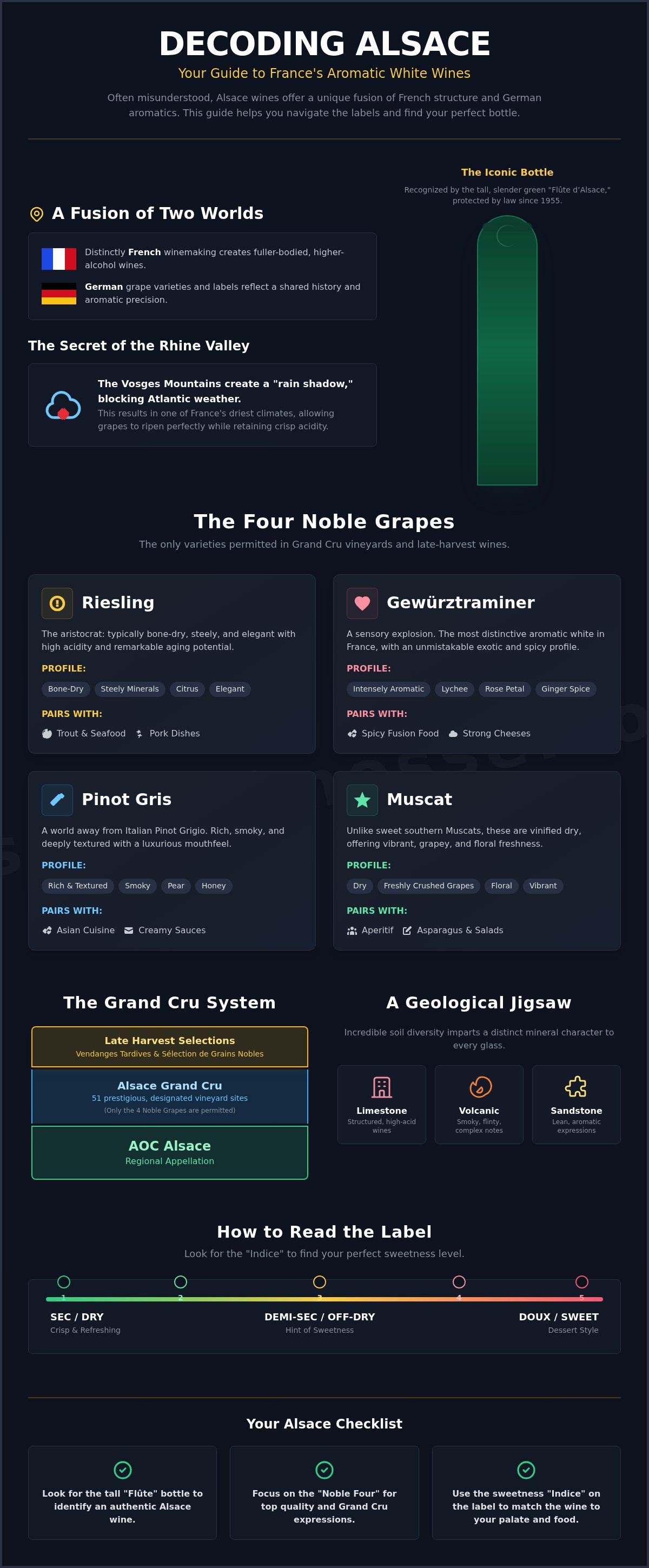
You'll recognise these wines instantly by their silhouette. The "Flûte d’Alsace" is a tall, slender green bottle that's been legally protected since a 1955 decree. Producers in the region are required by law to use this specific shape for their still wines. It's a mark of regional pride that separates an alsace white from any other bottle on your wine rack. This unique identity is the result of a complex history where national boundaries were constantly shifting.
The Franco-German Influence on Style
The history of Alsace is a cultural tug-of-war. Between 1871 and 1945, the region changed hands between France and Germany four times. This created a unique hybrid style. You'll see German names on the labels, like Riesling or Sylvaner, but the winemaking techniques are distinctly French. While German versions are often lighter and lower in alcohol, the French approach produces fuller-bodied wines with higher alcohol levels. It's a lovely combination of German aromatic precision and French structural weight found nowhere else.
The Geography of the Rhine Valley
Geography is the secret weapon of the alsace white producer. The region sits in a narrow strip between the Vosges Mountains to the west and the Rhine River to the east. Those mountains create a "rain shadow" effect, effectively blocking the wet weather coming from the Atlantic. This makes Colmar one of the driest spots in France, recording only 500mm of rain per year. This sunny, dry climate allows the grapes to reach optimal ripeness while retaining the crisp acidity that makes them so food-friendly.
The Four Noble Grapes: The Stars of Alsace
In the sun-drenched vineyards of the Vosges foothills, four specific varieties reign supreme. These are the "Noble Four": Riesling, Pinot Gris, Muscat, and Gewürztraminer. They aren't just the most famous exports; they're the only grapes permitted for use in the region's 51 prestigious Grand Cru sites and the concentrated, late-harvest dessert wines. This strict regulation ensures that every bottle bearing these names meets a high standard of quality and character.
Tim Mosse often remarks that it's all about what's in the bottle, and with these varieties, you're getting pure, aromatic intensity. He firmly believes these grapes offer the finest value for collectors looking for "bottle-aged" potential. While a top-tier Burgundy might require a massive investment, a complex alsace white from a Noble variety can be laid down for 10 to 15 years and often costs less than £40. This longevity comes from the natural acidity and structural balance inherent in the fruit.
Riesling and Gewürztraminer: The Heavyweights
Alsace Riesling is the aristocrat of the region. It's typically bone-dry, steely, and elegant, standing in sharp contrast to the sweeter versions found elsewhere. Its precision makes it a dream for food pairing, especially with local trout or pork dishes. On the other side of the spectrum sits Gewürztraminer. This wine is a sensory explosion, offering an exotic, spicy, and lychee-scented profile that's impossible to mistake. Gewürztraminer is the most distinctive aromatic white in France. If you're looking for a wine treat that breaks the mould, our hand-picked Alsace collection offers some truly glorious examples.
Pinot Gris and Muscat: The Versatile Pair
Alsace Pinot Gris is a world away from the light, often neutral Italian Pinot Grigio. It's rich, smoky, and deeply textured, providing a luxurious mouthfeel that works brilliantly with spicy Asian cuisine or creamy sauces. Muscat completes the quartet with its vibrant, "grapey" and floral freshness. Unlike the sweet Muscats of the south, these are usually vinified dry, making them a refreshing aperitif. Including these varieties is essential for a well-rounded wine cellar. They provide the texture and fragrance needed to handle diverse menus, ensuring you always have the right bottle for the occasion.
Understanding Terroir and the Grand Cru System
Alsace is a geological jigsaw puzzle. You'll find everything from pink sandstone to volcanic debris within a few miles. This incredible diversity is why alsace white wines vary so much from one hillside to the next. Soil isn't just dirt here; it's the DNA of the wine. Limestone soils, for instance, produce wines with a bright, elegant acidity. In contrast, the heavy marl and clay found in sites like Hengst offer a broader, more powerful structure that feels wonderful on the palate.
Some critics suggest "Grand Cru" is merely a clever marketing label. I disagree. The data proves the quality is real. While standard Alsace AOC allows yields up to 80 hectolitres per hectare, Grand Cru rules slash this to 55 hectolitres. Many top growers go further, harvesting just 35 or 40 hectolitres to ensure every drop is concentrated and glorious. It's all about what's in the bottle. These strict limits ensure only the best fruit makes the cut, giving you a wine treat that truly reflects its origin.
Decoding the 51 Grand Crus
The official Grand Cru system began in 1975, starting with the Schlossberg vineyard. Today, 51 specific sites are recognised for their exceptional terroir. Sites like Rangen de Thann, with its 45 degree volcanic slopes, produce smoky, intense alsace white wines that are world-class. These plots are reserved for the noble varieties. Riesling, Muscat, Pinot Gris, and Gewurztraminer are the stars. Each grape finds its perfect home; Riesling loves the granite of Schlossberg, while Gewurztraminer thrives on heavier clay soils.
Crémant d’Alsace: The Sparkling Alternative
If you want a sparkling alternative to Champagne for a celebration, Crémant d’Alsace is a lovely choice. It's made using the traditional method. This means the bubbles develop during a second fermentation in the bottle, just like the finest French fizz. Pinot Blanc and Chardonnay usually form the base of these blends. It's become a firm favourite for UK weddings and corporate gifts because it offers pure drinking pleasure. Around 33 million bottles are produced annually, proving its popularity with those who know their wine.
How to Buy and Pair Alsace White Wine
Finding the right bottle of alsace white starts with understanding the label. Unlike most French regions, Alsace proudly puts the grape variety front and centre. When you're browsing, look for the producer first. Names like Trimbach or Domaine Zind-Humbrecht are hallmarks of quality. Next, check for Grand Cru status; these wines come from one of the 51 protected vineyard sites and offer the best ageing potential. A top-tier Grand Cru Riesling often needs 7 to 15 years to truly sing. Don't be afraid to lay these bottles down in a cool cellar. To enjoy them at their best, serve between 8°C and 10°C. If the wine is too cold, you'll stifle those glorious floral aromas that make the region so special.
Decoding Sweetness: From Dry to SGN
Many people worry that Alsace wines are always sweet, but about 90% of the region's output is actually dry. To help you choose, many modern producers now use an Indice scale from 1 to 5 on the back label. An Indice 1 is bone dry, while 5 is very sweet. You can also use the alcohol level as a guide. A wine at 13.5% or 14% ABV is likely dry because the yeast has consumed most of the sugar. If you see Vendanges Tardives (VT), it means late harvest with more concentrated flavours. Sélection de Grains Nobles (SGN) indicates a rare, honeyed dessert wine affected by noble rot.
Food Pairing: Beyond Choucroute
Pairing this alsace white selection is pure drinking pleasure. Riesling is the ultimate partner for local Choucroute or fresh seafood. Its high acidity cuts through the richness of pork beautifully. If you're serving a spicy Thai green curry or a pungent Munster cheese, reach for a Gewürztraminer. Its lychee and spice notes handle heat better than almost any other wine. For something more substantial, Pinot Gris provides a lovely oily texture. It stands up brilliantly to creamy wild mushroom sauces or roast white meats. We've spent years hunting for the best examples so you can enjoy what's in your glass.
Ready to explore these stunning bottles? Browse our hand-picked selection of Alsace wines and find your next favourite.
Why We Love Alsace at Mosse and Mosse
At Mosse and Mosse, we don't just sell wine; we share a passion that's been refined over decades of tasting and travel. Tim Mosse spends a significant portion of the year hunting for small-scale, quality-driven producers who often fly under the radar of larger retailers. His philosophy is simple and uncompromising: "It’s all about what’s in the bottle." We believe that an exceptional alsace white should tell a vivid story of its soil without needing a massive marketing budget to justify its place on your table.
Our focus remains on providing a one-to-one special service for our UK customers. We want to build a relationship with you, acting as your personal guides through the complex landscape of French viticulture. When you buy from us, you aren't just clicking a button on a website. You're accessing years of expertise and a hand-picked selection that Tim has personally vetted during his visits to the Vosges foothills.
Our Selection Process
We prioritise family-run estates that have farmed the same plots for generations. These winemakers respect the tradition of the land, often using organic or biodynamic methods to ensure "pure drinking pleasure" in every glass. Whether it's a crisp bottle for a casual Tuesday night or a complex Grand Cru intended for the cellar, the quality must be undeniable. Our selection of alsace white wines focuses on balance, aromatics, and terroir.
- Family Heritage: We partner with estates where the owner is often the person driving the tractor and making the wine.
- Quality over Quantity: We look for producers who limit their yields to concentrate flavour.
- Corporate Gifting: We offer a bespoke service for businesses looking to send unique bottles. We help you choose wines that stand out from the generic supermarket options often found in corporate hampers.
Start Your Alsace Journey Today
The best way to understand this unique region is to taste the difference between the noble varieties side-by-side. Our curated mixed cases are designed to do exactly that, allowing you to compare a zesty Riesling against a spicy Gewürztraminer or a rich Pinot Gris. It's a fantastic way to discover your personal preference while exploring the diversity of the region's volcanic and limestone soils.
We make it easy to stock your cellar with these hidden gems. We offer free delivery options for UK mainland customers on orders over £150, ensuring your wine arrives safely and promptly. Don't settle for the ordinary when you can have the extraordinary delivered to your door. Click the link below to see what Tim has discovered on his latest trip.
Find Your Perfect Alsace Bottle Today
Alsace offers a unique fusion of French structure and Germanic aromatic intensity. You've discovered how the four noble grapes define the region's character and why the 51 designated Grand Cru sites produce such complex, age-worthy wines. Whether you're pairing a bone-dry Riesling with local trout or pouring a spicy Gewurztraminer for a bold Thai curry, the quality found in this sunshine-drenched corner of France is undeniable.
At Mosse and Mosse, we've spent more than 25 years as independent wine merchants hunting for the best quality so you can enjoy every drop. We specialise in the classic regions of Burgundy, Bordeaux, and Alsace, ensuring that every alsace white we stock meets our rigorous standards for pure drinking pleasure. Tim and Sam Mosse are always on hand to offer the kind of one-to-one personal service that makes finding your next favourite wine a treat rather than a chore. It's all about what's in the bottle, and we've made sure these bottles are truly special.
Browse our hand-picked Alsace White Wine selection
Frequently Asked Questions
Is Alsace white wine dry or sweet?
Most Alsace white wines are fermented to be dry, though the region produces world-class sweet styles too. Around 90% of the bottles coming out of the region are crisp and bone-dry. If you see "Vendanges Tardives" or "Sélection de Grains Nobles" on the label, you're buying a luscious dessert wine. These sweet designations represent less than 5% of the total annual production, making them a rare treat for enthusiasts.
What is the difference between Alsace Riesling and German Riesling?
Alsace Riesling is typically drier and more powerful than the styles found across the border in Germany. While a German Mosel Riesling might sit at 8% or 9% ABV with noticeable residual sugar, an Alsace version often reaches 13% alcohol. You'll find the French style has a fuller body and a characteristic petrol note that develops with age. It's a glorious, bone-dry expression of the grape that we love to hunt for our customers.
What are the four noble grapes of Alsace?
The four noble grapes of the region are Riesling, Pinot Gris, Muscat, and Gewürztraminer. These are the only varieties permitted in the 51 designated Grand Cru vineyards of the area. Each grape offers a unique profile, from the floral punch of Muscat to the spicy weight of Pinot Gris. Selecting a bottle from one of these noble varieties ensures you're drinking the very best terroir the region has to offer.
How long can you keep a bottle of Alsace white wine?
Most Alsace white wines are best enjoyed within 3 to 5 years of their vintage to capture their fresh fruit. However, top-tier Grand Cru bottles can be laid down for 15 to 20 years. We've found that bottle-aged Riesling develops a glorious complexity that provides pure drinking pleasure. To keep them at their best, store your cases in a dark space at a consistent 12°C.
What does Gewürztraminer taste like?
Gewürztraminer tastes like an exotic blend of lychee, rose petals, and Turkish delight. It's a highly aromatic wine with a full, oily texture and very low acidity. You'll often pick up distinct notes of ginger and white pepper on the finish. Because it's so bold, it's a real wine treat for those who enjoy intense, perfumed flavours that jump out of the glass.
Why is Alsace wine in such tall, thin bottles?
The tall, slender bottle is known as the "Flûte d'Alsace" and has been legally required for all still wines from the region since a 1972 decree. This traditional shape makes the wines easy to recognise on a shelf. Historically, these thin bottles were easier to pack tightly into river barges for transport down the Rhine. It's a classic look that reflects the long history of this unique border region.
Can I pair Alsace wine with spicy food?
You can absolutely pair Alsace wines with spicy dishes, as the aromatic profile stands up to heat. A glass of Gewürztraminer is the perfect partner for a Thai green curry or spicy Szechuan prawns. The slight richness in the wine coats the palate and tames the chilli burn. We often recommend these bottles to our customers looking for a versatile white that won't be overwhelmed by bold spices.
What is Crémant d’Alsace and is it like Champagne?
Crémant d’Alsace is a sparkling wine made using the same traditional method as Champagne, including a second fermentation in the bottle. While it shares that fine mousse and brioche character, it's often made from Pinot Blanc or Riesling rather than just Chardonnay and Pinot Noir. It offers incredible value, with many excellent bottles priced between £18 and £25. It's a lovely alternative for celebrations when you want quality without the Champagne price tag.


