
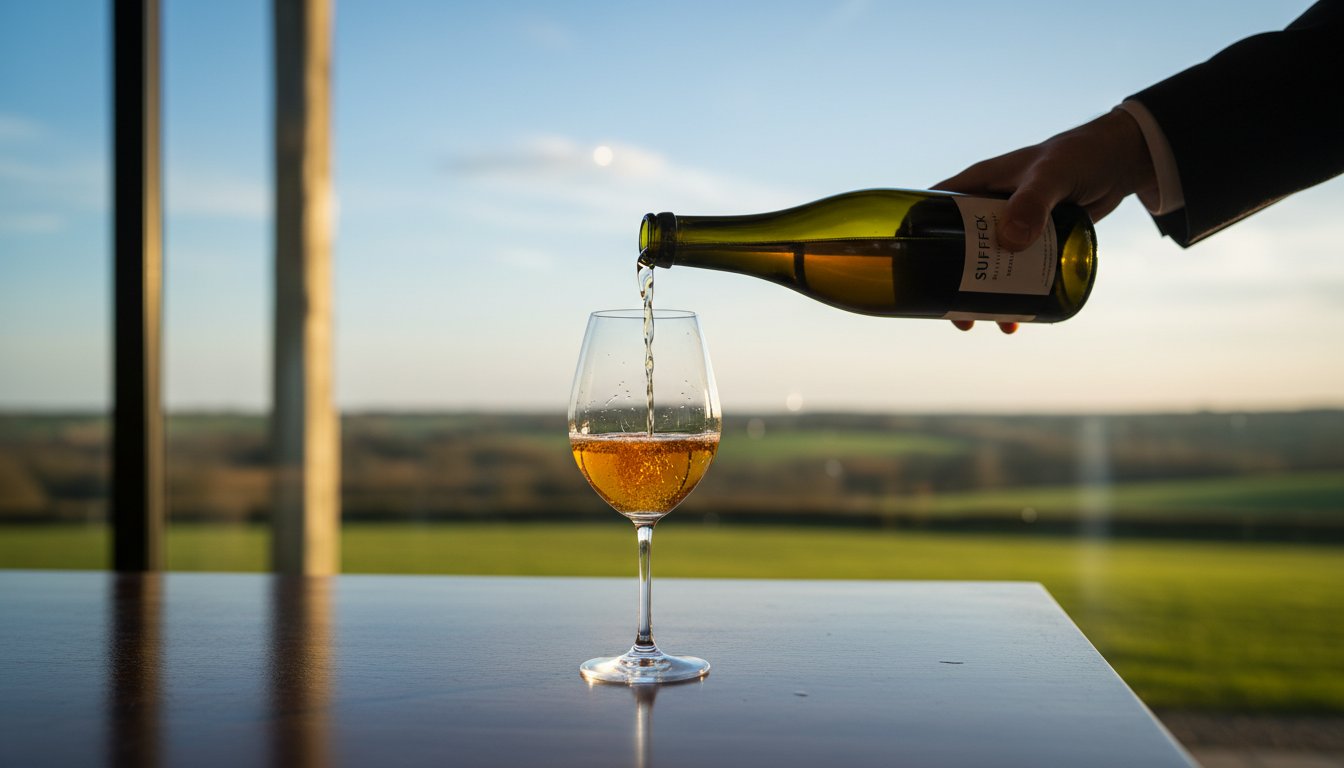
The most sophisticated bottle at your next dinner party might not come from a sun-drenched vineyard in Bordeaux, but from a heritage orchard in Herefordshire. For many of us, the word cider still conjures images of overly sweet, fizzy pints or the rustic, unpredictable 'scrumpy' of old. It's frustrating when you're looking for genuine complexity and instead find something that tastes more like a confectioner’s shop than a carefully crafted beverage.
We believe that fine cider deserves the same reverence as a vintage Burgundy because, as we always say, it's all about what's in the bottle. You'll discover how the principles of terroir and slow fermentation create a glorious drink of immense character, moving far beyond the artificial flavours found in 90% of mass-market options. This guide provides the vocabulary to describe these nuanced profiles, explains the production secrets shared with world-class wines; and helps you select the perfect bottle for any occasion.
Key Takeaways
- Discover why authentic cider is defined by 100% fresh juice rather than commercial concentrates, earning it the same respect as a vintage Burgundy.
- Understand the crucial role of terroir and how the four distinct apple categories—Sweet, Sharp, Bittersweet, and Bittersharp—create complex flavour profiles.
- Explore the "Great Divide" of British regional identities, distinguishing between the rustic depth of the West Country and the crisp acidity of the Eastern Counties.
- Enhance your drinking pleasure by ditching the pint glass and ice for proper glassware that respects the drink's delicate aromatic complexity.
- Gain the confidence to decode labels and source artisanal bottles from independent merchants, ensuring you find a "wine treat" that is truly all about what's in the bottle.
What is Cider? A Connoisseur’s Introduction to Fermented Fruit
To truly appreciate a drink, you have to look past the label and focus on the craftsmanship. At Mosse & Mosse, we believe it's all about what's in the bottle. For the true enthusiast, What is Cider? It isn't just a fizzy pub refreshment; it's a sophisticated "apple wine" that deserves the same respect as a fine Burgundy or Bordeaux. Historically, 17th-century British cider was a prestigious rival to French wine, served in ornate crystal at the tables of the aristocracy. This heritage of quality is what we look for today.
Real cider is defined by the fermentation of 100% fresh-pressed apple juice. It relies on a delicate balance of three core components: sugar, acid, and tannins. While sugar provides the alcohol and acid offers a bright, refreshing lift, it's the tannins that provide structure. Much like a bold red wine, these tannins come from specific "bittersweet" apple varieties, creating a lovely, mouth-drying complexity that lingers on the palate. When these elements align, the result is pure drinking pleasure.
The Difference Between Real Cider and Mass-Market Brands
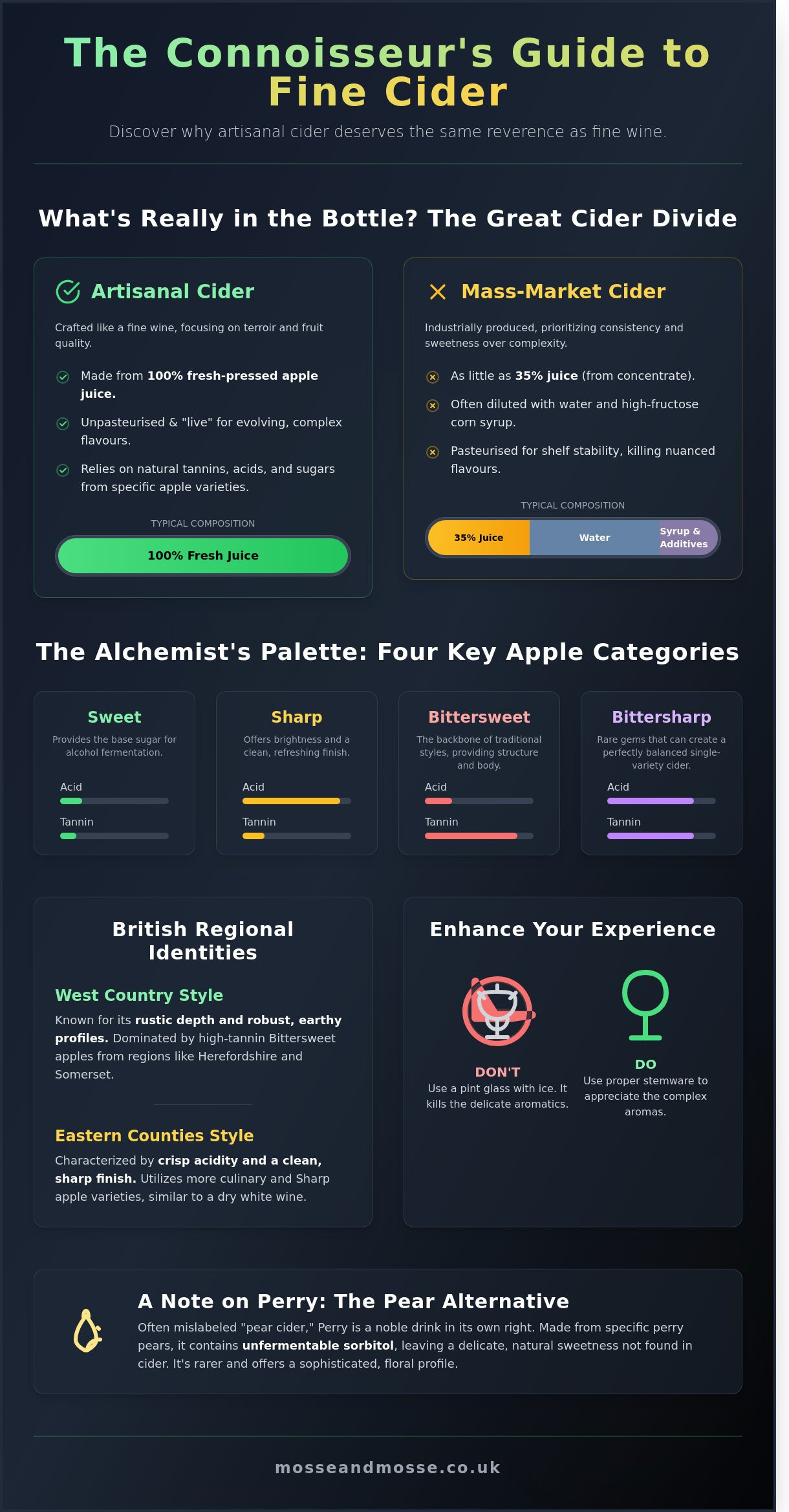
The gap between artisanal production and industrial brands is vast. Many commercial versions found in UK supermarkets contain as little as 35% juice, which is the minimum legal requirement. The rest is often a blend of water, high-fructose corn syrup, and artificial carbonation. We prefer "live" ciders that remain unpasteurised. These bottles contain active yeasts that allow the flavours to evolve over time, whereas pasteurised, shelf-stable versions often lose the glorious, funky nuances that define a vintage. Identifying 100% juice content is the first step toward finding a genuine wine treat; much like selecting the finest seasonal produce from Tai Kang Healthy Fruits, it is about prioritising quality and provenance over mass-market convenience.
Cider vs. Perry: Understanding the Pear Alternative
Perry is often mislabelled as "pear cider," but it's a distinct and noble drink in its own right. Traditional perry is made from specific perry pears, such as the Blakeney Red or Thorn, rather than standard dessert fruit. These pears contain sorbitol, a type of sugar that yeast cannot ferment. This leaves a natural, residual sweetness that cider simply doesn't have. Because perry pear trees can take 20 years to produce their first full crop, this drink is significantly rarer than apple-based alternatives. It offers a delicate, floral profile that is perfect for those seeking a sophisticated alternative to white wine.
From Orchard to Bottle: Understanding Terroir and Tannins
Just as a Grand Cru vineyard in Burgundy defines the character of a Pinot Noir, the concept of terroir is fundamental to premium cider. The soil composition in traditional regions like Somerset or Herefordshire directly dictates the nutrient uptake of the trees. Heavy clay soils often produce fruit with a robust, earthy profile, while lighter, sandy soils can result in more delicate, aromatic notes. Climate plays an equally vital role; the temperate, damp conditions of the UK allow for a long growing season that builds complex phenolic compounds within the fruit.
While terroir focuses on the earth, the success of any heritage orchard also depends on the intricate relationship between the trees and their pollinators. Supporting these ecosystems is a passion shared by specialists like Les's Bees, who provide the tools and expertise necessary for maintaining the healthy bee populations that are the unsung heroes of every apple harvest.
The alchemy begins with the selection of apple varieties. Unlike the uniform sweetness of supermarket fruit, traditional orchards rely on four distinct categories:
- Sweet: Low in acid and low in tannin, providing the base sugar for alcohol.
- Sharp: High in acid but low in tannin, offering brightness and a clean finish.
- Bittersweet: Low in acid but high in tannin, the backbone of traditional West Country styles.
- Bittersharp: High in both acid and tannin, these are the rare gems that can create a balanced drink on their own.
To the uninitiated, a Dabinett or a Kingston Black apple is a "spitter." They are practically inedible due to their astringency, yet these "ugly" apples are essential for quality. In the cellar, the fermentation process further defines the character. Many traditionalists prefer wild yeast found naturally on the apple skins, which produces a funky, unpredictable, and deeply personal result. Others opt for cultured yeasts to ensure a clean, consistent fermentation that highlights the pure fruit profile. It is all about what is in the bottle, and these choices determine whether the result is a simple beverage or a masterpiece.
The Role of Tannins in Structured Ciders
Tannins provide the essential "grip" and mouthfeel that connoisseurs often associate with a bold red wine. During the pressing process, the producer must manage the extraction of skin tannins, which are typically softer and more elegant, versus seed tannins that can introduce a harsh bitterness if the fruit is over-processed. High-tannin varieties possess the structural integrity required for long-term bottle ageing, allowing the flavours to mellow and integrate over several years. If you enjoy the structural complexity of a bottle-aged red, you might find our expertly selected wines provide a familiar sense of pure drinking pleasure.
Vintage vs. Non-Vintage: Why the Year Matters
Weather patterns in the UK are notoriously fickle, causing sugar levels and acidity to fluctuate significantly from year to year. Most commercial producers blend across different years to create a consistent house style that customers recognise. However, a single-vintage expression celebrates the unique thumbprint of a specific growing season. A late frost can concentrate flavours in a 2026 vintage by reducing the overall crop yield and forcing the tree to channel its energy into fewer, more intense fruits. This creates a glorious, high-extract liquid that truly reflects the struggle of the vine and tree against the elements.
Traditional British Cider Styles and Regional Identities
British cider making follows a historic line, often called the 'Great Divide,' which splits the country's production into two distinct camps. This isn't just a matter of local pride; it's a reflection of the soil and the specific apple varieties that thrive in different corners of the UK. From the heavy clays of Somerset to the lighter soils of East Anglia, the geography dictates exactly what lands in your glass. While local traditions once kept these styles strictly separate, today's makers are finding new ways to honour heritage while pushing boundaries.
The West Country Style: Tannic and Traditional
Travel through Somerset, Herefordshire, or Gloucestershire and you'll find the heartland of the bittersweet apple; for those exploring the local cider trail, The Corner House Hotel in Taunton offers a charming base in the heart of the county. These varieties, such as Dabinett or Kingston Black, are packed with tannins that provide a robust, mouth-drying structure. Traditional West Country cider is frequently fermented with wild yeasts found naturally on the apple skins. This process often results in the famous 'cloudy' appearance associated with the scrumpy tradition. You'll find a full-bodied, phenolic profile with deep earthy notes and a rich orange hue. It's a rustic, complex drink that prioritises the raw, bold character of the fruit over crystal-clear transparency.
The Eastern Counties Style: Crisp and Wine-Like
Head east towards Kent, Suffolk, and Norfolk, and the style shifts dramatically. Producers in these regions traditionally rely on culinary and dessert apples, including the sharp Bramley or the aromatic Cox's Orange Pippin. Because these apples have higher acidity and lower tannins, the resulting liquid is remarkably clear, bright, and refreshing. These elegant profiles often appeal to enthusiasts of white Burgundy wine. The focus here is on precision, acidity, and a clean finish, much like a well-made Chardonnay from a cool climate. It's all about that pure, zesty fruit expression that cuts through a rich meal perfectly.
While these regional identities remain strong, a modern 'craft' movement is starting to shake things up. We're seeing a lovely bit of experimentation where makers blend Eastern acidity with Western tannins. They're using wine-making techniques, such as barrel ageing and temperature-controlled fermentation, to refine traditional farmhouse methods. This crossover creates a new generation of cider that defies easy categorisation. For the connoisseur, this means more choice and more quality. Whether you prefer the tannic grip of a Somerset orchard or the wine-like acidity of a Kentish blend, the focus remains firmly on what's in the bottle.
Serving and Pairing Cider: Why Glassware and Temperature Matter
For many, the default vessel for cider is a chilled pint glass. While this works for mass-produced draughts, it's a disservice to the craft bottles we champion. To enjoy the full aromatic profile of a well-made fermentation, you should reach for a wine glass instead. A tulip-shaped glass concentrates the delicate apple esters, allowing you to experience the lovely bouquet that a wide-rimmed pint glass simply loses to the air. It's all about what's in the bottle, but how you present it determines how much of that quality you actually perceive.
Temperature is equally vital. Serving a complex bottle at 4°C or, worse, over ice, numbs the palate and masks the subtle tannins. We recommend a serving temperature between 8°C and 12°C. If a bottle is too cold, the fruit flavours feel muted. If it's a still, high-tannin variety, don't be afraid to decant it. Giving a still cider 20 minutes to breathe can soften the structure and reveal layers of bottle-aged complexity that were previously hidden. When pouring, aim for a gentle angle to preserve the natural effervescence, stopping just before the sediment if the bottle is unfiltered.
Choosing the Right Glass for the Style
Different styles demand different shapes to shine. For 'Methode Traditionnelle' sparkling ciders, a tall flute preserves the fine bead and directs the effervescence to the tip of the tongue. For aromatic or still ciders, a tulip-shaped wine glass is the gold standard. This shape manages the delivery of acidity and tannins across the palate. It ensures the sharp, refreshing finish hits the right spots while allowing the heavier, earthy notes to linger. Choosing the right glass is a simple way to turn a drink into a genuine wine treat.
Food Pairing: Cider’s Secret Versatility
Cider is a remarkably flexible partner at the dinner table. The classic pairing of cider and pork remains a match made in heaven because the natural malic acid cuts through the richness of the meat. However, there's a world of discovery beyond the roast dinner. High-acid Eastern Counties ciders are glorious when paired with creamy cheeses like Camembert, as the acidity cleanses the palate between bites. The tannins found in West Country styles provide the structure needed to stand up to bold, savoury flavours.
- Spicy Cuisine: A medium-dry cider with 3% or 4% residual sugar acts as a cooling balm against the heat of Thai or Indian spices.
- Seafood: Dry, crisp ciders provide a brilliant alternative to Muscadet when serving oysters or grilled white fish.
- Hard Cheeses: Match a tannin-led bittersweet cider with a mature Cheddar for a truly traditional experience.
Whether you're hosting a formal dinner or enjoying a quiet moment at home, these pairings elevate the entire experience. Explore our curated selection of bottles to find your next perfect match.
Finding the Best Cider: What’s Really in the Bottle?
Identifying a truly glorious cider starts with a close look at the label. In the UK, HMRC Notice 162 requires a minimum of only 35% apple juice for a product to carry the name. Most mass-produced options sit right at that limit, filled out with water and glucose syrup. Artisanal producers ignore this low bar. They focus on 100% juice. You should look for specific apple names like Dabinett, Harry Masters Jersey, or Kingston Black. These heritage varieties provide the structure and tannins that define a world-class drink. If the bottle doesn't tell you which apples were used, it's likely a blend of anonymous culinary fruit.
The Mosse & Mosse Standard: It's All About What's in the Bottle
We approach every bottle with a simple philosophy: I hunt the best so you can enjoy what's in your glass. This commitment to quality means we evaluate cider using the same rigorous standards as our Burgundy and Bordeaux. We look for a clear sense of place and the passion of the maker. We favour producers who avoid artificial additives and focus on pure fruit expression. It's about finding that "wine treat" feel in a bottle of fermented apples. Every selection must offer pure drinking pleasure, showing the same complexity you'd expect from a fine Cru Classe wine.
How to Buy Quality Alcohol Online with Confidence
Finding hidden gems often requires looking beyond the supermarket shelf. Choosing alcohol online allows you to access small-batch producers from Somerset, Herefordshire, and even Normandy. Mixed cases are a brilliant way to discover new regional styles without committing to a full case of one specific label. Once your delivery arrives, treat it with respect. Store your bottles in a cool, dark place, ideally around 12°C. While many ciders are ready to drink, high-tannin vintage styles can be laid down for 2 to 3 years to develop extra depth.
- Start small: Buy three bottles of the same vintage. Drink one now, one in six months, and one in a year to see how it evolves.
- Seek out "Methode Traditionnelle": These ciders undergo secondary fermentation in the bottle, offering a sophisticated sparkle.
- Connect with specialists: Independent merchants provide the one-to-one service needed to find bottles that match your specific palate.
Elevate Your Next Pour
Finding a truly exceptional drink is about more than just a label; it's about the heritage of the orchard and the precise balance of tannins and acidity. You've discovered how traditional British styles and the nuances of terroir define a premium bottle. Proper service at the right temperature ensures every subtle note is expressed fully. When you're looking for authentic cider, the quality of what's in the glass is the only thing that matters.
At Mosse & Mosse, we've spent over 25 years hunting for the finest expressions of the producer's craft. Tim and Sam Mosse are here to provide a personal one-to-one service, helping you choose bottles that offer pure drinking pleasure. We're an independent merchant dedicated to quality, and we offer free delivery on all mainland UK orders to make your next discovery even easier. It's our passion to ensure you enjoy every drop.
Explore our curated selection of fine drinks at Mosse & Mosse
It's time to treat yourself to something glorious.
Frequently Asked Questions
Is cider naturally gluten-free?
Yes, cider is naturally gluten-free because its primary ingredients are fermented apple juice and yeast. Unlike beer, which relies on gluten-containing grains like barley or wheat, traditional production avoids these ingredients entirely. Coeliac UK confirms that most ciders are safe for those with gluten intolerances. You should still check labels on mass-produced varieties, as some manufacturers might add barley-based sweeteners or flavourings during the bottling process.
What is the difference between cider and apple juice?
The fundamental difference lies in the fermentation process. While apple juice is simply the liquid extracted from pressed fruit, cider undergoes a transformation where yeast converts natural sugars into alcohol. In the UK, juice remains a non-alcoholic soft drink, whereas cider typically reaches an alcohol by volume (ABV) between 3% and 8.5%. This chemical change creates the complex tannins and dry finishes that we hunt for in a quality bottle.
How long does a bottle of craft cider last once opened?
A bottle of craft cider usually retains its peak flavour for 3 to 5 days if kept in the fridge with a secure stopper. Still varieties may last up to a week, but sparkling versions lose their carbonation much faster. After 72 hours, exposure to oxygen begins to dull the vibrant fruit notes and can introduce vinegary taints. For the best experience, treat it like a fine white wine and enjoy it while the profile remains fresh.
What are the best apples for making high-quality cider?
High-quality cider requires "spitting apples" like Dabinett, Kingston Black, or Somerset Redstreak. These specific cultivars are categorised as bittersweets or bittersharps because they contain high levels of tannins and malic acid. Unlike dessert apples, which are too sweet for a balanced ferment, these traditional varieties provide the structure and bite essential for a sophisticated drink. We believe the character of the orchard is always reflected in the glass.
Can you age cider in a cellar like you would a fine wine?
You can certainly age specific types of cider, particularly those with high tannin levels or bottle-conditioned varieties. While most commercial products are meant for immediate consumption, premium orchard-based liquids can develop beautifully over 2 to 5 years in a cool cellar. The natural acidity acts as a preservative, allowing the flavours to mellow and integrate. It’s a wonderful way to see how the profile of a vintage evolves over time.
What does 'scrumpy' cider actually mean?
The term 'scrumpy' traditionally refers to rough, high-alcohol cider made by small-scale farmers, particularly in the West Country. It comes from the local word 'scrump', meaning a small or withered apple. These drinks are often still, cloudy, and unfiltered, offering a powerful and rustic flavour profile. While some modern versions are commercially produced, true scrumpy remains a staple of traditional British farmhouse craft, often reaching 7% or 8% ABV.
Is there a difference between cider and hard cider?
In the United Kingdom, we simply call it cider, whereas "hard cider" is a term used primarily in North America to distinguish the alcoholic version from cloudy apple juice. Here, the word always implies an alcoholic beverage. If you're browsing our collection, you won't see the "hard" prefix used. We focus on the fermented craft, ensuring that every bottle delivers the authentic, crisp experience that British drinkers have enjoyed for centuries.
How many units of alcohol are typically in a bottle of cider?
A standard 500ml bottle of 5% ABV cider contains exactly 2.5 units of alcohol. If you choose a stronger craft variety at 7% ABV, that same bottle increases to 3.5 units. The NHS recommends that adults don't regularly exceed 14 units per week. Knowing the unit count helps you enjoy your drink responsibly while still appreciating the craft and dedication that goes into every single press.


