A paler hue in your glass doesn't guarantee a superior drop. In fact, some of the most glorious rose wine varieties I have hunted across France boast a deep, vibrant pink that puts the translucent trend to shame. It's easy to feel confused by sweetness levels or wonder if a £15 bottle from a lesser-known region is actually a hidden gem. Over the last 20 years, I've seen many customers hesitate at the shelf, unsure if a darker colour means a cloying syrup or a bone-dry masterpiece. We agree that it's all about what's in the bottle, and you shouldn't have to guess when hosting guests.
This guide promises to reveal the secrets behind your favourite pink wines, from traditional French methods to the perfect food pairings for year-round enjoyment. You'll learn to recognise the nuances of Provence versus other regional styles and gain the confidence to select a bottle that offers pure drinking pleasure. We'll explore how specific production techniques define the character of the wine, ensuring your next dinner party selection is a resounding success.
Key Takeaways
- Understand how expert winemakers use minimal skin contact to extract vibrant colour and complex phenols without the weight of heavy tannins.
- Explore the distinct characteristics of iconic regions, from the benchmark dry styles of Provence to the more structured, food-friendly alternatives found in Bordeaux.
- Learn the golden rules for serving rose wine, including why the correct temperature and glassware are vital for preserving those delicate floral aromas.
- Discover why these bottles are serious year-round contenders for your collection, offering a versatile profile that pairs beautifully with a variety of seasonal cuisines.
- Gain insight into our personal approach to hunting for the finest small-batch producers, ensuring that what’s in your bottle is always a glorious wine treat.
Understanding Rosé Wine: More Than Just a Seasonal Favourite
Rosé isn't a simple blend of red and white; it's a craft of precise timing. By macerating red grapes with their skins for a fleeting period, winemakers capture that glorious pink hue and delicate aromatics before the heavy tannins take over. At Mosse and Mosse, we've always maintained that it's all about what's in the bottle. This means looking past the "summer water" marketing to find wines with genuine structure and soul. While many see it as a fleeting seasonal trend, the best rose wine deserves a permanent spot in your cellar alongside your finest Burgundies and Bordeaux.
European traditions continue to set the benchmark for quality. In 2023, France remained the global leader, with Provence alone exporting over 105 million bottles. These Old World regions treat the style with the same reverence as their Grand Crus, focusing on terroir and acidity. Choosing a bottle from a family-run estate ensures you're getting a wine treat that offers pure drinking pleasure. It's an emotional choice for social gatherings, providing a sense of luxury that bridges the gap between casual sipping and serious connoisseurship.
The Colour Spectrum: From Onion Skin to Deep Cherry
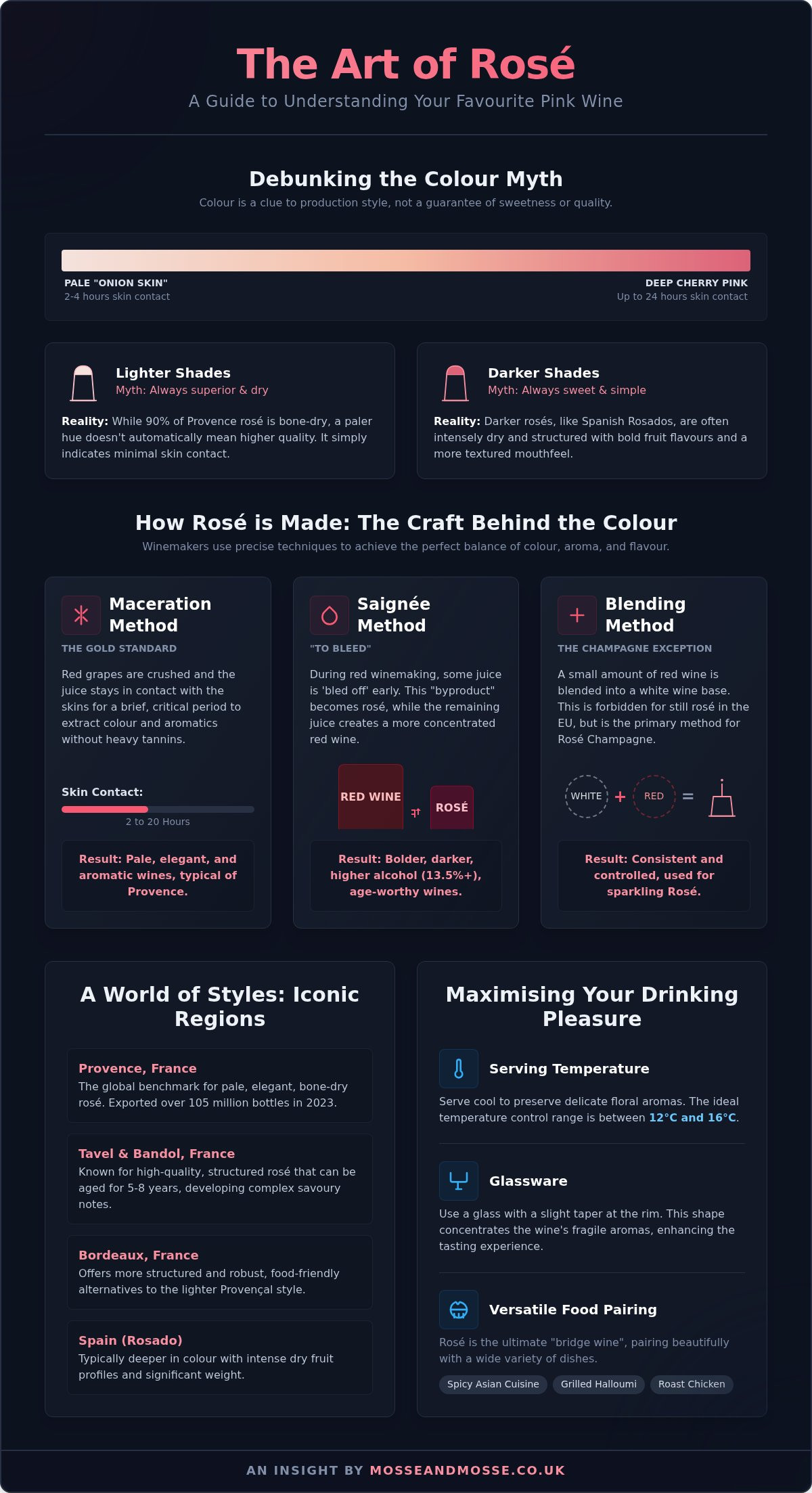
A wine's shade tells a story of patience in the cellar. A pale "onion skin" tint often suggests the grapes had just 2 to 4 hours of skin contact, whereas a deep cherry pink might have rested for up to 24 hours. It's a common mistake to assume lighter always means drier. While approximately 90 percent of Provence styles are bone dry, some deeper Spanish Rosados offer intense, dry fruit profiles with significant weight. Use the colour as a hint for body; darker shades typically signal bolder red fruit flavours and a more textured mouthfeel.
The Versatility Factor
This style acts as the ultimate bridge when a crisp white feels too light and a heavy red feels too overbearing for the menu. It's the most flexible partner for tricky food pairings, sitting comfortably with spicy Asian cuisine, grilled halloumi, or even a traditional roast chicken. The UK market has seen a 12 percent rise in demand for premium, bottle-aged rosé since 2022. These aren't just for immediate drinking; high-quality rose wine from regions like Bandol or Tavel can be laid down for 5 to 8 years, developing complex, savoury notes that rival fine aged whites.
How is Rosé Wine Made? The Art of the Pink
Creating a glorious bottle of rose wine is a delicate balancing act that requires a hunter’s eye for detail. It starts with the science of skin contact. Unlike red wines that ferment with their skins for weeks, rosé producers limit this interaction to extract vibrant phenols without the heavy, mouth-drying tannins. Temperature control is the winemaker's most vital tool during this process. By keeping the must cool, typically between 12°C and 16°C, they preserve the volatile floral aromas that define a high-quality bottle.
The choice of grape variety dictates the final character of what's in the bottle. Grenache provides those lovely strawberry notes and a plush texture, while Cinsault adds freshness and floral lift. In cooler climates, Pinot Noir takes centre stage, offering a structural and elegant profile. It’s a precise craft that ensures the liquid in your glass provides pure drinking pleasure.
The Maceration Method: The Gold Standard
This is the primary technique for the pale, sophisticated styles of Provence. After the grapes are crushed, the juice stays in contact with the skins for a brief window, usually between 2 and 20 hours. This timing is critical. Pressing the grapes at exactly the right moment achieves that sought-after onion-skin or pale salmon hue. Because the juice spends so little time on the skins, the result is an incredibly fresh and elegant fruit profile that’s perfect for savouring on a warm afternoon.
The Saignée Method: "Bleeding" for Concentration
Saignée translates to "bleeding" and represents a different philosophy. During the first few hours of making a red wine, some of the juice is bled off to increase the concentration of the skins in the remaining red vat. This "byproduct" becomes a bolder, darker rose wine. These wines often carry more weight, higher alcohol levels (frequently reaching 13.5% or 14%), and savoury notes. They have better ageing potential than their paler cousins, making them a fantastic choice for those who enjoy a more robust glass.
Blending: The Champagne Exception
Many people assume pink wine is just a mix of red and white, but this is a myth for still wines. EU regulations have strictly forbidden this practice for still wines since 2009 to protect traditional methods. However, the prestigious region of Champagne is the grand exception. Here, the art of the "assemblage" allows winemakers to blend a small percentage of still red Pinot Noir or Pinot Meunier (usually 5% to 15%) into the white base. This creates the glorious sparkling pinks we love to share, offering a structure and complexity that only the finest bottle-aged wines can provide.
Exploring Iconic Regions: Provence, Bordeaux, and Beyond
Finding a glorious rose wine isn't just about picking the palest bottle on the shelf; it's about understanding the soil and soul of the region. While many drinkers stick to what they know, exploring the "Old World" reveals a spectrum of styles that offer pure drinking pleasure throughout the year. At Mosse & Mosse, we believe it's all about what's in the bottle, and these iconic regions deliver quality that justifies every penny.
The Provence Benchmark
Provence remains the global standard for dry, flinty styles. You'll likely recognise the Côtes de Provence appellation, which accounts for roughly 75% of the region's wine production. These wines are famous for their pale "onion skin" colour and refreshing acidity. In Coteaux d’Aix-en-Provence, the terroir benefits from over 2,800 hours of annual sunshine; this provides the perfect environment for Grenache to develop its signature wild strawberry and citrus zest notes. The distinct minerality found here comes from the limestone and crystalline soils, making these bottles a lovely choice for a crisp aperitif.
Bordeaux and the North
If you want something with more "grip," look toward Bordeaux. Bordeaux Clairet is a historic style that dates back centuries; it bridges the gap between rosé and light red with its deep pink hue and structured tannins. For those seeking pure elegance, Sancerre Rosé from the Loire Valley is a must-try. Crafted from 100% Pinot Noir, these wines offer a delicate complexity that rivals expensive whites. These northern regions often provide better value for collectors, as they focus on structure rather than just "lifestyle" branding. We've found that a well-chosen bottle from a smaller producer in these areas can be a real wine treat.
Beyond France, the landscape shifts toward bolder expressions. Italian Rosato, particularly Cerasuolo d'Abruzzo, and Spanish Rosado from Rioja offer sun-drenched flavours of red cherry and spice. These are fantastic food wines that can stand up to grilled meats or spicy tapas. Meanwhile, New World innovations are shaking things up. Producers in cooler climates like Oregon or parts of New Zealand are using high-quality Pinot Noir to create sophisticated, fruit-forward styles. Whether it's a bottle-aged classic or a fresh New World find, the diversity available today ensures there's a style to suit every palate and occasion.
Serving and Food Pairing: Maximising Pure Drinking Pleasure
Temperature is the most critical factor when you're preparing to enjoy a bottle. It's a common mistake to serve rose wine straight from a domestic fridge at 4°C. This aggressive chill numbs your palate and effectively kills the delicate floral bouquet that Tim hunts for in every bottle we stock. For pure drinking pleasure, aim for a serving temperature between 8°C and 10°C. You'll notice the layers of fruit open up beautifully as the liquid warms slightly in your glass.
You don't need specialized glassware to enjoy these wines. A standard, medium-sized white wine glass is actually the superior choice. Its tapered rim concentrates those glorious aromas of wild strawberry and citrus, directing them straight to your nose. If you're organising a large event, such as a summer wedding or a corporate garden party, remember that rose wine evolves as it breathes. Pouring the wine five minutes before serving allows the initial tightness to soften, ensuring your guests get the full experience from the very first sip.
The Ultimate Food Match
Dry, pale styles are the natural partners for bold Mediterranean flavours. We love pairing a crisp bottle with a spread of heavy garlic, salty olives, and grilled sea bass. The wine's acidity also performs a vital role when you're serving spicy Asian cuisine. It cuts through the heat of Thai chillies or Szechuan peppercorns, refreshing the palate instantly. For a relaxed Sunday afternoon, try a more savoury, structured rose with a platter of British charcuterie. The salt and fat in the meats are perfectly balanced by the wine's bright, berry-driven profile.
Creating this kind of Mediterranean spread is all about the quality of the ingredients. For authentic gourmet products that will make your food pairings shine, specialist culinary retailers like Oil & Vinegar offer an excellent selection of oils, vinegars, and other delicacies.
Storage and Ageing
Most rosés are crafted for immediate enjoyment within 12 months of their vintage date. However, don't dismiss the potential for short-term cellaring. Certain prestige examples from regions like Bandol or high-end Bordeaux estates can develop fascinating secondary characteristics over 2 to 3 years. Look for bottles with firm acidity and concentrated fruit as these are indicators of a wine that will age gracefully. Always store your wine in a cool, dark spot. Clear glass bottles are highly vulnerable to "light strike," a chemical reaction that can spoil the flavour in as little as 60 minutes if left in direct sunlight or under bright shop lights.
Explore our latest hand-picked bottles and find your next favourite rose wine for the season.
Finding Your Favourite Rosé at Mosse and Mosse
At Mosse and Mosse, our philosophy is simple: it's all about what's in the bottle. Tim and Sam personally hunt for the best small-batch producers across France, focusing on quality and character rather than mass-market labels. This dedication means we often stock hidden gems that you won't find on a supermarket shelf. Being an independent merchant allows us to offer a bespoke, one-to-one service that values the relationship as much as the vintage. We take the time to understand your unique preferences, whether you're a seasoned collector or simply looking for a lovely bottle for Sunday lunch.
From our base in Suffolk, we provide reliable and convenient delivery to your doorstep anywhere in the UK. We handle every order with care, ensuring your rose wine arrives in perfect condition for your next gathering. Our expertise in the Old World, particularly Burgundy and Bordeaux, informs every bottle we select for our shop.
Curated Mixed Cases for Every Season
Our curated mixed cases offer a fantastic way to discover new regions and styles without the guesswork. We don't believe rose wine is strictly for July heatwaves. Instead, we select bottles that suit the changing calendar. Our seasonal selections transition from the zesty, high-acid pinks of spring to more robust, food-friendly styles perfect for a winter evening by the fire. We organise these cases to provide a balanced tasting journey. You can expect a mix of:
- Crisp, flinty selections from the Loire Valley for spring.
- Classic, pale, and elegant Provence styles for the peak of summer.
- Structured, darker pinks from Tavel or Bordeaux that stand up to autumn dishes.
Personalised Service for Special Occasions
Special occasions deserve a personal touch. We provide tailored wedding wine consultations to ensure your guests enjoy something truly glorious that fits your budget and menu. For businesses, a bottle of fine pink wine serves as a thoughtful "wine treat" for corporate gifting that feels far more personal than a standard hamper. Sam's deep background in retail ensures that building great relationships is at the heart of everything we do. Tim is always happy to spend time finding out exactly what you like to ensure pure drinking pleasure. Reach out to us today for expert advice and let us help you find the perfect bottle for your palate.
Find Your Perfect Pink Pour Today
Choosing the right rose wine is about more than just picking a pretty colour; it's about finding that glorious balance between crisp acidity and summer fruit. You now understand the nuances of Provence and Bordeaux and how the right serving temperature unlocks pure drinking pleasure. At Mosse and Mosse, we've spent 26 years as an independent Suffolk merchant dedicated to the philosophy that it's all about what's in the bottle. Tim and Sam Mosse offer a personal one to one service to help you navigate our hand-picked selections with ease. We've been hunting for quality since 1998 to ensure every glass you pour is a genuine wine treat. With free UK mainland delivery available on selected orders, there's never been a better time to stock your cellar or find a new seasonal favourite. Explore our curated collection of lovely Rosé wines and enjoy the expertise of a family business that truly cares about your palate. We can't wait to help you discover a bottle you'll love.
Frequently Asked Questions
Is rosé wine just a blend of red and white wine?
Blending red and white wine is actually prohibited for most PDO wines in Europe, with the notable exception of Rosé Champagne. Around 95% of premium rose wine is made through the maceration method. This involves letting clear grape juice sit with dark skins for a few hours to extract colour and flavour. This traditional process ensures the wine develops its own unique character and structure, focusing on what's truly in the bottle.
Why are some rosé wines much paler than others?
The shade of pink depends entirely on how long the grape skins stay in contact with the juice. Provence styles often spend as little as 2 to 6 hours in maceration to achieve that delicate onion-skin colour. In contrast, a bolder Tavel might sit for 48 hours, resulting in a deep, vibrant pink. Shorter contact times preserve subtle floral notes, while longer periods extract more tannin and intense red fruit flavours.
How long does a bottle of rosé wine last once opened?
A bottle will typically stay fresh for 3 to 5 days if you keep it recorked in the fridge. Oxygen is the enemy of those bright, fruity aromatics that make these wines such a treat. You'll notice the vibrant strawberry and citrus notes start to fade after 72 hours. Using a vacuum stopper can help preserve the wine's character for an extra 24 hours, ensuring you get pure drinking pleasure from every glass.
What is the best temperature to serve rosé wine?
You should aim to serve lighter, crisper styles between 7°C and 10°C, while more complex bottles shine at 11°C to 13°C. Chilling the wine too much can mask the delicate aromas of a fine rose wine. If you're enjoying a structured Bandol or a Pinot Noir variety, take it out of the fridge 15 minutes before pouring. This slight rise in temperature lets the nuanced, stony flavours truly open up.
Does rosé wine go out of date?
Rose wine doesn't have a hard expiry date, but it's designed to be enjoyed while it's fresh and vibrant. About 90% of these bottles are best consumed within 12 to 24 months of their vintage date. After this point, the bright acidity and primary fruit flavours begin to diminish. While the wine remains safe to drink, it loses the glorious, refreshing quality that defines the style. We always recommend drinking it young.
Is Provence rosé always dry?
Yes, approximately 90% of the wine produced in Provence is bone dry. Regional AOC regulations typically require residual sugar levels to remain below 4 grams per litre for most styles. This creates the crisp, refreshing profile that has made the region a global benchmark for quality. If you're looking for something with more sweetness, you might look toward an Anjou rosé from the Loire Valley, which often contains 10 grams of sugar or more.
What grapes are used to make rosé wine?
Winemakers use a variety of red grapes, though Grenache, Syrah, and Cinsault are the most common choices in the South of France. In cooler climates like the Loire, you'll find elegant versions made from 100% Pinot Noir or Cabernet Franc. Each variety brings a different personality to the blend. Grenache provides body and spice, while Cinsault adds a floral lift that makes the final wine incredibly drinkable and refreshing.
Can you age rosé wine like red Burgundy or Bordeaux?
Most aren't designed for the cellar, though certain structured bottles from Bandol or Tavel can age beautifully for 5 to 10 years. Unlike a heavy red Burgundy or Bordeaux, most pink wines rely on fresh fruit which fades over time. Only about 5% of global production has the tannin and acidity required for long-term ageing. For the vast majority of bottles, we suggest enjoying them within 2 years to experience their peak flavour.


